 Add to Chrome
 Add to Firefox
 Add to Edge
How Do Large Language Models Acquire Factual Knowledge During Pretraining?
Jun 17, 2024


Despite the recent observation that large language models (LLMs) can store substantial factual knowledge, there is a limited understanding of the mechanisms of how they acquire factual knowledge through pretraining. This work addresses this gap by studying how LLMs acquire factual knowledge during pretraining. The findings reveal several important insights into the dynamics of factual knowledge acquisition during pretraining. First, counterintuitively, we observe that pretraining on more data shows no significant improvement in the model's capability to acquire and maintain factual knowledge. Next, there is a power-law relationship between training steps and forgetting of memorization and generalization of factual knowledge, and LLMs trained with duplicated training data exhibit faster forgetting. Third, training LLMs with larger batch sizes can enhance the models' robustness to forgetting. Overall, our observations suggest that factual knowledge acquisition in LLM pretraining occurs by progressively increasing the probability of factual knowledge presented in the pretraining data at each step. However, this increase is diluted by subsequent forgetting. Based on this interpretation, we demonstrate that we can provide plausible explanations for recently observed behaviors of LLMs, such as the poor performance of LLMs on long-tail knowledge and the benefits of deduplicating the pretraining corpus.

The BiGGen Bench: A Principled Benchmark for Fine-grained Evaluation of Language Models with Language Models
Jun 09, 2024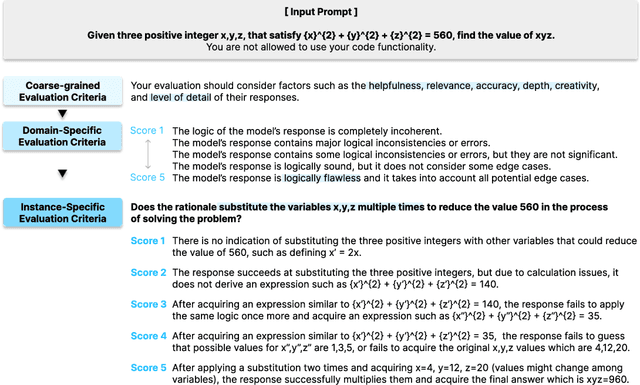


As language models (LMs) become capable of handling a wide range of tasks, their evaluation is becoming as challenging as their development. Most generation benchmarks currently assess LMs using abstract evaluation criteria like helpfulness and harmlessness, which often lack the flexibility and granularity of human assessment. Additionally, these benchmarks tend to focus disproportionately on specific capabilities such as instruction following, leading to coverage bias. To overcome these limitations, we introduce the BiGGen Bench, a principled generation benchmark designed to thoroughly evaluate nine distinct capabilities of LMs across 77 diverse tasks. A key feature of the BiGGen Bench is its use of instance-specific evaluation criteria, closely mirroring the nuanced discernment of human evaluation. We apply this benchmark to assess 103 frontier LMs using five evaluator LMs. Our code, data, and evaluation results are all publicly available at https://github.com/prometheus-eval/prometheus-eval/tree/main/BiGGen-Bench.
Aligning to Thousands of Preferences via System Message Generalization
May 28, 2024Although humans inherently have diverse values, current large language model (LLM) alignment methods often assume that aligning LLMs with the general public's preferences is optimal. A major challenge in adopting a more individualized approach to LLM alignment is its lack of scalability, as it involves repeatedly acquiring preference data and training new reward models and LLMs for each individual's preferences. To address these challenges, we propose a new paradigm where users specify what they value most within the system message, steering the LLM's generation behavior to better align with the user's intentions. However, a naive application of such an approach is non-trivial since LLMs are typically trained on a uniform system message (e.g., "You are a helpful assistant") which limits their ability to generalize to diverse, unseen system messages. To improve this generalization, we create the Multifaceted Collection, a preference dataset with 192k combinations of values beyond generic helpfulness and harmlessness, spanning 65k user instructions. Using this dataset, we train a 7B LLM called Janus and test it on 921 prompts from 5 benchmarks (AlpacaEval 2.0, FLASK, Koala, MT-Bench, and Self-Instruct) by adding various unseen system messages that reflect user preferences. Janus achieves tie+win rate of 75.2%, 72.4%, and 66.4% against Mistral 7B Instruct v0.2, GPT-3.5 Turbo, and GPT-4, respectively. Unexpectedly, on three benchmarks focused on response helpfulness (AlpacaEval 2.0, MT-Bench, Arena Hard Auto v0.1), Janus also outperforms LLaMA 3 8B Instruct by a +4.0%, +0.1%, +3.0% margin, underscoring that training with a vast array of system messages could also enhance alignment to the general public's preference as well. Our code, dataset, benchmark, and models are available at https://github.com/kaistAI/Janus.
Prometheus 2: An Open Source Language Model Specialized in Evaluating Other Language Models
May 02, 2024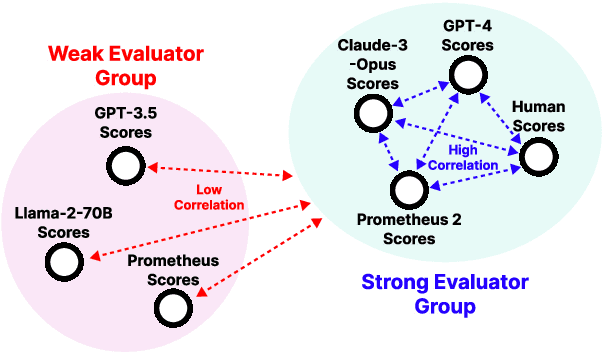
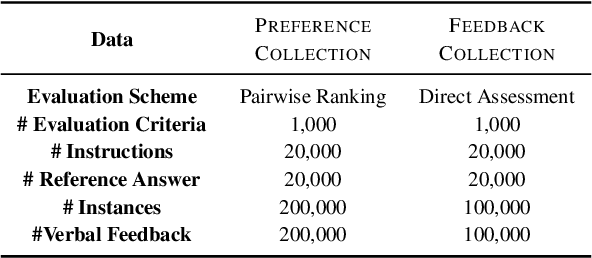
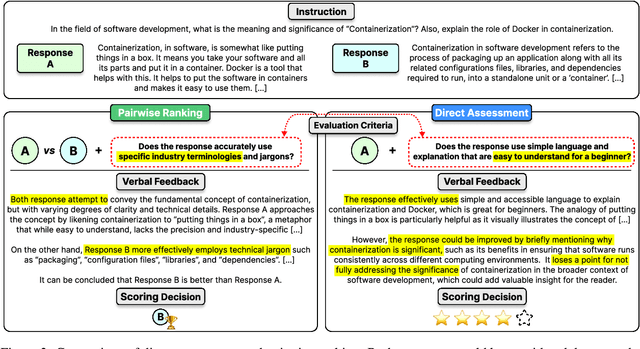
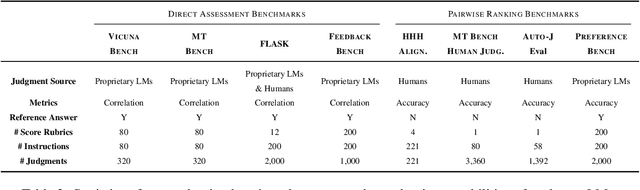
Proprietary LMs such as GPT-4 are often employed to assess the quality of responses from various LMs. However, concerns including transparency, controllability, and affordability strongly motivate the development of open-source LMs specialized in evaluations. On the other hand, existing open evaluator LMs exhibit critical shortcomings: 1) they issue scores that significantly diverge from those assigned by humans, and 2) they lack the flexibility to perform both direct assessment and pairwise ranking, the two most prevalent forms of assessment. Additionally, they do not possess the ability to evaluate based on custom evaluation criteria, focusing instead on general attributes like helpfulness and harmlessness. To address these issues, we introduce Prometheus 2, a more powerful evaluator LM than its predecessor that closely mirrors human and GPT-4 judgements. Moreover, it is capable of processing both direct assessment and pair-wise ranking formats grouped with a user-defined evaluation criteria. On four direct assessment benchmarks and four pairwise ranking benchmarks, Prometheus 2 scores the highest correlation and agreement with humans and proprietary LM judges among all tested open evaluator LMs. Our models, code, and data are all publicly available at https://github.com/prometheus-eval/prometheus-eval.
Pegasus-v1 Technical Report
Apr 23, 2024


This technical report introduces Pegasus-1, a multimodal language model specialized in video content understanding and interaction through natural language. Pegasus-1 is designed to address the unique challenges posed by video data, such as interpreting spatiotemporal information, to offer nuanced video content comprehension across various lengths. This technical report overviews Pegasus-1's architecture, training strategies, and its performance in benchmarks on video conversation, zero-shot video question answering, and video summarization. We also explore qualitative characteristics of Pegasus-1 , demonstrating its capabilities as well as its limitations, in order to provide readers a balanced view of its current state and its future direction.
SuRe: Summarizing Retrievals using Answer Candidates for Open-domain QA of LLMs
Apr 17, 2024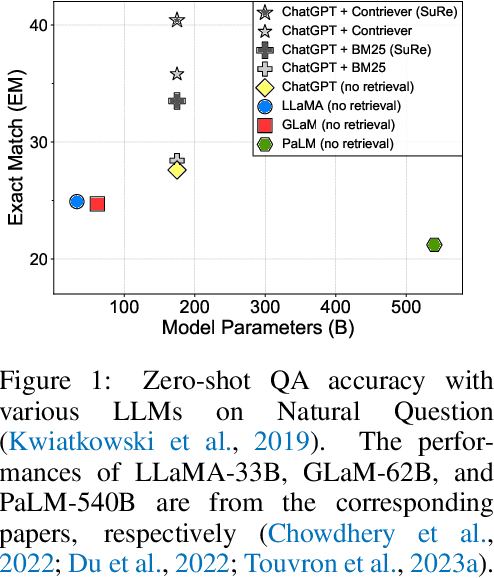
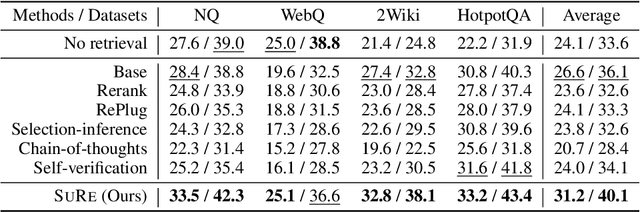
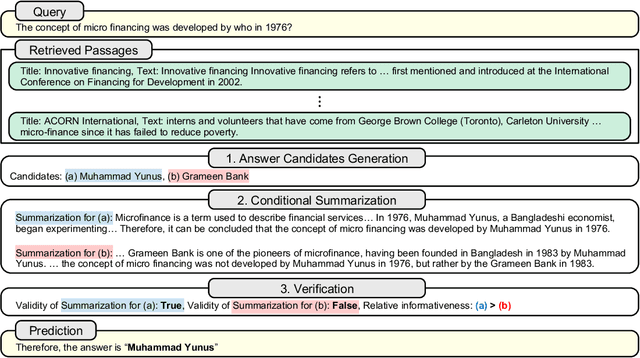
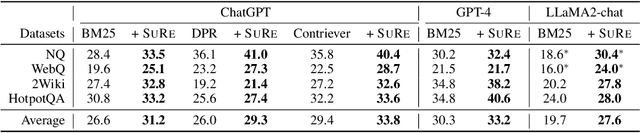
Large language models (LLMs) have made significant advancements in various natural language processing tasks, including question answering (QA) tasks. While incorporating new information with the retrieval of relevant passages is a promising way to improve QA with LLMs, the existing methods often require additional fine-tuning which becomes infeasible with recent LLMs. Augmenting retrieved passages via prompting has the potential to address this limitation, but this direction has been limitedly explored. To this end, we design a simple yet effective framework to enhance open-domain QA (ODQA) with LLMs, based on the summarized retrieval (SuRe). SuRe helps LLMs predict more accurate answers for a given question, which are well-supported by the summarized retrieval that could be viewed as an explicit rationale extracted from the retrieved passages. Specifically, SuRe first constructs summaries of the retrieved passages for each of the multiple answer candidates. Then, SuRe confirms the most plausible answer from the candidate set by evaluating the validity and ranking of the generated summaries. Experimental results on diverse ODQA benchmarks demonstrate the superiority of SuRe, with improvements of up to 4.6% in exact match (EM) and 4.0% in F1 score over standard prompting approaches. SuRe also can be integrated with a broad range of retrieval methods and LLMs. Finally, the generated summaries from SuRe show additional advantages to measure the importance of retrieved passages and serve as more preferred rationales by models and humans.
Self-Explore to Avoid the Pit: Improving the Reasoning Capabilities of Language Models with Fine-grained Rewards
Apr 16, 2024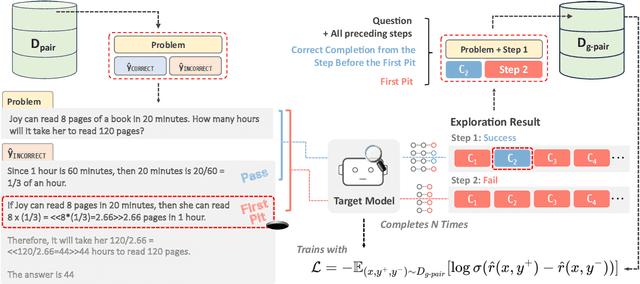
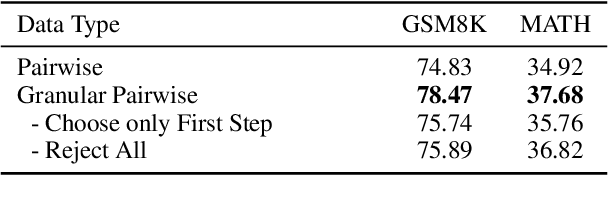
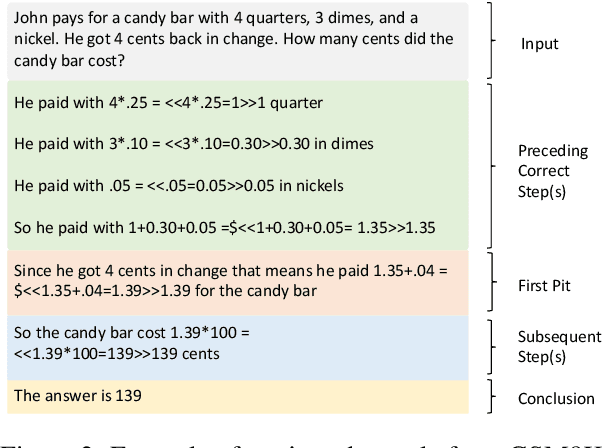
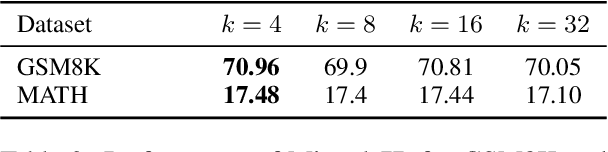
Training on large amounts of rationales (i.e., CoT Fine-tuning) is effective at improving the reasoning capabilities of large language models (LLMs). However, acquiring human-authored rationales or augmenting rationales from proprietary models is costly and not scalable. In this paper, we study the problem of whether LLMs could self-improve their reasoning capabilities. To this end, we propose Self-Explore, where the LLM is tasked to explore the first wrong step (i.e., the first pit) within the rationale and use such signals as fine-grained rewards for further improvement. On the GSM8K and MATH test set, Self-Explore achieves 11.57% and 2.89% improvement on average across three LLMs compared to supervised fine-tuning (SFT). Our code is available at https://github.com/hbin0701/Self-Explore.
Semiparametric Token-Sequence Co-Supervision
Mar 14, 2024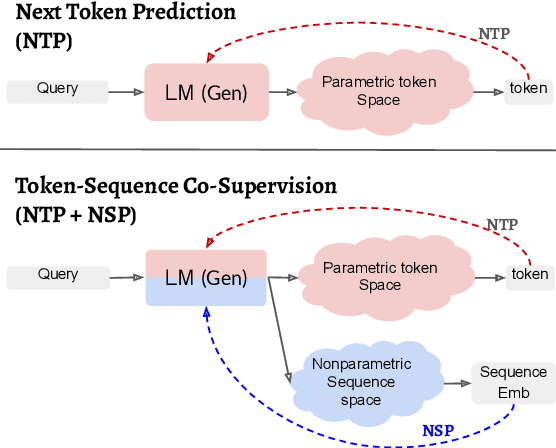
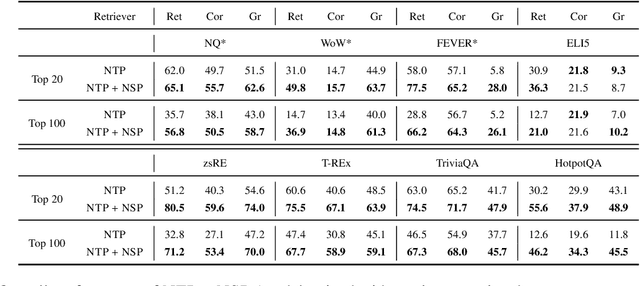
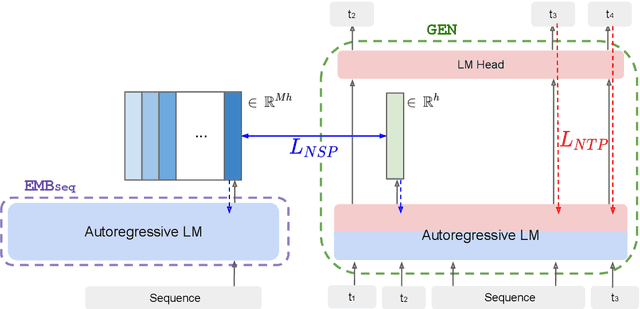
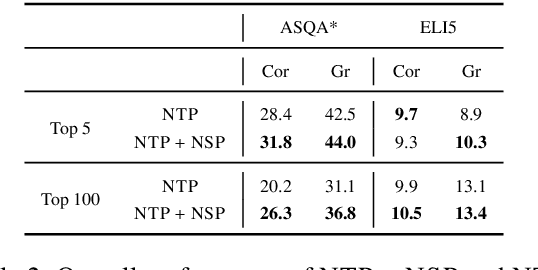
In this work, we introduce a semiparametric token-sequence co-supervision training method. It trains a language model by simultaneously leveraging supervision from the traditional next token prediction loss which is calculated over the parametric token embedding space and the next sequence prediction loss which is calculated over the nonparametric sequence embedding space. The nonparametric sequence embedding space is constructed by a separate language model tasked to condense an input text into a single representative embedding. Our experiments demonstrate that a model trained via both supervisions consistently surpasses models trained via each supervision independently. Analysis suggests that this co-supervision encourages a broader generalization capability across the model. Especially, the robustness of parametric token space which is established during the pretraining step tends to effectively enhance the stability of nonparametric sequence embedding space, a new space established by another language model.
INSTRUCTIR: A Benchmark for Instruction Following of Information Retrieval Models
Feb 22, 2024Despite the critical need to align search targets with users' intention, retrievers often only prioritize query information without delving into the users' intended search context. Enhancing the capability of retrievers to understand intentions and preferences of users, akin to language model instructions, has the potential to yield more aligned search targets. Prior studies restrict the application of instructions in information retrieval to a task description format, neglecting the broader context of diverse and evolving search scenarios. Furthermore, the prevailing benchmarks utilized for evaluation lack explicit tailoring to assess instruction-following ability, thereby hindering progress in this field. In response to these limitations, we propose a novel benchmark,INSTRUCTIR, specifically designed to evaluate instruction-following ability in information retrieval tasks. Our approach focuses on user-aligned instructions tailored to each query instance, reflecting the diverse characteristics inherent in real-world search scenarios. Through experimental analysis, we observe that retrievers fine-tuned to follow task-style instructions, such as INSTRUCTOR, can underperform compared to their non-instruction-tuned counterparts. This underscores potential overfitting issues inherent in constructing retrievers trained on existing instruction-aware retrieval datasets.
Aligning Large Language Models by On-Policy Self-Judgment
Feb 17, 2024To align large language models with human preferences, existing research either utilizes a separate reward model (RM) to perform on-policy learning or simplifies the training procedure by discarding the on-policy learning and the need for a separate RM. In this paper, we present a novel alignment framework, SELF-JUDGE that is (1) on-policy learning and 2) parameter efficient, as it does not require an additional RM for evaluating the samples for on-policy learning. To this end, we propose Judge-augmented Supervised Fine-Tuning (JSFT) to train a single model acting as both a policy and a judge. Specifically, we view the pairwise judgment task as a special case of the instruction-following task, choosing the better response from a response pair. Thus, the resulting model can judge preferences of on-the-fly responses from current policy initialized from itself. Experimental results show the efficacy of SELF-JUDGE, outperforming baselines in preference benchmarks. We also show that self-rejection with oversampling can improve further without an additional evaluator. Our code is available at https://github.com/oddqueue/self-judge.