 Add to Chrome
 Add to Firefox
 Add to Edge
MGDT: MLLM-Guided Diffusion Transformer with Relation-Adaptive Mixture-of-Experts for Multimodal Knowledge Graph Completion
Jul 17, 2026
Multimodal Knowledge Graph Completion (MKGC) requires inferring missing entities from structural, textual, and visual cues. Existing diffusion-based MKGC methods usually denoise directly on raw multimodal features. Such a design forces the denoiser to simultaneously perform relation-dependent cue selection, cross-modal semantic alignment, and structure-aware entity generation, which introduces noisy and semantically inconsistent conditions for diffusion and consequently leads to suboptimal completion performance. To address this limitation, we propose MGDT: MLLM-Guided Diffusion Transformer with Relation-Adaptive Mixture-of-Experts (MGDT), a novel MKGC framework built on an align-then-diffuse paradigm. MGDT first employs a Relation-Adaptive Semantic Routing Mixture-of-Experts (RASR-MoE) module to select relation-relevant multimodal semantic transformation paths and suppress irrelevant modality interference. MGDT then uses a frozen Multimodal Large Language Model (MLLM) as a semantic anchor to align the routed multimodal representations into a unified latent space and reduce cross-modal semantic heterogeneity. Finally, a Knowledge Graph Diffusion Transformer (KGDT) performs graph-conditioned denoising generation in the aligned space to produce the missing entity representation. Experiments on three benchmark datasets show that MGDT consistently outperforms strong baselines.

What Does Your Short-Answer VQA Score Actually Measure? Evaluator-Dependent Instability in Multimodal Short-Answer Benchmarks
Jul 11, 2026Short-answer VQA benchmarks conflate two distinct quantities: whether a model's answer is semantically correct, and whether that answer matches the surface form expected by the automatic evaluator. We study this conflation across six vision--language models and six benchmarks, using a human-validated semantic judge (97.6% precision) to audit over 37k official errors. A second text-only judge reproduces the same benchmark-level false-negative pattern, showing that the effect is not an artifact of a single audit model. On text-rich benchmarks, up to half of these errors are semantically acceptable answers penalized purely for surface-form mismatch. This instability is structured by answer type: extractive and multi-span answers are far more evaluator-sensitive than scalar answers. Benign prompt and context rewrites further destabilize official outcomes, flipping item-level correctness at substantial rates without changing the underlying task. A deterministic CPU-only contract repair confirms that the undercount is partially recoverable. These findings imply that official short-answer VQA scores should be accompanied by semantic audits and answer-type diagnostics to remain interpretable.
Beyond Metadata: CAPRA for Hidden Subgroup Analysis under Missing Metadata in Medical Imaging
Jul 10, 2026Medical imaging models are often deployed without the demographic, acquisition, and quality metadata needed for subgroup auditing. Once those metadata disappear, clinically critical failure modes can be masked by strong aggregate performance, and many robust-learning methods lose the group structure they rely on. We present CAPRA, a calibrated proxy-axis framework for hidden subgroup analysis under missing metadata. CAPRA predicts image-derived semantic axes, calibrates axis posteriors on a small metadata-labeled split via patient-level cross-fitting, and organizes those posteriors into a calibrated subgroup interface that supports both deployment-time failure analysis and downstream robust learning without requiring subgroup labels at deployment. Across fundus, dermoscopy, and chest radiography, CAPRA reveals disparity patterns missed by metadata-only slicing, remains informative under dataset shift, and produces subgroup partitions that align more closely with explicit failure axes than image-only or latent-slice baselines. The same interface can also be reused by downstream robust learners, although those gains are domain-dependent. Overall, CAPRA turns hidden subgroup analysis under missing metadata into a calibrated, interpretable, and reusable subgroup interface for deployment-time analysis and robust transfer.
DiffusionCom: Structure-Aware Multimodal Diffusion Model for Multimodal Knowledge Graph Completion
Apr 09, 2025Most current MKGC approaches are predominantly based on discriminative models that maximize conditional likelihood. These approaches struggle to efficiently capture the complex connections in real-world knowledge graphs, thereby limiting their overall performance. To address this issue, we propose a structure-aware multimodal Diffusion model for multimodal knowledge graph Completion (DiffusionCom). DiffusionCom innovatively approaches the problem from the perspective of generative models, modeling the association between the $(head, relation)$ pair and candidate tail entities as their joint probability distribution $p((head, relation), (tail))$, and framing the MKGC task as a process of gradually generating the joint probability distribution from noise. Furthermore, to fully leverage the structural information in MKGs, we propose Structure-MKGformer, an adaptive and structure-aware multimodal knowledge representation learning method, as the encoder for DiffusionCom. Structure-MKGformer captures rich structural information through a multimodal graph attention network (MGAT) and adaptively fuses it with entity representations, thereby enhancing the structural awareness of these representations. This design effectively addresses the limitations of existing MKGC methods, particularly those based on multimodal pre-trained models, in utilizing structural information. DiffusionCom is trained using both generative and discriminative losses for the generator, while the feature extractor is optimized exclusively with discriminative loss. This dual approach allows DiffusionCom to harness the strengths of both generative and discriminative models. Extensive experiments on the FB15k-237-IMG and WN18-IMG datasets demonstrate that DiffusionCom outperforms state-of-the-art models.
Addressing Heterogeneity and Heterophily in Graphs: A Heterogeneous Heterophilic Spectral Graph Neural Network
Oct 17, 2024Graph Neural Networks (GNNs) have garnered significant scholarly attention for their powerful capabilities in modeling graph structures. Despite this, two primary challenges persist: heterogeneity and heterophily. Existing studies often address heterogeneous and heterophilic graphs separately, leaving a research gap in the understanding of heterogeneous heterophilic graphs-those that feature diverse node or relation types with dissimilar connected nodes. To address this gap, we investigate the application of spectral graph filters within heterogeneous graphs. Specifically, we propose a Heterogeneous Heterophilic Spectral Graph Neural Network (H2SGNN), which employs a dual-module approach: local independent filtering and global hybrid filtering. The local independent filtering module applies polynomial filters to each subgraph independently to adapt to different homophily, while the global hybrid filtering module captures interactions across different subgraphs. Extensive empirical evaluations on four real-world datasets demonstrate the superiority of H2SGNN compared to state-of-the-art methods.
Dynamic Self-adaptive Multiscale Distillation from Pre-trained Multimodal Large Model for Efficient Cross-modal Representation Learning
Apr 16, 2024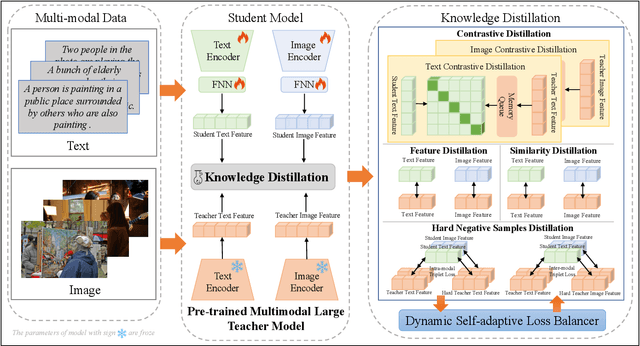
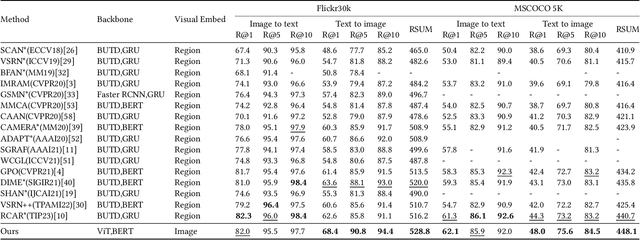
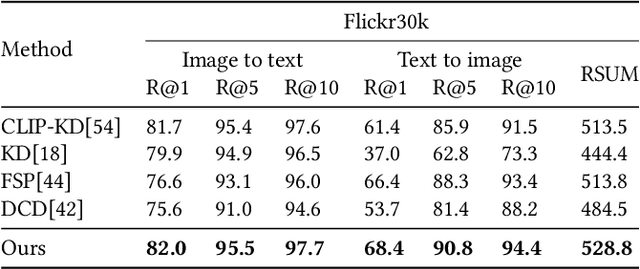
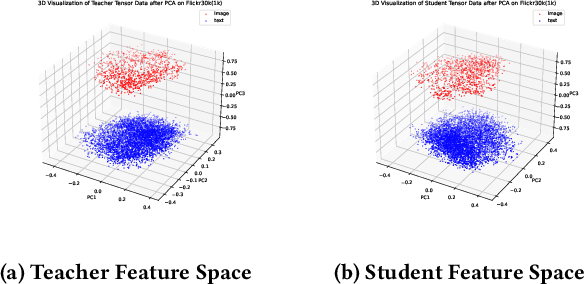
In recent years, pre-trained multimodal large models have attracted widespread attention due to their outstanding performance in various multimodal applications. Nonetheless, the extensive computational resources and vast datasets required for their training present significant hurdles for deployment in environments with limited computational resources. To address this challenge, we propose a novel dynamic self-adaptive multiscale distillation from pre-trained multimodal large model for efficient cross-modal representation learning for the first time. Unlike existing distillation methods, our strategy employs a multiscale perspective, enabling the extraction structural knowledge across from the pre-trained multimodal large model. Ensuring that the student model inherits a comprehensive and nuanced understanding of the teacher knowledge. To optimize each distillation loss in a balanced and efficient manner, we propose a dynamic self-adaptive distillation loss balancer, a novel component eliminating the need for manual loss weight adjustments and dynamically balances each loss item during the distillation process. Our methodology streamlines pre-trained multimodal large models using only their output features and original image-level information, requiring minimal computational resources. This efficient approach is suited for various applications and allows the deployment of advanced multimodal technologies even in resource-limited settings. Extensive experiments has demonstrated that our method maintains high performance while significantly reducing model complexity and training costs. Moreover, our distilled student model utilizes only image-level information to achieve state-of-the-art performance on cross-modal retrieval tasks, surpassing previous methods that relied on region-level information.
Improving Expressive Power of Spectral Graph Neural Networks with Eigenvalue Correction
Jan 28, 2024In recent years, spectral graph neural networks, characterized by polynomial filters, have garnered increasing attention and have achieved remarkable performance in tasks such as node classification. These models typically assume that eigenvalues for the normalized Laplacian matrix are distinct from each other, thus expecting a polynomial filter to have a high fitting ability. However, this paper empirically observes that normalized Laplacian matrices frequently possess repeated eigenvalues. Moreover, we theoretically establish that the number of distinguishable eigenvalues plays a pivotal role in determining the expressive power of spectral graph neural networks. In light of this observation, we propose an eigenvalue correction strategy that can free polynomial filters from the constraints of repeated eigenvalue inputs. Concretely, the proposed eigenvalue correction strategy enhances the uniform distribution of eigenvalues, thus mitigating repeated eigenvalues, and improving the fitting capacity and expressive power of polynomial filters. Extensive experimental results on both synthetic and real-world datasets demonstrate the superiority of our method.
Topic model based on co-occurrence word networks for unbalanced short text datasets
Nov 05, 2023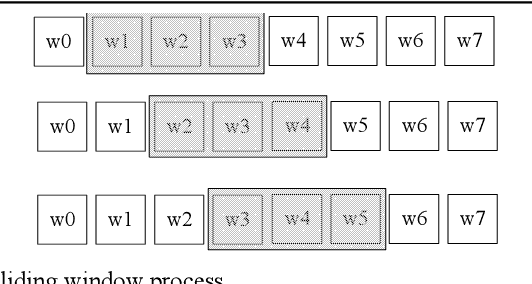
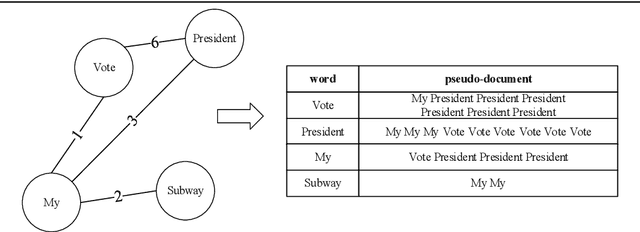
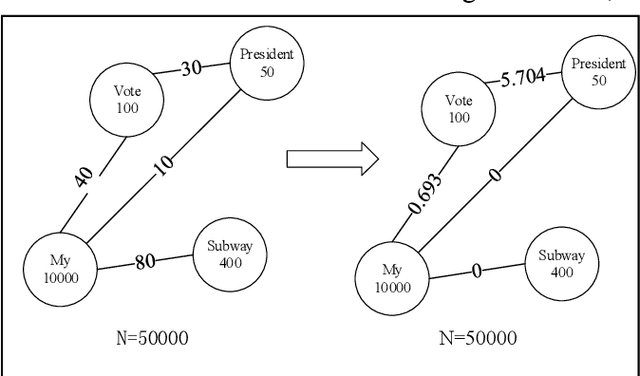
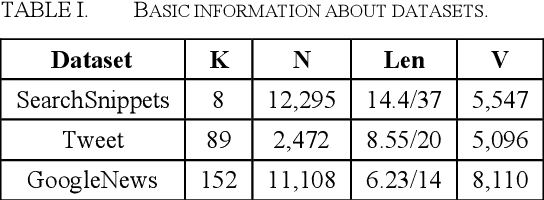
We propose a straightforward solution for detecting scarce topics in unbalanced short-text datasets. Our approach, named CWUTM (Topic model based on co-occurrence word networks for unbalanced short text datasets), Our approach addresses the challenge of sparse and unbalanced short text topics by mitigating the effects of incidental word co-occurrence. This allows our model to prioritize the identification of scarce topics (Low-frequency topics). Unlike previous methods, CWUTM leverages co-occurrence word networks to capture the topic distribution of each word, and we enhanced the sensitivity in identifying scarce topics by redefining the calculation of node activity and normalizing the representation of both scarce and abundant topics to some extent. Moreover, CWUTM adopts Gibbs sampling, similar to LDA, making it easily adaptable to various application scenarios. Our extensive experimental validation on unbalanced short-text datasets demonstrates the superiority of CWUTM compared to baseline approaches in discovering scarce topics. According to the experimental results the proposed model is effective in early and accurate detection of emerging topics or unexpected events on social platforms.
Federated Topic Model and Model Pruning Based on Variational Autoencoder
Nov 01, 2023Topic modeling has emerged as a valuable tool for discovering patterns and topics within large collections of documents. However, when cross-analysis involves multiple parties, data privacy becomes a critical concern. Federated topic modeling has been developed to address this issue, allowing multiple parties to jointly train models while protecting pri-vacy. However, there are communication and performance challenges in the federated sce-nario. In order to solve the above problems, this paper proposes a method to establish a federated topic model while ensuring the privacy of each node, and use neural network model pruning to accelerate the model, where the client periodically sends the model neu-ron cumulative gradients and model weights to the server, and the server prunes the model. To address different requirements, two different methods are proposed to determine the model pruning rate. The first method involves slow pruning throughout the entire model training process, which has limited acceleration effect on the model training process, but can ensure that the pruned model achieves higher accuracy. This can significantly reduce the model inference time during the inference process. The second strategy is to quickly reach the target pruning rate in the early stage of model training in order to accelerate the model training speed, and then continue to train the model with a smaller model size after reaching the target pruning rate. This approach may lose more useful information but can complete the model training faster. Experimental results show that the federated topic model pruning based on the variational autoencoder proposed in this paper can greatly accelerate the model training speed while ensuring the model's performance.
* 8 pages
Semantic Representation Learning of Scientific Literature based on Adaptive Feature and Graph Neural Network
Nov 01, 2023
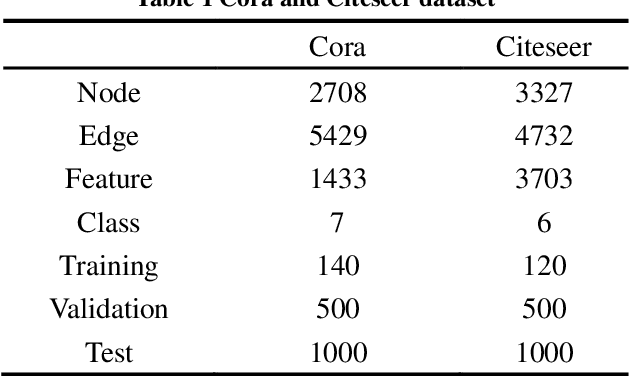

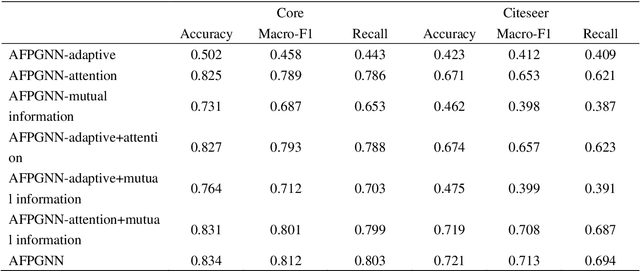
Because most of the scientific literature data is unmarked, it makes semantic representation learning based on unsupervised graph become crucial. At the same time, in order to enrich the features of scientific literature, a learning method of semantic representation of scientific literature based on adaptive features and graph neural network is proposed. By introducing the adaptive feature method, the features of scientific literature are considered globally and locally. The graph attention mechanism is used to sum the features of scientific literature with citation relationship, and give each scientific literature different feature weights, so as to better express the correlation between the features of different scientific literature. In addition, an unsupervised graph neural network semantic representation learning method is proposed. By comparing the mutual information between the positive and negative local semantic representation of scientific literature and the global graph semantic representation in the potential space, the graph neural network can capture the local and global information, thus improving the learning ability of the semantic representation of scientific literature. The experimental results show that the proposed learning method of semantic representation of scientific literature based on adaptive feature and graph neural network is competitive on the basis of scientific literature classification, and has achieved good results.