 Add to Chrome
 Add to Firefox
 Add to Edge
Reliable Narrowband Interference Detection via Backward Conformal Prediction
May 04, 2026
Narrowband interference can severely degrade the performance of WiFi links by concentrating significant power on a small portion of the channel. Machine learning (ML) detectors trained on baseband I/Q samples can identify the affected subcarriers with high accuracy, surpassing model-based detectors that rely on hand-crafted statistics. The predictive probabilities produced by such detectors are, however, typically poorly calibrated, and downstream mitigation modules generally operate under strict resource budgets that limit the number of candidate interference states that can be acted upon. Conformal prediction (CP) provides a distribution-free framework for constructing prediction sets that control the probability of excluding the true output, i.e., the miscoverage level, at a prescribed level. However, this target miscoverage level must be fixed in advance, while the resulting prediction-set size remains uncontrolled, which is misaligned with operationally constrained settings. To address this issue, we develop a backward conformal prediction (BCP) framework in which the prediction-set size is fixed by the operational budget and the corresponding per-input miscoverage level is estimated from calibration data with provable reliability guarantees. We instantiate the framework for narrowband interference detection in WiFi systems and show through simulations that BCP yields reliable miscoverage estimates whose accuracy approaches that of an uncalibrated baseline as the calibration set grows.

Beyond Fixed False Discovery Rates: Post-Hoc Conformal Selection with E-Variables
Apr 13, 2026Conformal selection (CS) uses calibration data to identify test inputs whose unobserved outcomes are likely to satisfy a pre-specified minimal quality requirement, while controlling the false discovery rate (FDR). Existing methods fix the target FDR level before observing data, which prevents the user from adapting the balance between number of selected test inputs and FDR to downstream needs and constraints based on the available data. For example, in genomics or neuroimaging, researchers often inspect the distribution of test statistics, and decide how aggressively to pursue candidates based on observed evidence strength and available follow-up resources. To address this limitation, we introduce {post-hoc CS} (PH-CS), which generates a path of candidate selection sets, each paired with a data-driven false discovery proportion (FDP) estimate. PH-CS lets the user select any operating point on this path by maximizing a user-specified utility, arbitrarily balancing selection size and FDR. Building on conformal e-variables and the e-Benjamini-Hochberg (e-BH) procedure, PH-CS is proved to provide a finite-sample post-hoc reliability guarantee whereby the ratio between estimated FDP level and true FDP is, on average, upper bounded by $1$, so that the average estimated FDP is, to first order, a valid upper bound on the true FDR. PH-CS is extended to control quality defined in terms of a general risk. Experiments on synthetic and real-world datasets demonstrate that, unlike CS, PH-CS can consistently satisfy user-imposed utility constraints while producing reliable FDP estimates and maintaining competitive FDR control.
FUSE-RSVLM: Feature Fusion Vision-Language Model for Remote Sensing
Dec 30, 2025Large vision-language models (VLMs) exhibit strong performance across various tasks. However, these VLMs encounter significant challenges when applied to the remote sensing domain due to the inherent differences between remote sensing images and natural images. Existing remote sensing VLMs often fail to extract fine-grained visual features and suffer from visual forgetting during deep language processing. To address this, we introduce MF-RSVLM, a Multi-Feature Fusion Remote Sensing Vision--Language Model that effectively extracts and fuses visual features for RS understanding. MF-RSVLM learns multi-scale visual representations and combines global context with local details, improving the capture of small and complex structures in RS scenes. A recurrent visual feature injection scheme ensures the language model remains grounded in visual evidence and reduces visual forgetting during generation. Extensive experiments on diverse RS benchmarks show that MF-RSVLM achieves state-of-the-art or highly competitive performance across remote sensing classification, image captioning, and VQA tasks. Our code is publicly available at https://github.com/Yunkaidang/RSVLM.
A Benchmark for Ultra-High-Resolution Remote Sensing MLLMs
Dec 19, 2025Multimodal large language models (MLLMs) demonstrate strong perception and reasoning performance on existing remote sensing (RS) benchmarks. However, most prior benchmarks rely on low-resolution imagery, and some high-resolution benchmarks suffer from flawed reasoning-task designs. We show that text-only LLMs can perform competitively with multimodal vision-language models on RS reasoning tasks without access to images, revealing a critical mismatch between current benchmarks and the intended evaluation of visual understanding. To enable faithful assessment, we introduce RSHR-Bench, a super-high-resolution benchmark for RS visual understanding and reasoning. RSHR-Bench contains 5,329 full-scene images with a long side of at least 4,000 pixels, with up to about 3 x 10^8 pixels per image, sourced from widely used RS corpora and UAV collections. We design four task families: multiple-choice VQA, open-ended VQA, image captioning, and single-image evaluation. These tasks cover nine perception categories and four reasoning types, supporting multi-turn and multi-image dialog. To reduce reliance on language priors, we apply adversarial filtering with strong LLMs followed by rigorous human verification. Overall, we construct 3,864 VQA tasks, 3,913 image captioning tasks, and 500 fully human-written or verified single-image evaluation VQA pairs. Evaluations across open-source, closed-source, and RS-specific VLMs reveal persistent performance gaps in super-high-resolution scenarios. Code: https://github.com/Yunkaidang/RSHR
Conformal Distributed Remote Inference in Sensor Networks Under Reliability and Communication Constraints
Sep 12, 2024


This paper presents communication-constrained distributed conformal risk control (CD-CRC) framework, a novel decision-making framework for sensor networks under communication constraints. Targeting multi-label classification problems, such as segmentation, CD-CRC dynamically adjusts local and global thresholds used to identify significant labels with the goal of ensuring a target false negative rate (FNR), while adhering to communication capacity limits. CD-CRC builds on online exponentiated gradient descent to estimate the relative quality of the observations of different sensors, and on online conformal risk control (CRC) as a mechanism to control local and global thresholds. CD-CRC is proved to offer deterministic worst-case performance guarantees in terms of FNR and communication overhead, while the regret performance in terms of false positive rate (FPR) is characterized as a function of the key hyperparameters. Simulation results highlight the effectiveness of CD-CRC, particularly in communication resource-constrained environments, making it a valuable tool for enhancing the performance and reliability of distributed sensor networks.
Uncertainty, Calibration, and Membership Inference Attacks: An Information-Theoretic Perspective
Feb 16, 2024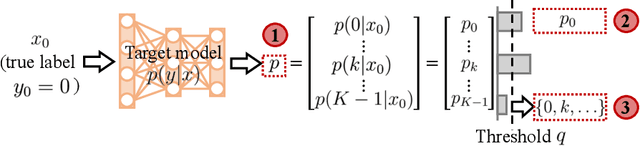
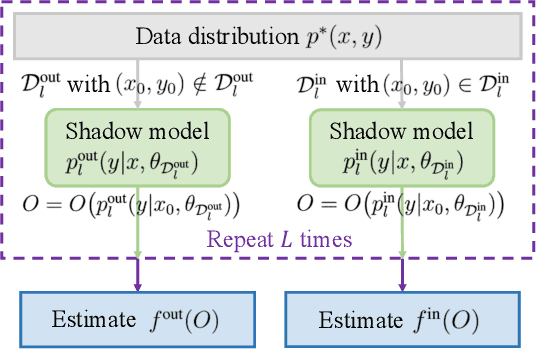
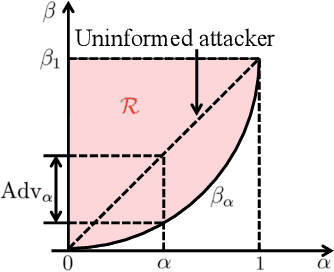
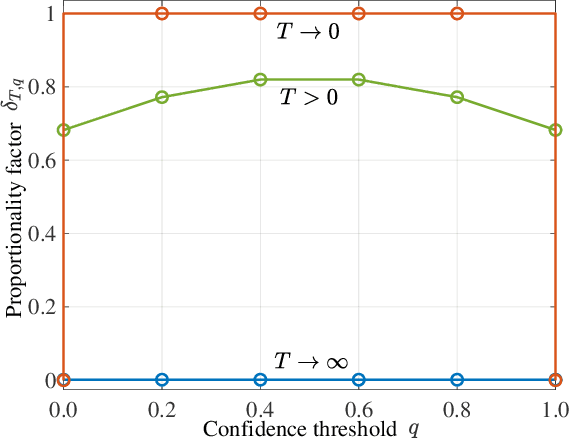
In a membership inference attack (MIA), an attacker exploits the overconfidence exhibited by typical machine learning models to determine whether a specific data point was used to train a target model. In this paper, we analyze the performance of the state-of-the-art likelihood ratio attack (LiRA) within an information-theoretical framework that allows the investigation of the impact of the aleatoric uncertainty in the true data generation process, of the epistemic uncertainty caused by a limited training data set, and of the calibration level of the target model. We compare three different settings, in which the attacker receives decreasingly informative feedback from the target model: confidence vector (CV) disclosure, in which the output probability vector is released; true label confidence (TLC) disclosure, in which only the probability assigned to the true label is made available by the model; and decision set (DS) disclosure, in which an adaptive prediction set is produced as in conformal prediction. We derive bounds on the advantage of an MIA adversary with the aim of offering insights into the impact of uncertainty and calibration on the effectiveness of MIAs. Simulation results demonstrate that the derived analytical bounds predict well the effectiveness of MIAs.
Federated Inference with Reliable Uncertainty Quantification over Wireless Channels via Conformal Prediction
Aug 08, 2023Consider a setting in which devices and a server share a pre-trained model. The server wishes to make an inference on a new input given the model. Devices have access to data, previously not used for training, and can communicate to the server over a common wireless channel. If the devices have no access to the new input, can communication from devices to the server enhance the quality of the inference decision at the server? Recent work has introduced federated conformal prediction (CP), which leverages devices-to-server communication to improve the reliability of the server's decision. With federated CP, devices communicate to the server information about the loss accrued by the shared pre-trained model on the local data, and the server leverages this information to calibrate a decision interval, or set, so that it is guaranteed to contain the correct answer with a pre-defined target reliability level. Previous work assumed noise-free communication, whereby devices can communicate a single real number to the server. In this paper, we study for the first time federated CP in a wireless setting. We introduce a novel protocol, termed wireless federated conformal prediction (WFCP), which builds on type-based multiple access (TBMA) and on a novel quantile correction strategy. WFCP is proved to provide formal reliability guarantees in terms of coverage of the predicted set produced by the server. Using numerical results, we demonstrate the significant advantages of WFCP against digital implementations of existing federated CP schemes, especially in regimes with limited communication resources and/or large number of devices.
Semantics-Aware Remote Estimation via Information Bottleneck-Inspired Type Based Multiple Access
Dec 19, 2022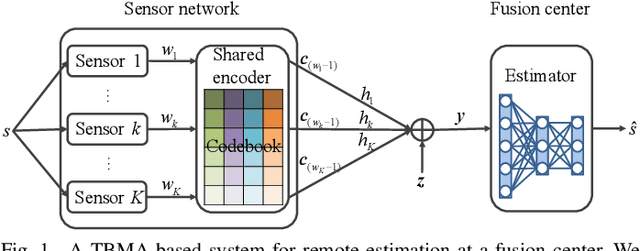
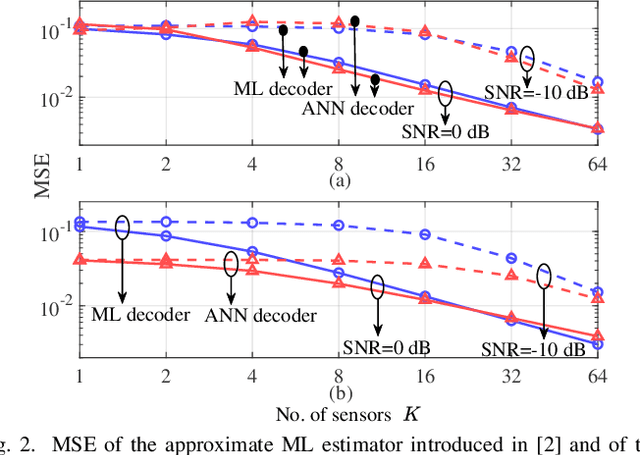

Type-based multiple access (TBMA) is a semantics-aware multiple access protocol for remote inference. In TBMA, codewords are reused across transmitting sensors, with each codeword being assigned to a different observation value. Existing TBMA protocols are based on fixed shared codebooks and on conventional maximum-likelihood or Bayesian decoders, which require knowledge of the distributions of observations and channels. In this letter, we propose a novel design principle for TBMA based on the information bottleneck (IB). In the proposed IB-TBMA protocol, the shared codebook is jointly optimized with a decoder based on artificial neural networks (ANNs), so as to adapt to source, observations, and channel statistics based on data only. We also introduce the Compressed IB-TBMA (CB-TBMA) protocol, which improves IB-TBMA by enabling a reduction in the number of codewords via an IB-inspired clustering phase. Numerical results demonstrate the importance of a joint design of codebook and neural decoder, and validate the benefits of codebook compression.