 Add to Chrome
 Add to Firefox
 Add to Edge
AI Adoption Across a Multinational Workforce: Sociotechnical Conditions for GenAI Acceptance in Human Resources
Jun 16, 2026
Generative AI (GenAI) deployment in the workplace is accelerating rapidly. Nevertheless, questions of who adopts, who benefits, and who is left behind and why are still understudied. In this paper, we investigate these dynamics in the context of a multinational tech company transitioning from a legacy Human Resources (HR) search system to a GenAI-supported system, analyzing search log data, survey data (n=25), and ten semi-structured interviews. Our findings show that adoption depended on the fit between the GenAI system's design assumptions and employees' work positionalities (role, spoken language, tenure). Further, we find that employees' trust in GenAI answers was built through source-checking, comparison among systems, and seeking input from colleagues or HR when in doubt. Our contribution is twofold. First, we provide empirical evidence of workplace GenAI adoption during a live organizational transition, showing that adoption is influenced by factors such as situational fit, search literacy, and trust calibration. It is also further shaped by knowledge conditions such as the system's content quality, employee training, and guidance. Second, we translate these findings into design considerations for inclusive deployment and adoption in high-stakes environments such as HR. We argue that organizations should design systems considering the role and context-sensitive benefits they yield to different social groups. They also need to treat the organizational knowledge infrastructure as AI infrastructure to improve the accountability and usability of GenAI systems

Can AI Agents Synthesize Scientific Conclusions?
Jun 09, 2026Scientific AI agents increasingly retrieve evidence, reason across sources, and synthesize conclusions used in consequential decisions. Yet, their ability to do so in high-stakes domains such as health remains unclear. We introduce SciConBench, a large-scale live benchmark of 9.11K questions and expert-written conclusions from systematic reviews to evaluate open-domain scientific conclusion synthesis. The benchmark draws on an expert-validated automated evaluation pipeline that decomposes conclusions into atomic facts and measures correctness and comprehensiveness via factual precision and recall. To mitigate data leakage, we further introduce SciConHarness, a clean-room evaluation harness that equips agents with controlled web interaction to ensure valid measurement. Evaluating 8 frontier models and deep research agents, we find that factual quality remains low: under clean-room settings, the best agent achieves only a factual F1 of 0.337. Our clean-room setting consistently reduces performance relative to unconstrained evaluation, suggesting that leakage inflates estimates of models' true synthesis capabilities. Finally, we audit consumer-facing agents (e.g., Google AI Overview, OpenEvidence) and find they frequently generate incomplete and sometimes contradictory conclusions, even when the ground-truth answer is available. Overall, our results show that reliable synthesis of scientific conclusions remains an open challenge, and that clean-room evaluation is essential for assessing open-domain AI agents.
The Enforcement and Feasibility of Hate Speech Moderation on Twitter
Apr 14, 2026Online hate speech is associated with substantial social harms, yet it remains unclear how consistently platforms enforce hate speech policies or whether enforcement is feasible at scale. We address these questions through a global audit of hate speech moderation on Twitter (now X). Using a complete 24-hour snapshot of public tweets, we construct representative samples comprising 540,000 tweets annotated for hate speech by trained annotators across eight major languages. Five months after posting, 80% of hateful tweets remain online, including explicitly violent hate speech. Such tweets are no more likely to be removed than non-hateful tweets, with neither severity nor visibility increasing the likelihood of removal. We then examine whether these enforcement gaps reflect technical limits of large-scale moderation systems. While fully automated detection systems cannot reliably identify hate speech without generating large numbers of false positives, they effectively prioritize likely violations for human review. Simulations of a human-AI moderation pipeline indicate that substantially reducing user exposure to hate speech is economically feasible at a cost below existing regulatory penalties. These results suggest that the persistence of online hate cannot be explained by technical constraints alone but also reflects institutional choices in the allocation of moderation resources.
Commercial Persuasion in AI-Mediated Conversations
Apr 05, 2026As Large Language Models (LLMs) become a primary interface between users and the web, companies face growing economic incentives to embed commercial influence into AI-mediated conversations. We present two preregistered experiments (N = 2,012) in which participants selected a book to receive from a large eBook catalog using either a traditional search engine or a conversational LLM agent powered by one of five frontier models. Unbeknownst to participants, a fifth of all products were randomly designated as sponsored and promoted in different ways. We find that LLM-driven persuasion nearly triples the rate at which users select sponsored products compared to traditional search placement (61.2% vs. 22.4%), while the vast majority of participants fail to detect any promotional steering. Explicit "Sponsored" labels do not significantly reduce persuasion, and instructing the model to conceal its intent makes its influence nearly invisible (detection accuracy < 10%). Altogether, our results indicate that conversational AI can covertly redirect consumer choices at scale, and that existing transparency mechanisms may be insufficient to protect users.
The Illusion of Insight in Reasoning Models
Jan 02, 2026Do reasoning models have "Aha!" moments? Prior work suggests that models like DeepSeek-R1-Zero undergo sudden mid-trace realizations that lead to accurate outputs, implying an intrinsic capacity for self-correction. Yet, it remains unclear whether such intrinsic shifts in reasoning strategy actually improve performance. Here, we study mid-reasoning shifts and instrument training runs to detect them. Our analysis spans 1M+ reasoning traces, hundreds of training checkpoints, three reasoning domains, and multiple decoding temperatures and model architectures. We find that reasoning shifts are rare, do not become more frequent with training, and seldom improve accuracy, indicating that they do not correspond to prior perceptions of model insight. However, their effect varies with model uncertainty. Building on this finding, we show that artificially triggering extrinsic shifts under high entropy reliably improves accuracy. Our results show that mid-reasoning shifts are symptoms of unstable inference behavior rather than an intrinsic mechanism for self-correction.
Redefining Research Crowdsourcing: Incorporating Human Feedback with LLM-Powered Digital Twins
May 29, 2025Crowd work platforms like Amazon Mechanical Turk and Prolific are vital for research, yet workers' growing use of generative AI tools poses challenges. Researchers face compromised data validity as AI responses replace authentic human behavior, while workers risk diminished roles as AI automates tasks. To address this, we propose a hybrid framework using digital twins, personalized AI models that emulate workers' behaviors and preferences while keeping humans in the loop. We evaluate our system with an experiment (n=88 crowd workers) and in-depth interviews with crowd workers (n=5) and social science researchers (n=4). Our results suggest that digital twins may enhance productivity and reduce decision fatigue while maintaining response quality. Both researchers and workers emphasized the importance of transparency, ethical data use, and worker agency. By automating repetitive tasks and preserving human engagement for nuanced ones, digital twins may help balance scalability with authenticity.
Economics of Sourcing Human Data
Feb 11, 2025Progress in AI has relied on human-generated data, from annotator marketplaces to the wider Internet. However, the widespread use of large language models now threatens the quality and integrity of human-generated data on these very platforms. We argue that this issue goes beyond the immediate challenge of filtering AI-generated content--it reveals deeper flaws in how data collection systems are designed. Existing systems often prioritize speed, scale, and efficiency at the cost of intrinsic human motivation, leading to declining engagement and data quality. We propose that rethinking data collection systems to align with contributors' intrinsic motivations--rather than relying solely on external incentives--can help sustain high-quality data sourcing at scale while maintaining contributor trust and long-term participation.
Could ChatGPT get an Engineering Degree? Evaluating Higher Education Vulnerability to AI Assistants
Aug 07, 2024
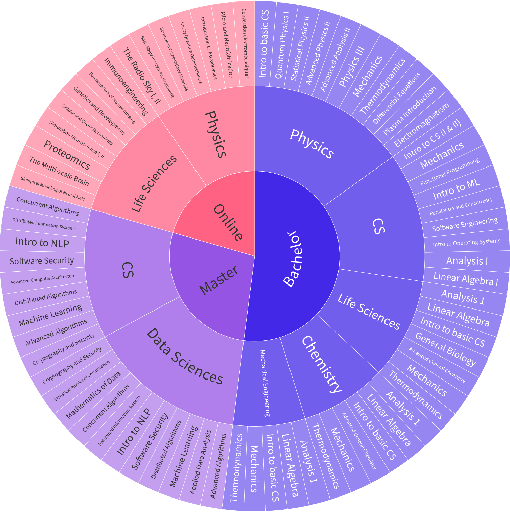

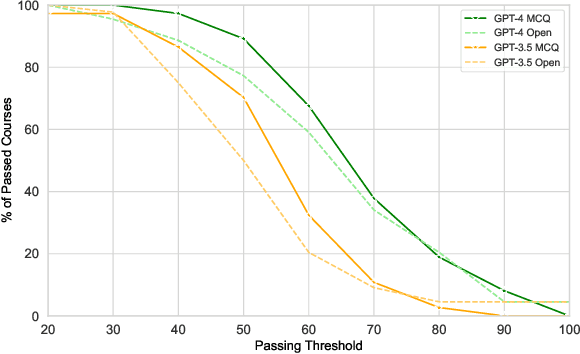
AI assistants are being increasingly used by students enrolled in higher education institutions. While these tools provide opportunities for improved teaching and education, they also pose significant challenges for assessment and learning outcomes. We conceptualize these challenges through the lens of vulnerability, the potential for university assessments and learning outcomes to be impacted by student use of generative AI. We investigate the potential scale of this vulnerability by measuring the degree to which AI assistants can complete assessment questions in standard university-level STEM courses. Specifically, we compile a novel dataset of textual assessment questions from 50 courses at EPFL and evaluate whether two AI assistants, GPT-3.5 and GPT-4 can adequately answer these questions. We use eight prompting strategies to produce responses and find that GPT-4 answers an average of 65.8% of questions correctly, and can even produce the correct answer across at least one prompting strategy for 85.1% of questions. When grouping courses in our dataset by degree program, these systems already pass non-project assessments of large numbers of core courses in various degree programs, posing risks to higher education accreditation that will be amplified as these models improve. Our results call for revising program-level assessment design in higher education in light of advances in generative AI.
Can Language Models Recognize Convincing Arguments?
Mar 31, 2024


The remarkable and ever-increasing capabilities of Large Language Models (LLMs) have raised concerns about their potential misuse for creating personalized, convincing misinformation and propaganda. To gain insights into LLMs' persuasive capabilities without directly engaging in experimentation with humans, we propose studying their performance on the related task of detecting convincing arguments. We extend a dataset by Durmus & Cardie (2018) with debates, votes, and user traits and propose tasks measuring LLMs' ability to (1) distinguish between strong and weak arguments, (2) predict stances based on beliefs and demographic characteristics, and (3) determine the appeal of an argument to an individual based on their traits. We show that LLMs perform on par with humans in these tasks and that combining predictions from different LLMs yields significant performance gains, even surpassing human performance. The data and code released with this paper contribute to the crucial ongoing effort of continuously evaluating and monitoring the rapidly evolving capabilities and potential impact of LLMs.
Prevalence and prevention of large language model use in crowd work
Oct 24, 2023
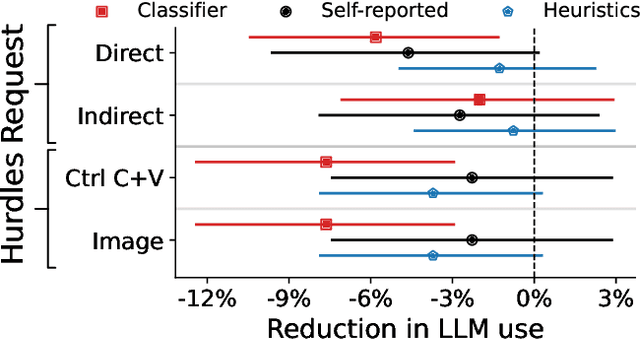
We show that the use of large language models (LLMs) is prevalent among crowd workers, and that targeted mitigation strategies can significantly reduce, but not eliminate, LLM use. On a text summarization task where workers were not directed in any way regarding their LLM use, the estimated prevalence of LLM use was around 30%, but was reduced by about half by asking workers to not use LLMs and by raising the cost of using them, e.g., by disabling copy-pasting. Secondary analyses give further insight into LLM use and its prevention: LLM use yields high-quality but homogeneous responses, which may harm research concerned with human (rather than model) behavior and degrade future models trained with crowdsourced data. At the same time, preventing LLM use may be at odds with obtaining high-quality responses; e.g., when requesting workers not to use LLMs, summaries contained fewer keywords carrying essential information. Our estimates will likely change as LLMs increase in popularity or capabilities, and as norms around their usage change. Yet, understanding the co-evolution of LLM-based tools and users is key to maintaining the validity of research done using crowdsourcing, and we provide a critical baseline before widespread adoption ensues.