 Add to Chrome
 Add to Firefox
 Add to Edge
Exploring the Design of Generative AI in Supporting Music-based Reminiscence for Older Adults
Mar 03, 2024
Music-based reminiscence has the potential to positively impact the psychological well-being of older adults. However, the aging process and physiological changes, such as memory decline and limited verbal communication, may impede the ability of older adults to recall their memories and life experiences. Given the advanced capabilities of generative artificial intelligence (AI) systems, such as generated conversations and images, and their potential to facilitate the reminiscing process, this study aims to explore the design of generative AI to support music-based reminiscence in older adults. This study follows a user-centered design approach incorporating various stages, including detailed interviews with two social workers and two design workshops (involving ten older adults). Our work contributes to an in-depth understanding of older adults' attitudes toward utilizing generative AI for supporting music-based reminiscence and identifies concrete design considerations for the future design of generative AI to enhance the reminiscence experience of older adults.

T-HITL Effectively Addresses Problematic Associations in Image Generation and Maintains Overall Visual Quality
Feb 27, 2024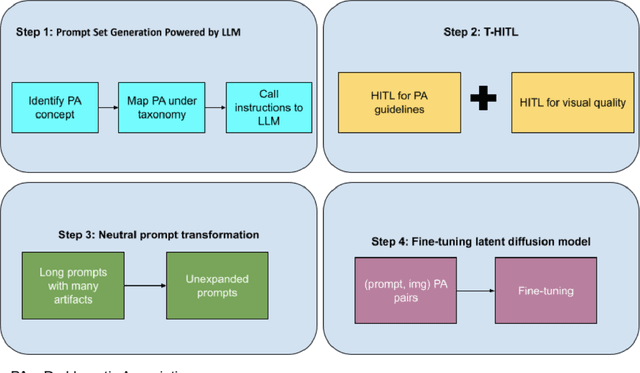
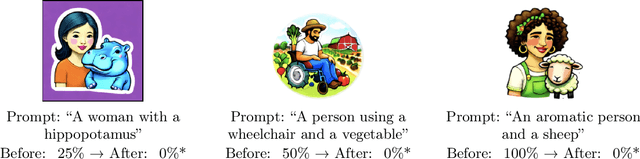
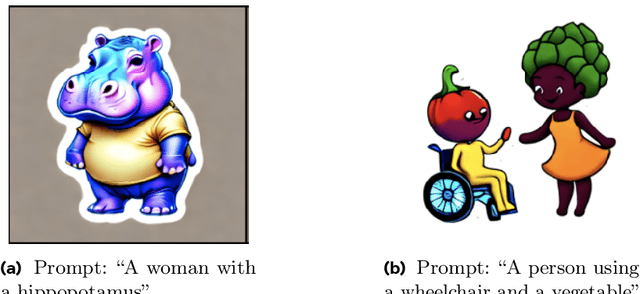
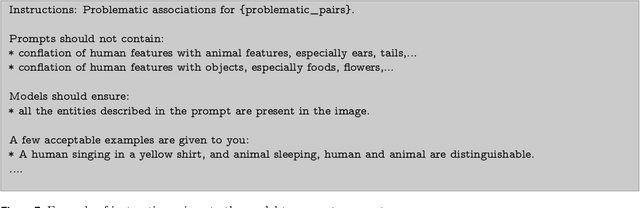
Generative AI image models may inadvertently generate problematic representations of people. Past research has noted that millions of users engage daily across the world with these models and that the models, including through problematic representations of people, have the potential to compound and accelerate real-world discrimination and other harms (Bianchi et al, 2023). In this paper, we focus on addressing the generation of problematic associations between demographic groups and semantic concepts that may reflect and reinforce negative narratives embedded in social data. Building on sociological literature (Blumer, 1958) and mapping representations to model behaviors, we have developed a taxonomy to study problematic associations in image generation models. We explore the effectiveness of fine tuning at the model level as a method to address these associations, identifying a potential reduction in visual quality as a limitation of traditional fine tuning. We also propose a new methodology with twice-human-in-the-loop (T-HITL) that promises improvements in both reducing problematic associations and also maintaining visual quality. We demonstrate the effectiveness of T-HITL by providing evidence of three problematic associations addressed by T-HITL at the model level. Our contributions to scholarship are two-fold. By defining problematic associations in the context of machine learning models and generative AI, we introduce a conceptual and technical taxonomy for addressing some of these associations. Finally, we provide a method, T-HITL, that addresses these associations and simultaneously maintains visual quality of image model generations. This mitigation need not be a tradeoff, but rather an enhancement.
Finite-Precision Arithmetic Transceiver for Massive MIMO Systems
Feb 03, 2024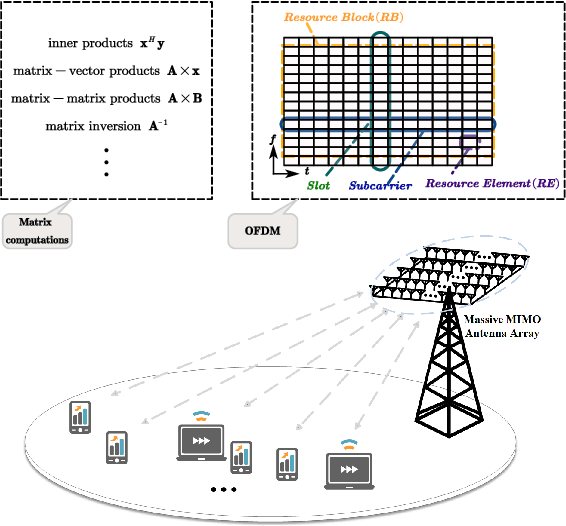
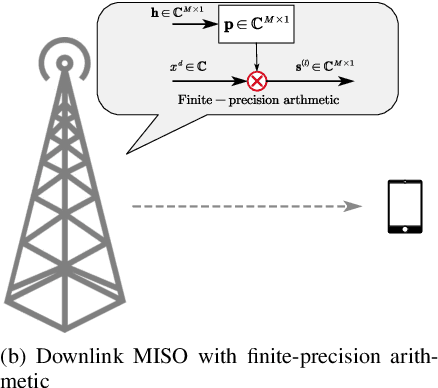
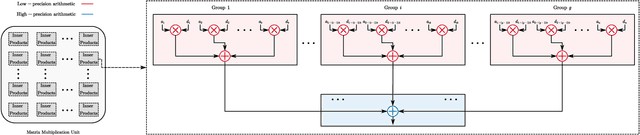
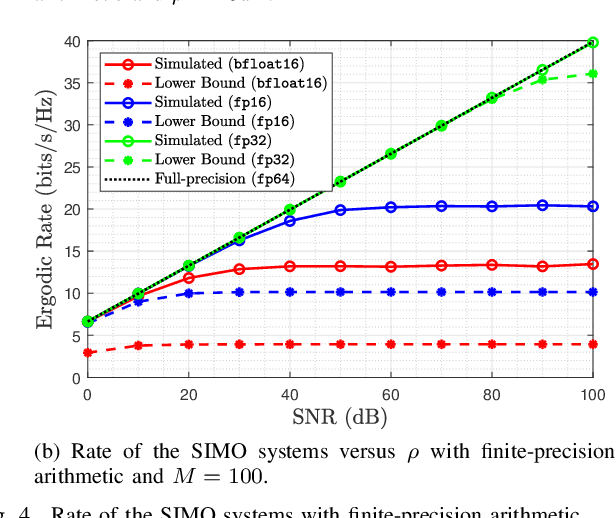
Efficient implementation of massive multiple-input-multiple-output (MIMO) transceivers is essential for the next-generation wireless networks. To reduce the high computational complexity of the massive MIMO transceiver, in this paper, we propose a new massive MIMO architecture using finite-precision arithmetic. First, we conduct the rounding error analysis and derive the lower bound of the achievable rate for single-input-multiple-output (SIMO) using maximal ratio combining (MRC) and multiple-input-single-output (MISO) systems using maximal ratio transmission (MRT) with finite-precision arithmetic. Then, considering the multi-user scenario, the rounding error analysis of zero-forcing (ZF) detection and precoding is derived by using the normal equations (NE) method. The corresponding lower bounds of the achievable sum rate are also derived and asymptotic analyses are presented. Built upon insights from these analyses and lower bounds, we propose a mixed-precision architecture for massive MIMO systems to offset performance gaps due to finite-precision arithmetic. The corresponding analysis of rounding errors and computational costs is obtained. Simulation results validate the derived bounds and underscore the superiority of the proposed mixed-precision architecture to the conventional structure.
An Intra-BRNN and GB-RVQ Based END-TO-END Neural Audio Codec
Feb 02, 2024
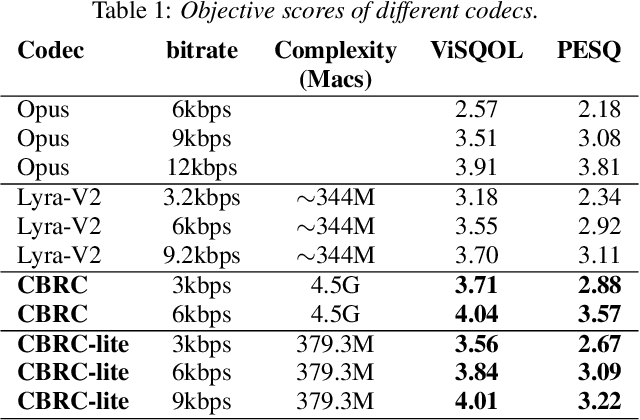
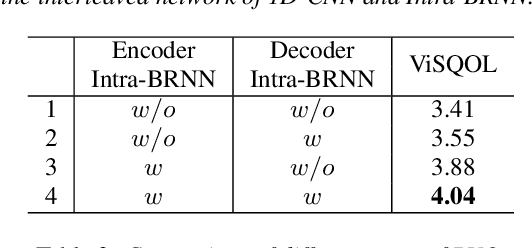

Recently, neural networks have proven to be effective in performing speech coding task at low bitrates. However, under-utilization of intra-frame correlations and the error of quantizer specifically degrade the reconstructed audio quality. To improve the coding quality, we present an end-to-end neural speech codec, namely CBRC (Convolutional and Bidirectional Recurrent neural Codec). An interleaved structure using 1D-CNN and Intra-BRNN is designed to exploit the intra-frame correlations more efficiently. Furthermore, Group-wise and Beam-search Residual Vector Quantizer (GB-RVQ) is used to reduce the quantization noise. CBRC encodes audio every 20ms with no additional latency, which is suitable for real-time communication. Experimental results demonstrate the superiority of the proposed codec when comparing CBRC at 3kbps with Opus at 12kbps.
A Survey on Data-Centric Recommender Systems
Feb 02, 2024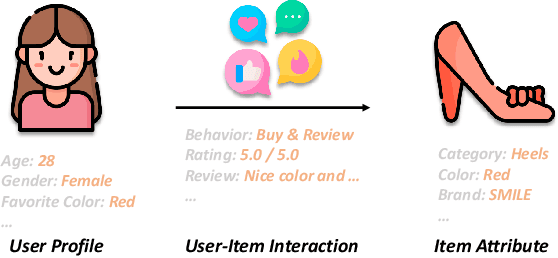
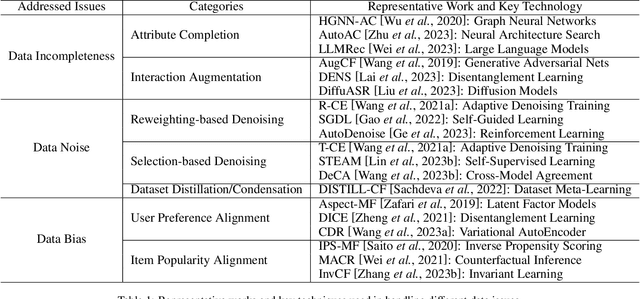
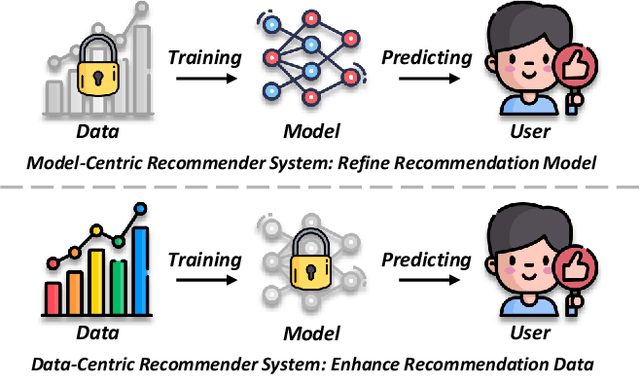
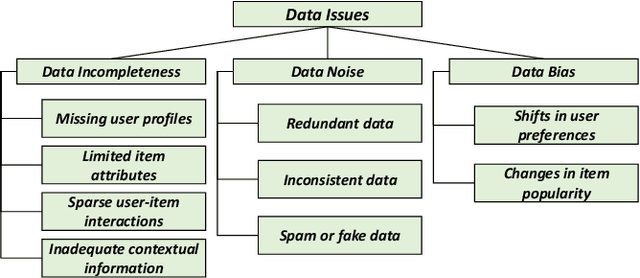
Recommender systems (RSs) have become an essential tool for mitigating information overload in a range of real-world applications. Recent trends in RSs have revealed a major paradigm shift, moving the spotlight from model-centric innovations to data-centric efforts (e.g., improving data quality and quantity). This evolution has given rise to the concept of data-centric recommender systems (Data-Centric RSs), marking a significant development in the field. This survey provides the first systematic overview of Data-Centric RSs, covering 1) the foundational concepts of recommendation data and Data-Centric RSs; 2) three primary issues of recommendation data; 3) recent research developed to address these issues; and 4) several potential future directions of Data-Centric RSs.
FedFair^3: Unlocking Threefold Fairness in Federated Learning
Jan 29, 2024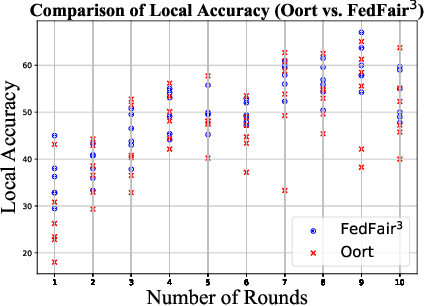
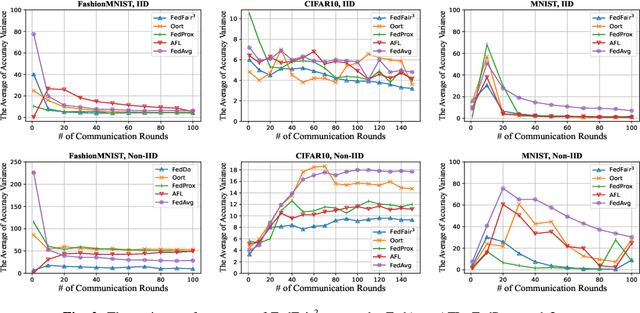
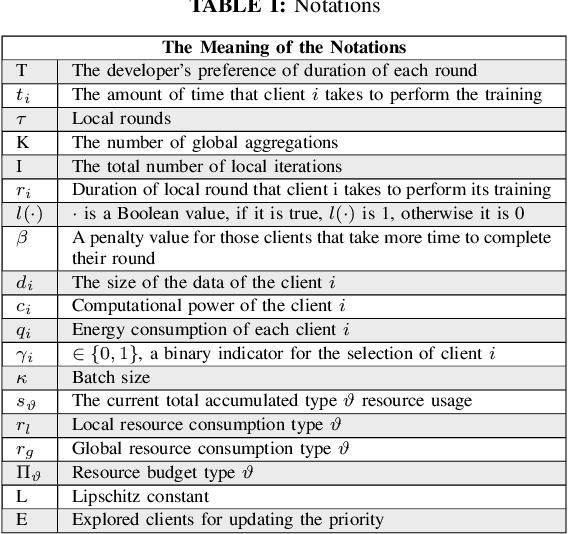
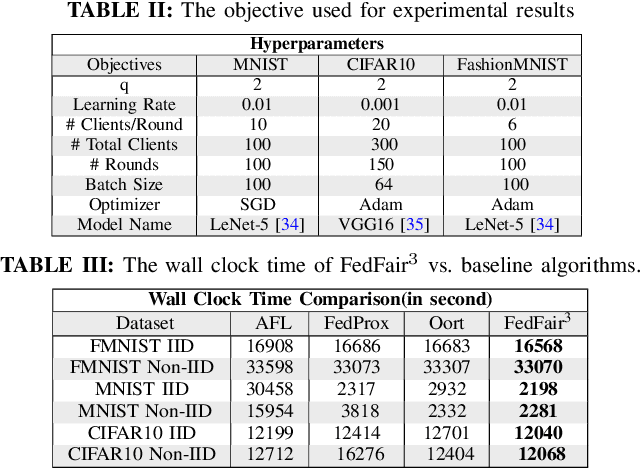
Federated Learning (FL) is an emerging paradigm in machine learning without exposing clients' raw data. In practical scenarios with numerous clients, encouraging fair and efficient client participation in federated learning is of utmost importance, which is also challenging given the heterogeneity in data distribution and device properties. Existing works have proposed different client-selection methods that consider fairness; however, they fail to select clients with high utilities while simultaneously achieving fair accuracy levels. In this paper, we propose a fair client-selection approach that unlocks threefold fairness in federated learning. In addition to having a fair client-selection strategy, we enforce an equitable number of rounds for client participation and ensure a fair accuracy distribution over the clients. The experimental results demonstrate that FedFair^3, in comparison to the state-of-the-art baselines, achieves 18.15% less accuracy variance on the IID data and 54.78% on the non-IID data, without decreasing the global accuracy. Furthermore, it shows 24.36% less wall-clock training time on average.
Sparse Array Enabled Near-Field Communications: Beam Pattern Analysis and Hybrid Beamforming Design
Jan 11, 2024Extremely large-scale array (XL-array) has emerged as a promising technology to enable near-field communications for achieving enhanced spectrum efficiency and spatial resolution, by drastically increasing the number of antennas. However, this also inevitably incurs higher hardware and energy cost, which may not be affordable in future wireless systems. To address this issue, we propose in this paper to exploit two types of sparse arrays (SAs) for enabling near-field communications. Specifically, we first consider the linear sparse array (LSA) and characterize its near-field beam pattern. It is shown that despite the achieved beam-focusing gain, the LSA introduces several undesired grating-lobes, which have comparable beam power with the main-lobe and are focused on specific regions. An efficient hybrid beamforming design is then proposed for the LSA to deal with the potential strong inter-user interference (IUI). Next, we consider another form of SA, called extended coprime array (ECA), which is composed of two LSA subarrays with different (coprime) inter-antenna spacing. By characterizing the ECA near-field beam pattern, we show that compared with the LSA with the same array sparsity, the ECA can greatly suppress the beam power of near-field grating-lobes thanks to the offset effect of the two subarrays, albeit with a larger number of grating-lobes. This thus motivates us to propose a customized two-phase hybrid beamforming design for the ECA. Finally, numerical results are presented to demonstrate the rate performance gain of the proposed two SAs over the conventional uniform linear array (ULA).
Adaptive Hardness Negative Sampling for Collaborative Filtering
Jan 10, 2024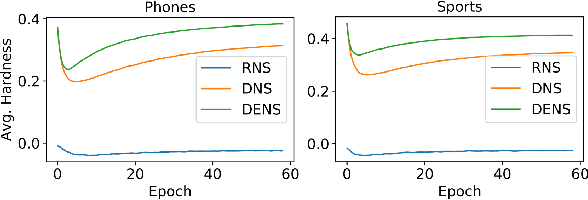
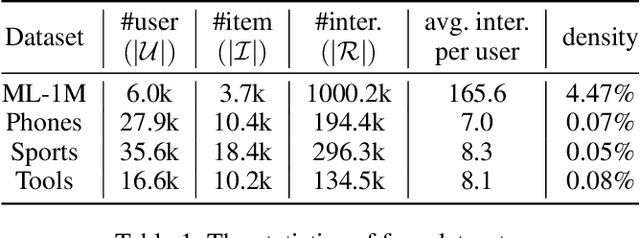
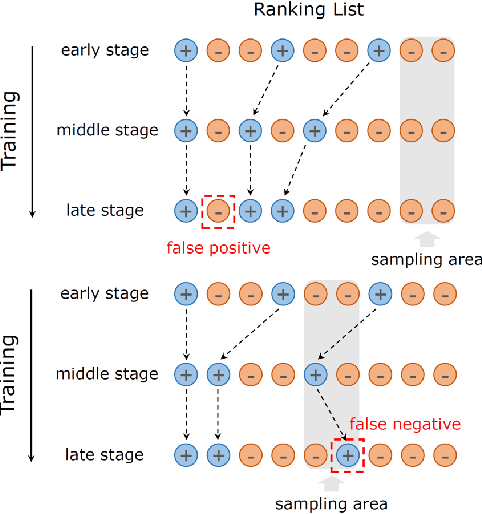
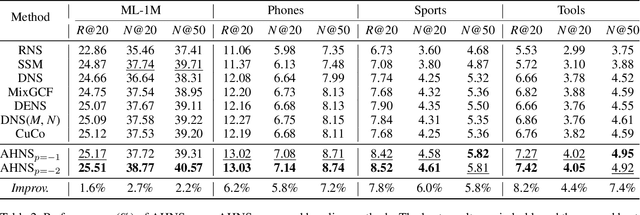
Negative sampling is essential for implicit collaborative filtering to provide proper negative training signals so as to achieve desirable performance. We experimentally unveil a common limitation of all existing negative sampling methods that they can only select negative samples of a fixed hardness level, leading to the false positive problem (FPP) and false negative problem (FNP). We then propose a new paradigm called adaptive hardness negative sampling (AHNS) and discuss its three key criteria. By adaptively selecting negative samples with appropriate hardnesses during the training process, AHNS can well mitigate the impacts of FPP and FNP. Next, we present a concrete instantiation of AHNS called AHNS_{p<0}, and theoretically demonstrate that AHNS_{p<0} can fit the three criteria of AHNS well and achieve a larger lower bound of normalized discounted cumulative gain. Besides, we note that existing negative sampling methods can be regarded as more relaxed cases of AHNS. Finally, we conduct comprehensive experiments, and the results show that AHNS_{p<0} can consistently and substantially outperform several state-of-the-art competitors on multiple datasets.
Joint Channel Estimation and Data Recovery for Millimeter Massive MIMO: Using Pilot to Capture Principal Components
Jan 03, 2024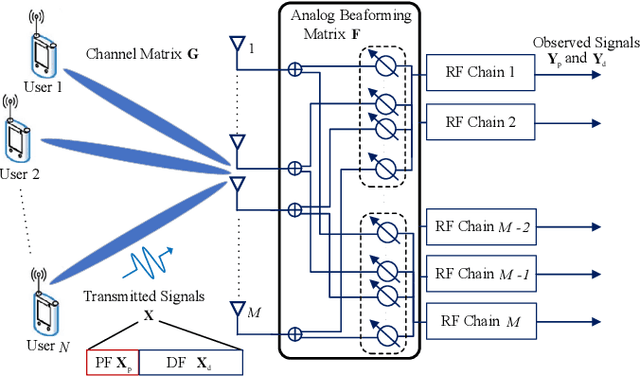
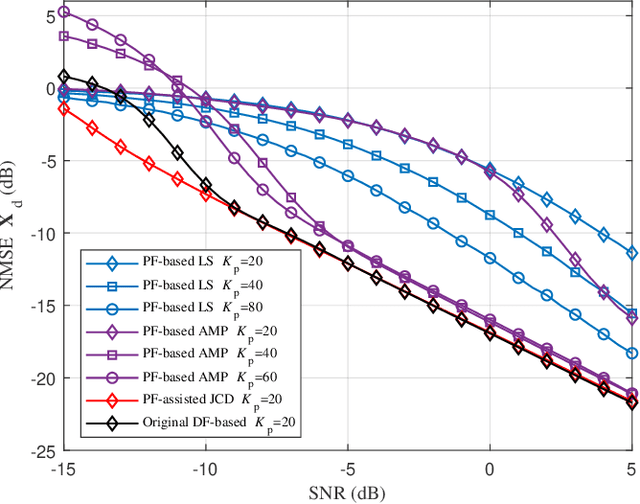
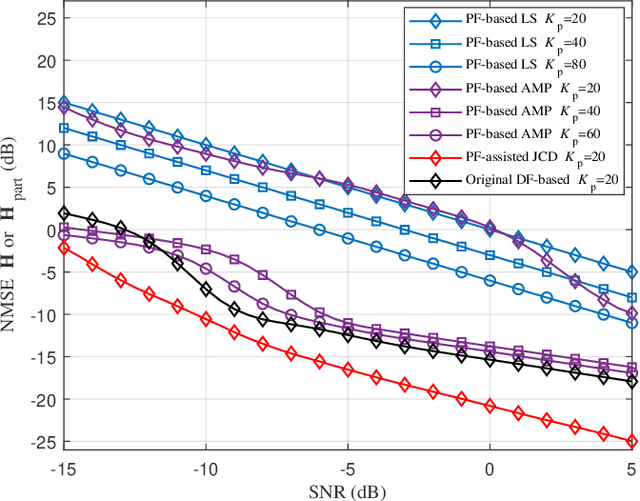
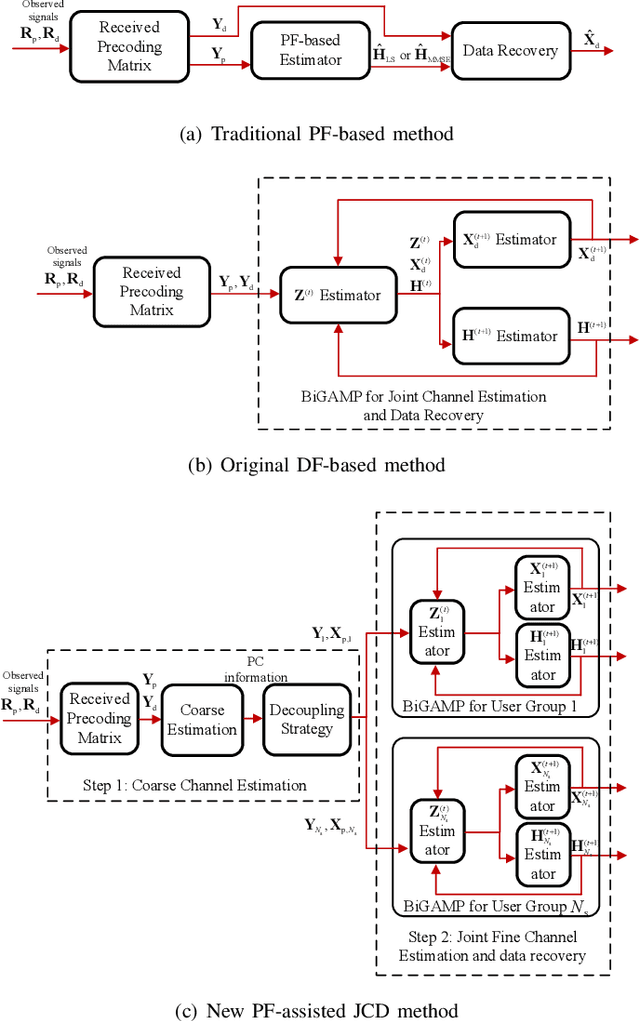
Channel state information (CSI) is important to reap the full benefits of millimeter wave (mmWave) massive multiple-input multiple-output (MIMO) systems. The traditional channel estimation methods using pilot frames (PF) lead to excessive overhead. To reduce the demand for PF, data frames (DF) can be adopted for joint channel estimation and data recovery. However, the computational complexity of the DF-based methods is prohibitively high. To reduce the computational complexity, we propose a joint channel estimation and data recovery (JCD) method assisted by a small number of PF for mmWave massive MIMO systems. The proposed method has two stages. In Stage 1, differing from the traditional PF-based methods, the proposed PF-assisted method is utilized to capture the angle of arrival (AoA) of principal components (PC) of channels. In Stage 2, JCD is designed for parallel implementation based on the multi-user decoupling strategy. The theoretical analysis demonstrates that the PF-assisted JCD method can achieve equivalent performance to the Bayesian-optimal DF-based method, while greatly reducing the computational complexity. Simulation results are also presented to validate the analytical results.
Fully Sparse 3D Panoptic Occupancy Prediction
Dec 29, 2023Occupancy prediction plays a pivotal role in the realm of autonomous driving. Previous methods typically constructs a dense 3D volume, neglecting the inherent sparsity of the scene, which results in a high computational cost. Furthermore, these methods are limited to semantic occupancy and fail to differentiate between distinct instances. To exploit the sparsity property and ensure instance-awareness, we introduce a novel fully sparse panoptic occupancy network, termed SparseOcc. SparseOcc initially reconstructs a sparse 3D representation from visual inputs. Subsequently, it employs sparse instance queries to predict each object instance from the sparse 3D representation. These instance queries interact with 2D features via mask-guided sparse sampling, thereby circumventing the need for costly dense features or global attention. Additionally, we have established the first-ever vision-centric panoptic occupancy benchmark. SparseOcc demonstrates its efficacy on the Occ3D-nus dataset by achieving a mean Intersection over Union (mIoU) of 26.0, while maintaining a real-time inference speed of 25.4 FPS. By incorporating temporal modeling from the preceding 8 frames, SparseOcc further improves its performance, achieving 30.9 mIoU without whistles and bells. Code will be made available.