 Add to Chrome
 Add to Firefox
 Add to Edge
MedMAP: Promoting Incomplete Multi-modal Brain Tumor Segmentation with Alignment
Aug 18, 2024
Brain tumor segmentation is often based on multiple magnetic resonance imaging (MRI). However, in clinical practice, certain modalities of MRI may be missing, which presents a more difficult scenario. To cope with this challenge, Knowledge Distillation, Domain Adaption, and Shared Latent Space have emerged as commonly promising strategies. However, recent efforts typically overlook the modality gaps and thus fail to learn important invariant feature representations across different modalities. Such drawback consequently leads to limited performance for missing modality models. To ameliorate these problems, pre-trained models are used in natural visual segmentation tasks to minimize the gaps. However, promising pre-trained models are often unavailable in medical image segmentation tasks. Along this line, in this paper, we propose a novel paradigm that aligns latent features of involved modalities to a well-defined distribution anchor as the substitution of the pre-trained model}. As a major contribution, we prove that our novel training paradigm ensures a tight evidence lower bound, thus theoretically certifying its effectiveness. Extensive experiments on different backbones validate that the proposed paradigm can enable invariant feature representations and produce models with narrowed modality gaps. Models with our alignment paradigm show their superior performance on both BraTS2018 and BraTS2020 datasets.

Is Your Model Really A Good Math Reasoner? Evaluating Mathematical Reasoning with Checklist
Jul 11, 2024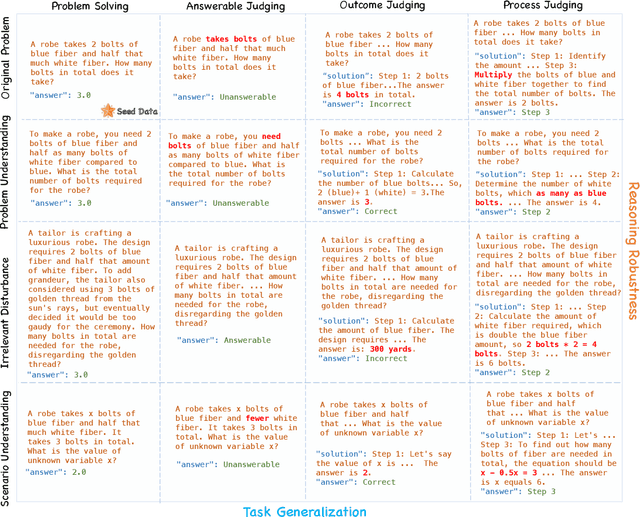
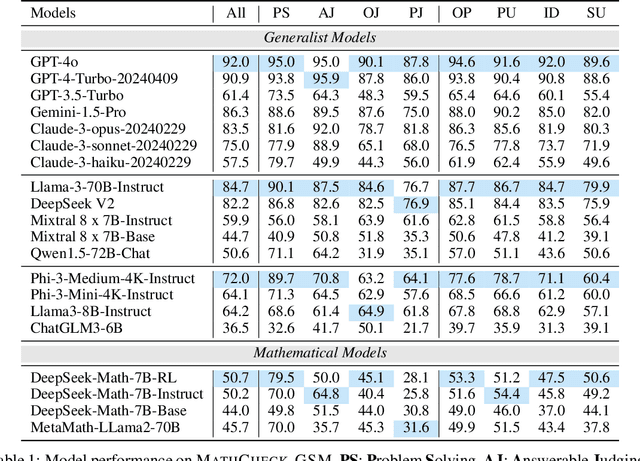

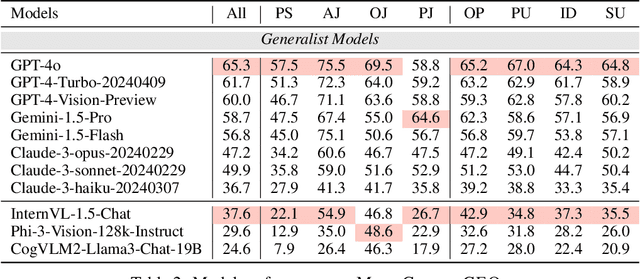
Exceptional mathematical reasoning ability is one of the key features that demonstrate the power of large language models (LLMs). How to comprehensively define and evaluate the mathematical abilities of LLMs, and even reflect the user experience in real-world scenarios, has emerged as a critical issue. Current benchmarks predominantly concentrate on problem-solving capabilities, which presents a substantial risk of model overfitting and fails to accurately represent genuine mathematical reasoning abilities. In this paper, we argue that if a model really understands a problem, it should be robustly and readily applied across a diverse array of tasks. Motivated by this, we introduce MATHCHECK, a well-designed checklist for testing task generalization and reasoning robustness, as well as an automatic tool to generate checklists efficiently. MATHCHECK includes multiple mathematical reasoning tasks and robustness test types to facilitate a comprehensive evaluation of both mathematical reasoning ability and behavior testing. Utilizing MATHCHECK, we develop MATHCHECK-GSM and MATHCHECK-GEO to assess mathematical textual reasoning and multi-modal reasoning capabilities, respectively, serving as upgraded versions of benchmarks including GSM8k, GeoQA, UniGeo, and Geometry3K. We adopt MATHCHECK-GSM and MATHCHECK-GEO to evaluate over 20 LLMs and 11 MLLMs, assessing their comprehensive mathematical reasoning abilities. Our results demonstrate that while frontier LLMs like GPT-4o continue to excel in various abilities on the checklist, many other model families exhibit a significant decline. Further experiments indicate that, compared to traditional math benchmarks, MATHCHECK better reflects true mathematical abilities and represents mathematical intelligence more linearly, thereby supporting our design. On our MATHCHECK, we can easily conduct detailed behavior analysis to deeply investigate models.
W-Net: One-Shot Arbitrary-Style Chinese Character Generation with Deep Neural Networks
Jun 10, 2024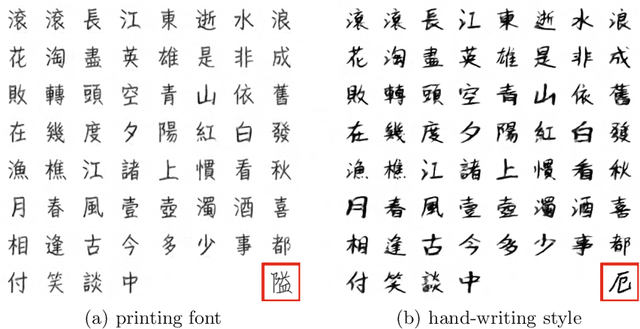
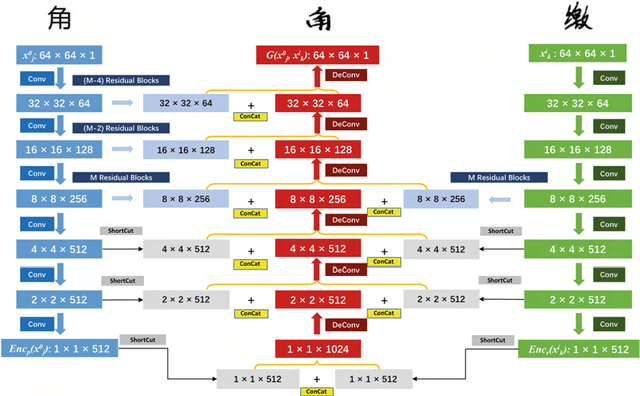
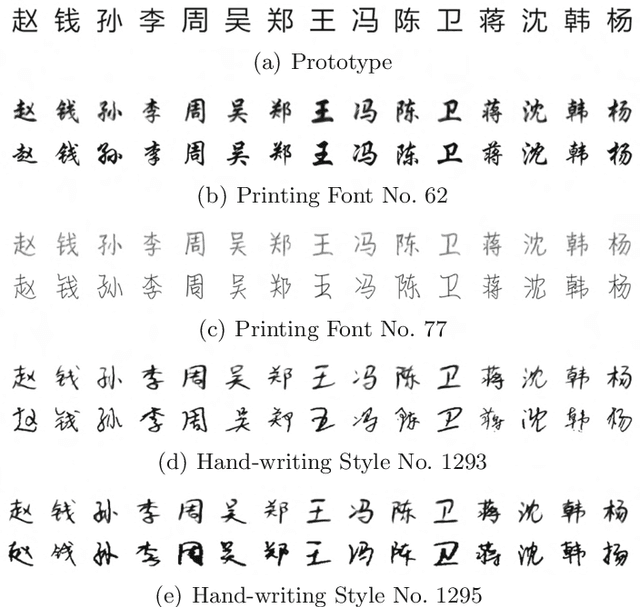
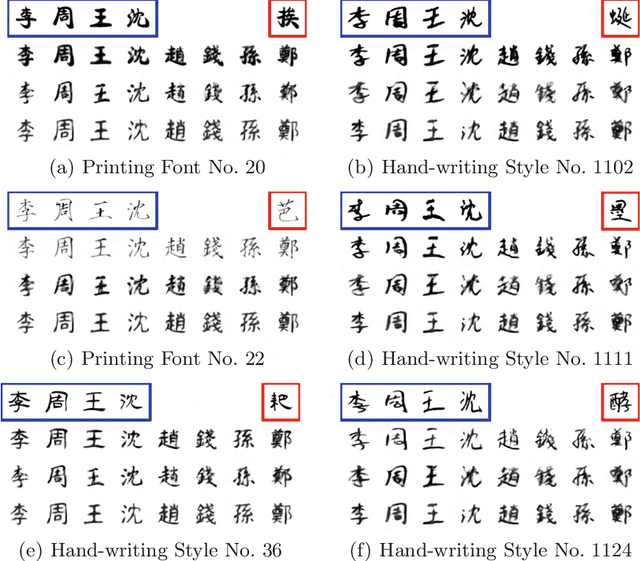
Due to the huge category number, the sophisticated combinations of various strokes and radicals, and the free writing or printing styles, generating Chinese characters with diverse styles is always considered as a difficult task. In this paper, an efficient and generalized deep framework, namely, the W-Net, is introduced for the one-shot arbitrary-style Chinese character generation task. Specifically, given a single character (one-shot) with a specific style (e.g., a printed font or hand-writing style), the proposed W-Net model is capable of learning and generating any arbitrary characters sharing the style similar to the given single character. Such appealing property was rarely seen in the literature. We have compared the proposed W-Net framework to many other competitive methods. Experimental results showed the proposed method is significantly superior in the one-shot setting.
Generalized W-Net: Arbitrary-style Chinese Character Synthesization
Jun 10, 2024Synthesizing Chinese characters with consistent style using few stylized examples is challenging. Existing models struggle to generate arbitrary style characters with limited examples. In this paper, we propose the Generalized W-Net, a novel class of W-shaped architectures that addresses this. By incorporating Adaptive Instance Normalization and introducing multi-content, our approach can synthesize Chinese characters in any desired style, even with limited examples. It handles seen and unseen styles during training and can generate new character contents. Experimental results demonstrate the effectiveness of our approach.
Exploring Data Efficiency in Zero-Shot Learning with Diffusion Models
Jun 05, 2024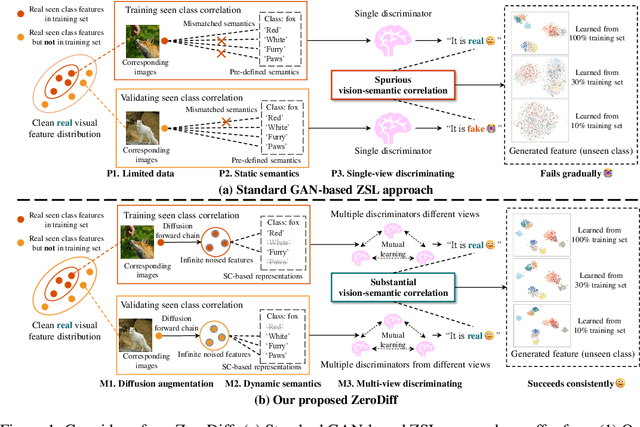
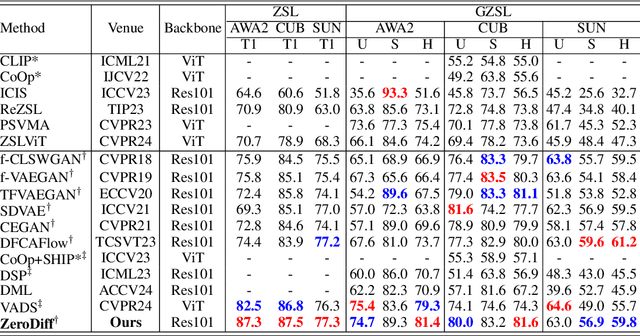
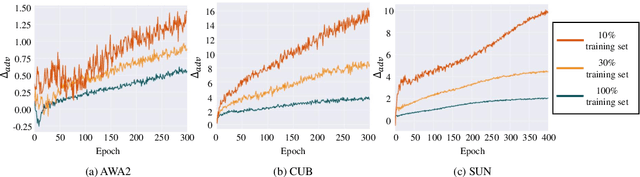
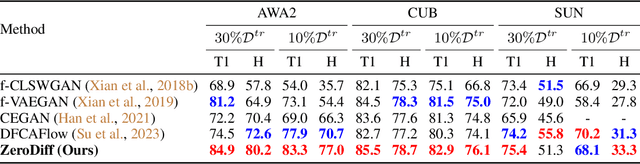
Zero-Shot Learning (ZSL) aims to enable classifiers to identify unseen classes by enhancing data efficiency at the class level. This is achieved by generating image features from pre-defined semantics of unseen classes. However, most current approaches heavily depend on the number of samples from seen classes, i.e. they do not consider instance-level effectiveness. In this paper, we demonstrate that limited seen examples generally result in deteriorated performance of generative models. To overcome these challenges, we propose ZeroDiff, a Diffusion-based Generative ZSL model. This unified framework incorporates diffusion models to improve data efficiency at both the class and instance levels. Specifically, for instance-level effectiveness, ZeroDiff utilizes a forward diffusion chain to transform limited data into an expanded set of noised data. For class-level effectiveness, we design a two-branch generation structure that consists of a Diffusion-based Feature Generator (DFG) and a Diffusion-based Representation Generator (DRG). DFG focuses on learning and sampling the distribution of cross-entropy-based features, whilst DRG learns the supervised contrastive-based representation to boost the zero-shot capabilities of DFG. Additionally, we employ three discriminators to evaluate generated features from various aspects and introduce a Wasserstein-distance-based mutual learning loss to transfer knowledge among discriminators, thereby enhancing guidance for generation. Demonstrated through extensive experiments on three popular ZSL benchmarks, our ZeroDiff not only achieves significant improvements over existing ZSL methods but also maintains robust performance even with scarce training data. Code will be released upon acceptance.
Revisiting Mutual Information Maximization for Generalized Category Discovery
May 31, 2024Generalized category discovery presents a challenge in a realistic scenario, which requires the model's generalization ability to recognize unlabeled samples from known and unknown categories. This paper revisits the challenge of generalized category discovery through the lens of information maximization (InfoMax) with a probabilistic parametric classifier. Our findings reveal that ensuring independence between known and unknown classes while concurrently assuming a uniform probability distribution across all classes, yields an enlarged margin among known and unknown classes that promotes the model's performance. To achieve the aforementioned independence, we propose a novel InfoMax-based method, Regularized Parametric InfoMax (RPIM), which adopts pseudo labels to supervise unlabeled samples during InfoMax, while proposing a regularization to ensure the quality of the pseudo labels. Additionally, we introduce novel semantic-bias transformation to refine the features from the pre-trained model instead of direct fine-tuning to rescue the computational costs. Extensive experiments on six benchmark datasets validate the effectiveness of our method. RPIM significantly improves the performance regarding unknown classes, surpassing the state-of-the-art method by an average margin of 3.5%.
SCMix: Stochastic Compound Mixing for Open Compound Domain Adaptation in Semantic Segmentation
May 23, 2024Open compound domain adaptation (OCDA) aims to transfer knowledge from a labeled source domain to a mix of unlabeled homogeneous compound target domains while generalizing to open unseen domains. Existing OCDA methods solve the intra-domain gaps by a divide-and-conquer strategy, which divides the problem into several individual and parallel domain adaptation (DA) tasks. Such approaches often contain multiple sub-networks or stages, which may constrain the model's performance. In this work, starting from the general DA theory, we establish the generalization bound for the setting of OCDA. Built upon this, we argue that conventional OCDA approaches may substantially underestimate the inherent variance inside the compound target domains for model generalization. We subsequently present Stochastic Compound Mixing (SCMix), an augmentation strategy with the primary objective of mitigating the divergence between source and mixed target distributions. We provide theoretical analysis to substantiate the superiority of SCMix and prove that the previous methods are sub-groups of our methods. Extensive experiments show that our method attains a lower empirical risk on OCDA semantic segmentation tasks, thus supporting our theories. Combining the transformer architecture, SCMix achieves a notable performance boost compared to the SoTA results.
DKE-Research at SemEval-2024 Task 2: Incorporating Data Augmentation with Generative Models and Biomedical Knowledge to Enhance Inference Robustness
Apr 14, 2024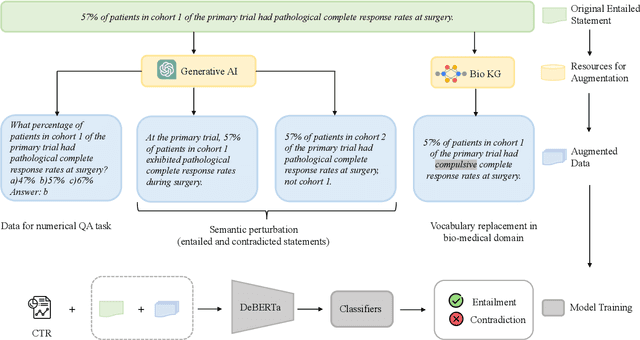
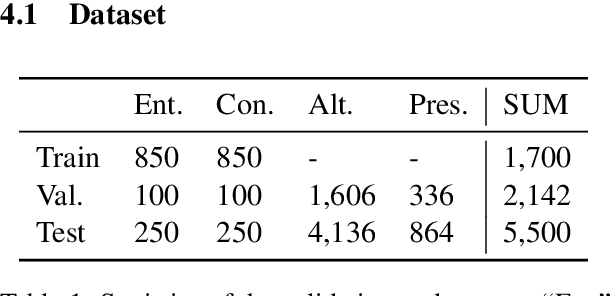
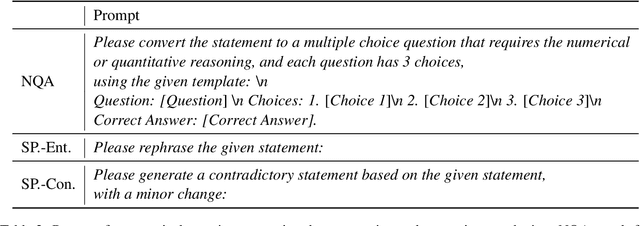
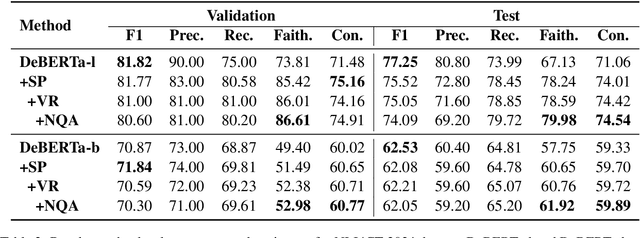
Safe and reliable natural language inference is critical for extracting insights from clinical trial reports but poses challenges due to biases in large pre-trained language models. This paper presents a novel data augmentation technique to improve model robustness for biomedical natural language inference in clinical trials. By generating synthetic examples through semantic perturbations and domain-specific vocabulary replacement and adding a new task for numerical and quantitative reasoning, we introduce greater diversity and reduce shortcut learning. Our approach, combined with multi-task learning and the DeBERTa architecture, achieved significant performance gains on the NLI4CT 2024 benchmark compared to the original language models. Ablation studies validate the contribution of each augmentation method in improving robustness. Our best-performing model ranked 12th in terms of faithfulness and 8th in terms of consistency, respectively, out of the 32 participants.
Rethinking Information Loss in Medical Image Segmentation with Various-sized Targets
Mar 28, 2024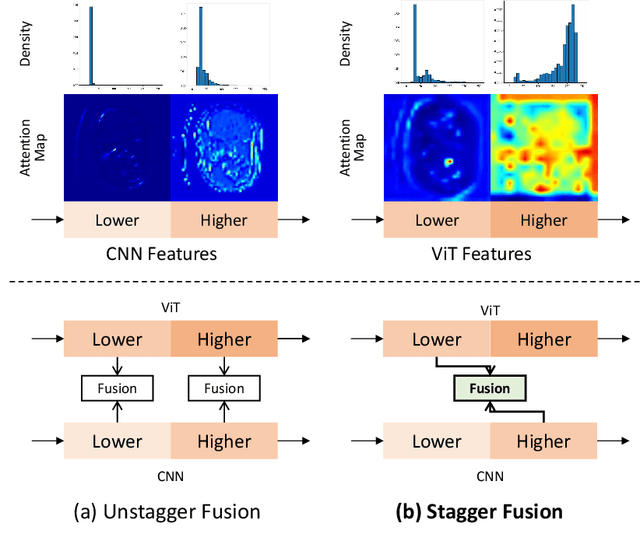
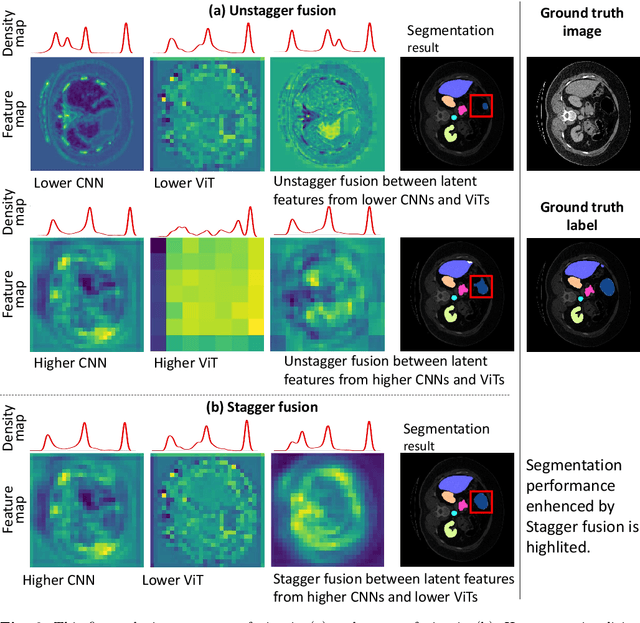
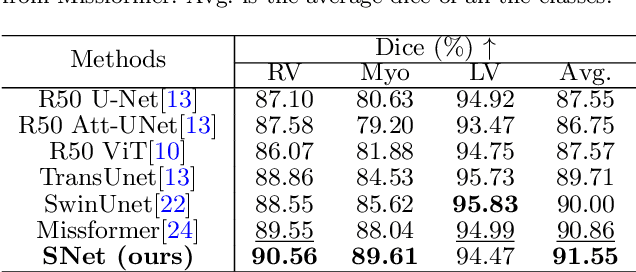
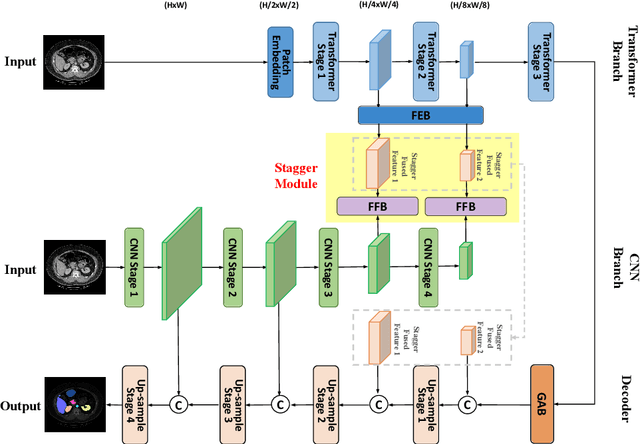
Medical image segmentation presents the challenge of segmenting various-size targets, demanding the model to effectively capture both local and global information. Despite recent efforts using CNNs and ViTs to predict annotations of different scales, these approaches often struggle to effectively balance the detection of targets across varying sizes. Simply utilizing local information from CNNs and global relationships from ViTs without considering potential significant divergence in latent feature distributions may result in substantial information loss. To address this issue, in this paper, we will introduce a novel Stagger Network (SNet) and argues that a well-designed fusion structure can mitigate the divergence in latent feature distributions between CNNs and ViTs, thereby reducing information loss. Specifically, to emphasize both global dependencies and local focus, we design a Parallel Module to bridge the semantic gap. Meanwhile, we propose the Stagger Module, trying to fuse the selected features that are more semantically similar. An Information Recovery Module is further adopted to recover complementary information back to the network. As a key contribution, we theoretically analyze that the proposed parallel and stagger strategies would lead to less information loss, thus certifying the SNet's rationale. Experimental results clearly proved that the proposed SNet excels comparisons with recent SOTAs in segmenting on the Synapse dataset where targets are in various sizes. Besides, it also demonstrates superiority on the ACDC and the MoNuSeg datasets where targets are with more consistent dimensions.
Rethinking Multi-domain Generalization with A General Learning Objective
Feb 29, 2024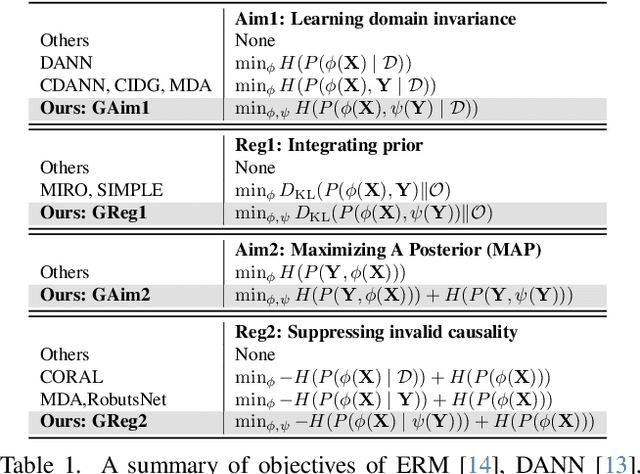
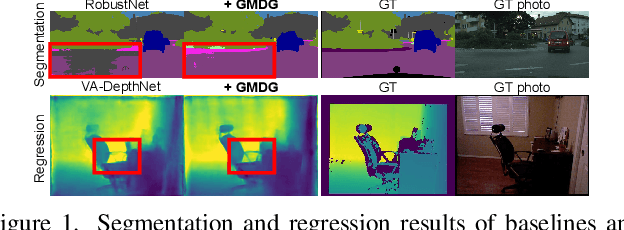
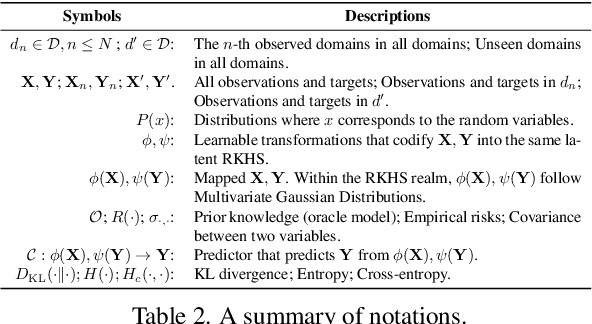

Multi-domain generalization (mDG) is universally aimed to minimize the discrepancy between training and testing distributions to enhance marginal-to-label distribution mapping. However, existing mDG literature lacks a general learning objective paradigm and often imposes constraints on static target marginal distributions. In this paper, we propose to leverage a $Y$-mapping to relax the constraint. We rethink the learning objective for mDG and design a new \textbf{general learning objective} to interpret and analyze most existing mDG wisdom. This general objective is bifurcated into two synergistic amis: learning domain-independent conditional features and maximizing a posterior. Explorations also extend to two effective regularization terms that incorporate prior information and suppress invalid causality, alleviating the issues that come with relaxed constraints. We theoretically contribute an upper bound for the domain alignment of domain-independent conditional features, disclosing that many previous mDG endeavors actually \textbf{optimize partially the objective} and thus lead to limited performance. As such, our study distills a general learning objective into four practical components, providing a general, robust, and flexible mechanism to handle complex domain shifts. Extensive empirical results indicate that the proposed objective with $Y$-mapping leads to substantially better mDG performance in various downstream tasks, including regression, segmentation, and classification.