 Add to Chrome
 Add to Firefox
 Add to Edge
SciOrch: Learning to Orchestrate Expert LLMs for Solving Frontier Multimodal Scientific Reasoning Tasks
Jun 14, 2026
Frontier scientific reasoning remains a major challenge for large language models (LLMs), where even the strongest commercial systems fall short of expert-level performance. A closer look at model behavior reveals substantial complementarity that single-model evaluation hides: different frontier models excel on different question types, and no single model captures the full picture. We present SciOrch, a framework that trains a lightweight 8B model to orchestrate frontier LLMs for scientific reasoning. The orchestrator decomposes each question, delegates sub-problems to selected commercial models through API calls, and synthesizes a final answer. Training such an orchestrator is fundamentally harder than conventional agentic RL: each action triggers an API call that is expensive in both dollar cost and latency, making standard online rollouts infeasible. We address this with MCTS-based approach, producing diverse orchestration trajectories, extracting per-node single-turn samples, and optimizing the orchestrator with GRPO-style training. On a 240-question test set spanning SGI-Reasoning and Scientists' First Exam, SciOrch reaches 56.66% average accuracy, outperforming the strongest single commercial model by 3.74% and the strongest multi-agent baseline by 3.33%. It also attains the best accuracy on both SGI and SFE with less than half the API cost of typical multi-agent methods.

Patho-R1: A Multimodal Reinforcement Learning-Based Pathology Expert Reasoner
May 16, 2025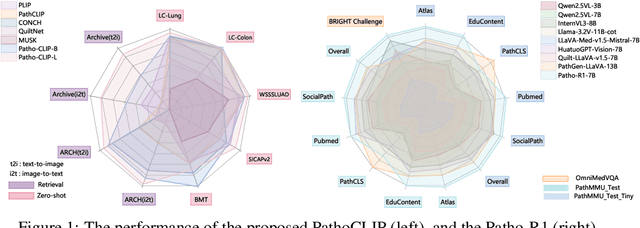
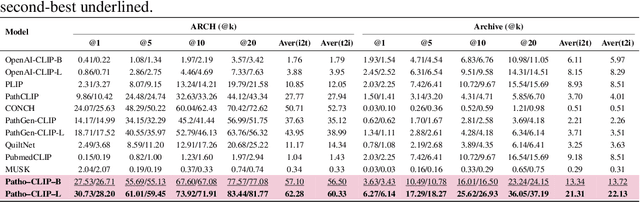
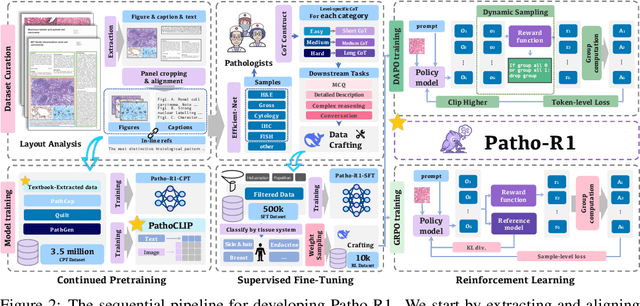
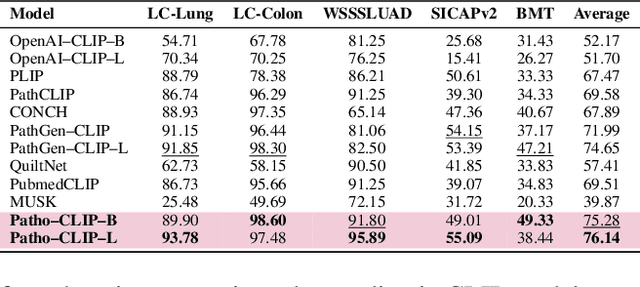
Recent advances in vision language models (VLMs) have enabled broad progress in the general medical field. However, pathology still remains a more challenging subdomain, with current pathology specific VLMs exhibiting limitations in both diagnostic accuracy and reasoning plausibility. Such shortcomings are largely attributable to the nature of current pathology datasets, which are primarily composed of image description pairs that lack the depth and structured diagnostic paradigms employed by real world pathologists. In this study, we leverage pathology textbooks and real world pathology experts to construct high-quality, reasoning-oriented datasets. Building on this, we introduce Patho-R1, a multimodal RL-based pathology Reasoner, trained through a three-stage pipeline: (1) continued pretraining on 3.5 million image-text pairs for knowledge infusion; (2) supervised fine-tuning on 500k high-quality Chain-of-Thought samples for reasoning incentivizing; (3) reinforcement learning using Group Relative Policy Optimization and Decoupled Clip and Dynamic sAmpling Policy Optimization strategies for multimodal reasoning quality refinement. To further assess the alignment quality of our dataset, we propose PathoCLIP, trained on the same figure-caption corpus used for continued pretraining. Comprehensive experimental results demonstrate that both PathoCLIP and Patho-R1 achieve robust performance across a wide range of pathology-related tasks, including zero-shot classification, cross-modal retrieval, Visual Question Answering, and Multiple Choice Question. Our project is available at the Patho-R1 repository: https://github.com/Wenchuan-Zhang/Patho-R1.