 Add to Chrome
 Add to Firefox
 Add to Edge
Fast and Accurate Probing of In-Training LLMs' Downstream Performances
Apr 01, 2026
The paradigm of scaling Large Language Models (LLMs) in both parameter size and test time has pushed the boundaries of AI capabilities, but at the cost of making the traditional generative evaluation paradigm prohibitively expensive, therefore making the latency of LLM's in-training downstream performance evaluation unbearable. However, simple metrics like training loss (perplexity) are not always correlated with downstream performance, as sometimes their trends diverge from the actual task outcomes. This dilemma calls for a method that is computationally efficient and sufficiently accurate in measuring model capabilities. To address this challenge, we introduce a new in-training evaluation paradigm that uses a lightweight probe for monitoring downstream performance. The probes take the internal representations of LLM checkpoints (during training) as input and directly predict the checkpoint's performance on downstream tasks measured by success probability (i.e., pass@1). We design several probe architectures, validating their effectiveness using the OLMo3-7B's checkpoints across a diverse set of downstream tasks. The probes can accurately predict a checkpoint's performance (with avg. AUROC$>$0.75), have decent generalizability across checkpoints (earlier predicts later), and reduce the computation latency from $\sim$1 hr (using conventional generative evaluation method) to $\sim$3 min. In sum, this work presents a practical and scalable in-training downstream evaluation paradigm, enabling a more agile, informed, and efficient LLM development process.

Is AI Robust Enough for Scientific Research?
Dec 19, 2024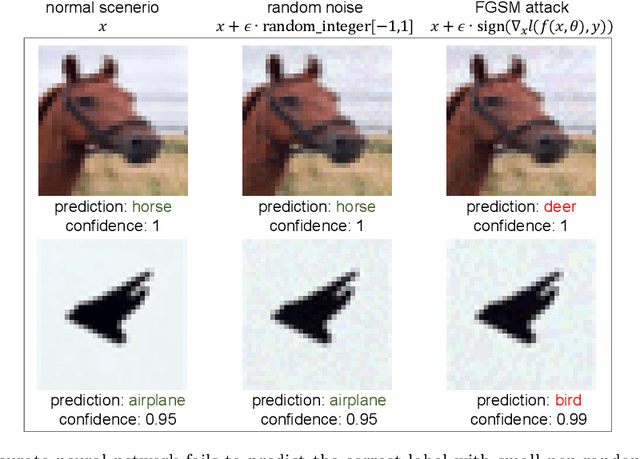
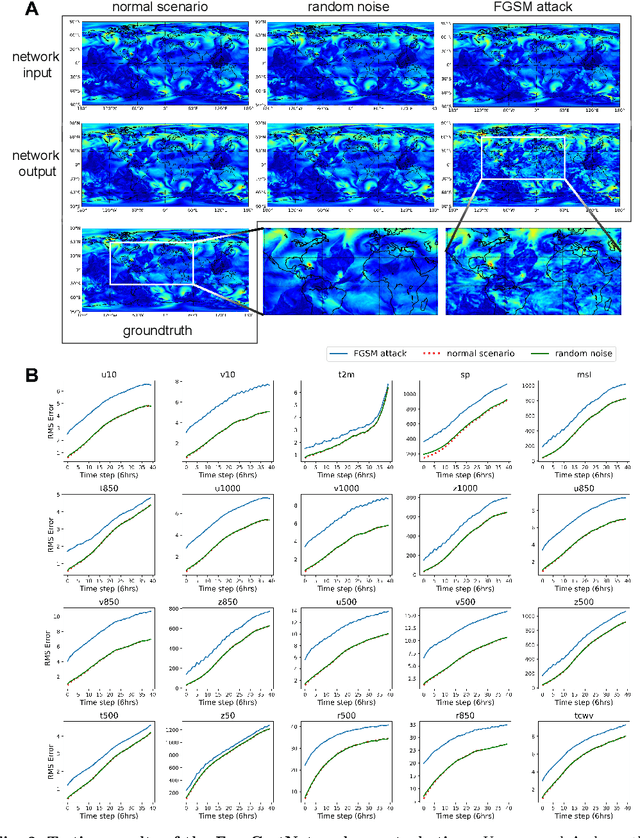
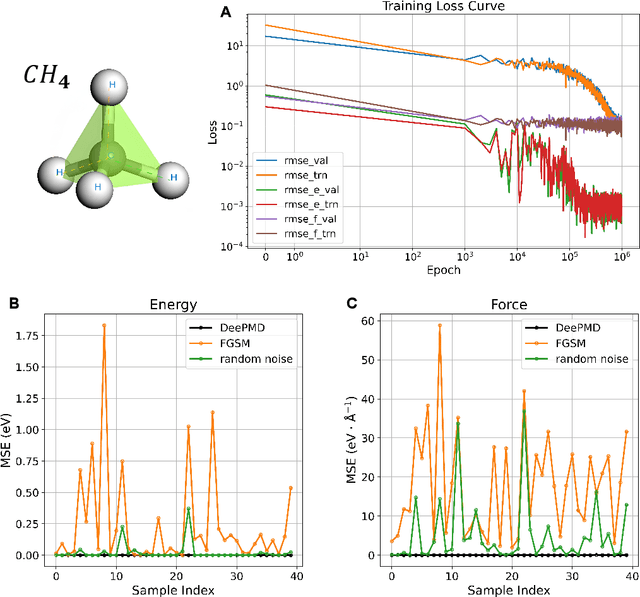

We uncover a phenomenon largely overlooked by the scientific community utilizing AI: neural networks exhibit high susceptibility to minute perturbations, resulting in significant deviations in their outputs. Through an analysis of five diverse application areas -- weather forecasting, chemical energy and force calculations, fluid dynamics, quantum chromodynamics, and wireless communication -- we demonstrate that this vulnerability is a broad and general characteristic of AI systems. This revelation exposes a hidden risk in relying on neural networks for essential scientific computations, calling further studies on their reliability and security.
GrokLST: Towards High-Resolution Benchmark and Toolkit for Land Surface Temperature Downscaling
Sep 30, 2024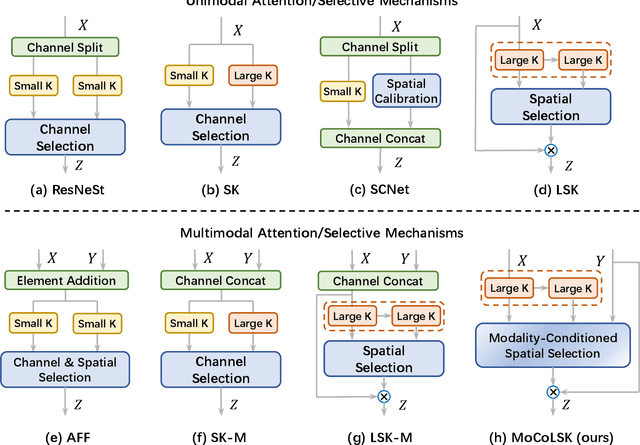


Land Surface Temperature (LST) is a critical parameter for environmental studies, but obtaining high-resolution LST data remains challenging due to the spatio-temporal trade-off in satellite remote sensing. Guided LST downscaling has emerged as a solution, but current methods often neglect spatial non-stationarity and lack a open-source ecosystem for deep learning methods. To address these limitations, we propose the Modality-Conditional Large Selective Kernel (MoCoLSK) Networks, a novel architecture that dynamically fuses multi-modal data through modality-conditioned projections. MoCoLSK re-engineers our previous LSKNet to achieve a confluence of dynamic receptive field adjustment and multi-modal feature integration, leading to enhanced LST prediction accuracy. Furthermore, we establish the GrokLST project, a comprehensive open-source ecosystem featuring the GrokLST dataset, a high-resolution benchmark, and the GrokLST toolkit, an open-source PyTorch-based toolkit encapsulating MoCoLSK alongside 40+ state-of-the-art approaches. Extensive experimental results validate MoCoLSK's effectiveness in capturing complex dependencies and subtle variations within multispectral data, outperforming existing methods in LST downscaling. Our code, dataset, and toolkit are available at https://github.com/GrokCV/GrokLST.