 Add to Chrome
 Add to Firefox
 Add to Edge
Physics-Informed Neural Network with Squeeze-Excitation-like Attention
Jun 18, 2026
We introduce SEA-PINN, a novel architecture that incorporates a Squeeze-Excitation-like attention mechanism into physics-informed neural networks to dynamically recalibrate the importance of neurons across layers. A key feature of SEA-PINN is its highly stable initialization. On 17 out of 20 benchmark problems, SEA-PINN exhibit nearly negligible variance and significantly reduced initial loss, establishing a quasi-deterministic and favorable starting point for optimization. Notably, without employing Fourier feature embeddings or periodic activation functions, SEA-PINN attained competitive accuracy (83\% vs. 90\% improvement relative to FNN-PINN on the high-frequency case 7) as compared with TSA-PINN-a model specifically engineered for high-frequency problems via learnable frequencies in sinusoidal activations. Furthermore, integrating SEA-PINN into TSA-PINN boosted performance by 42.49\%. These results underscore SEA-PINN as a lightweight plug-in module that enhances nonlinear representation power, promotes more robust and efficient convergence, and strengthens the overall reliability of physics-informed learning.

Is AI Robust Enough for Scientific Research?
Dec 19, 2024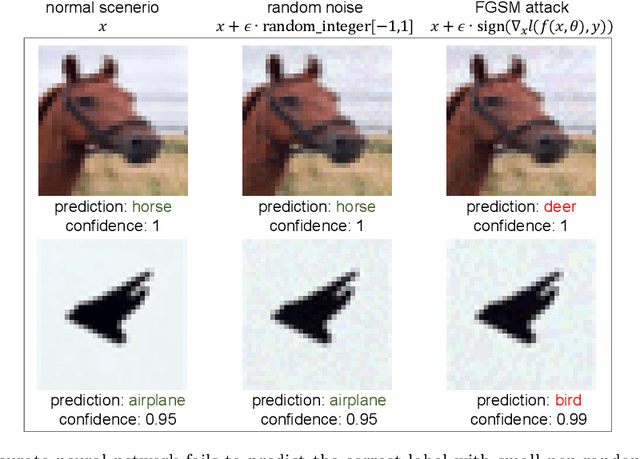
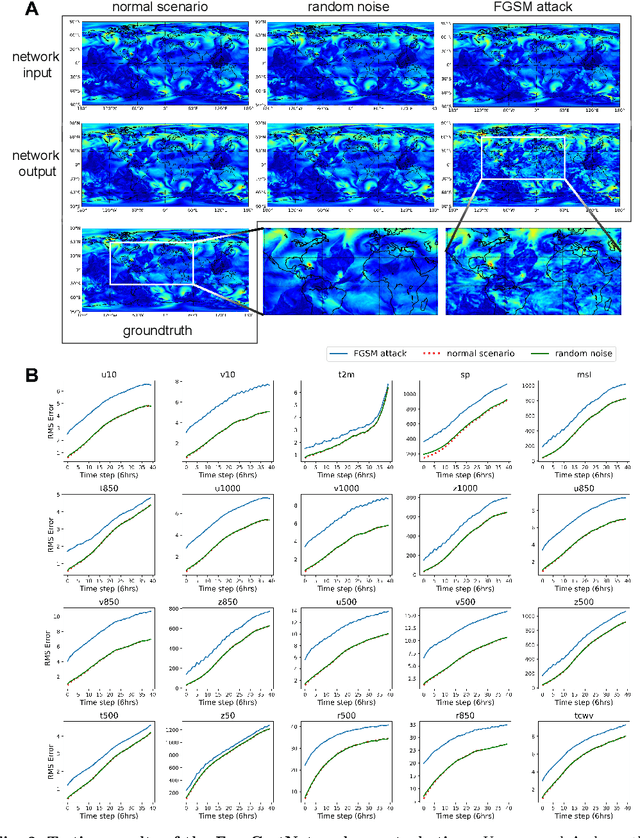
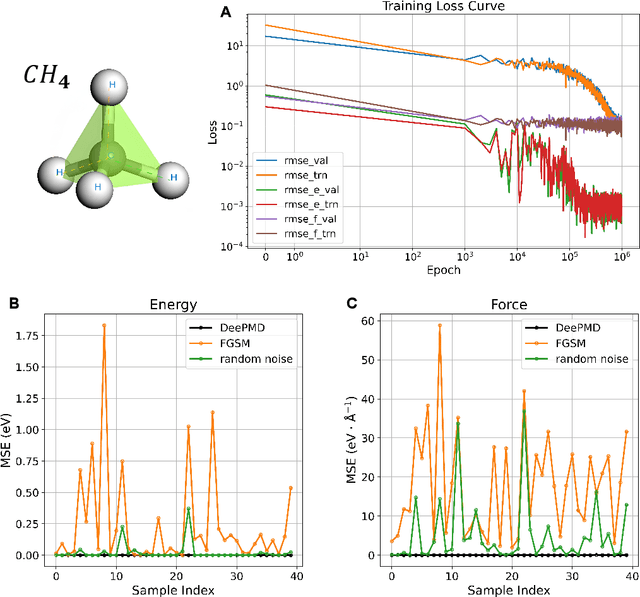

We uncover a phenomenon largely overlooked by the scientific community utilizing AI: neural networks exhibit high susceptibility to minute perturbations, resulting in significant deviations in their outputs. Through an analysis of five diverse application areas -- weather forecasting, chemical energy and force calculations, fluid dynamics, quantum chromodynamics, and wireless communication -- we demonstrate that this vulnerability is a broad and general characteristic of AI systems. This revelation exposes a hidden risk in relying on neural networks for essential scientific computations, calling further studies on their reliability and security.
Symmetry Breaking in Neural Network Optimization: Insights from Input Dimension Expansion
Sep 10, 2024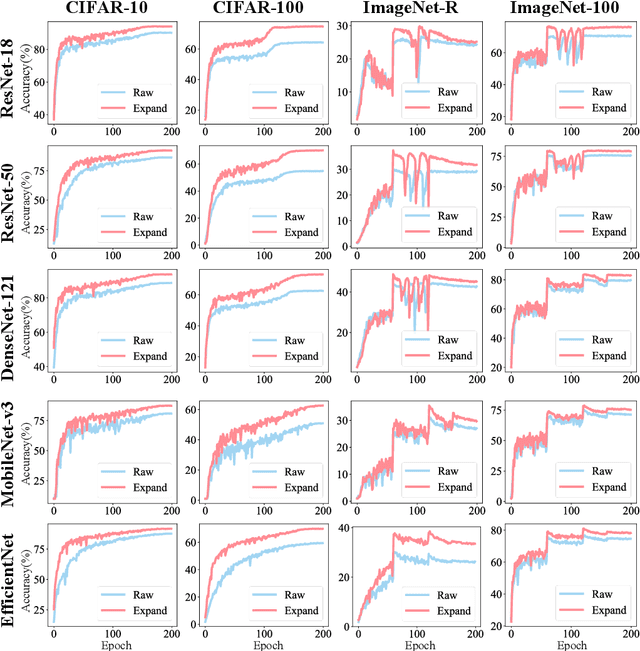


Understanding the mechanisms behind neural network optimization is crucial for improving network design and performance. While various optimization techniques have been developed, a comprehensive understanding of the underlying principles that govern these techniques remains elusive. Specifically, the role of symmetry breaking, a fundamental concept in physics, has not been fully explored in neural network optimization. This gap in knowledge limits our ability to design networks that are both efficient and effective. Here, we propose the symmetry breaking hypothesis to elucidate the significance of symmetry breaking in enhancing neural network optimization. We demonstrate that a simple input expansion can significantly improve network performance across various tasks, and we show that this improvement can be attributed to the underlying symmetry breaking mechanism. We further develop a metric to quantify the degree of symmetry breaking in neural networks, providing a practical approach to evaluate and guide network design. Our findings confirm that symmetry breaking is a fundamental principle that underpins various optimization techniques, including dropout, batch normalization, and equivariance. By quantifying the degree of symmetry breaking, our work offers a practical technique for performance enhancement and a metric to guide network design without the need for complete datasets and extensive training processes.