 Add to Chrome
 Add to Firefox
 Add to Edge
X2Streaming-TTS: Causal Token-Level Text-to-Speech from Streaming Text with Speech-State Inheritance
Aug 19, 2026
Streaming text-to-speech is essential for low-latency spoken dialogue systems, yet many systems wait for sentence-level text and are therefore only pseudo-streaming. True token-level synthesis must generate speech from uncertain prefixes while maintaining perceptual continuity over an unbounded stream with bounded context. We present X2Streaming-TTS, a causal TTS framework that consumes asynchronously arriving text tokens and emits speech without accessing future input. To handle uncertain prefixes, we introduce causal commitment, which keeps ambiguous expressions provisional through uncertainty-aware buffering and performs capacity-adaptive, punctuation-aware segmentation. To preserve acoustic continuity, we further introduce causal speech-state inheritance, which carries the complete Code2Wav state and selected historical Talker states across segment boundaries. Together with an attention prior constraint, it blocks access to future positions while retaining bounded acoustic context. Experiments show that X2Streaming-TTS outperforms existing pseudo-streaming models on most subjective and objective metrics. Further analysis shows that causal commitment stabilizes online segmentation and reduces failures caused by insufficient context, while speech-state inheritance improves boundary continuity without degrading naturalness or speaker identity. X2Streaming-TTS thus achieves strict token-level synthesis with quality comparable to the evaluated offline baselines, a median time to first audio token (TTFT) of 15.8 ms for a single request, and a median TTFT of 260.8 ms at 128 concurrent requests. Our implementation is publicly available at https://github.com/X-Square-Robot/X2Streaming-TTS .

WAVE-Stereo: Warp-Aligned Volume Encoding for Stereo Matching
Jul 15, 2026Existing iterative stereo matching methods primarily adopt two types of correspondence representation: explicit matching search via correlation volumes and local residual refinement via warped features, yet the two remain separately modeled. We propose WAVE-Stereo, built on a core insight: correlation volumes and feature warping provide complementary matching cues. \textbf{GeoWarp Correspondence Encoder (GWCE)} encodes matching search, residual alignment, and disparity prior in parallel at the ConvGRU input. To mitigate matching degradation in textureless regions, we propose \textbf{Periodic Global Context Propagation (PGCP)}, which propagates global spatial information in a periodic manner. On five real-world benchmarks -- Middlebury, ETH3D, KITTI 2012, KITTI 2015, and Booster -- WAVE-Stereo achieves competitive zero-shot generalization accuracy without any external foundation model prior, achieving 3.18\% D1-all on KITTI 2015, 4.42\% Bad-2.0 on Booster, and 66ms real-time inference, striking a favorable balance between accuracy and efficiency. Our code is available at https://github.com/yamanoko-do/WAVE-Stereo.
Is AI Robust Enough for Scientific Research?
Dec 19, 2024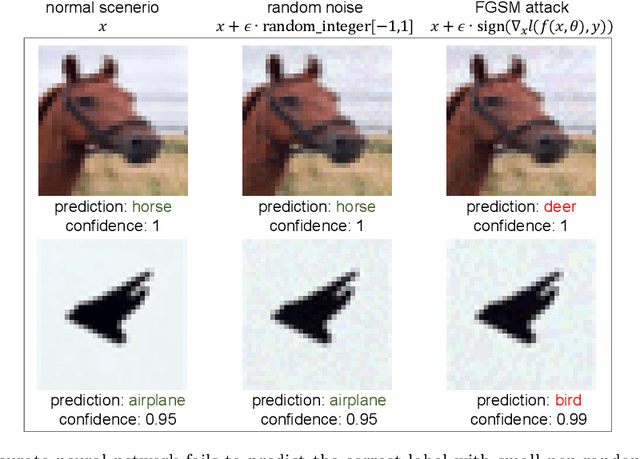
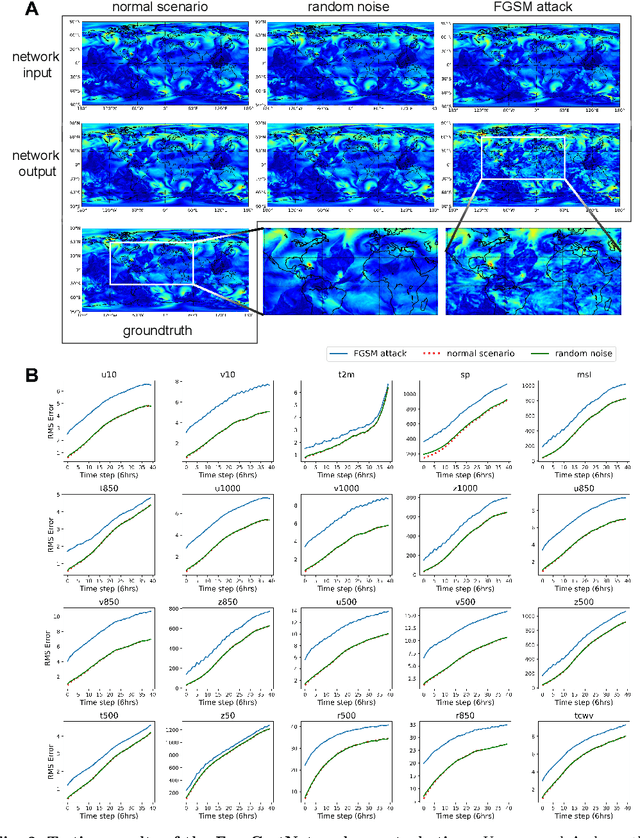
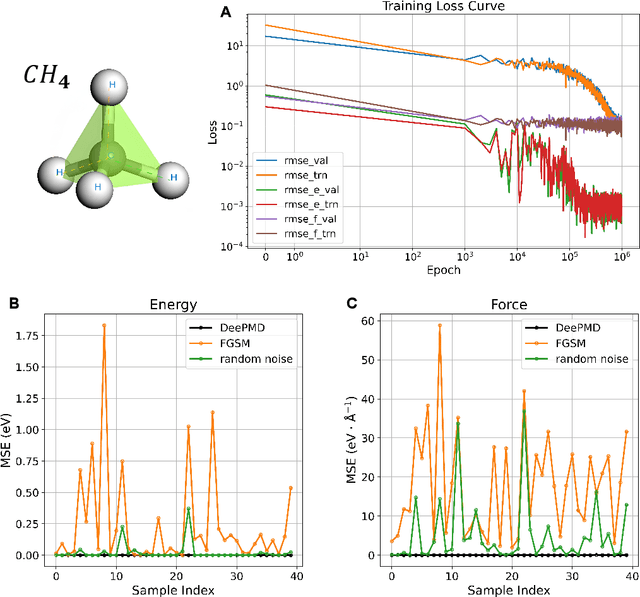

We uncover a phenomenon largely overlooked by the scientific community utilizing AI: neural networks exhibit high susceptibility to minute perturbations, resulting in significant deviations in their outputs. Through an analysis of five diverse application areas -- weather forecasting, chemical energy and force calculations, fluid dynamics, quantum chromodynamics, and wireless communication -- we demonstrate that this vulnerability is a broad and general characteristic of AI systems. This revelation exposes a hidden risk in relying on neural networks for essential scientific computations, calling further studies on their reliability and security.