 Add to Chrome
 Add to Firefox
 Add to Edge
Workspace Topology as an Attack Vector in Agentic Coding Assistants
Aug 14, 2026
Agentic coding assistants are finding widespread use, not just in new code development but in quickly ingesting and leveraging third-party code. This opens up a risk of malicious code being ingested as these coding tools operate with broad filesystem access inside developer workspaces. In this paper, we extensively study the impact of different dimensions of a novel attack surface we term workspace topology -- defined via directory depth, codebase modularity, in-file injection position and context framing -- on the attack success rate of adversarial prompt injection attempts. We perform an empirical study of indirect prompt injection (IPI) across a diverse set of open-source repositories spanning 10 languages and 6 engineering domains, evaluating three IPI entry points against open-weight models operating open source code harnesses. We find that workspace topology measurably affects IPI success. Specifically, changes in codebase modularity can significantly alter the Attack Success Rate (ASR), with highly modular environments demonstrating significantly lower attack success rates. Furthermore, context framing and introduction of security-cues in the workspace can also alter the ASR. Our findings offer practical value for the evaluation and security testing of coding agents across diverse settings, while underscoring the importance of an uncontaminated testing environment to obtain reliable results and conclusions.

Continual Segmentation under Joint Nonstationarity
May 19, 2026Evolving data streams induce joint nonstationarity in continual semantic segmentation, where semantic classes, input distributions, and supervision availability change simultaneously over time. This setting reflects practical structured prediction systems, yet remains largely unexplored in prior continual learning work, which typically studies these factors in isolation. We formalize continual segmentation under coupled class, domain, and label shifts and investigate learning in heterogeneous dense prediction environments with limited annotations and abundant unlabeled data. To address instability and overfitting arising from few-shot supervision under distribution drift, we introduce gradient-adaptive stabilization, a parameter-wise regularization mechanism implemented via gradient-scaled stochastic perturbations that promotes a principled stability-plasticity tradeoff. We further leverage unlabeled data through semi-supervised learning and introduce prototype anchored supervision that validates pseudo-labels via joint confidence and prototype consistency. Together, these mechanisms enable learning under joint nonstationarity in continual segmentation. Extensive empirical evaluation across class-incremental, domain-incremental, and few-shot regimes demonstrates consistent improvements over prior methods in heterogeneous structured prediction settings. Our results expose fundamental failure modes of existing continual segmentation approaches and provide insight into learning robust dense predictors in dynamically evolving environments.
Scene Representation using 360° Saliency Graph and its Application in Vision-based Indoor Navigation
Mar 20, 2026A Scene, represented visually using different formats such as RGB-D, LiDAR scan, keypoints, rectangular, spherical, multi-views, etc., contains information implicitly embedded relevant to applications such as scene indexing, vision-based navigation. Thus, these representations may not be efficient for such applications. This paper proposes a novel 360° saliency graph representation of the scenes. This rich representation explicitly encodes the relevant visual, contextual, semantic, and geometric information of the scene as nodes, edges, edge weights, and angular position in the 360° graph. Also, this representation is robust against scene view change and addresses challenges of indoor environments such as varied illumination, occlusions, and shadows as in the case of existing traditional methods. We have utilized this rich and efficient representation for vision-based navigation and compared it with existing navigation methods using 360° scenes. However, these existing methods suffer from limitations of poor scene representation, lacking scene-specific information. This work utilizes the proposed representation first to localize the query scene in the given topological map, and then facilitate 2D navigation by estimating the next required movement directions towards the target destination in the topological map by using the embedded geometric information in the 360° saliency graph. Experimental results demonstrate the efficacy of the proposed 360° saliency graph representation in enhancing both scene localization and vision-based indoor navigation.
The Language of Bargaining: Linguistic Effects in LLM Negotiations
Jan 07, 2026Negotiation is a core component of social intelligence, requiring agents to balance strategic reasoning, cooperation, and social norms. Recent work shows that LLMs can engage in multi-turn negotiation, yet nearly all evaluations occur exclusively in English. Using controlled multi-agent simulations across Ultimatum, Buy-Sell, and Resource Exchange games, we systematically isolate language effects across English and four Indic framings (Hindi, Punjabi, Gujarati, Marwadi) by holding game rules, model parameters, and incentives constant across all conditions. We find that language choice can shift outcomes more strongly than changing models, reversing proposer advantages and reallocating surplus. Crucially, effects are task-contingent: Indic languages reduce stability in distributive games yet induce richer exploration in integrative settings. Our results demonstrate that evaluating LLM negotiation solely in English yields incomplete and potentially misleading conclusions. These findings caution against English-only evaluation of LLMs and suggest that culturally-aware evaluation is essential for fair deployment.
GRAID: Synthetic Data Generation with Geometric Constraints and Multi-Agentic Reflection for Harmful Content Detection
Aug 23, 2025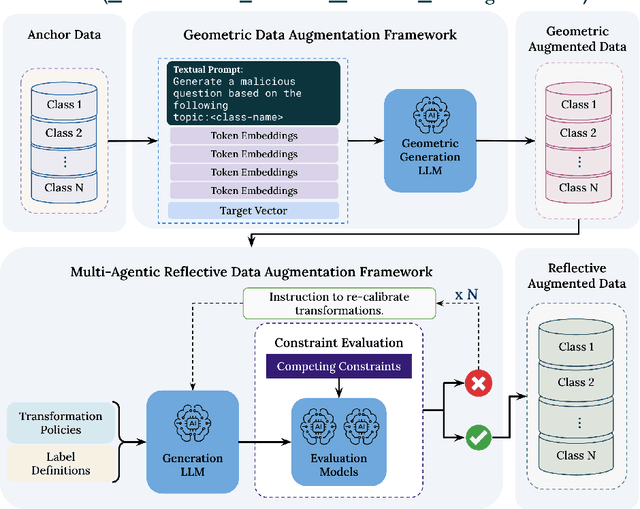

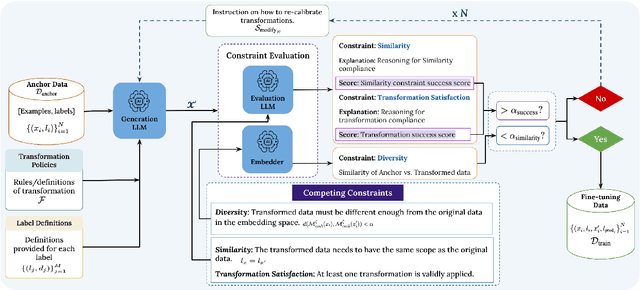
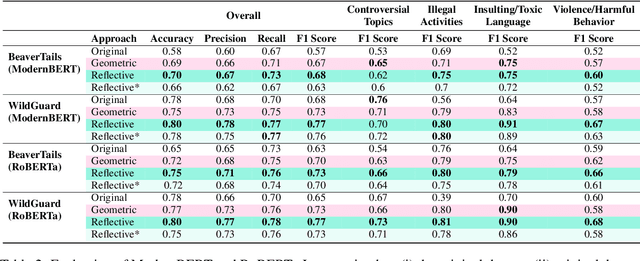
We address the problem of data scarcity in harmful text classification for guardrailing applications and introduce GRAID (Geometric and Reflective AI-Driven Data Augmentation), a novel pipeline that leverages Large Language Models (LLMs) for dataset augmentation. GRAID consists of two stages: (i) generation of geometrically controlled examples using a constrained LLM, and (ii) augmentation through a multi-agentic reflective process that promotes stylistic diversity and uncovers edge cases. This combination enables both reliable coverage of the input space and nuanced exploration of harmful content. Using two benchmark data sets, we demonstrate that augmenting a harmful text classification dataset with GRAID leads to significant improvements in downstream guardrail model performance.
Enhancing Cache-Augmented Generation (CAG) with Adaptive Contextual Compression for Scalable Knowledge Integration
May 13, 2025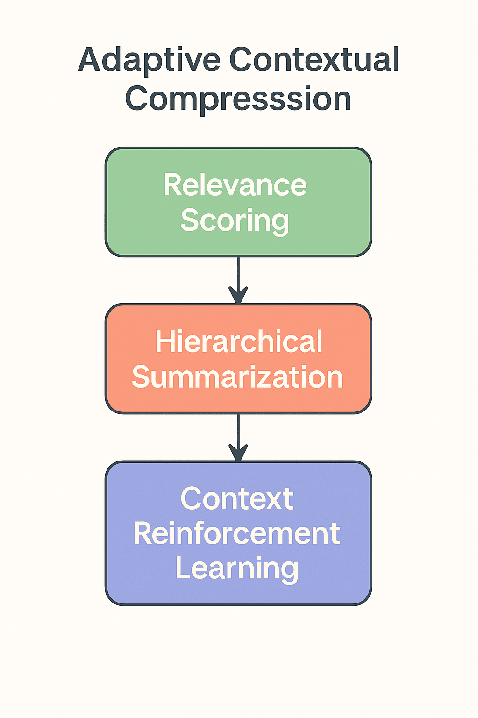
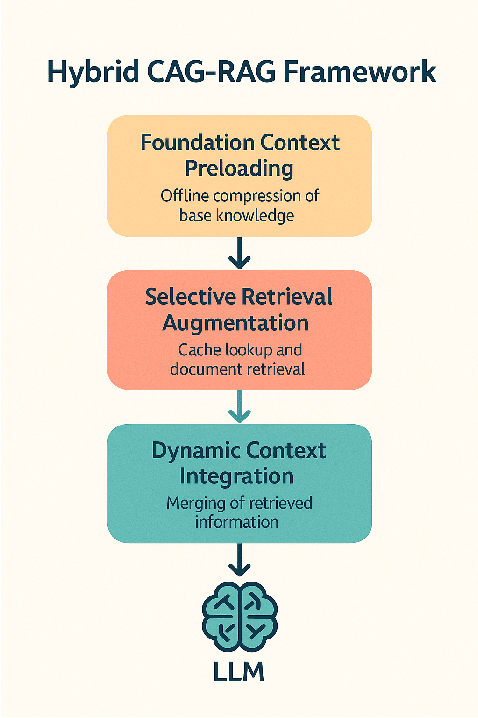
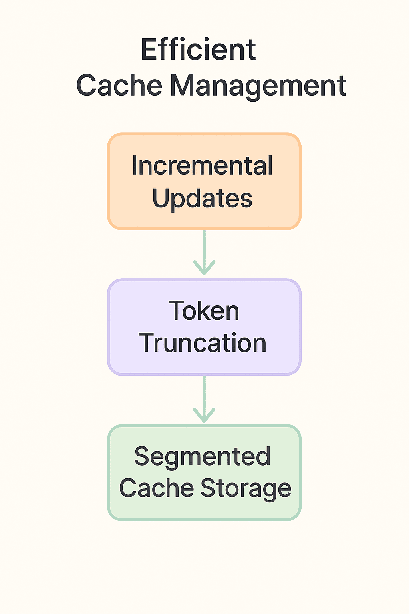
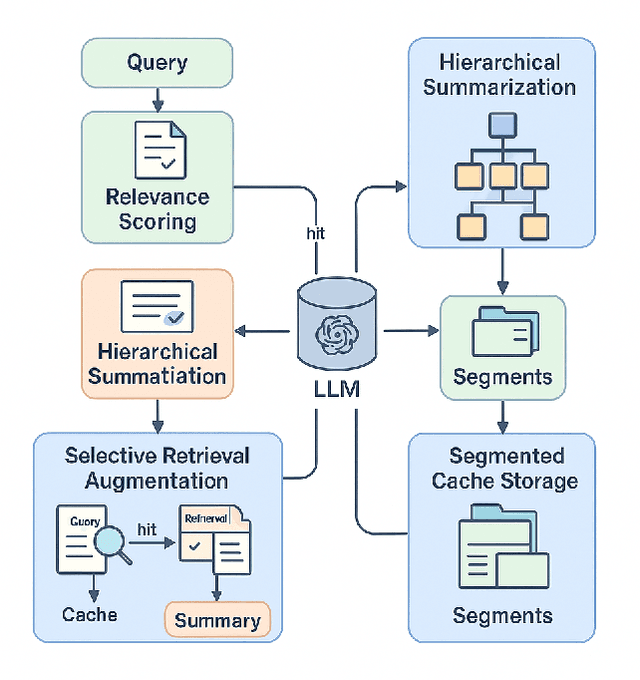
The rapid progress in large language models (LLMs) has paved the way for novel approaches in knowledge-intensive tasks. Among these, Cache-Augmented Generation (CAG) has emerged as a promising alternative to Retrieval-Augmented Generation (RAG). CAG minimizes retrieval latency and simplifies system design by preloading knowledge into the model's context. However, challenges persist in scaling CAG to accommodate large and dynamic knowledge bases effectively. This paper introduces Adaptive Contextual Compression (ACC), an innovative technique designed to dynamically compress and manage context inputs, enabling efficient utilization of the extended memory capabilities of modern LLMs. To further address the limitations of standalone CAG, we propose a Hybrid CAG-RAG Framework, which integrates selective retrieval to augment preloaded contexts in scenarios requiring additional information. Comprehensive evaluations on diverse datasets highlight the proposed methods' ability to enhance scalability, optimize efficiency, and improve multi-hop reasoning performance, offering practical solutions for real-world knowledge integration challenges.
NanoVLMs: How small can we go and still make coherent Vision Language Models?
Feb 11, 2025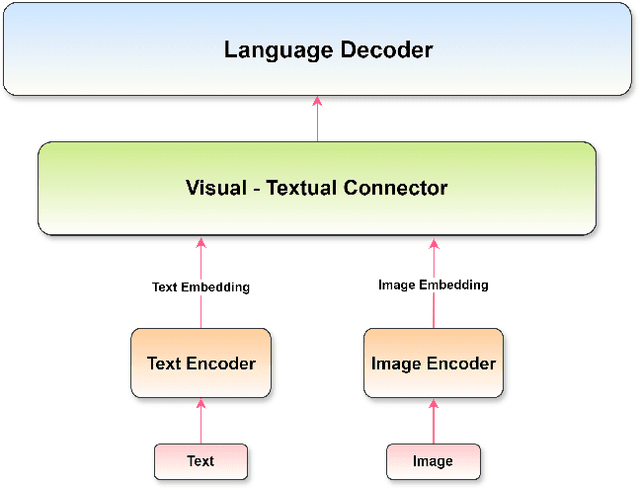
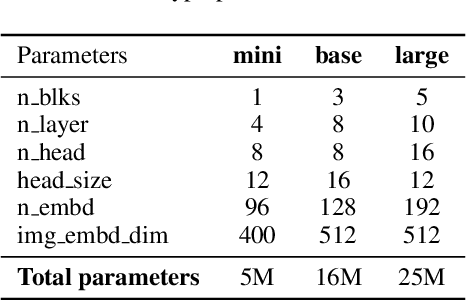
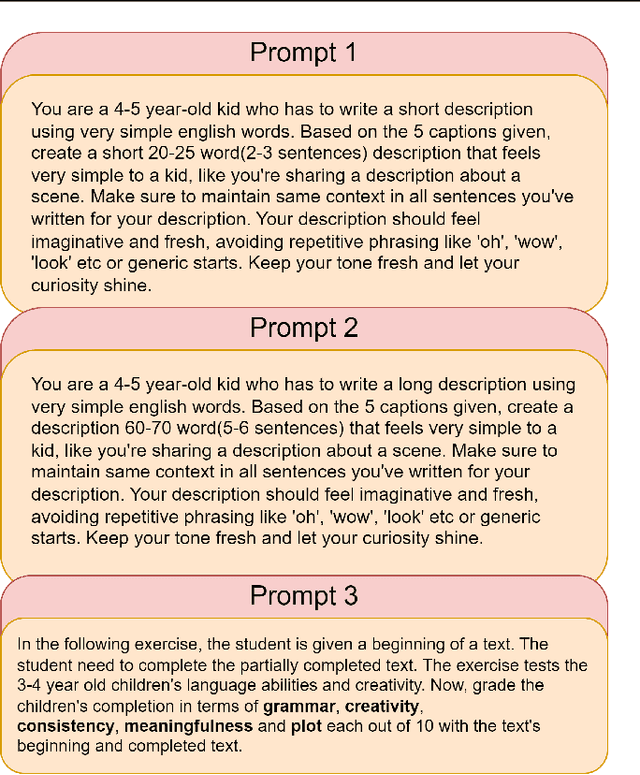
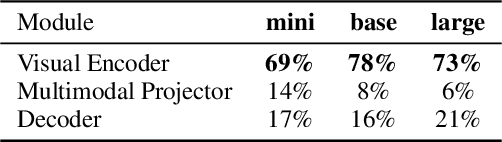
Vision-Language Models (VLMs), such as GPT-4V and Llama 3.2 vision, have garnered significant research attention for their ability to leverage Large Language Models (LLMs) in multimodal tasks. However, their potential is constrained by inherent challenges, including proprietary restrictions, substantial computational demands, and limited accessibility. Smaller models, such as GIT and BLIP, exhibit marked limitations, often failing to generate coherent and consistent text beyond a few tokens, even with extensive training. This underscores a pivotal inquiry: how small can a VLM be and still produce fluent and consistent text? Drawing inspiration from the exceptional learning process of 3-4 year old children, who rely heavily on visual cues for understanding and communication, we introduce two novel datasets: ShortDesc (featuring concise image descriptions) and LongDesc (containing more detailed image descriptions). These datasets consist of image-text pairs where the text is restricted to the simple vocabulary and syntax typically used by young children, generated with a scaled- down model, GPT-4o. Using these datasets, we demonstrate that it is possible to train VLMs that are significantly smaller, up to 10 times smaller than state of the art(SOTA) small VLMs while maintaining architectural simplicity. To evaluate the outputs, we leverage GPT-4o to grade the text, as if stories written by students, on creativity, meaningfulness, and consistency, assigning scores out of 10. This method addresses limitations of standard benchmarks by accommodating unstructured outputs and providing a multidimensional evaluation of the model capabilities. Our findings contribute to the development of lightweight, accessible multimodal models for resource constrained environments.
3rd Workshop on Maritime Computer Vision (MaCVi) 2025: Challenge Results
Jan 17, 2025The 3rd Workshop on Maritime Computer Vision (MaCVi) 2025 addresses maritime computer vision for Unmanned Surface Vehicles (USV) and underwater. This report offers a comprehensive overview of the findings from the challenges. We provide both statistical and qualitative analyses, evaluating trends from over 700 submissions. All datasets, evaluation code, and the leaderboard are available to the public at https://macvi.org/workshop/macvi25.
A Multimodal Dataset for Enhancing Industrial Task Monitoring and Engagement Prediction
Jan 10, 2025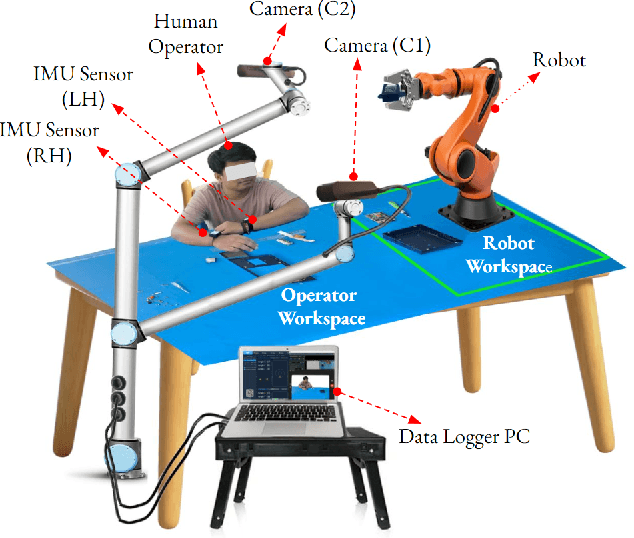

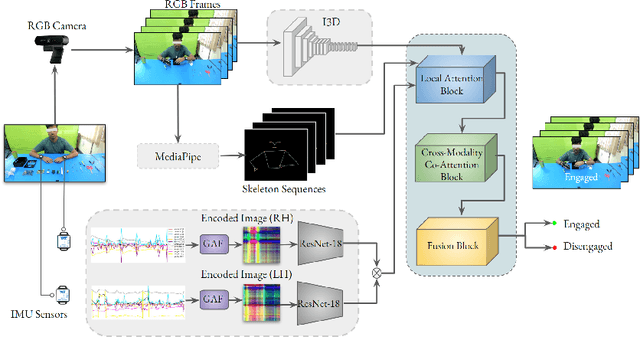

Detecting and interpreting operator actions, engagement, and object interactions in dynamic industrial workflows remains a significant challenge in human-robot collaboration research, especially within complex, real-world environments. Traditional unimodal methods often fall short of capturing the intricacies of these unstructured industrial settings. To address this gap, we present a novel Multimodal Industrial Activity Monitoring (MIAM) dataset that captures realistic assembly and disassembly tasks, facilitating the evaluation of key meta-tasks such as action localization, object interaction, and engagement prediction. The dataset comprises multi-view RGB, depth, and Inertial Measurement Unit (IMU) data collected from 22 sessions, amounting to 290 minutes of untrimmed video, annotated in detail for task performance and operator behavior. Its distinctiveness lies in the integration of multiple data modalities and its emphasis on real-world, untrimmed industrial workflows-key for advancing research in human-robot collaboration and operator monitoring. Additionally, we propose a multimodal network that fuses RGB frames, IMU data, and skeleton sequences to predict engagement levels during industrial tasks. Our approach improves the accuracy of recognizing engagement states, providing a robust solution for monitoring operator performance in dynamic industrial environments. The dataset and code can be accessed from https://github.com/navalkishoremehta95/MIAM/.
A Volumetric Saliency Guided Image Summarization for RGB-D Indoor Scene Classification
Jan 19, 2024Image summary, an abridged version of the original visual content, can be used to represent the scene. Thus, tasks such as scene classification, identification, indexing, etc., can be performed efficiently using the unique summary. Saliency is the most commonly used technique for generating the relevant image summary. However, the definition of saliency is subjective in nature and depends upon the application. Existing saliency detection methods using RGB-D data mainly focus on color, texture, and depth features. Consequently, the generated summary contains either foreground objects or non-stationary objects. However, applications such as scene identification require stationary characteristics of the scene, unlike state-of-the-art methods. This paper proposes a novel volumetric saliency-guided framework for indoor scene classification. The results highlight the efficacy of the proposed method.