 Add to Chrome
 Add to Firefox
 Add to Edge
4th Workshop on Maritime Computer Vision (MaCVi): Challenge Overview
Apr 14, 2026
The 4th Workshop on Maritime Computer Vision (MaCVi) is organized as part of CVPR 2026. This edition features five benchmark challenges with emphasis on both predictive accuracy and embedded real-time feasibility. This report summarizes the MaCVi 2026 challenge setup, evaluation protocols, datasets, and benchmark tracks, and presents quantitative results, qualitative comparisons, and cross-challenge analyses of emerging method trends. We also include technical reports from top-performing teams to highlight practical design choices and lessons learned across the benchmark suite. Datasets, leaderboards, and challenge resources are available at https://macvi.org/workshop/cvpr26.

3rd Workshop on Maritime Computer Vision (MaCVi) 2025: Challenge Results
Jan 17, 2025The 3rd Workshop on Maritime Computer Vision (MaCVi) 2025 addresses maritime computer vision for Unmanned Surface Vehicles (USV) and underwater. This report offers a comprehensive overview of the findings from the challenges. We provide both statistical and qualitative analyses, evaluating trends from over 700 submissions. All datasets, evaluation code, and the leaderboard are available to the public at https://macvi.org/workshop/macvi25.
The 2nd Workshop on Maritime Computer Vision 2024
Nov 23, 2023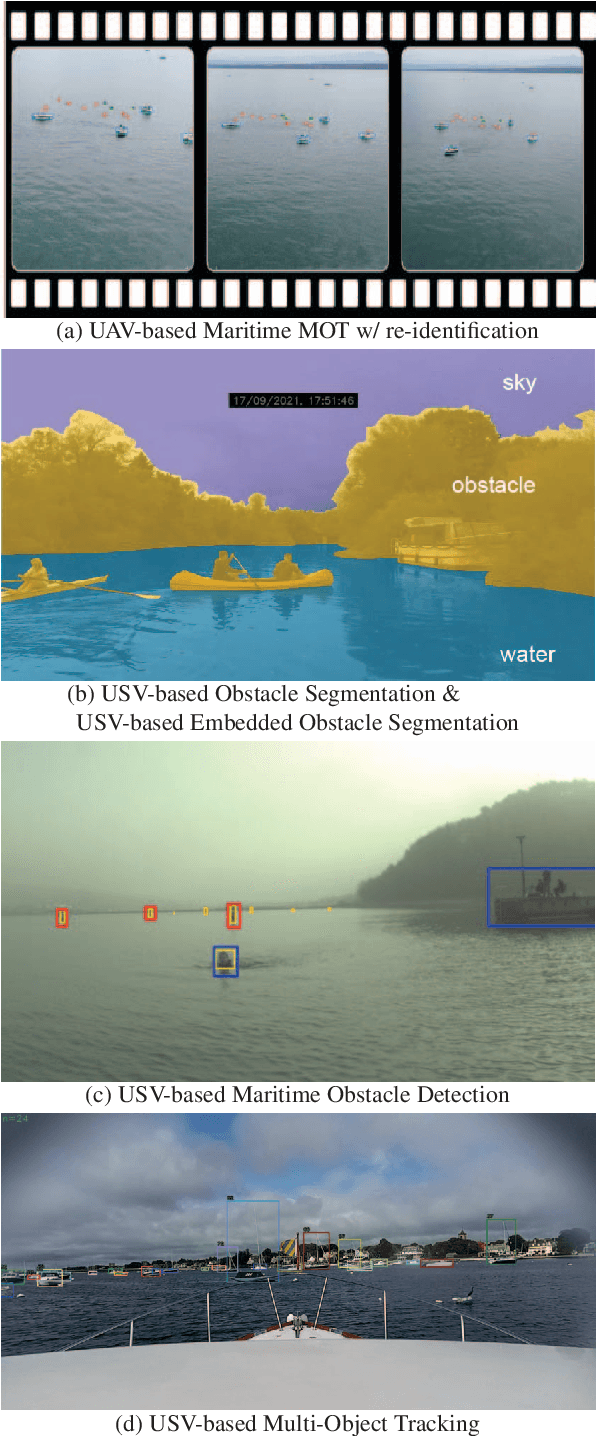
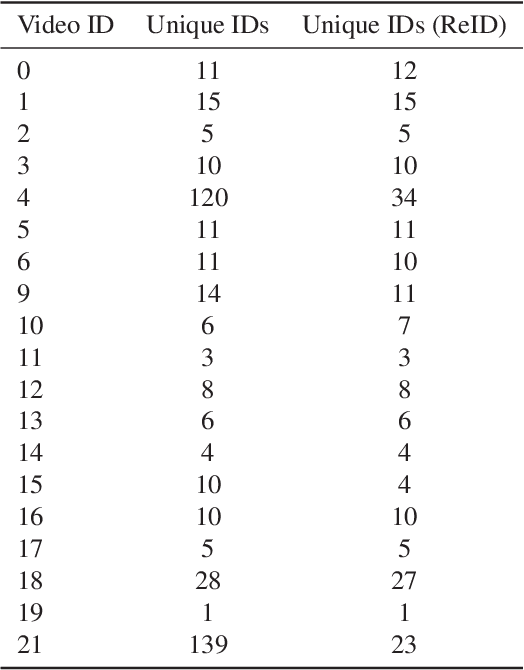

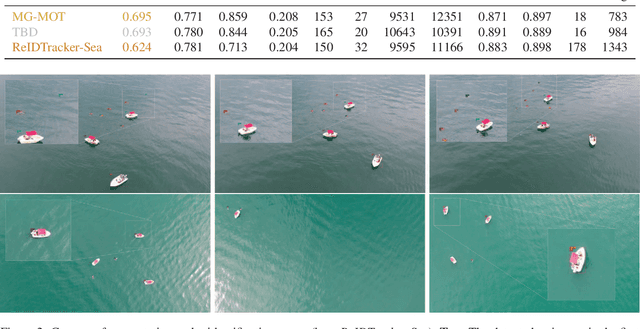
The 2nd Workshop on Maritime Computer Vision (MaCVi) 2024 addresses maritime computer vision for Unmanned Aerial Vehicles (UAV) and Unmanned Surface Vehicles (USV). Three challenges categories are considered: (i) UAV-based Maritime Object Tracking with Re-identification, (ii) USV-based Maritime Obstacle Segmentation and Detection, (iii) USV-based Maritime Boat Tracking. The USV-based Maritime Obstacle Segmentation and Detection features three sub-challenges, including a new embedded challenge addressing efficicent inference on real-world embedded devices. This report offers a comprehensive overview of the findings from the challenges. We provide both statistical and qualitative analyses, evaluating trends from over 195 submissions. All datasets, evaluation code, and the leaderboard are available to the public at https://macvi.org/workshop/macvi24.
eWaSR -- an embedded-compute-ready maritime obstacle detection network
Apr 21, 2023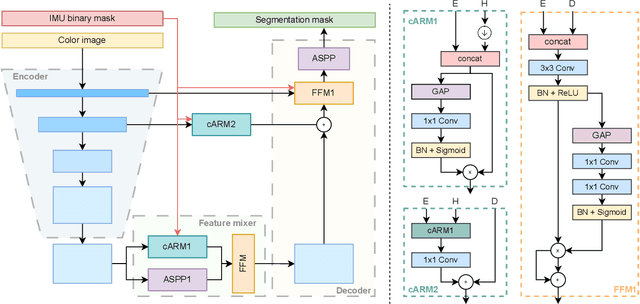

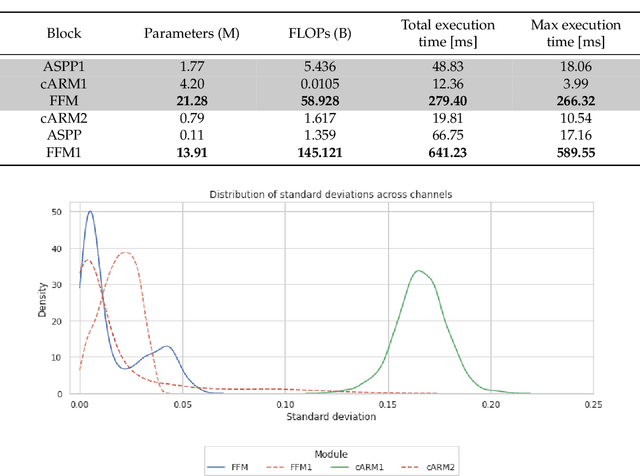
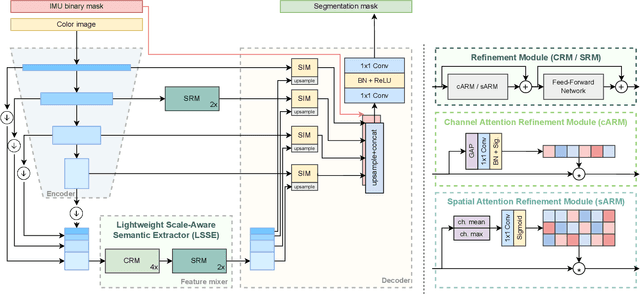
Maritime obstacle detection is critical for safe navigation of autonomous surface vehicles (ASVs). While the accuracy of image-based detection methods has advanced substantially, their computational and memory requirements prohibit deployment on embedded devices. In this paper we analyze the currently best-performing maritime obstacle detection network WaSR. Based on the analysis we then propose replacements for the most computationally intensive stages and propose its embedded-compute-ready variant eWaSR. In particular, the new design follows the most recent advancements of transformer-based lightweight networks. eWaSR achieves comparable detection results to state-of-the-art WaSR with only 0.52% F1 score performance drop and outperforms other state-of-the-art embedded-ready architectures by over 9.74% in F1 score. On a standard GPU, eWaSR runs 10x faster than the original WaSR (115 FPS vs 11 FPS). Tests on a real embedded device OAK-D show that, while WaSR cannot run due to memory restrictions, eWaSR runs comfortably at 5.5 FPS. This makes eWaSR the first practical embedded-compute-ready maritime obstacle detection network. The source code and trained eWaSR models are publicly available here: https://github.com/tersekmatija/eWaSR.