 Add to Chrome
 Add to Firefox
 Add to Edge
Three methods, one problem: Classical and AI approaches to no-three-in-line
Dec 22, 2025
The No-Three-In-Line problem asks for the maximum number of points that can be placed on an n by n grid with no three collinear, representing a famous problem in combinatorial geometry. While classical methods like Integer Linear Programming (ILP) guarantee optimal solutions, they face exponential scaling with grid size, and recent advances in machine learning offer promising alternatives for pattern-based approximation. This paper presents the first systematic comparison of classical optimization and AI approaches to this problem, evaluating their performance against traditional algorithms. We apply PatternBoost transformer learning and reinforcement learning (PPO) to this problem for the first time, comparing them against ILP. ILP achieves provably optimal solutions up to 19 by 19 grids, while PatternBoost matches optimal performance up to 14 by 14 grids with 96% test loss reduction. PPO achieves perfect solutions on 10 by 10 grids but fails at 11 by 11 grids, where constraint violations prevent valid configurations. These results demonstrate that classical optimization remains essential for exact solutions while AI methods offer competitive performance on smaller instances, with hybrid approaches presenting the most promising direction for scaling to larger problem sizes.

Forecasting N-Body Dynamics: A Comparative Study of Neural Ordinary Differential Equations and Universal Differential Equations
Dec 12, 2025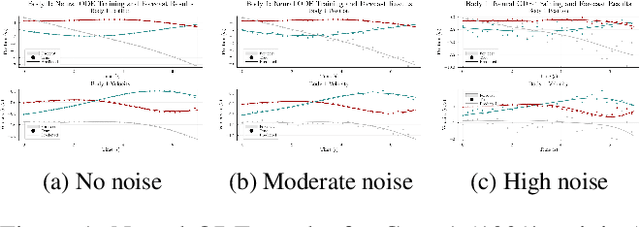
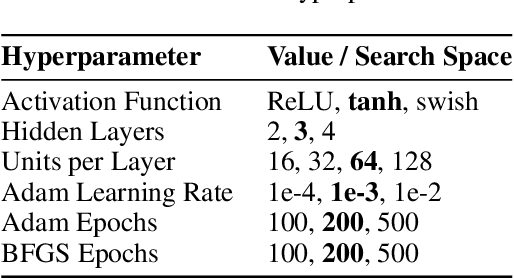
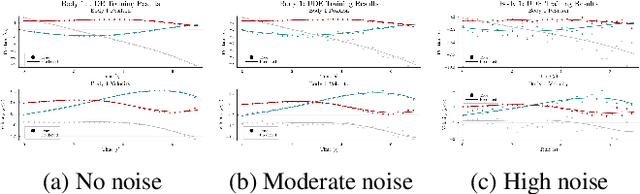
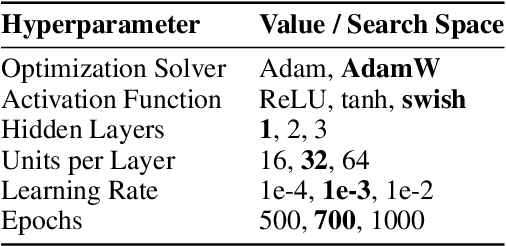
The n body problem, fundamental to astrophysics, simulates the motion of n bodies acting under the effect of their own mutual gravitational interactions. Traditional machine learning models that are used for predicting and forecasting trajectories are often data intensive black box models, which ignore the physical laws, thereby lacking interpretability. Whereas Scientific Machine Learning ( Scientific ML ) directly embeds the known physical laws into the machine learning framework. Through robust modelling in the Julia programming language, our method uses the Scientific ML frameworks: Neural ordinary differential equations (NODEs) and Universal differential equations (UDEs) to predict and forecast the system dynamics. In addition, an essential component of our analysis involves determining the forecasting breakdown point, which is the smallest possible amount of training data our models need to predict future, unseen data accurately. We employ synthetically created noisy data to simulate real-world observational limitations. Our findings indicate that the UDE model is much more data efficient, needing only 20% of data for a correct forecast, whereas the Neural ODE requires 90%.
Physics-Informed Neural ODEs with Scale-Aware Residuals for Learning Stiff Biophysical Dynamics
Nov 13, 2025Neural differential equations offer a powerful framework for modeling continuous-time dynamics, but forecasting stiff biophysical systems remains unreliable. Standard Neural ODEs and physics informed variants often require orders of magnitude more iterations, and even then may converge to suboptimal solutions that fail to preserve oscillatory frequency or amplitude. We introduce PhysicsInformed Neural ODEs with with Scale-Aware Residuals (PI-NODE-SR), a framework that combines a low-order explicit solver (Heun method) residual normalisation to balance contributions between state variables evolving on disparate timescales. This combination stabilises training under realistic iteration budgets and avoids reliance on computationally expensive implicit solvers. On the Hodgkin-Huxley equations, PI-NODE-SR learns from a single oscillation simulated with a stiff solver (Rodas5P) and extrapolates beyond 100 ms, capturing both oscillation frequency and near-correct amplitudes. Remarkably, end-to-end learning of the vector field enables PI-NODE-SR to recover morphological features such as sharp subthreshold curvature in gating variables that are typically reserved for higher-order solvers, suggesting that neural correction can offset numerical diffusion. While performance remains sensitive to initialisation, PI-NODE-SR consistently reduces long-horizon errors relative to baseline Neural-ODEs and PINNs, offering a principled route to stable and efficient learning of stiff biological dynamics.
Simulating Misinformation Propagation in Social Networks using Large Language Models
Nov 13, 2025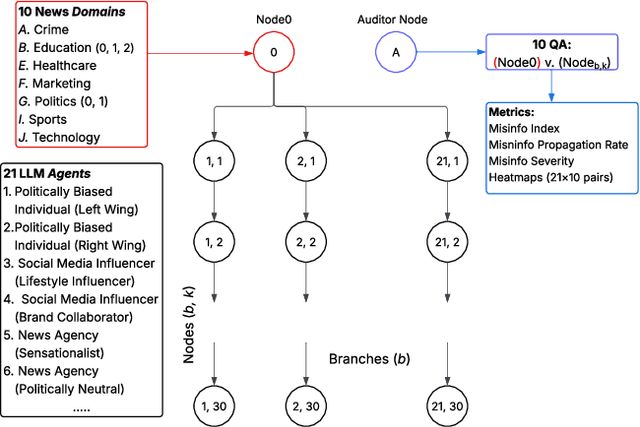
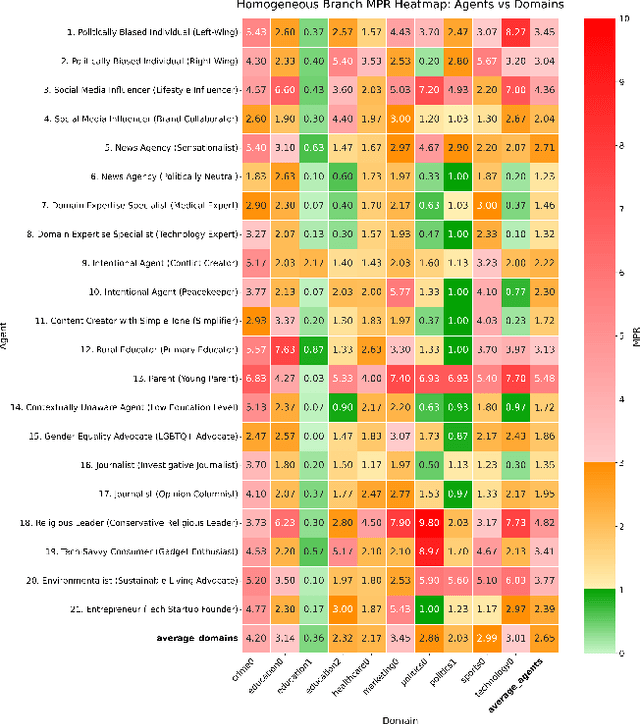
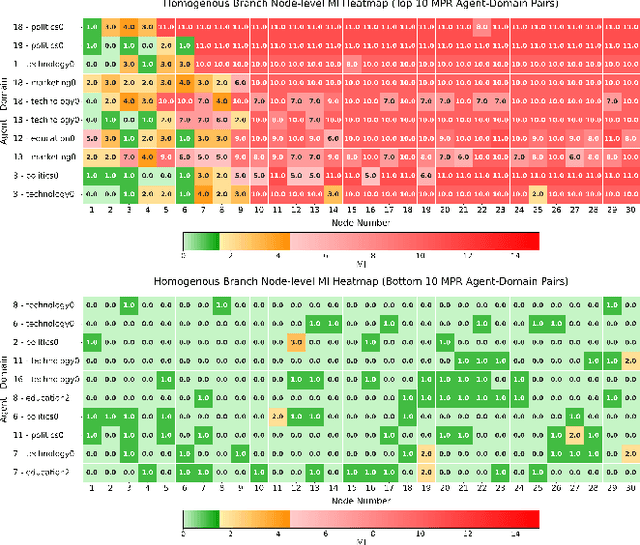
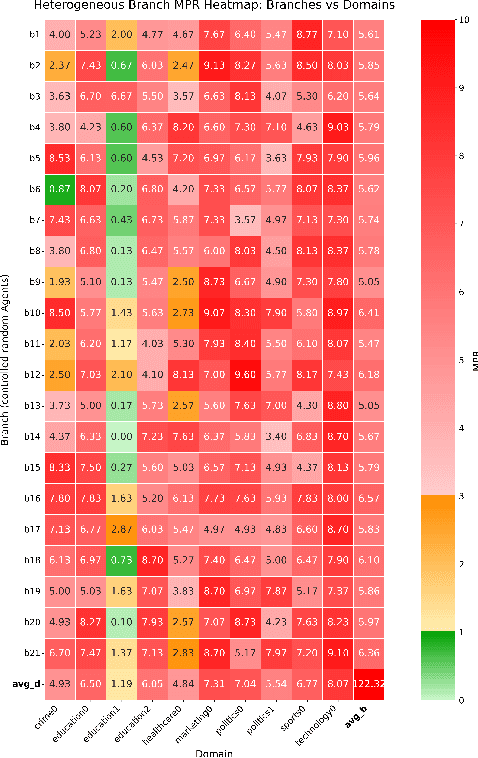
Misinformation on social media thrives on surprise, emotion, and identity-driven reasoning, often amplified through human cognitive biases. To investigate these mechanisms, we model large language model (LLM) personas as synthetic agents that mimic user-level biases, ideological alignments, and trust heuristics. Within this setup, we introduce an auditor--node framework to simulate and analyze how misinformation evolves as it circulates through networks of such agents. News articles are propagated across networks of persona-conditioned LLM nodes, each rewriting received content. A question--answering-based auditor then measures factual fidelity at every step, offering interpretable, claim-level tracking of misinformation drift. We formalize a misinformation index and a misinformation propagation rate to quantify factual degradation across homogeneous and heterogeneous branches of up to 30 sequential rewrites. Experiments with 21 personas across 10 domains reveal that identity- and ideology-based personas act as misinformation accelerators, especially in politics, marketing, and technology. By contrast, expert-driven personas preserve factual stability. Controlled-random branch simulations further show that once early distortions emerge, heterogeneous persona interactions rapidly escalate misinformation to propaganda-level distortion. Our taxonomy of misinformation severity -- spanning factual errors, lies, and propaganda -- connects observed drift to established theories in misinformation studies. These findings demonstrate the dual role of LLMs as both proxies for human-like biases and as auditors capable of tracing information fidelity. The proposed framework provides an interpretable, empirically grounded approach for studying, simulating, and mitigating misinformation diffusion in digital ecosystems.
Decoders Laugh as Loud as Encoders
Sep 05, 2025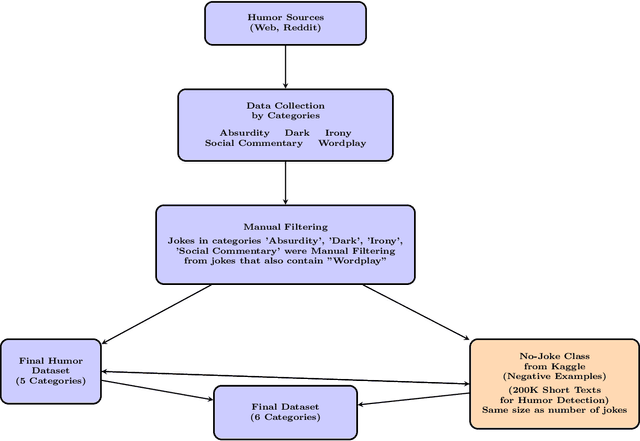

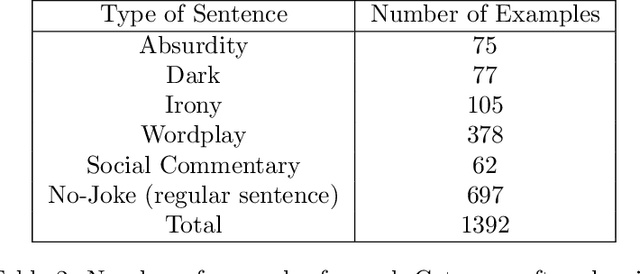
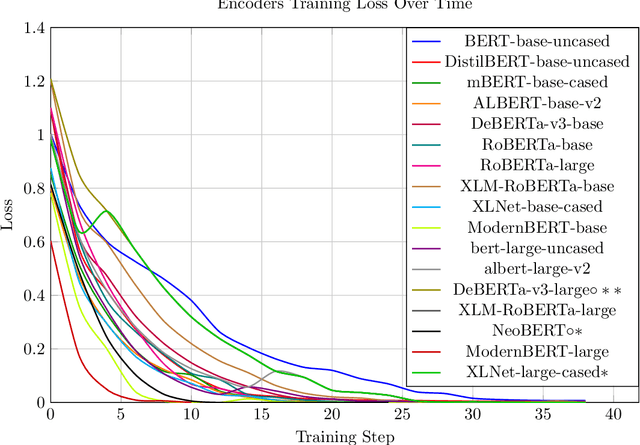
From the dawn of the computer, Allen Turing dreamed of a robot that could communicate using language as a human being. The recent advances in the field of Large Language Models (LLMs) shocked the scientific community when a single model can apply for various natural language processing (NLP) tasks, while the output results are sometimes even better than most human communication skills. Models such as GPT, Claude, Grok, etc. have left their mark on the scientific community. However, it is unclear how much these models understand what they produce, especially in a nuanced theme such as humor. The question of whether computers understand humor is still open (among the decoders, the latest to be checked was GPT-2). We addressed this issue in this paper; we have showed that a fine-tuned decoder (GPT-4o) performed (Mean F1-macro score of 0.85) as well as the best fine-tuned encoder (RoBERTa with a Mean of F1-score 0.86)
Latent Multi-Head Attention for Small Language Models
Jun 11, 2025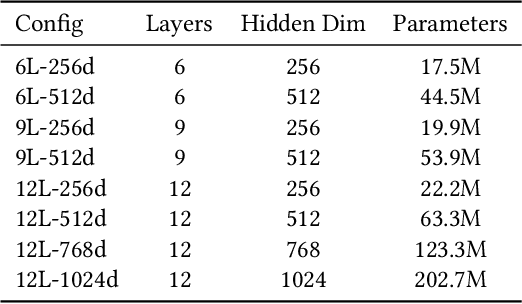
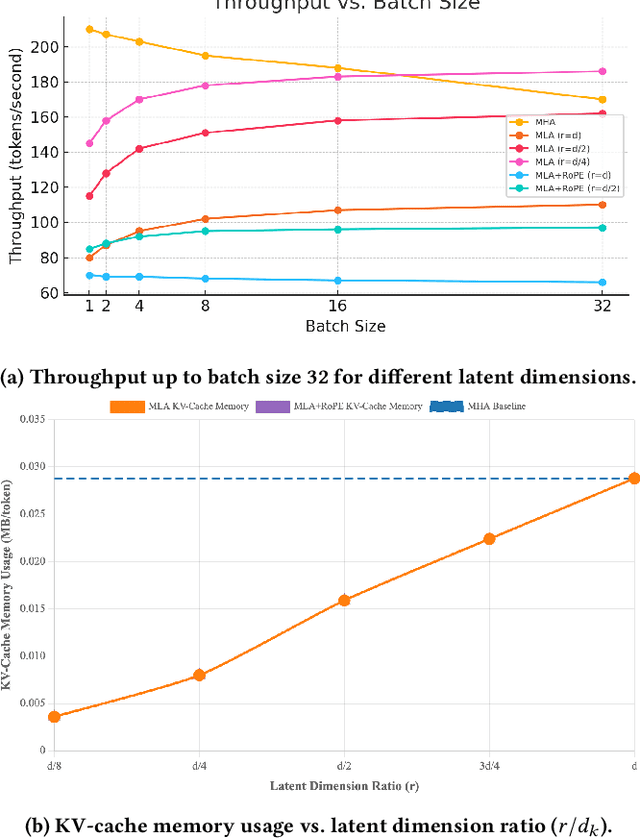
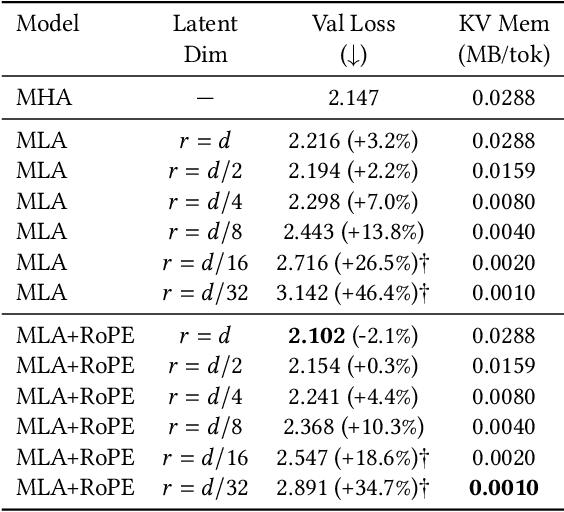
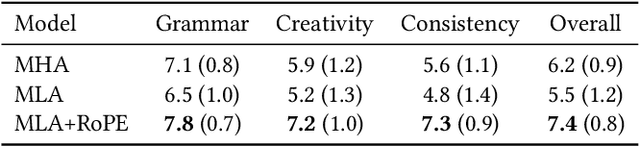
We present the first comprehensive study of latent multi-head attention (MLA) for small language models, revealing interesting efficiency-quality trade-offs. Training 30M-parameter GPT models on 100,000 synthetic stories, we benchmark three architectural variants: standard multi-head attention (MHA), MLA, and MLA with rotary positional embeddings (MLA+RoPE). Our key finding is that MLA+RoPE with half-rank latent dimensions (r = d/2) achieves a 45% KV-cache memory reduction while incurring only a 0.3% increase in validation loss (essentially matching MHA quality)- a Pareto improvement for memory constrained deployment. We further show that RoPE is crucial for MLA in small models: without it, MLA underperforms vanilla attention by 3-5%, but with RoPE, it surpasses vanilla by 2%. Inference benchmarks on NVIDIA A100 GPUs reveal that MLA with r=d/2 achieves a 1.4 times speedup over full-rank MLA while maintaining the memory savings. GPT-4 evaluations corroborate perplexity results, with ours achieving the highest quality scores (7.4/10) across grammar, creativity, and consistency metrics. Code and models will be released upon acceptance.
NanoVLMs: How small can we go and still make coherent Vision Language Models?
Feb 11, 2025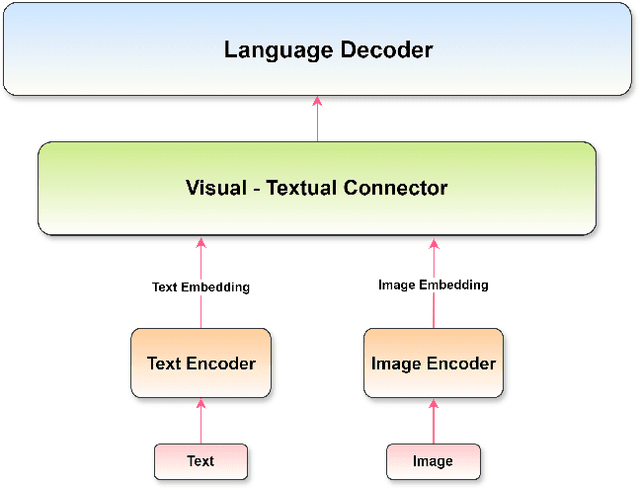
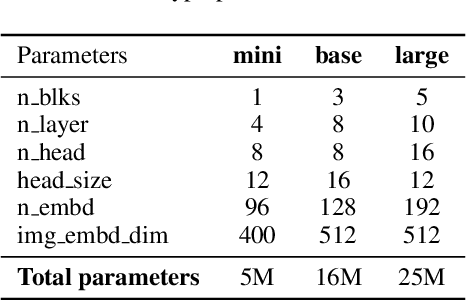
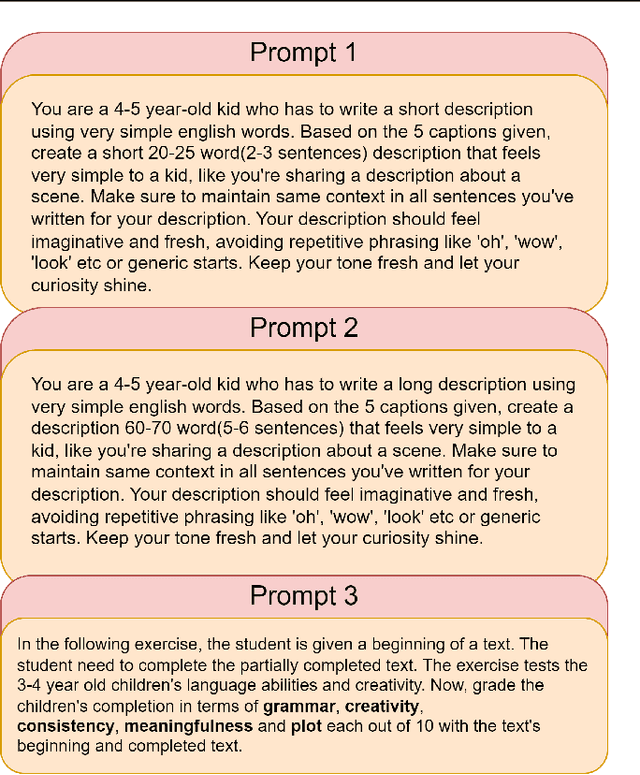
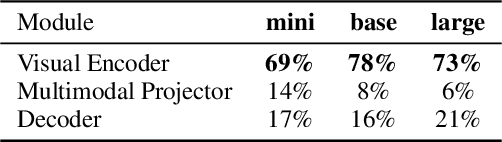
Vision-Language Models (VLMs), such as GPT-4V and Llama 3.2 vision, have garnered significant research attention for their ability to leverage Large Language Models (LLMs) in multimodal tasks. However, their potential is constrained by inherent challenges, including proprietary restrictions, substantial computational demands, and limited accessibility. Smaller models, such as GIT and BLIP, exhibit marked limitations, often failing to generate coherent and consistent text beyond a few tokens, even with extensive training. This underscores a pivotal inquiry: how small can a VLM be and still produce fluent and consistent text? Drawing inspiration from the exceptional learning process of 3-4 year old children, who rely heavily on visual cues for understanding and communication, we introduce two novel datasets: ShortDesc (featuring concise image descriptions) and LongDesc (containing more detailed image descriptions). These datasets consist of image-text pairs where the text is restricted to the simple vocabulary and syntax typically used by young children, generated with a scaled- down model, GPT-4o. Using these datasets, we demonstrate that it is possible to train VLMs that are significantly smaller, up to 10 times smaller than state of the art(SOTA) small VLMs while maintaining architectural simplicity. To evaluate the outputs, we leverage GPT-4o to grade the text, as if stories written by students, on creativity, meaningfulness, and consistency, assigning scores out of 10. This method addresses limitations of standard benchmarks by accommodating unstructured outputs and providing a multidimensional evaluation of the model capabilities. Our findings contribute to the development of lightweight, accessible multimodal models for resource constrained environments.
CBEval: A framework for evaluating and interpreting cognitive biases in LLMs
Dec 04, 2024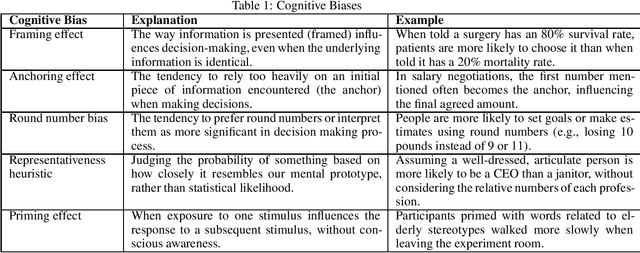
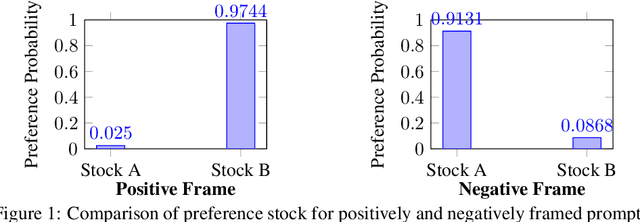
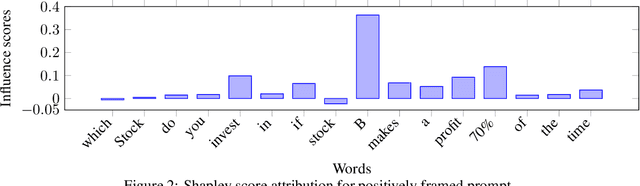
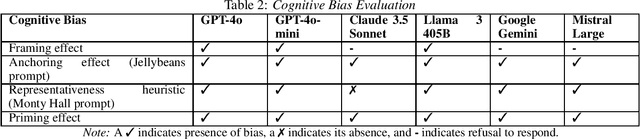
Rapid advancements in Large Language models (LLMs) has significantly enhanced their reasoning capabilities. Despite improved performance on benchmarks, LLMs exhibit notable gaps in their cognitive processes. Additionally, as reflections of human-generated data, these models have the potential to inherit cognitive biases, raising concerns about their reasoning and decision making capabilities. In this paper we present a framework to interpret, understand and provide insights into a host of cognitive biases in LLMs. Conducting our research on frontier language models we're able to elucidate reasoning limitations and biases, and provide reasoning behind these biases by constructing influence graphs that identify phrases and words most responsible for biases manifested in LLMs. We further investigate biases such as round number bias and cognitive bias barrier revealed when noting framing effect in language models.
Scientific machine learning in ecological systems: A study on the predator-prey dynamics
Nov 11, 2024In this study, we apply two pillars of Scientific Machine Learning: Neural Ordinary Differential Equations (Neural ODEs) and Universal Differential Equations (UDEs) to the Lotka Volterra Predator Prey Model, a fundamental ecological model describing the dynamic interactions between predator and prey populations. The Lotka-Volterra model is critical for understanding ecological dynamics, population control, and species interactions, as it is represented by a system of differential equations. In this work, we aim to uncover the underlying differential equations without prior knowledge of the system, relying solely on training data and neural networks. Using robust modeling in the Julia programming language, we demonstrate that both Neural ODEs and UDEs can be effectively utilized for prediction and forecasting of the Lotka-Volterra system. More importantly, we introduce the forecasting breakdown point: the time at which forecasting fails for both Neural ODEs and UDEs. We observe how UDEs outperform Neural ODEs by effectively recovering the underlying dynamics and achieving accurate forecasting with significantly less training data. Additionally, we introduce Gaussian noise of varying magnitudes (from mild to high) to simulate real-world data perturbations and show that UDEs exhibit superior robustness, effectively recovering the underlying dynamics even in the presence of noisy data, while Neural ODEs struggle with high levels of noise. Through extensive hyperparameter optimization, we offer insights into neural network architectures, activation functions, and optimizers that yield the best results. This study opens the door to applying Scientific Machine Learning frameworks for forecasting tasks across a wide range of ecological and scientific domains.
A comparative study of NeuralODE and Universal ODE approaches to solving Chandrasekhar White Dwarf equation
Oct 19, 2024In this study, we apply two pillars of Scientific Machine Learning: Neural Ordinary Differential Equations (Neural ODEs) and Universal Differential Equations (UDEs) to the Chandrasekhar White Dwarf Equation (CWDE). The CWDE is fundamental for understanding the life cycle of a star, and describes the relationship between the density of the white dwarf and its distance from the center. Despite the rise in Scientific Machine Learning frameworks, very less attention has been paid to the systematic applications of the above SciML pillars on astronomy based ODEs. Through robust modeling in the Julia programming language, we show that both Neural ODEs and UDEs can be used effectively for both prediction as well as forecasting of the CWDE. More importantly, we introduce the forecasting breakdown point - the time at which forecasting fails for both Neural ODEs and UDEs. Through a robust hyperparameter optimization testing, we provide insights on the neural network architecture, activation functions and optimizers which provide the best results. This study provides opens a door to investigate the applicability of Scientific Machine Learning frameworks in forecasting tasks for a wide range of scientific domains.