 Add to Chrome
 Add to Firefox
 Add to Edge
Hierarchical Federated Transfer Learning in Digital Twin-Based Vehicular Networks
Aug 12, 2026
In recent research on the Digital Twin-based Vehicular Ad hoc Network(DT-VANET), Federated Learning (FL) has shown its ability to provide data privacy. However, Federated learning struggles to adequately train a global model when confronted with data heterogeneity and data sparsity among vehicles, which ensure suboptimal accuracy in making precise predictions for different vehicle types. To address these challenges, this paper combines Federated Transfer Learning (FTL) to conduct vehicle clustering related to types of vehicles and proposes a novel Hierarchical Federated Transfer Learning (HFTL). We construct a framework for DT-VANET, along with two algorithms designed for cloud server model updates and intra-cluster federated transfer learning, to improve the accuracy of the global model. In addition, we developed a data quality score-based mechanism to prevent the global model from being affected by malicious vehicles. Lastly, detailed experiments on real-world datasets are conducted, considering different performance metrics that verify the effectiveness and efficiency of our algorithm.

EpiFormer: Learning Antigen-Antibody Interactions for Epitope Prediction via Geometric Deep Learning
Jun 02, 2026Antibodies neutralize foreign antigens by binding to specific surface regions called epitopes. Computational epitope prediction is critical for understanding immune recognition and guiding antibody engineering. However, existing methods face three fundamental challenges: antibody-aware models encode each chain independently and combine them only at a late stage, failing to capture co-dependent structural features that define binding interfaces, whereas severe class imbalance and scarcity of known antibody-antigen complexes render standard training objectives ineffective. We propose EpiFormer, a general encoder-decoder framework that addresses these challenges jointly. Our key design principle is interleaved cross-attention within GNN encoding layers, enabling bidirectional antigen-antibody information flow throughout representation learning rather than only at the output. This early-fusion principle is backbone-agnostic, providing consistent gains across GNN architectures from simple GCNs to equivariant models. We further show that sparsity-aware objectives are effective when paired with early-fusion architectures for the epitope prediction task. EpiFormer improves over the previous best method by over 40% in F1 score on standard benchmarks, demonstrating generalizability and cross-dataset transferability. Notably, EpiFormer discovers known biological principles as emergent behaviors of end-to-end training, where the learned cross-attention gates favor antigen-to-antibody information flow, consistent with the asymmetric roles of the two chains at the binding interface, and the model's preference for geometric over evolutionary features aligns with the established finding that epitope residues are not evolutionarily conserved. The source code is available at: https://github.com/mansoor181/epiformer.git
Deformba: Vision State Space Model with Adaptive State Fusion
May 20, 2026State Space Models (SSMs) have emerged as a powerful and efficient alternative to Transformers, demonstrating linear-time complexity and exceptional sequence modeling capabilities. However, their application to vision tasks remains challenging. First, existing vision SSMs largely depend on manually designed fixed scanning methods to flatten image patches into sequences, which imposes predefined geometric structures and increases the complexity. Second, the broader adoption of vision SSMs is hindered in domains that require query-based interactions between distinct information streams. This is a result of the inherently causal and self-referential nature of SSMs designed for 1D sequence modeling tasks. This fusion mechanism is indispensable for critical perception tasks such as multi-view 3D fusion. To address these limitations, we propose Deformba, a context adaptive method that dynamically augments the spatial structural information while maintaining the linear complexity of SSMs. Deformba also allows multi-modal fusion like cross attention. To demonstrate the effectiveness and general applicability of Deformba, we test its performance on general 2D vision tasks such as image classification, object detection, and segmentation, as well as 3D vision tasks like BEV perception. Extensive experiments show that Deformba achieves strong performance across various visual perception benchmarks.
MamBEV: Enabling State Space Models to Learn Birds-Eye-View Representations
Mar 18, 2025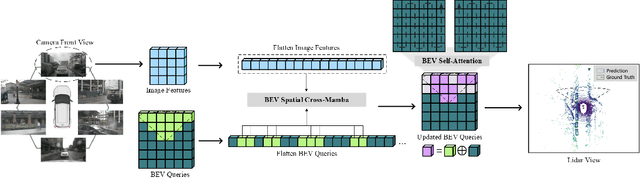
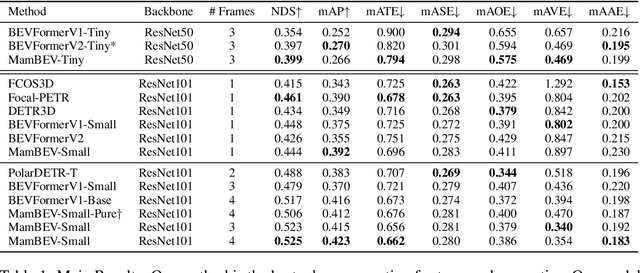
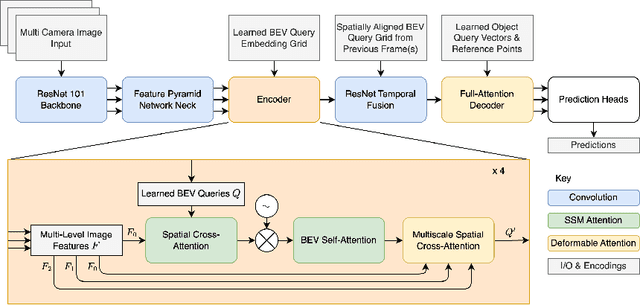
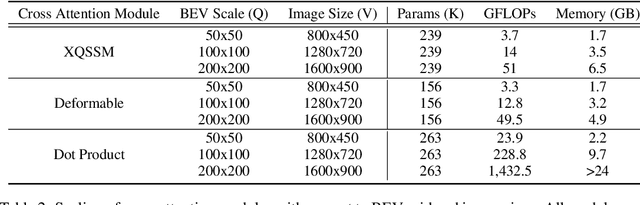
3D visual perception tasks, such as 3D detection from multi-camera images, are essential components of autonomous driving and assistance systems. However, designing computationally efficient methods remains a significant challenge. In this paper, we propose a Mamba-based framework called MamBEV, which learns unified Bird's Eye View (BEV) representations using linear spatio-temporal SSM-based attention. This approach supports multiple 3D perception tasks with significantly improved computational and memory efficiency. Furthermore, we introduce SSM based cross-attention, analogous to standard cross attention, where BEV query representations can interact with relevant image features. Extensive experiments demonstrate MamBEV's promising performance across diverse visual perception metrics, highlighting its advantages in input scaling efficiency compared to existing benchmark models.
GreenAuto: An Automated Platform for Sustainable AI Model Design on Edge Devices
Jan 25, 2025
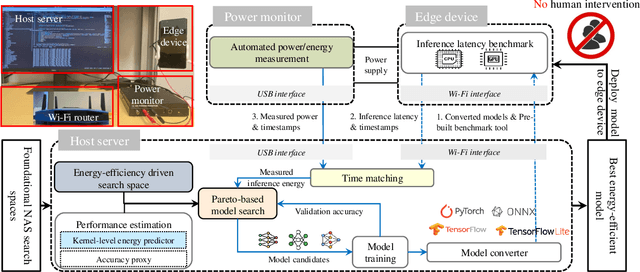
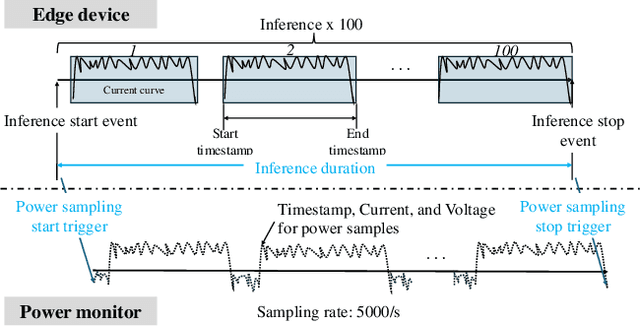
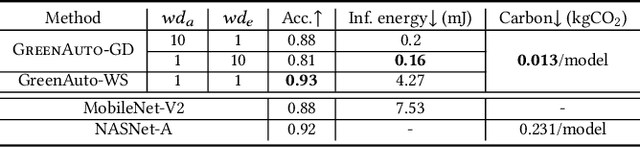
We present GreenAuto, an end-to-end automated platform designed for sustainable AI model exploration, generation, deployment, and evaluation. GreenAuto employs a Pareto front-based search method within an expanded neural architecture search (NAS) space, guided by gradient descent to optimize model exploration. Pre-trained kernel-level energy predictors estimate energy consumption across all models, providing a global view that directs the search toward more sustainable solutions. By automating performance measurements and iteratively refining the search process, GreenAuto demonstrates the efficient identification of sustainable AI models without the need for human intervention.
Analyzing and Overcoming Local Optima in Complex Multi-Objective Optimization by Decomposition-Based Evolutionary Algorithms
Apr 12, 2024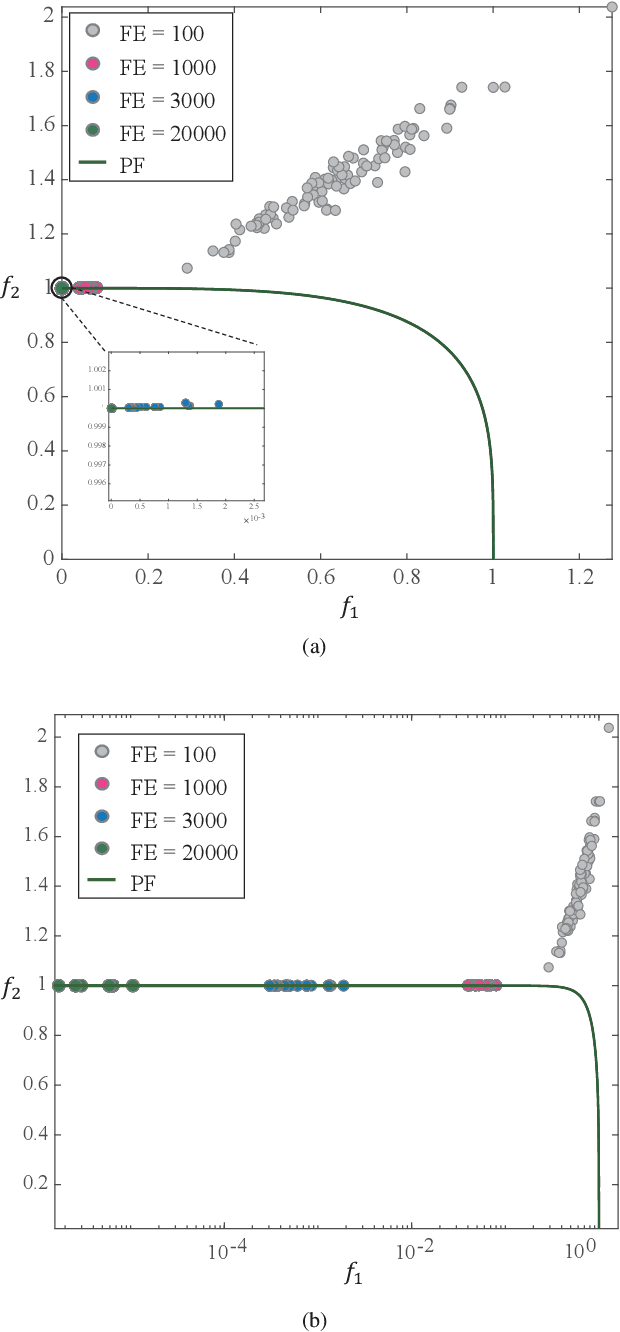
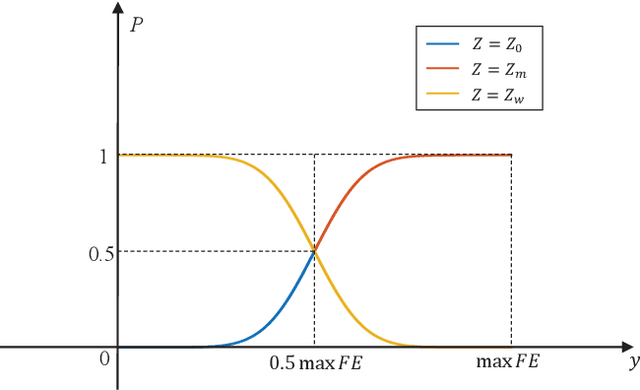
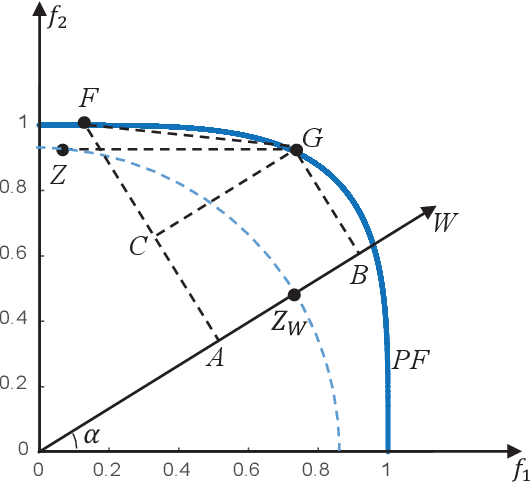
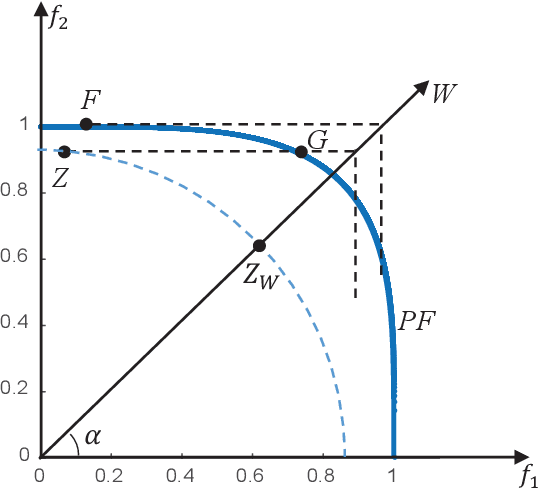
When addressing the challenge of complex multi-objective optimization problems, particularly those with non-convex and non-uniform Pareto fronts, Decomposition-based Multi-Objective Evolutionary Algorithms (MOEADs) often converge to local optima, thereby limiting solution diversity. Despite its significance, this issue has received limited theoretical exploration. Through a comprehensive geometric analysis, we identify that the traditional method of Reference Point (RP) selection fundamentally contributes to this challenge. In response, we introduce an innovative RP selection strategy, the Weight Vector-Guided and Gaussian-Hybrid method, designed to overcome the local optima issue. This approach employs a novel RP type that aligns with weight vector directions and integrates a Gaussian distribution to combine three distinct RP categories. Our research comprises two main experimental components: an ablation study involving 14 algorithms within the MOEADs framework, spanning from 2014 to 2022, to validate our theoretical framework, and a series of empirical tests to evaluate the effectiveness of our proposed method against both traditional and cutting-edge alternatives. Results demonstrate that our method achieves remarkable improvements in both population diversity and convergence.
Pre-insertion resistors temperature prediction based on improved WOA-SVR
Jan 07, 2024The pre-insertion resistors (PIR) within high-voltage circuit breakers are critical components and warm up by generating Joule heat when an electric current flows through them. Elevated temperature can lead to temporary closure failure and, in severe cases, the rupture of PIR. To accurately predict the temperature of PIR, this study combines finite element simulation techniques with Support Vector Regression (SVR) optimized by an Improved Whale Optimization Algorithm (IWOA) approach. The IWOA includes Tent mapping, a convergence factor based on the sigmoid function, and the Ornstein-Uhlenbeck variation strategy. The IWOA-SVR model is compared with the SSA-SVR and WOA-SVR. The results reveal that the prediction accuracies of the IWOA-SVR model were 90.2% and 81.5% (above 100$^\circ$C) in the 3$^\circ$C temperature deviation range and 96.3% and 93.4% (above 100$^\circ$C) in the 4$^\circ$C temperature deviation range, surpassing the performance of the comparative models. This research demonstrates the method proposed can realize the online monitoring of the temperature of the PIR, which can effectively prevent thermal faults PIR and provide a basis for the opening and closing of the circuit breaker within a short period.
Dance of Channel and Sequence: An Efficient Attention-Based Approach for Multivariate Time Series Forecasting
Dec 11, 2023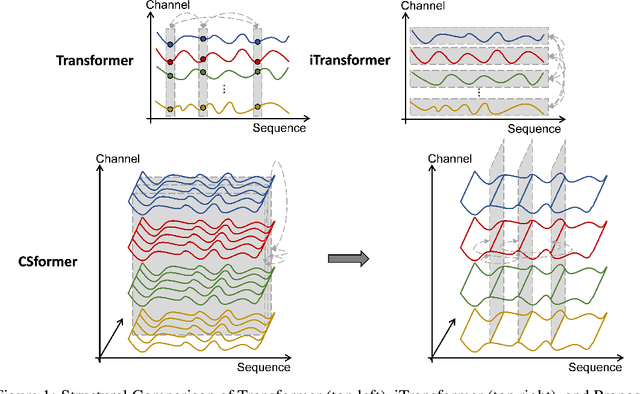

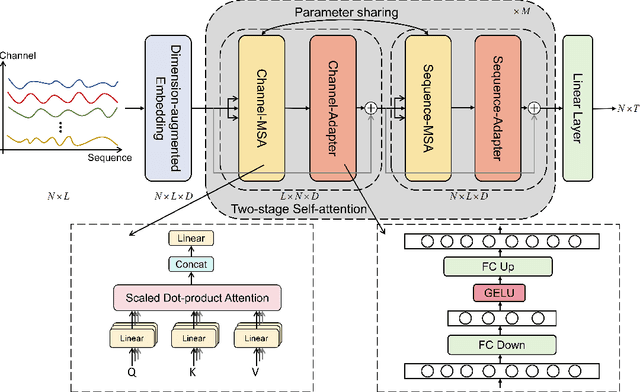

In recent developments, predictive models for multivariate time series analysis have exhibited commendable performance through the adoption of the prevalent principle of channel independence. Nevertheless, it is imperative to acknowledge the intricate interplay among channels, which fundamentally influences the outcomes of multivariate predictions. Consequently, the notion of channel independence, while offering utility to a certain extent, becomes increasingly impractical, leading to information degradation. In response to this pressing concern, we present CSformer, an innovative framework characterized by a meticulously engineered two-stage self-attention mechanism. This mechanism is purposefully designed to enable the segregated extraction of sequence-specific and channel-specific information, while sharing parameters to promote synergy and mutual reinforcement between sequences and channels. Simultaneously, we introduce sequence adapters and channel adapters, ensuring the model's ability to discern salient features across various dimensions. Rigorous experimentation, spanning multiple real-world datasets, underscores the robustness of our approach, consistently establishing its position at the forefront of predictive performance across all datasets. This augmentation substantially enhances the capacity for feature extraction inherent to multivariate time series data, facilitating a more comprehensive exploitation of the available information.
DeepEn2023: Energy Datasets for Edge Artificial Intelligence
Nov 30, 2023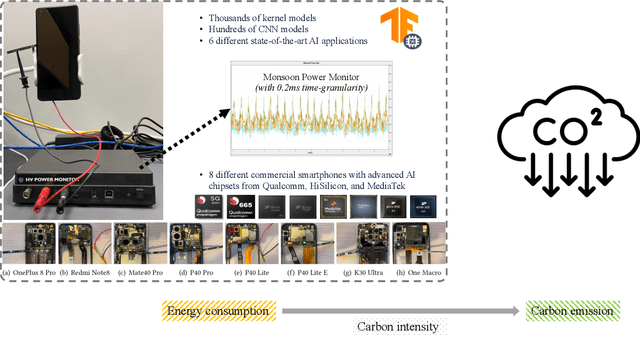
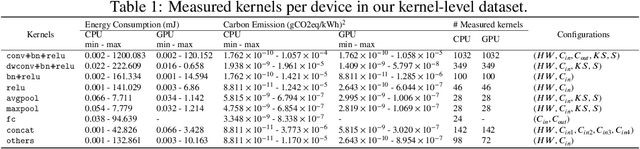
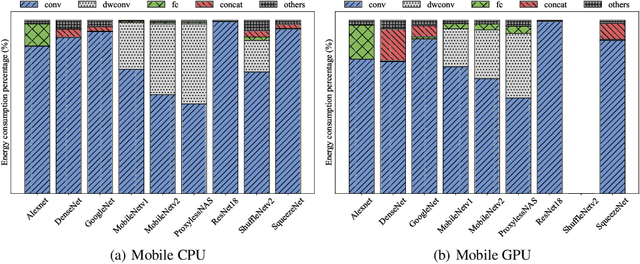
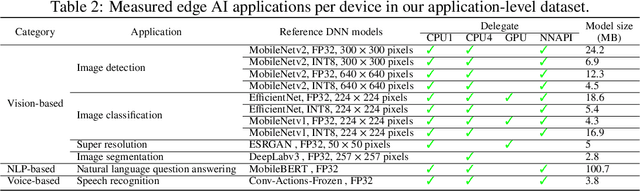
Climate change poses one of the most significant challenges to humanity. As a result of these climatic changes, the frequency of weather, climate, and water-related disasters has multiplied fivefold over the past 50 years, resulting in over 2 million deaths and losses exceeding $3.64 trillion USD. Leveraging AI-powered technologies for sustainable development and combating climate change is a promising avenue. Numerous significant publications are dedicated to using AI to improve renewable energy forecasting, enhance waste management, and monitor environmental changes in real time. However, very few research studies focus on making AI itself environmentally sustainable. This oversight regarding the sustainability of AI within the field might be attributed to a mindset gap and the absence of comprehensive energy datasets. In addition, with the ubiquity of edge AI systems and applications, especially on-device learning, there is a pressing need to measure, analyze, and optimize their environmental sustainability, such as energy efficiency. To this end, in this paper, we propose large-scale energy datasets for edge AI, named DeepEn2023, covering a wide range of kernels, state-of-the-art deep neural network models, and popular edge AI applications. We anticipate that DeepEn2023 will improve transparency in sustainability in on-device deep learning across a range of edge AI systems and applications. For more information, including access to the dataset and code, please visit https://amai-gsu.github.io/DeepEn2023.
TimeSQL: Improving Multivariate Time Series Forecasting with Multi-Scale Patching and Smooth Quadratic Loss
Nov 19, 2023Time series is a special type of sequence data, a sequence of real-valued random variables collected at even intervals of time. The real-world multivariate time series comes with noises and contains complicated local and global temporal dynamics, making it difficult to forecast the future time series given the historical observations. This work proposes a simple and effective framework, coined as TimeSQL, which leverages multi-scale patching and smooth quadratic loss (SQL) to tackle the above challenges. The multi-scale patching transforms the time series into two-dimensional patches with different length scales, facilitating the perception of both locality and long-term correlations in time series. SQL is derived from the rational quadratic kernel and can dynamically adjust the gradients to avoid overfitting to the noises and outliers. Theoretical analysis demonstrates that, under mild conditions, the effect of the noises on the model with SQL is always smaller than that with MSE. Based on the two modules, TimeSQL achieves new state-of-the-art performance on the eight real-world benchmark datasets. Further ablation studies indicate that the key modules in TimeSQL could also enhance the results of other models for multivariate time series forecasting, standing as plug-and-play techniques.