 Add to Chrome
 Add to Firefox
 Add to Edge
Contrastive Parameter Disentanglement for Multi-modal Remote Sensing Image Generation
Jul 26, 2026
Existing remote sensing image generation methods are largely confined to single-modality synthesis and therefore fail to exploit the complementary information inherent in multimodal imagery. To address this limitation, we propose a contrastive parameter disentanglement framework for multimodal remote sensing image generation, which generates semantically consistent and structurally aligned images across multiple modalities, including optical, infrared, and synthetic aperture radar (SAR), from a single text prompt. Specifically, we introduce a contrastive parameter disentanglement module that disentangles shared semantics from modality-specific attributes at the parameter level within an orthogonal core subspace. Based on this module, we develop a disentangled optimization strategy that first constrains the parameter matrix A of the LoRA adapter to capture modality-invariant semantics through a multimodal contrastive objective and then guides multiple parameter matrices B to learn modality-specific attributes under text conditioning. This strategy enables the simultaneous generation of multimodal images with consistent semantic content and distinct modality characteristics. Furthermore, to ensure structural alignment across the generated images, we devise a query-key structure transfer mechanism that jointly models multimodal sampling trajectories during inference by transferring structural correlation priors from an anchor modality to the remaining modalities. Extensive experiments demonstrate that our method outperforms state-of-the-art remote sensing image generation approaches in terms of generation quality, semantic consistency, and structural alignment, while also achieving superior performance in the downstream object classification task.

FUSAR-R1: A Large-Scale Reasoning Model for Intelligent Interpretation of SAR Images
Jul 18, 2026In recent years, large-scale vision-language models have been driving a paradigm shift in intelligent remote sensing image interpretation. By incorporating textual semantic information, the cognitive expression, semantic understanding, and human-computer interaction capabilities of interpretation models have been significantly improved, achieving initial progress in the field of Synthetic Aperture Radar (SAR) image interpretation. However, SAR images are affected by factors such as coherent imaging mechanisms, complex scattering characteristics, speckle noise interference, and target-background coupling, resulting in complex and variable image features with significant uncertainties and specializations. Existing SAR vision-language models do not yet possess the step-by-step analysis, logical judgment, and self-correction capabilities of human experts, making it difficult to support reliable intelligent interpretation in complex scenarios. To address this issue, this paper proposes a large-scale reasoning model, FUSAR-R1, for intelligent interpretation of SAR images. The model first constructs explicit chain-of-thought reasoning data by simulating the interpretation process of human experts and uses this data to guide instruction learning, thereby endowing the model with basic reasoning capabilities. Subsequently, a reinforcement learning strategy is introduced to optimize the model's outputs based on inference results, enabling self-correction and more reliable reasoning. Experimental results demonstrate that FUSAR-R1 consistently outperforms existing multimodal large-scale models across various SAR interpretation tasks, including target detection, target counting and classification, and land-cover category recognition.
SFKD: Spatial--Frequency Joint-Aware Heterogeneous Knowledge Distillation via Multi-Level Wavelet Spectral Interaction
Jul 02, 2026Most existing knowledge distillation methods focus on homogeneous models (e.g., CNN-to-CNN), thereby overlooking the flexibility and potential of knowledge transfer across heterogeneous models. Due to intrinsic inductive bias discrepancies between heterogeneous models that cause spatial distribution inconsistencies, prior heterogeneous distillation methods often weaken or discard spatial information in heterogeneous representations. However, the spatial information in representations often encodes transferable global structural semantics as well as architecture-specific local details, and therefore should not be directly ignored. To better leverage the spatial information encoded in heterogeneous representations, we propose a Spatial-Frequency Joint-Aware Heterogeneous Knowledge Distillation framework (SFKD). By leveraging the complementary properties of wavelet transform spatial locality and Fourier representations in characterizing global energy distributions, we first apply multi-level discrete wavelet transform to explicitly decouple spatial information. The resulting wavelet sub-bands are further refined by a dual-stream dual-stage refinement module, and finally combined with a Gaussian-filtered frequency loss to selectively capture informative global information. Extensive experiments on multiple benchmark datasets under both homogeneous and heterogeneous models demonstrate the superiority of our method.
PASTE: Physics-Aware Scattering Topology Embedding Framework for SAR Object Detection
Mar 16, 2026Current deep learning-based object detection for Synthetic Aperture Radar (SAR) imagery mainly adopts optical image methods, treating targets as texture patches while ignoring inherent electromagnetic scattering mechanisms. Though scattering points have been studied to boost detection performance, most methods still rely on amplitude-based statistical models. Some approaches introduce frequency-domain information for scattering center extraction, but they suffer from high computation cost and poor compatibility with diverse datasets. Thus, effectively embedding scattering topological information into modern detection frameworks remains challenging. To solve these problems, this paper proposes the Physics-Aware Scattering Topology Embedding Framework (PASTE), a novel closed-loop architecture for comprehensive scattering prior integration. By building the full pipeline from topology generation, injection to joint supervision, PASTE elegantly integrates scattering physics into modern SAR detectors. Specifically, it designs a scattering keypoint generation and automatic annotation scheme based on the Attributed Scattering Center (ASC) model to produce scalable and physically consistent priors. A scattering topology injection module guides multi-scale feature learning, and a scattering prior supervision strategy constrains network optimization by aligning predictions with scattering center distributions. Experiments on real datasets show that PASTE is compatible with various detectors and brings relative mAP gains of 2.9% to 11.3% over baselines with acceptable computation overhead. Visualization of scattering maps verifies that PASTE successfully embeds scattering topological priors into feature space, clearly distinguishing target and background scattering regions, thus providing strong interpretability for results.
CrossEarth-SAR: A SAR-Centric and Billion-Scale Geospatial Foundation Model for Domain Generalizable Semantic Segmentation
Mar 12, 2026Synthetic Aperture Radar (SAR) enables global, all-weather earth observation. However, owing to diverse imaging mechanisms, domain shifts across sensors and regions severely hinder its semantic generalization. To address this, we present CrossEarth-SAR, the first billion-scale SAR vision foundation model built upon a novel physics-guided sparse mixture-of-experts (MoE) architecture incorporating physical descriptors, explicitly designed for cross-domain semantic segmentation. To facilitate large-scale pre-training, we develop CrossEarth-SAR-200K, a weakly and fully supervised dataset that unifies public and private SAR imagery. We also introduce a benchmark suite comprising 22 sub-benchmarks across 8 distinct domain gaps, establishing the first unified standard for domain generalization semantic segmentation on SAR imagery. Extensive experiments demonstrate that CrossEarth-SAR achieves state-of-the-art results on 20 benchmarks, surpassing previous methods by over 10\% mIoU on some benchmarks under multi-gap transfer. All code, benchmark and datasets will be publicly available.
FUSAR-GPT : A Spatiotemporal Feature-Embedded and Two-Stage Decoupled Visual Language Model for SAR Imagery
Feb 26, 2026Research on the intelligent interpretation of all-weather, all-time Synthetic Aperture Radar (SAR) is crucial for advancing remote sensing applications. In recent years, although Visual Language Models (VLMs) have demonstrated strong open-world understanding capabilities on RGB images, their performance is severely limited when directly applied to the SAR field due to the complexity of the imaging mechanism, sensitivity to scattering features, and the scarcity of high-quality text corpora. To systematically address this issue, we constructed the inaugural SAR Image-Text-AlphaEarth feature triplet dataset and developed FUSAR-GPT, a VLM specifically for SAR. FUSAR-GPT innovatively introduces a geospatial baseline model as a 'world knowledge' prior and embeds multi-source remote-sensing temporal features into the model's visual backbone via 'spatiotemporal anchors', enabling dynamic compensation for the sparse representation of targets in SAR images. Furthermore, we designed a two-stage SFT strategy to decouple the knowledge injection and task execution of large models. The spatiotemporal feature embedding and the two-stage decoupling paradigm enable FUSAR-GPT to achieve state-of-the-art performance across several typical remote sensing visual-language benchmark tests, significantly outperforming mainstream baseline models by over 12%.
Error-Propagation-Free Learned Video Compression With Dual-Domain Progressive Temporal Alignment
Dec 11, 2025Existing frameworks for learned video compression suffer from a dilemma between inaccurate temporal alignment and error propagation for motion estimation and compensation (ME/MC). The separate-transform framework employs distinct transforms for intra-frame and inter-frame compression to yield impressive rate-distortion (R-D) performance but causes evident error propagation, while the unified-transform framework eliminates error propagation via shared transforms but is inferior in ME/MC in shared latent domains. To address this limitation, in this paper, we propose a novel unifiedtransform framework with dual-domain progressive temporal alignment and quality-conditioned mixture-of-expert (QCMoE) to enable quality-consistent and error-propagation-free streaming for learned video compression. Specifically, we propose dualdomain progressive temporal alignment for ME/MC that leverages coarse pixel-domain alignment and refined latent-domain alignment to significantly enhance temporal context modeling in a coarse-to-fine fashion. The coarse pixel-domain alignment efficiently handles simple motion patterns with optical flow estimated from a single reference frame, while the refined latent-domain alignment develops a Flow-Guided Deformable Transformer (FGDT) over latents from multiple reference frames to achieve long-term motion refinement (LTMR) for complex motion patterns. Furthermore, we design a QCMoE module for continuous bit-rate adaptation that dynamically assigns different experts to adjust quantization steps per pixel based on target quality and content rather than relies on a single quantization step. QCMoE allows continuous and consistent rate control with appealing R-D performance. Experimental results show that the proposed method achieves competitive R-D performance compared with the state-of-the-arts, while successfully eliminating error propagation.
When Segmentation Meets Hyperspectral Image: New Paradigm for Hyperspectral Image Classification
Feb 18, 2025Hyperspectral image (HSI) classification is a cornerstone of remote sensing, enabling precise material and land-cover identification through rich spectral information. While deep learning has driven significant progress in this task, small patch-based classifiers, which account for over 90% of the progress, face limitations: (1) the small patch (e.g., 7x7, 9x9)-based sampling approach considers a limited receptive field, resulting in insufficient spatial structural information critical for object-level identification and noise-like misclassifications even within uniform regions; (2) undefined optimal patch sizes lead to coarse label predictions, which degrade performance; and (3) a lack of multi-shape awareness around objects. To address these challenges, we draw inspiration from large-scale image segmentation techniques, which excel at handling object boundaries-a capability essential for semantic labeling in HSI classification. However, their application remains under-explored in this task due to (1) the prevailing notion that larger patch sizes degrade performance, (2) the extensive unlabeled regions in HSI groundtruth, and (3) the misalignment of input shapes between HSI data and segmentation models. Thus, in this study, we propose a novel paradigm and baseline, HSIseg, for HSI classification that leverages segmentation techniques combined with a novel Dynamic Shifted Regional Transformer (DSRT) to overcome these challenges. We also introduce an intuitive progressive learning framework with adaptive pseudo-labeling to iteratively incorporate unlabeled regions into the training process, thereby advancing the application of segmentation techniques. Additionally, we incorporate auxiliary data through multi-source data collaboration, promoting better feature interaction. Validated on five public HSI datasets, our proposal outperforms state-of-the-art methods.
Contrastive Representation Distillation via Multi-Scale Feature Decoupling
Feb 09, 2025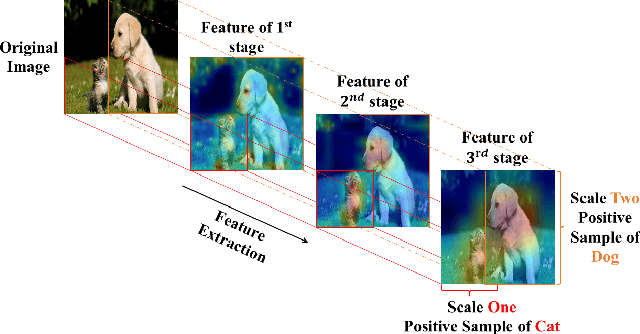
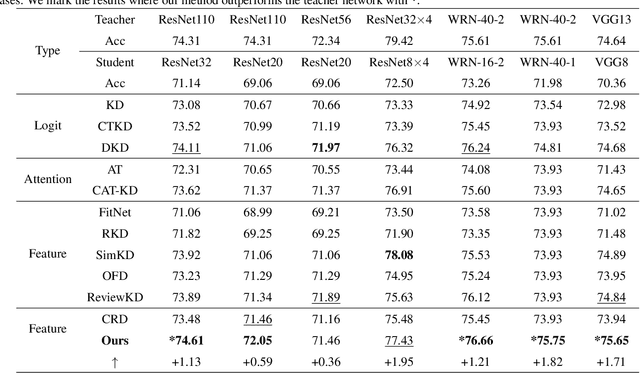


Knowledge distillation is a technique aimed at enhancing the performance of a smaller student network without increasing its parameter size by transferring knowledge from a larger, pre-trained teacher network. Previous approaches have predominantly focused on distilling global feature information while overlooking the importance of disentangling the diverse types of information embedded within different regions of the feature. In this work, we introduce multi-scale decoupling in the feature transfer process for the first time, where the decoupled local features are individually processed and integrated with contrastive learning. Moreover, compared to previous contrastive learning-based distillation methods, our approach not only reduces computational costs but also enhances efficiency, enabling performance improvements for the student network using only single-batch samples. Extensive evaluations on CIFAR-100 and ImageNet demonstrate our method's superiority, with some student networks distilled using our method even surpassing the performance of their pre-trained teacher networks. These results underscore the effectiveness of our approach in enabling student networks to thoroughly absorb knowledge from teacher networks.
Reciprocal Point Learning Network with Large Electromagnetic Kernel for SAR Open-Set Recognition
Nov 07, 2024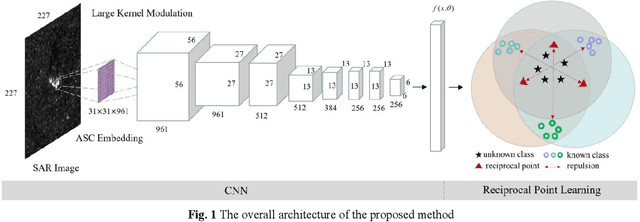
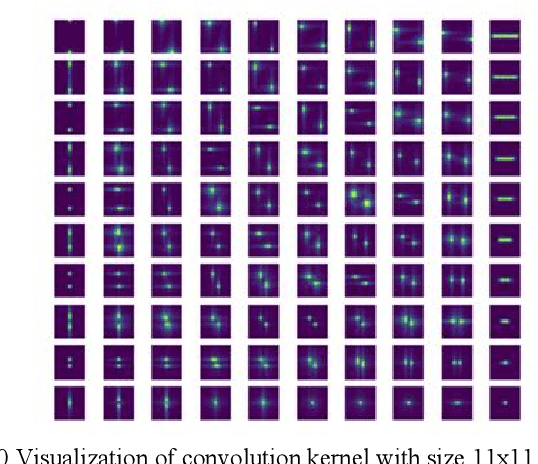
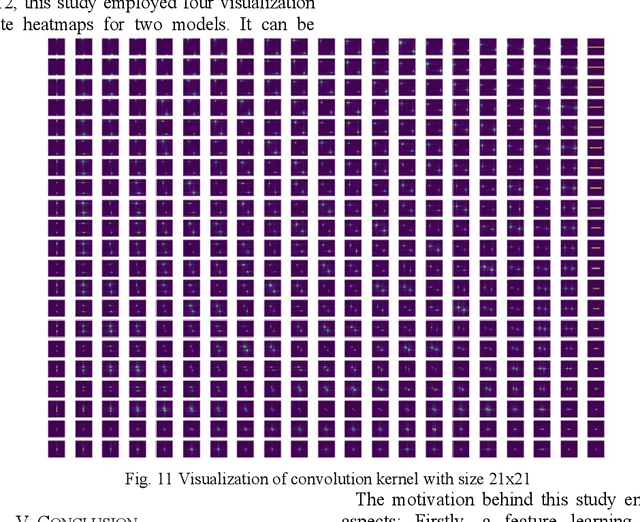
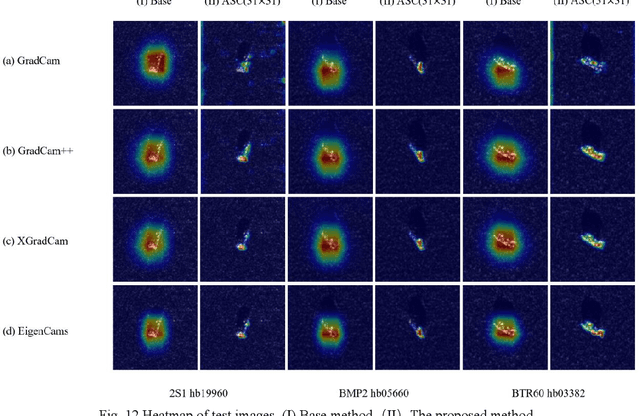
The limitations of existing Synthetic Aperture Radar (SAR) Automatic Target Recognition (ATR) methods lie in their confinement by the closed-environment assumption, hindering their effective and robust handling of unknown target categories in open environments. Open Set Recognition (OSR), a pivotal facet for algorithmic practicality, intends to categorize known classes while denoting unknown ones as "unknown." The chief challenge in OSR involves concurrently mitigating risks associated with generalizing features from a restricted set of known classes to numerous unknown samples and the open space exposure to potential unknown data. To enhance open-set SAR classification, a method called scattering kernel with reciprocal learning network is proposed. Initially, a feature learning framework is constructed based on reciprocal point learning (RPL), establishing a bounded space for potential unknown classes. This approach indirectly introduces unknown information into a learner confined to known classes, thereby acquiring more concise and discriminative representations. Subsequently, considering the variability in the imaging of targets at different angles and the discreteness of components in SAR images, a proposal is made to design convolutional kernels based on large-sized attribute scattering center models. This enhances the ability to extract intrinsic non-linear features and specific scattering characteristics in SAR images, thereby improving the discriminative features of the model and mitigating the impact of imaging variations on classification performance. Experiments on the MSTAR datasets substantiate the superior performance of the proposed approach called ASC-RPL over mainstream methods.