 Add to Chrome
 Add to Firefox
 Add to Edge
FreeStyle: Free Control of Style-Content Dual-Reference Generation from Community LoRA Mining
Jun 18, 2026
Style-content dual-reference generation aims to synthesize an image that preserves the structure and semantics of a content reference while adopting the style of a separate style reference.Despite recent progress, this setting remains challenging because models must balance content fidelity, style alignment, and instruction following avoiding semantic leakage from the style reference.A key bottleneck is the lack of large-scale triplet data with clean content-style separation and broad long-tail style coverage.In this work, we propose FreeStyle, a scalable dual-reference generation framework based on community LoRA mining.We treat community LoRAs as compositional anchors for style and content, and design a rigorous generation and filtering pipeline to construct large-scale Style-Reference and Content-Reference triplets across multiple base models.To address content leakage, we adopt a two-stage curriculum with stage-specific disentanglement mechanisms: an attention-level enrichment constraint that suppresses style-reference leakage in the style-transfer stage, and a frequency-aware RoPE modulation strategy that targets positional-correspondence-based leakage in the harder dual-reference stage.We also introduce a benchmark covering both style-reference and dual-reference generation, with evaluations on style similarity, content preservation, aesthetics, instruction following, and leakage rejection. The benchmark incorporates a style-invariant Content Alignment Score (CAS) and introduces a calibrated VLM-based Rejection Score for evaluating generation reliability and leakage suppression.Extensive experiments show that our model achieves a strong balance among style alignment, content preservation, and leakage suppression.

Few-Shot Distribution-Aligned Flow Matching for Data Synthesis in Medical Image Segmentation
Apr 03, 2026Data heterogeneity hinders clinical deployment of medical image analysis models, and generative data augmentation helps mitigate this issue. However, recent diffusion-based methods that synthesize image-mask pairs often ignore distribution shifts between generated and real images across scenarios, and such mismatches can markedly degrade downstream performance. To address this issue, we propose AlignFlow, a flow matching model that aligns with the target reference image distribution via differentiable reward fine-tuning, and remains effective even when only a small number of reference images are provided. Specifically, we divide the training of the flow matching model into two stages: in the first stage, the model fits the training data to generate plausible images; Then, we introduce a distribution alignment mechanism and employ differentiable reward to steer the generated images toward the distribution of the given samples from the target domain. In addition, to enhance the diversity of generated masks, we also design a flow matching based mask generation to complement the diversity in regions of interest. Extensive experiments demonstrate the effectiveness of our approach, i.e., performance improvement by 3.5-4.0% in mDice and 3.5-5.6% in mIoU across a variety of datasets and scenarios.
CrossEarth-SAR: A SAR-Centric and Billion-Scale Geospatial Foundation Model for Domain Generalizable Semantic Segmentation
Mar 12, 2026Synthetic Aperture Radar (SAR) enables global, all-weather earth observation. However, owing to diverse imaging mechanisms, domain shifts across sensors and regions severely hinder its semantic generalization. To address this, we present CrossEarth-SAR, the first billion-scale SAR vision foundation model built upon a novel physics-guided sparse mixture-of-experts (MoE) architecture incorporating physical descriptors, explicitly designed for cross-domain semantic segmentation. To facilitate large-scale pre-training, we develop CrossEarth-SAR-200K, a weakly and fully supervised dataset that unifies public and private SAR imagery. We also introduce a benchmark suite comprising 22 sub-benchmarks across 8 distinct domain gaps, establishing the first unified standard for domain generalization semantic segmentation on SAR imagery. Extensive experiments demonstrate that CrossEarth-SAR achieves state-of-the-art results on 20 benchmarks, surpassing previous methods by over 10\% mIoU on some benchmarks under multi-gap transfer. All code, benchmark and datasets will be publicly available.
FUSAR-GPT : A Spatiotemporal Feature-Embedded and Two-Stage Decoupled Visual Language Model for SAR Imagery
Feb 26, 2026Research on the intelligent interpretation of all-weather, all-time Synthetic Aperture Radar (SAR) is crucial for advancing remote sensing applications. In recent years, although Visual Language Models (VLMs) have demonstrated strong open-world understanding capabilities on RGB images, their performance is severely limited when directly applied to the SAR field due to the complexity of the imaging mechanism, sensitivity to scattering features, and the scarcity of high-quality text corpora. To systematically address this issue, we constructed the inaugural SAR Image-Text-AlphaEarth feature triplet dataset and developed FUSAR-GPT, a VLM specifically for SAR. FUSAR-GPT innovatively introduces a geospatial baseline model as a 'world knowledge' prior and embeds multi-source remote-sensing temporal features into the model's visual backbone via 'spatiotemporal anchors', enabling dynamic compensation for the sparse representation of targets in SAR images. Furthermore, we designed a two-stage SFT strategy to decouple the knowledge injection and task execution of large models. The spatiotemporal feature embedding and the two-stage decoupling paradigm enable FUSAR-GPT to achieve state-of-the-art performance across several typical remote sensing visual-language benchmark tests, significantly outperforming mainstream baseline models by over 12%.
Meta-SimGNN: Adaptive and Robust WiFi Localization Across Dynamic Configurations and Diverse Scenarios
Nov 18, 2025To promote the practicality of deep learning-based localization, existing studies aim to address the issue of scenario dependence through meta-learning. However, these studies primarily focus on variations in environmental layouts while overlooking the impact of changes in device configurations, such as bandwidth, the number of access points (APs), and the number of antennas used. Unlike environmental changes, variations in device configurations affect the dimensionality of channel state information (CSI), thereby compromising neural network usability. To address this issue, we propose Meta-SimGNN, a novel WiFi localization system that integrates graph neural networks with meta-learning to improve localization generalization and robustness. First, we introduce a fine-grained CSI graph construction scheme, where each AP is treated as a graph node, allowing for adaptability to changes in the number of APs. To structure the features of each node, we propose an amplitude-phase fusion method and a feature extraction method. The former utilizes both amplitude and phase to construct CSI images, enhancing data reliability, while the latter extracts dimension-consistent features to address variations in bandwidth and the number of antennas. Second, a similarity-guided meta-learning strategy is developed to enhance adaptability in diverse scenarios. The initial model parameters for the fine-tuning stage are determined by comparing the similarity between the new scenario and historical scenarios, facilitating rapid adaptation of the model to the new localization scenario. Extensive experimental results over commodity WiFi devices in different scenarios show that Meta-SimGNN outperforms the baseline methods in terms of localization generalization and accuracy.
Efficient Network Automatic Relevance Determination
Jun 14, 2025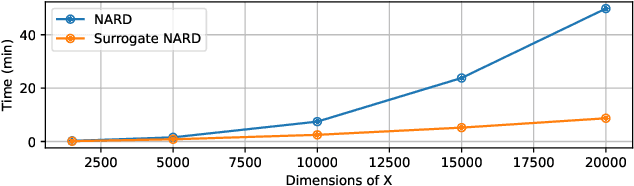
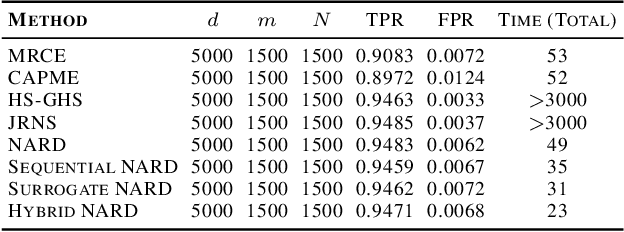
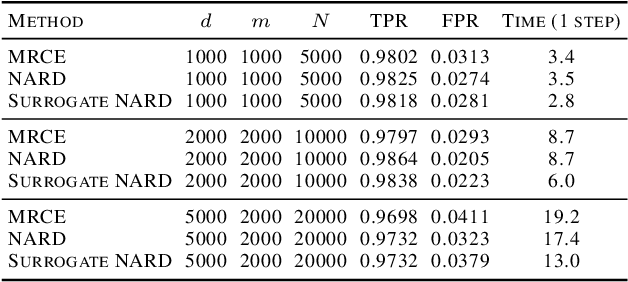
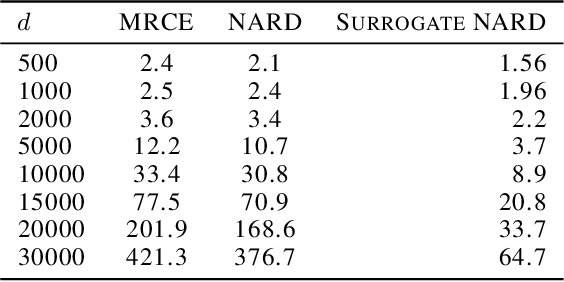
We propose Network Automatic Relevance Determination (NARD), an extension of ARD for linearly probabilistic models, to simultaneously model sparse relationships between inputs $X \in \mathbb R^{d \times N}$ and outputs $Y \in \mathbb R^{m \times N}$, while capturing the correlation structure among the $Y$. NARD employs a matrix normal prior which contains a sparsity-inducing parameter to identify and discard irrelevant features, thereby promoting sparsity in the model. Algorithmically, it iteratively updates both the precision matrix and the relationship between $Y$ and the refined inputs. To mitigate the computational inefficiencies of the $\mathcal O(m^3 + d^3)$ cost per iteration, we introduce Sequential NARD, which evaluates features sequentially, and a Surrogate Function Method, leveraging an efficient approximation of the marginal likelihood and simplifying the calculation of determinant and inverse of an intermediate matrix. Combining the Sequential update with the Surrogate Function method further reduces computational costs. The computational complexity per iteration for these three methods is reduced to $\mathcal O(m^3+p^3)$, $\mathcal O(m^3 + d^2)$, $\mathcal O(m^3+p^2)$, respectively, where $p \ll d$ is the final number of features in the model. Our methods demonstrate significant improvements in computational efficiency with comparable performance on both synthetic and real-world datasets.
Breaking the Ceiling of the LLM Community by Treating Token Generation as a Classification for Ensembling
Jun 18, 2024Ensembling multiple models has always been an effective approach to push the limits of existing performance and is widely used in classification tasks by simply averaging the classification probability vectors from multiple classifiers to achieve better accuracy. However, in the thriving open-source Large Language Model (LLM) community, ensembling methods are rare and typically limited to ensembling the full-text outputs of LLMs, such as selecting the best output using a ranker, which leads to underutilization of token-level probability information. In this paper, we treat the Generation of each token by LLMs as a Classification (GaC) for ensembling. This approach fully exploits the probability information at each generation step and better prevents LLMs from producing early incorrect tokens that lead to snowballing errors. In experiments, we ensemble state-of-the-art LLMs on several benchmarks, including exams, mathematics and reasoning, and observe that our method breaks the existing community performance ceiling. Furthermore, we observed that most of the tokens in the answer are simple and do not affect the correctness of the final answer. Therefore, we also experimented with ensembling only key tokens, and the results showed better performance with lower latency across benchmarks.
An Intelligent-Detection Network for Handwritten Mathematical Expression Recognition
Nov 26, 2023The use of artificial intelligence technology in education is growing rapidly, with increasing attention being paid to handwritten mathematical expression recognition (HMER) by researchers. However, many existing methods for HMER may fail to accurately read formulas with complex structures, as the attention results can be inaccurate due to illegible handwriting or large variations in writing styles. Our proposed Intelligent-Detection Network (IDN) for HMER differs from traditional encoder-decoder methods by utilizing object detection techniques. Specifically, we have developed an enhanced YOLOv7 network that can accurately detect both digital and symbolic objects. The detection results are then integrated into the bidirectional gated recurrent unit (BiGRU) and the baseline symbol relationship tree (BSRT) to determine the relationships between symbols and numbers. The experiments demonstrate that the proposed method outperforms those encoder-decoder networks in recognizing complex handwritten mathematical expressions. This is due to the precise detection of symbols and numbers. Our research has the potential to make valuable contributions to the field of HMER. This could be applied in various practical scenarios, such as assignment grading in schools and information entry of paper documents.
AR Visualization System for Ship Detection and Recognition Based on AI
Nov 21, 2023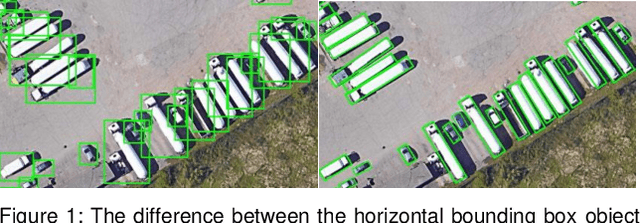
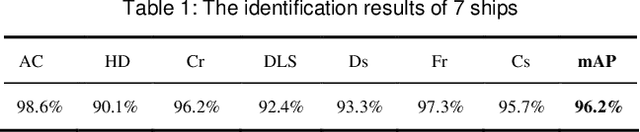
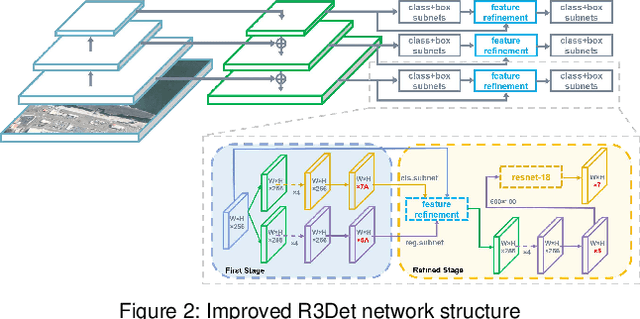
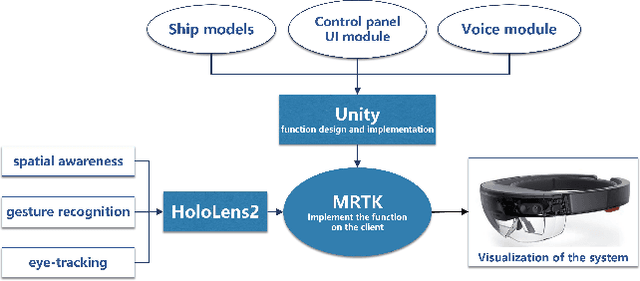
Augmented reality technology has been widely used in industrial design interaction, exhibition guide, information retrieval and other fields. The combination of artificial intelligence and augmented reality technology has also become a future development trend. This project is an AR visualization system for ship detection and recognition based on AI, which mainly includes three parts: artificial intelligence module, Unity development module and Hololens2AR module. This project is based on R3Det algorithm to complete the detection and recognition of ships in remote sensing images. The recognition rate of model detection trained on RTX 2080Ti can reach 96%. Then, the 3D model of the ship is obtained by ship categories and information and generated in the virtual scene. At the same time, voice module and UI interaction module are added. Finally, we completed the deployment of the project on Hololens2 through MRTK. The system realizes the fusion of computer vision and augmented reality technology, which maps the results of object detection to the AR field, and makes a brave step toward the future technological trend and intelligent application.