 Add to Chrome
 Add to Firefox
 Add to Edge
ContrastDiagnosis: Enhancing Interpretability in Lung Nodule Diagnosis Using Contrastive Learning
Mar 08, 2024
With the ongoing development of deep learning, an increasing number of AI models have surpassed the performance levels of human clinical practitioners. However, the prevalence of AI diagnostic products in actual clinical practice remains significantly lower than desired. One crucial reason for this gap is the so-called `black box' nature of AI models. Clinicians' distrust of black box models has directly hindered the clinical deployment of AI products. To address this challenge, we propose ContrastDiagnosis, a straightforward yet effective interpretable diagnosis framework. This framework is designed to introduce inherent transparency and provide extensive post-hoc explainability for deep learning model, making them more suitable for clinical medical diagnosis. ContrastDiagnosis incorporates a contrastive learning mechanism to provide a case-based reasoning diagnostic rationale, enhancing the model's transparency and also offers post-hoc interpretability by highlighting similar areas. High diagnostic accuracy was achieved with AUC of 0.977 while maintain a high transparency and explainability.

MambaMIR: An Arbitrary-Masked Mamba for Joint Medical Image Reconstruction and Uncertainty Estimation
Feb 28, 2024
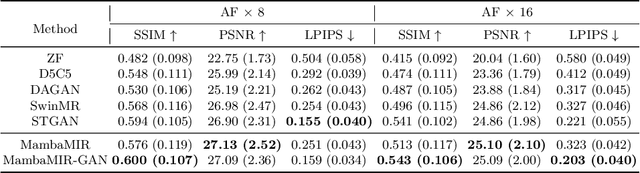
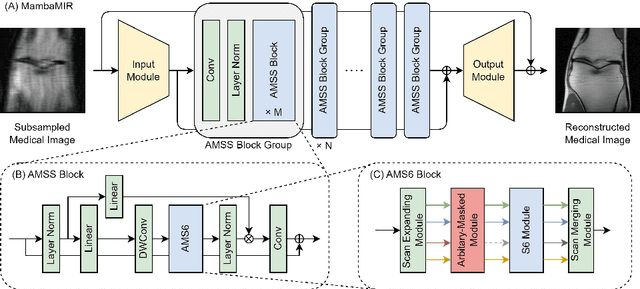
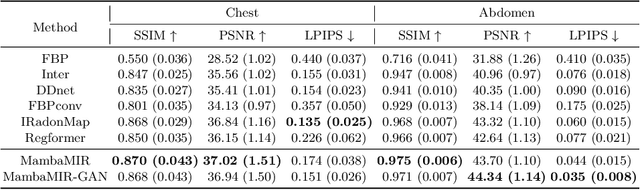
The recent Mamba model has shown remarkable adaptability for visual representation learning, including in medical imaging tasks. This study introduces MambaMIR, a Mamba-based model for medical image reconstruction, as well as its Generative Adversarial Network-based variant, MambaMIR-GAN. Our proposed MambaMIR inherits several advantages, such as linear complexity, global receptive fields, and dynamic weights, from the original Mamba model. The innovated arbitrary-mask mechanism effectively adapt Mamba to our image reconstruction task, providing randomness for subsequent Monte Carlo-based uncertainty estimation. Experiments conducted on various medical image reconstruction tasks, including fast MRI and SVCT, which cover anatomical regions such as the knee, chest, and abdomen, have demonstrated that MambaMIR and MambaMIR-GAN achieve comparable or superior reconstruction results relative to state-of-the-art methods. Additionally, the estimated uncertainty maps offer further insights into the reliability of the reconstruction quality. The code is publicly available at https://github.com/ayanglab/MambaMIR.
Deep Separable Spatiotemporal Learning for Fast Dynamic Cardiac MRI
Feb 24, 2024

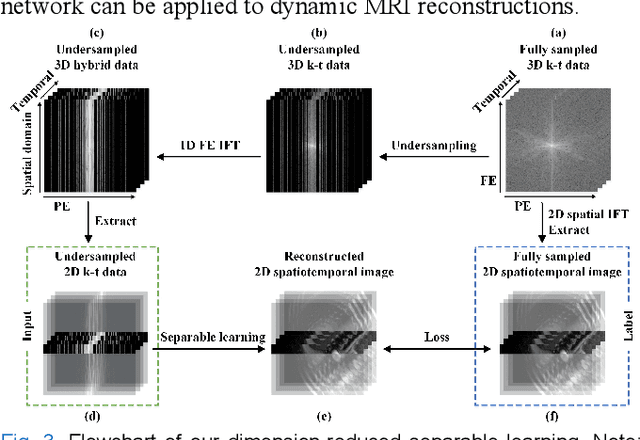
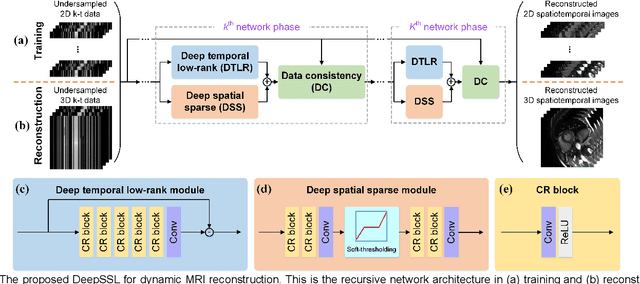
Dynamic magnetic resonance imaging (MRI) plays an indispensable role in cardiac diagnosis. To enable fast imaging, the k-space data can be undersampled but the image reconstruction poses a great challenge of high-dimensional processing. This challenge leads to necessitate extensive training data in many deep learning reconstruction methods. This work proposes a novel and efficient approach, leveraging a dimension-reduced separable learning scheme that excels even with highly limited training data. We further integrate it with spatiotemporal priors to develop a Deep Separable Spatiotemporal Learning network (DeepSSL), which unrolls an iteration process of a reconstruction model with both temporal low-rankness and spatial sparsity. Intermediate outputs are visualized to provide insights into the network's behavior and enhance its interpretability. Extensive results on cardiac cine datasets show that the proposed DeepSSL is superior to the state-of-the-art methods visually and quantitatively, while reducing the demand for training cases by up to 75%. And its preliminary adaptability to cardiac patients has been verified through experienced radiologists' and cardiologists' blind reader study. Additionally, DeepSSL also benefits for achieving the downstream task of cardiac segmentation with higher accuracy and shows robustness in prospective real-time cardiac MRI.
Make it more specific: A novel uncertainty based airway segmentation application on 3D U-Net and its variants
Feb 12, 2024Each medical segmentation task should be considered with a specific AI algorithm based on its scenario so that the most accurate prediction model can be obtained. The most popular algorithms in medical segmentation, 3D U-Net and its variants, can directly implement the task of lung trachea segmentation, but its failure to consider the special tree-like structure of the trachea suggests that there is much room for improvement in its segmentation accuracy. Therefore, a research gap exists because a great amount of state-of-the-art DL algorithms are vanilla 3D U-Net structures, which do not introduce the various performance-enhancing modules that come with special natural image modality in lung airway segmentation. In this paper, we proposed two different network structures Branch-Level U-Net (B-UNet) and Branch-Level CE-UNet (B-CE-UNet) which are based on U-Net structure and compared the prediction results with the same dataset. Specially, both of the two networks add branch loss and central line loss to learn the feature of fine branch endings of the airways. Uncertainty estimation algorithms are also included to attain confident predictions and thereby, increase the overall trustworthiness of our whole model. In addition, predictions of the lung trachea based on the maximum connectivity rate were calculated and extracted during post-processing for segmentation refinement and pruning.
Assessing the Efficacy of Invisible Watermarks in AI-Generated Medical Images
Feb 08, 2024AI-generated medical images are gaining growing popularity due to their potential to address the data scarcity challenge in the real world. However, the issue of accurate identification of these synthetic images, particularly when they exhibit remarkable realism with their real copies, remains a concern. To mitigate this challenge, image generators such as DALLE and Imagen, have integrated digital watermarks aimed at facilitating the discernment of synthetic images' authenticity. These watermarks are embedded within the image pixels and are invisible to the human eye while remains their detectability. Nevertheless, a comprehensive investigation into the potential impact of these invisible watermarks on the utility of synthetic medical images has been lacking. In this study, we propose the incorporation of invisible watermarks into synthetic medical images and seek to evaluate their efficacy in the context of downstream classification tasks. Our goal is to pave the way for discussions on the viability of such watermarks in boosting the detectability of synthetic medical images, fortifying ethical standards, and safeguarding against data pollution and potential scams.
* 5 pages
HAMLET: Graph Transformer Neural Operator for Partial Differential Equations
Feb 05, 2024We present a novel graph transformer framework, HAMLET, designed to address the challenges in solving partial differential equations (PDEs) using neural networks. The framework uses graph transformers with modular input encoders to directly incorporate differential equation information into the solution process. This modularity enhances parameter correspondence control, making HAMLET adaptable to PDEs of arbitrary geometries and varied input formats. Notably, HAMLET scales effectively with increasing data complexity and noise, showcasing its robustness. HAMLET is not just tailored to a single type of physical simulation, but can be applied across various domains. Moreover, it boosts model resilience and performance, especially in scenarios with limited data. We demonstrate, through extensive experiments, that our framework is capable of outperforming current techniques for PDEs.
Data and Physics driven Deep Learning Models for Fast MRI Reconstruction: Fundamentals and Methodologies
Jan 29, 2024
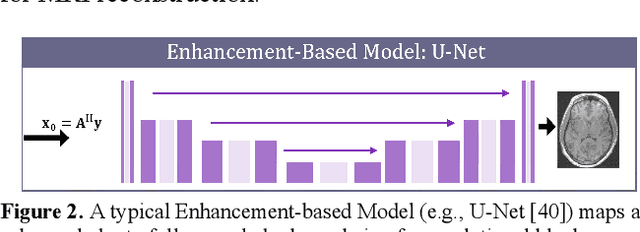

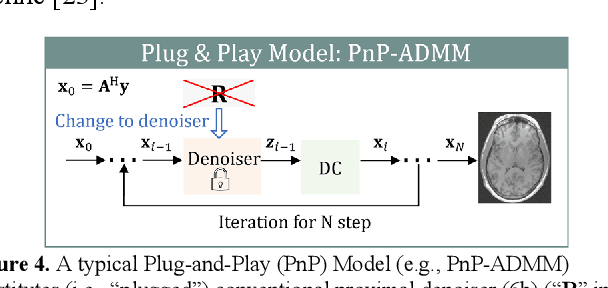
Magnetic Resonance Imaging (MRI) is a pivotal clinical diagnostic tool, yet its extended scanning times often compromise patient comfort and image quality, especially in volumetric, temporal and quantitative scans. This review elucidates recent advances in MRI acceleration via data and physics-driven models, leveraging techniques from algorithm unrolling models, enhancement-based models, and plug-and-play models to emergent full spectrum of generative models. We also explore the synergistic integration of data models with physics-based insights, encompassing the advancements in multi-coil hardware accelerations like parallel imaging and simultaneous multi-slice imaging, and the optimization of sampling patterns. We then focus on domain-specific challenges and opportunities, including image redundancy exploitation, image integrity, evaluation metrics, data heterogeneity, and model generalization. This work also discusses potential solutions and future research directions, emphasizing the role of data harmonization, and federated learning for further improving the general applicability and performance of these methods in MRI reconstruction.
Hunting imaging biomarkers in pulmonary fibrosis: Benchmarks of the AIIB23 challenge
Dec 21, 2023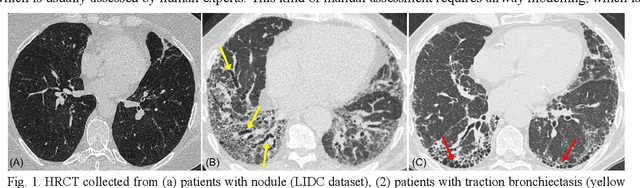
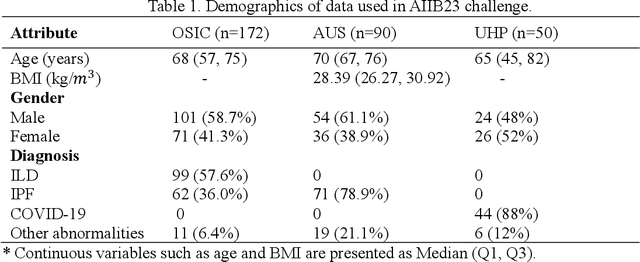

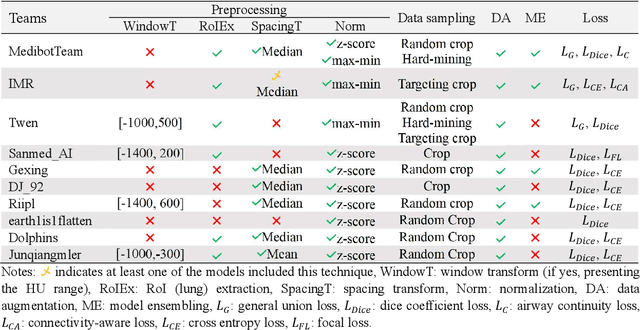
Airway-related quantitative imaging biomarkers are crucial for examination, diagnosis, and prognosis in pulmonary diseases. However, the manual delineation of airway trees remains prohibitively time-consuming. While significant efforts have been made towards enhancing airway modelling, current public-available datasets concentrate on lung diseases with moderate morphological variations. The intricate honeycombing patterns present in the lung tissues of fibrotic lung disease patients exacerbate the challenges, often leading to various prediction errors. To address this issue, the 'Airway-Informed Quantitative CT Imaging Biomarker for Fibrotic Lung Disease 2023' (AIIB23) competition was organized in conjunction with the official 2023 International Conference on Medical Image Computing and Computer Assisted Intervention (MICCAI). The airway structures were meticulously annotated by three experienced radiologists. Competitors were encouraged to develop automatic airway segmentation models with high robustness and generalization abilities, followed by exploring the most correlated QIB of mortality prediction. A training set of 120 high-resolution computerised tomography (HRCT) scans were publicly released with expert annotations and mortality status. The online validation set incorporated 52 HRCT scans from patients with fibrotic lung disease and the offline test set included 140 cases from fibrosis and COVID-19 patients. The results have shown that the capacity of extracting airway trees from patients with fibrotic lung disease could be enhanced by introducing voxel-wise weighted general union loss and continuity loss. In addition to the competitive image biomarkers for prognosis, a strong airway-derived biomarker (Hazard ratio>1.5, p<0.0001) was revealed for survival prognostication compared with existing clinical measurements, clinician assessment and AI-based biomarkers.
A Dual Domain Multi-exposure Image Fusion Network based on the Spatial-Frequency Integration
Dec 17, 2023Multi-exposure image fusion aims to generate a single high-dynamic image by integrating images with different exposures. Existing deep learning-based multi-exposure image fusion methods primarily focus on spatial domain fusion, neglecting the global modeling ability of the frequency domain. To effectively leverage the global illumination modeling ability of the frequency domain, we propose a novelty perspective on multi-exposure image fusion via the Spatial-Frequency Integration Framework, named MEF-SFI. Initially, we revisit the properties of the Fourier transform on the 2D image, and verify the feasibility of multi-exposure image fusion on the frequency domain where the amplitude and phase component is able to guide the integration of the illumination information. Subsequently, we present the deep Fourier-based multi-exposure image fusion framework, which consists of a spatial path and frequency path for local and global modeling separately. Specifically, we introduce a Spatial-Frequency Fusion Block to facilitate efficient interaction between dual domains and capture complementary information from input images with different exposures. Finally, we combine a dual domain loss function to ensure the retention of complementary information in both the spatial and frequency domains. Extensive experiments on the PQA-MEF dataset demonstrate that our method achieves visual-appealing fusion results against state-of-the-art multi-exposure image fusion approaches. Our code is available at https://github.com/SSyangguang/MEF-freq.
A Multi-scale Information Integration Framework for Infrared and Visible Image Fusion
Dec 07, 2023Infrared and visible image fusion aims at generating a fused image containing the intensity and detail information of source images, and the key issue is effectively measuring and integrating the complementary information of multi-modality images from the same scene. Existing methods mostly adopt a simple weight in the loss function to decide the information retention of each modality rather than adaptively measuring complementary information for different image pairs. In this study, we propose a multi-scale dual attention (MDA) framework for infrared and visible image fusion, which is designed to measure and integrate complementary information in both structure and loss function at the image and patch level. In our method, the residual downsample block decomposes source images into three scales first. Then, dual attention fusion block integrates complementary information and generates a spatial and channel attention map at each scale for feature fusion. Finally, the output image is reconstructed by the residual reconstruction block. Loss function consists of image-level, feature-level and patch-level three parts, of which the calculation of the image-level and patch-level two parts are based on the weights generated by the complementary information measurement. Indeed, to constrain the pixel intensity distribution between the output and infrared image, a style loss is added. Our fusion results perform robust and informative across different scenarios. Qualitative and quantitative results on two datasets illustrate that our method is able to preserve both thermal radiation and detailed information from two modalities and achieve comparable results compared with the other state-of-the-art methods. Ablation experiments show the effectiveness of our information integration architecture and adaptively measure complementary information retention in the loss function.