 Add to Chrome
 Add to Firefox
 Add to Edge
SPEARBench: A Benchmark for Naturalness Evaluation in Streaming Speech-to-Speech Language Models
Jul 06, 2026
Streaming speech-to-speech language models aim to answer spoken queries directly with synthetic speech. However, standard speech and text benchmarks do not capture whether these systems behave naturally in conversations, where timing, turn-taking, prosody, interpersonal stance, language and dialect consistency, and relationship-aware appropriateness jointly shape perceived quality. We introduce SPEARBench, a benchmark for evaluating naturalness in speech-to-speech language models from question-answer interactions. SPEARBench constructs controlled dialogue prompts from the Seamless Interaction corpus, runs inference across multiple models, and evaluates generated answers using a multidimensional protocol that covers response latency, interruptions, speech quality, ASR robustness, language and dialect consistency, emotional naturalness, interpersonal stance, and explainable distributional baselines. The benchmark includes original human answers as a reference condition and reports results for several contemporary models. Results show that current models can achieve high signal-level quality and low ASR error while still differing from human conversational behavior in latency, overlap, dialect preservation, emotional adaptation, and interpersonal stance dynamics.

TurnNat: Automatic Evaluation of Turn-Taking Naturalness in Dyadic Spoken Dialogue
Jul 01, 2026Turn-taking naturalness is central to full-duplex spoken dialogue systems, yet its automatic evaluation remains limited. Existing evaluations often rely on human judgments or behavior-specific timing metrics, making it difficult to compare heterogeneous timing failures within a unified framework. We propose TurnNat, a likelihood-based framework for automatic turn-taking naturalness evaluation in two-channel spoken dialogue. A causal turn-taking prediction model trained on natural conversations estimates future two-speaker voice-activity states, and the negative log-likelihood (NLL) of the observed future activity measures timing atypicality. TurnNat pools frame-level NLLs over turn-taking boundary units (TBUs) extracted from utterance onsets and offsets, and aggregates mean and tail TBU scores into a dialogue-level naturalness score. We further construct a controlled perturbation benchmark of paired natural and perturbed dialogue clips, validated by human naturalness judgments. Experiments on this benchmark show that TurnNat successfully identifies unnatural turn-taking perturbations across heterogeneous timing failures.
Reference-Based Prosody and Rhythm Evaluation for Spoken Dialogue Systems
Jun 30, 2026Speech-to-speech (S2S) AI agents are advancing rapidly, yet evaluation lacks interpretable speech-native measures for conversational prosody and rhythm. Because $F_0$, speaking rate, articulation rate, and pausing shift with model-predicted speaker traits and interaction state, pooled human statistics can be poorly calibrated for evaluating a particular output. Using 4000+ hours of dyadic English conversation from the Seamless Interaction dataset, we construct matched reference regimes for $F_0$ mean, $F_0$ expressivity, speech rate, articulation rate, pause ratio, and mean pause duration. We then define a percentile-based evaluation protocol: extract the same metrics from an S2S output waveform, compare them to the closest matched human reference stratum, and report percentile deviations or 5th-95th percentile out-of-regime flags. On held-out human rows, pooled references over-flag state-conditioned $F_0$ expressivity and rhythm, while matched references return flag rates closer to the nominal 10% and make deviation direction interpretable. These outputs serve as behavioral plausibility checks that complement, rather than replace, perceptual and user-centered evaluation.
TRACE: Temporal Relationship-Aware Conversational Entrainment Detection in Dyadic Speech
Jun 29, 2026With the proliferation of speech AI agents, understanding emotional entrainment in conversational interaction has become increasingly important. Emotional entrainment is shaped by social relationships and conversational context, influencing affective coordination over time. We introduce DyadEE, a dataset for emotional entrainment detection in dyadic speech interactions, containing both emotionally entrained conversations and synthetic interactions where entrainment is disrupted through partner swapping and emotion resynthesis. We further propose TRACE, a window-level framework that models dyadic interaction as ordered sequences of acoustic embeddings derived from emotion fine-tuned Whisper representations, treating each sample as an interaction trace rather than pooled utterances. Experimental results on DyadEE show that incorporating conversational context and relationship information improves emotional entrainment detection, with TRACE achieving the best accuracy of 97.01%.
Cross-lingual Knowledge Distillation via Flow-based Voice Conversion for Robust Polyglot Text-To-Speech
Sep 15, 2023In this work, we introduce a framework for cross-lingual speech synthesis, which involves an upstream Voice Conversion (VC) model and a downstream Text-To-Speech (TTS) model. The proposed framework consists of 4 stages. In the first two stages, we use a VC model to convert utterances in the target locale to the voice of the target speaker. In the third stage, the converted data is combined with the linguistic features and durations from recordings in the target language, which are then used to train a single-speaker acoustic model. Finally, the last stage entails the training of a locale-independent vocoder. Our evaluations show that the proposed paradigm outperforms state-of-the-art approaches which are based on training a large multilingual TTS model. In addition, our experiments demonstrate the robustness of our approach with different model architectures, languages, speakers and amounts of data. Moreover, our solution is especially beneficial in low-resource settings.
InstaLoc: One-shot Global Lidar Localisation in Indoor Environments through Instance Learning
May 16, 2023

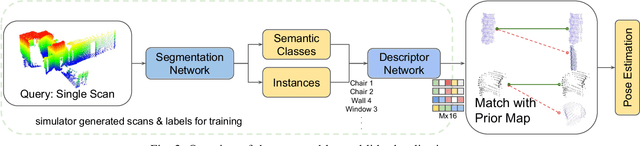
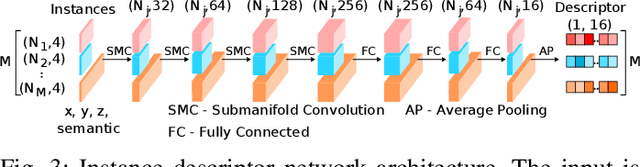
Localization for autonomous robots in prior maps is crucial for their functionality. This paper offers a solution to this problem for indoor environments called InstaLoc, which operates on an individual lidar scan to localize it within a prior map. We draw on inspiration from how humans navigate and position themselves by recognizing the layout of distinctive objects and structures. Mimicking the human approach, InstaLoc identifies and matches object instances in the scene with those from a prior map. As far as we know, this is the first method to use panoptic segmentation directly inferring on 3D lidar scans for indoor localization. InstaLoc operates through two networks based on spatially sparse tensors to directly infer dense 3D lidar point clouds. The first network is a panoptic segmentation network that produces object instances and their semantic classes. The second smaller network produces a descriptor for each object instance. A consensus based matching algorithm then matches the instances to the prior map and estimates a six degrees of freedom (DoF) pose for the input cloud in the prior map. The significance of InstaLoc is that it has two efficient networks. It requires only one to two hours of training on a mobile GPU and runs in real-time at 1 Hz. Our method achieves between two and four times more detections when localizing, as compared to baseline methods, and achieves higher precision on these detections.
Real-time LIDAR localization in natural and urban environments
Jan 31, 2023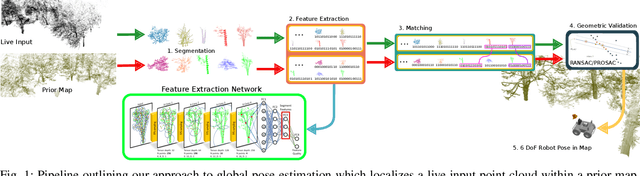
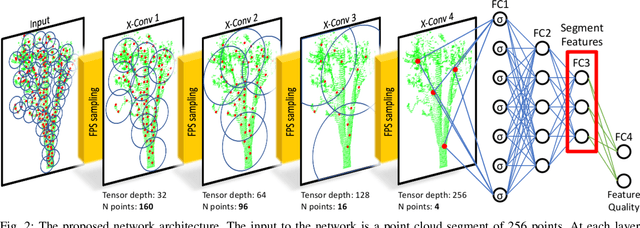
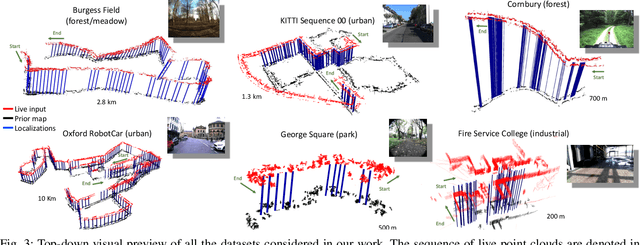
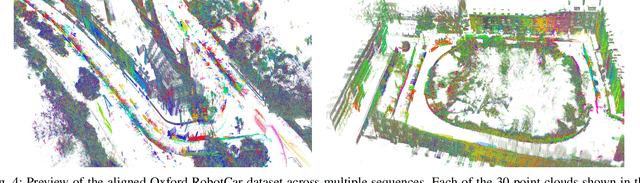
Localization is a key challenge in many robotics applications. In this work we explore LIDAR-based global localization in both urban and natural environments and develop a method suitable for online application. Our approach leverages efficient deep learning architecture capable of learning compact point cloud descriptors directly from 3D data. The method uses an efficient feature space representation of a set of segmented point clouds to match between the current scene and the prior map. We show that down-sampling in the inner layers of the network can significantly reduce computation time without sacrificing performance. We present substantial evaluation of LIDAR-based global localization methods on nine scenarios from six datasets varying between urban, park, forest, and industrial environments. Part of which includes post-processed data from 30 sequences of the Oxford RobotCar dataset, which we make publicly available. Our experiments demonstrate a factor of three reduction of computation, 70% lower memory consumption with marginal loss in localization frequency. The proposed method allows the full pipeline to run on robots with limited computation payload such as drones, quadrupeds, and UGVs as it does not require a GPU at run time.
Modelling low-resource accents without accent-specific TTS frontend
Jan 11, 2023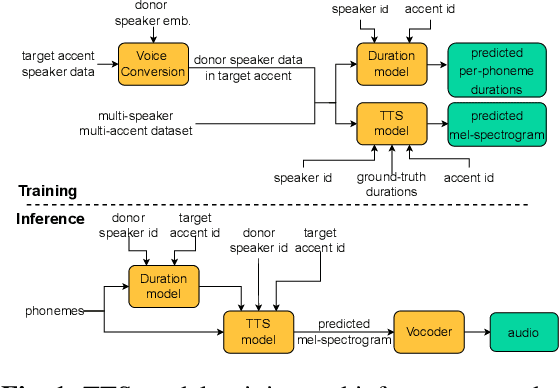
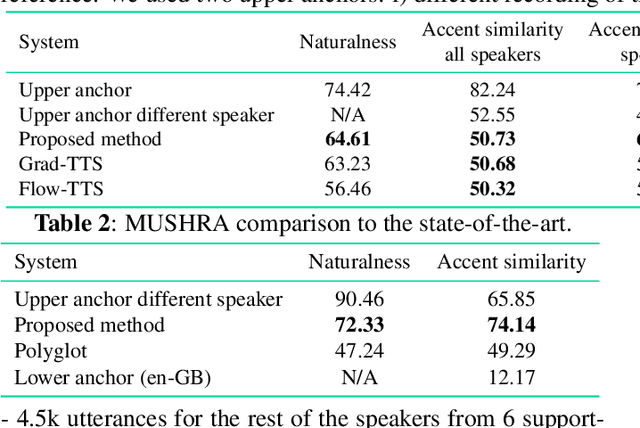
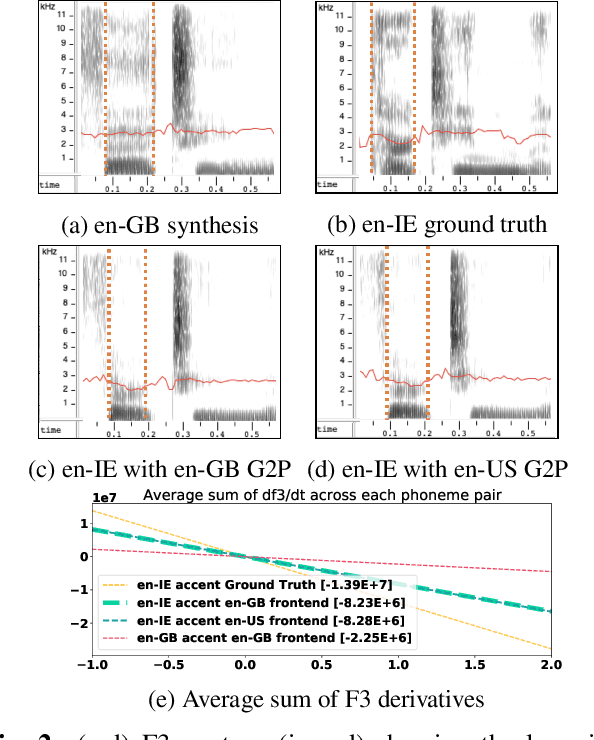
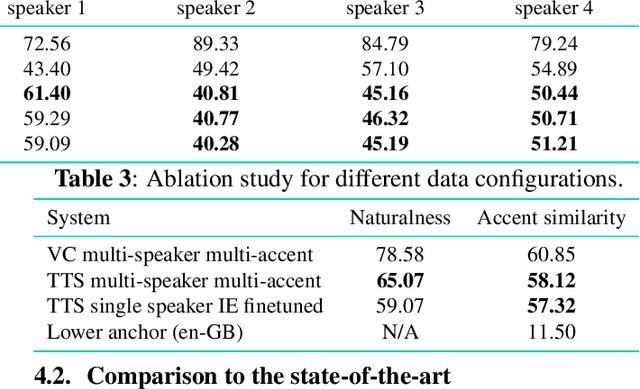
This work focuses on modelling a speaker's accent that does not have a dedicated text-to-speech (TTS) frontend, including a grapheme-to-phoneme (G2P) module. Prior work on modelling accents assumes a phonetic transcription is available for the target accent, which might not be the case for low-resource, regional accents. In our work, we propose an approach whereby we first augment the target accent data to sound like the donor voice via voice conversion, then train a multi-speaker multi-accent TTS model on the combination of recordings and synthetic data, to generate the donor's voice speaking in the target accent. Throughout the procedure, we use a TTS frontend developed for the same language but a different accent. We show qualitative and quantitative analysis where the proposed strategy achieves state-of-the-art results compared to other generative models. Our work demonstrates that low resource accents can be modelled with relatively little data and without developing an accent-specific TTS frontend. Audio samples of our model converting to multiple accents are available on our web page.
Universal Neural Vocoding with Parallel WaveNet
Feb 15, 2021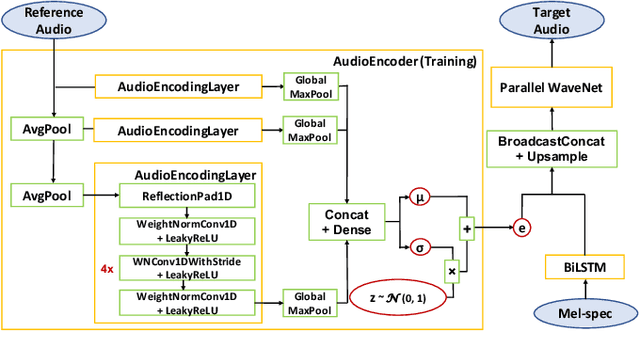

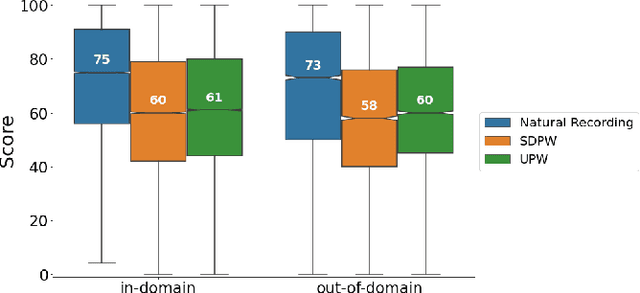
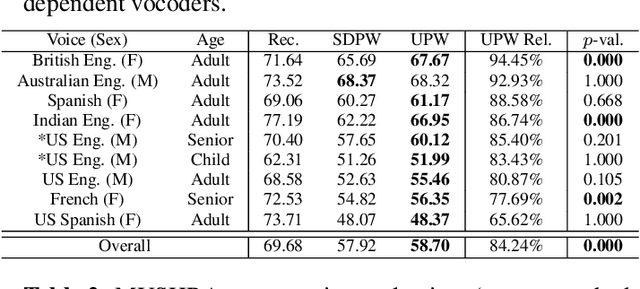
We present a universal neural vocoder based on Parallel WaveNet, with an additional conditioning network called Audio Encoder. Our universal vocoder offers real-time high-quality speech synthesis on a wide range of use cases. We tested it on 43 internal speakers of diverse age and gender, speaking 20 languages in 17 unique styles, of which 7 voices and 5 styles were not exposed during training. We show that the proposed universal vocoder significantly outperforms speaker-dependent vocoders overall. We also show that the proposed vocoder outperforms several existing neural vocoder architectures in terms of naturalness and universality. These findings are consistent when we further test on more than 300 open-source voices.
$\mathbb{X}$Resolution Correspondence Networks
Dec 17, 2020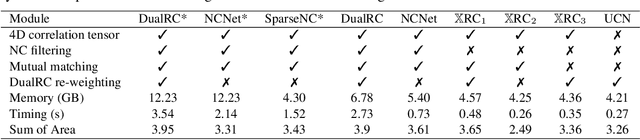
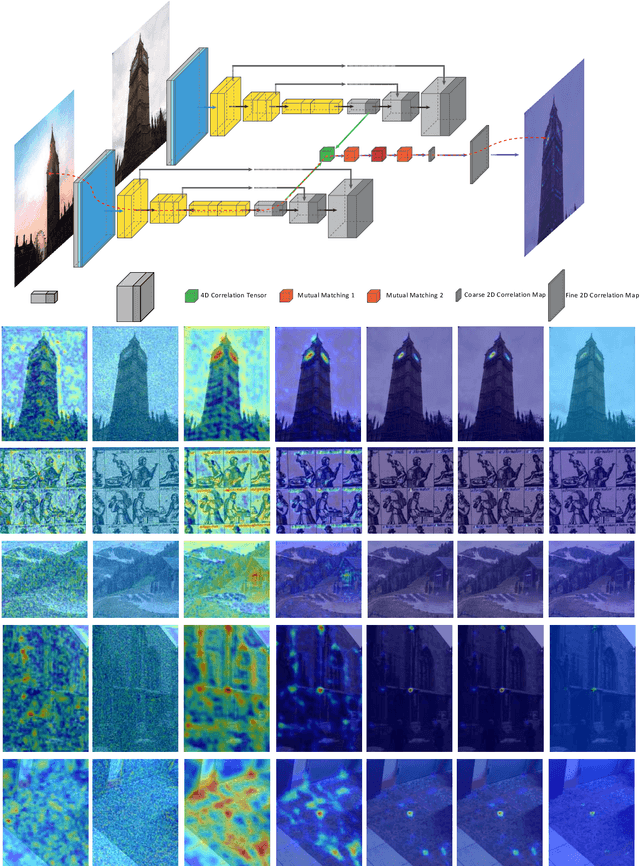
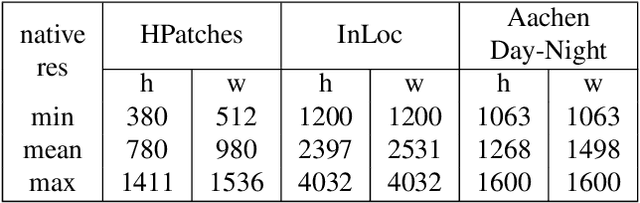
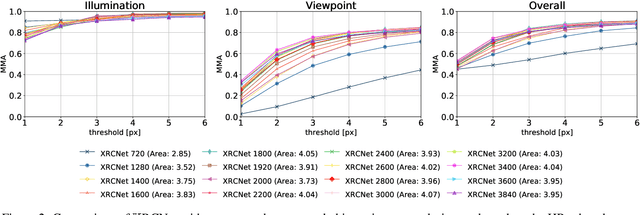
In this paper, we aim at establishing accurate dense correspondences between a pair of images with overlapping field of view under challenging illumination variation, viewpoint changes, and style differences. Through an extensive ablation study of the state-of-the-art correspondence networks, we surprisingly discovered that the widely adopted 4D correlation tensor and its related learning and processing modules could be de-parameterised and removed from training with merely a minor impact over the final matching accuracy. Disabling some of the most memory consuming and computational expensive modules dramatically speeds up the training procedure and allows to use 4x bigger batch size, which in turn compensates for the accuracy drop. Together with a multi-GPU inference stage, our method facilitates the systematic investigation of the relationship between matching accuracy and up-sampling resolution of the native testing images from 720p to 4K. This leads to finding an optimal resolution $\mathbb X$ that produces accurate matching performance surpassing the state-of-the-art methods particularly over the lower error band for the proposed network and evaluation datasets.