 Add to Chrome
 Add to Firefox
 Add to Edge
Towards Shared Embodied Intelligence in Humanoid Robots through Optimization Development and Testing of the Human Aware ergoCub Robot
May 26, 2026
Collaboration is central to human behavior, enabling tasks beyond individual capability. This ability arises from coordinating actions through internal representations of others, a concept known as shared intelligence. Additionally, humans are characterized by physical bodies and cognitive abilities that are optimized in response to their environment, a phenomenon referred to as embodied cognition. Designing humanoid robots that collaborate safely and effectively with people requires unifying these principles. Here we propose an architecture that integrates shared intelligence and embodied cognition to enable robots to physically collaborate with humans, where robot hardware and control are optimized for human metrics, using representations of the human body and motion intelligence. The ultimate goal is to achieve a form of shared embodied intelligence. Specifically, our architecture optimizes robot hardware and physical intelligence parameters with respect to human ergonomic metrics. This is accomplished by modeling human-robot interaction as a function of hardware configurations and embedding human models into the robot's physical intelligence. As a concrete implementation, we present the humanoid robot ergoCub, whose morphology and control have been optimized for collaborative tasks with humans. Our approach provides a framework for designing humanoid robots that prioritize human ergonomics at both the hardware and physical intelligence levels, with applications in industrial and assistive robotics.

A Control Approach for Human-Robot Ergonomic Payload Lifting
May 15, 2023
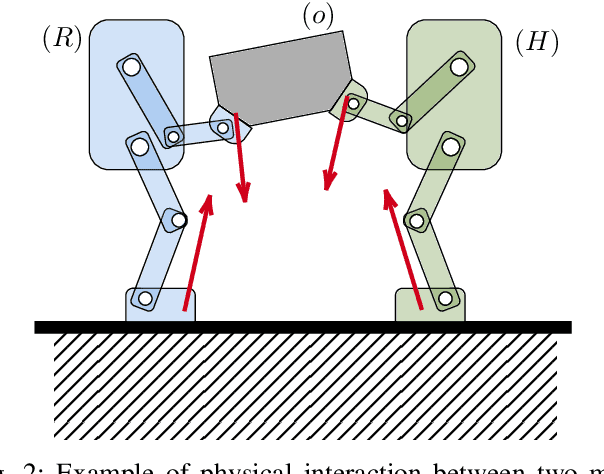
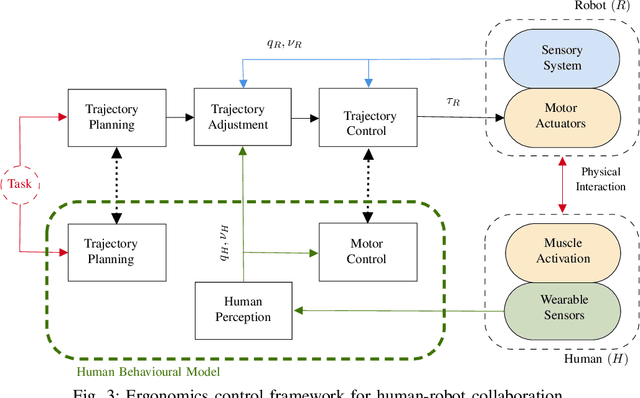
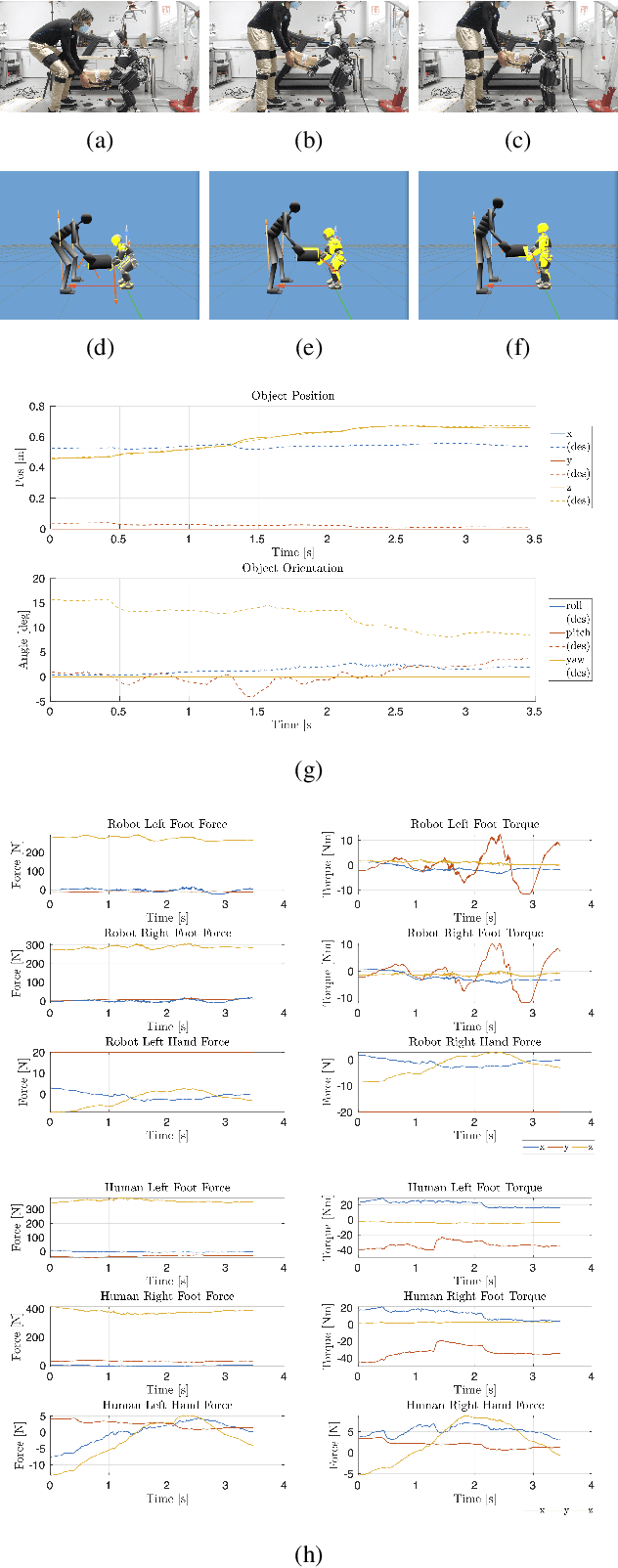
Collaborative robots can relief human operators from excessive efforts during payload lifting activities. Modelling the human partner allows the design of safe and efficient collaborative strategies. In this paper, we present a control approach for human-robot collaboration based on human monitoring through whole-body wearable sensors, and interaction modelling through coupled rigid-body dynamics. Moreover, a trajectory advancement strategy is proposed, allowing for online adaptation of the robot trajectory depending on the human motion. The resulting framework allows us to perform payload lifting tasks, taking into account the ergonomic requirements of the agents. Validation has been performed in an experimental scenario using the iCub3 humanoid robot and a human subject sensorized with the iFeel wearable system.
Control of a Back-Support Exoskeleton to Assist Carrying Activities
May 11, 2023

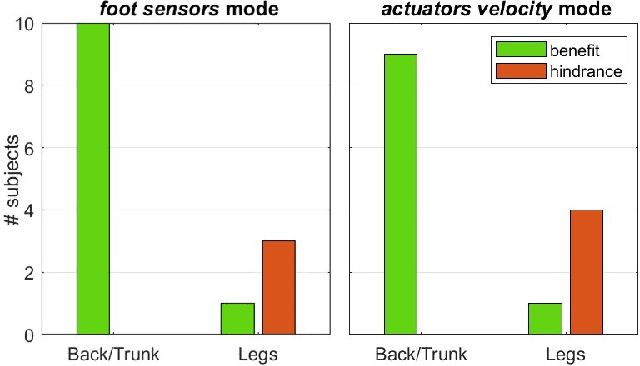
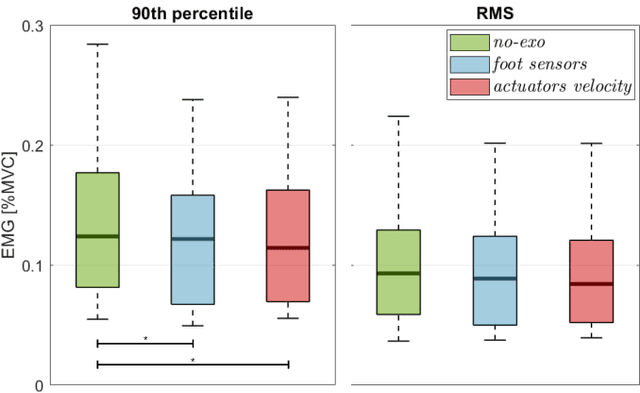
Back-support exoskeletons are commonly used in the workplace to reduce low back pain risk for workers performing demanding activities. However, for the assistance of tasks differing from lifting, back-support exoskeletons potential has not been exploited extensively. This work focuses on the use of an active back-support exoskeleton to assist carrying. Two control strategies are designed that modulate the exoskeleton torques to comply with the task assistance requirements. In particular, two gait phase detection frameworks are exploited to adapt the assistance according to the legs' motion. The two strategies are assessed through an experimental analysis on ten subjects. Carrying task is performed without and with the exoskeleton assistance. Results prove the potential of the presented controls in assisting the task without hindering the gait movement and improving the usability experienced by users. Moreover, the exoskeleton assistance significantly reduces the lumbar load associated with the task, demonstrating its promising use for risk mitigation in the workplace.