 Add to Chrome
 Add to Firefox
 Add to Edge
PL-Guard: Probabilistic Logic Reasoning for LLM Guardrails
Aug 16, 2026
Large language model guardrails can be viewed as policy-consistency problems: a system must determine which policy-relevant facts hold in a prompt-response pair and what those facts imply under a given policy. Common approaches, including policy prompting and LLM-as-a-judge pipelines, often overlap the tasks of semantic grounding and policy reasoning: the model both interprets the prompt-response pair and reasons about whether a policy has been violated. This can lead to unsafe compliance with harmful prompts, or refusals to assist benign ones. To separate grounding and reasoning roles, we propose PL-Guard, a neurosymbolic guardrail architecture. Using a symbolic policy interface consisting of predicates and ProbLog rules, a local LLM grounds prompt-response pairs into predicate probabilities using renormalized True/False token scores, while ProbLog performs explicit probabilistic rule inference over the symbolic policy. On the XSTest benchmark, an offline Qwen-based evaluator finds that PL-Guard with a hand-curated policy reduces unsafe compliance from 22.0% for the base model to 0.5%, and below the 6.0% rate of an LLM-as-a-judge baseline. This comes at the cost of higher over-refusal than the LLM-as-a-judge baseline, 14.4% versus 5.2%. These results suggest that separating neural grounding from probabilistic symbolic reasoning can expose the safety-helpfulness tradeoff while making the guardrail's intermediate reasoning steps explicit and auditable.

How Simple Can It Get? From Interpretable Equations to Readable Rules for Financial Decision Making
Aug 10, 2026In regulated domains such as finance, a model that cannot be explained cannot be deployed, yet many interpretable classifiers defeat their own purpose by producing formulas with dozens of features that no regulator could read. We take the reverse direction. Starting from an interpretable classifier expressed as a single equation over the input features, we progressively simplify it into more readable forms, including a pruned monomial, a directional if--then rule, and the integer scorecards and tallies that finance already deploys. Because the equation is itself the predictive model rather than a post-hoc explanation we can directly quantify what is lost under each simplification. Across four financial datasets, we find that pruning is nearly free and that fidelity can erode faster than predictive performance, allowing simpler rules to remain effective classifiers without faithfully reproducing the original model. A human assessment shows that simplification improves perceived readability, while preferences for different representations vary by professional background. Beyond measuring these losses empirically, we show that some can be anticipated from the original model: we derive a bound on the change caused by pruning and predict how faithfully a rule retaining only the direction of each feature's effect preserves the original ranking.
Amortized Interventional Forecasting for Multivariate CIR Processes
Aug 04, 2026Mean-reverting dynamics are pervasive in finance, and the Cox--Ingersoll--Ross (CIR) process is a standard model for the time series they produce, from short rates to credit default swap (CDS) spreads. Yet CIR models capture only \emph{correlated} co-movement, not \emph{causal} influence between series, so they cannot answer the system's response when one series is externally shocked, which observational conditionals confound with historical co-movement. We make two contributions. First, an amortized model for distributional causal effect estimation that frames trajectories as time-stamped observations and predicts the calibrated multi-horizon shock response without retraining per scenario. Second, a causal multivariate CIR data-generating process that supplies the paired observational and interventional ground truth that real markets cannot. We instantiate and calibrate the framework on CDS spreads as a testbed. CIR-ACTIVA's validity is established on synthetic ground truth, independent of how well the simulator matches reality, while practical grounding is assessed by backtesting the generated traces against real CDS data. Against observational and amortized causal-inference baselines, CIR-ACTIVA leads on both causal selectivity in the joint distribution and horizon-resolved calibration, retaining its selectivity once the interventional law varies over the horizon, with gains concentrating at short horizons. This opens up a class of what-if queries on coupled spread systems, CDS stress testing among them, that observational forecasters cannot answer.
Explaining the Explainer: Understanding the Inner Workings of Transformer-based Symbolic Regression Models
Feb 03, 2026Following their success across many domains, transformers have also proven effective for symbolic regression (SR); however, the internal mechanisms underlying their generation of mathematical operators remain largely unexplored. Although mechanistic interpretability has successfully identified circuits in language and vision models, it has not yet been applied to SR. In this article, we introduce PATCHES, an evolutionary circuit discovery algorithm that identifies compact and correct circuits for SR. Using PATCHES, we isolate 28 circuits, providing the first circuit-level characterisation of an SR transformer. We validate these findings through a robust causal evaluation framework based on key notions such as faithfulness, completeness, and minimality. Our analysis shows that mean patching with performance-based evaluation most reliably isolates functionally correct circuits. In contrast, we demonstrate that direct logit attribution and probing classifiers primarily capture correlational features rather than causal ones, limiting their utility for circuit discovery. Overall, these results establish SR as a high-potential application domain for mechanistic interpretability and propose a principled methodology for circuit discovery.
ECSEL: Explainable Classification via Signomial Equation Learning
Jan 29, 2026We introduce ECSEL, an explainable classification method that learns formal expressions in the form of signomial equations, motivated by the observation that many symbolic regression benchmarks admit compact signomial structure. ECSEL directly constructs a structural, closed-form expression that serves as both a classifier and an explanation. On standard symbolic regression benchmarks, our method recovers a larger fraction of target equations than competing state-of-the-art approaches while requiring substantially less computation. Leveraging this efficiency, ECSEL achieves classification accuracy competitive with established machine learning models without sacrificing interpretability. Further, we show that ECSEL satisfies some desirable properties regarding global feature behavior, decision-boundary analysis, and local feature attributions. Experiments on benchmark datasets and two real-world case studies i.e., e-commerce and fraud detection, demonstrate that the learned equations expose dataset biases, support counterfactual reasoning, and yield actionable insights.
Same Content, Different Answers: Cross-Modal Inconsistency in MLLMs
Dec 09, 2025We introduce two new benchmarks REST and REST+(Render-Equivalence Stress Tests) to enable systematic evaluation of cross-modal inconsistency in multimodal large language models (MLLMs). MLLMs are trained to represent vision and language in the same embedding space, yet they cannot perform the same tasks in both modalities. Our benchmarks contain samples with the same semantic information in three modalities (image, text, mixed) and we show that state-of-the-art MLLMs cannot consistently reason over these different modalities. We evaluate 15 MLLMs and find that the degree of modality inconsistency varies substantially, even when accounting for problems with text recognition (OCR). Neither rendering text as image nor rendering an image as text solves the inconsistency. Even if OCR is correct, we find that visual characteristics (text colour and resolution, but not font) and the number of vision tokens have an impact on model performance. Finally, we find that our consistency score correlates with the modality gap between text and images, highlighting a mechanistic interpretation of cross-modal inconsistent MLLMs.
ACTIVA: Amortized Causal Effect Estimation without Graphs via Transformer-based Variational Autoencoder
Mar 03, 2025
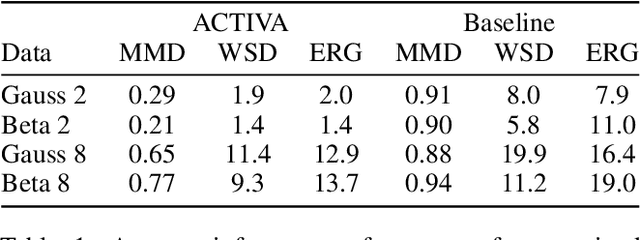
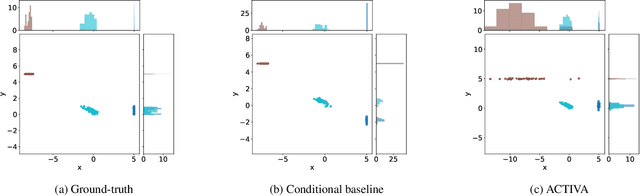
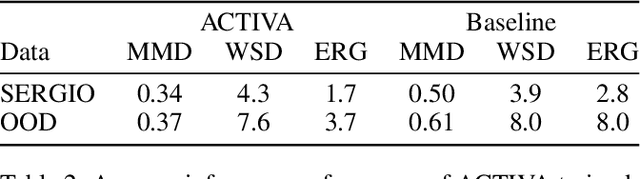
Predicting the distribution of outcomes under hypothetical interventions is crucial in domains like healthcare, economics, and policy-making. Current methods often rely on strong assumptions, such as known causal graphs or parametric models, and lack amortization across problem instances, limiting their practicality. We propose a novel transformer-based conditional variational autoencoder architecture, named ACTIVA, that extends causal transformer encoders to predict causal effects as mixtures of Gaussians. Our method requires no causal graph and predicts interventional distributions given only observational data and a queried intervention. By amortizing over many simulated instances, it enables zero-shot generalization to novel datasets without retraining. Experiments demonstrate accurate predictions for synthetic and semi-synthetic data, showcasing the effectiveness of our graph-free, amortized causal inference approach.
Think Smart, Act SMARL! Analyzing Probabilistic Logic Driven Safety in Multi-Agent Reinforcement Learning
Nov 07, 2024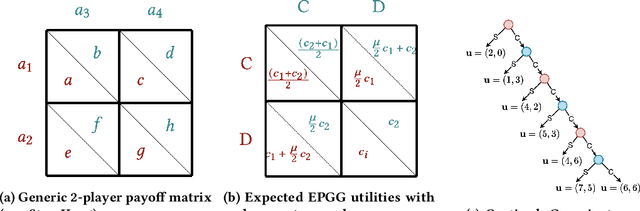
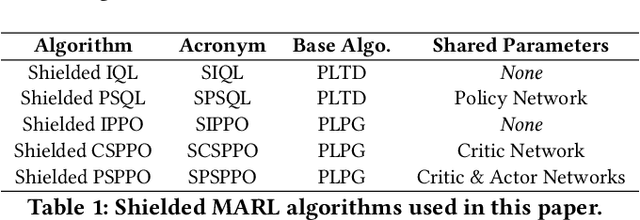
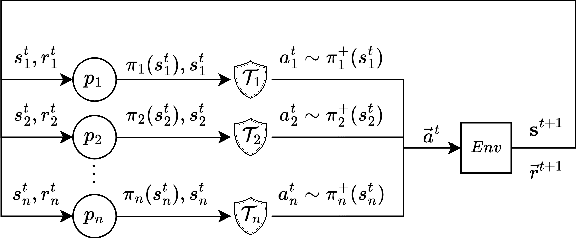
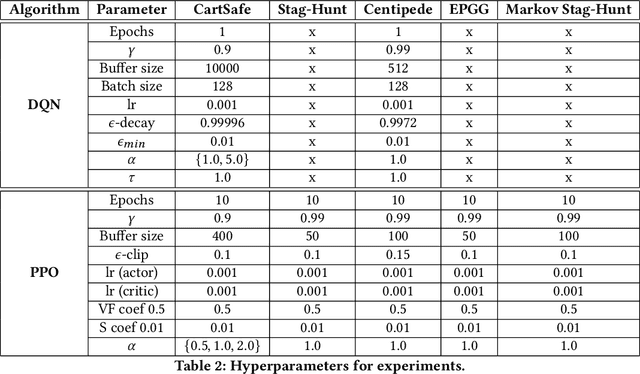
An important challenge for enabling the deployment of reinforcement learning (RL) algorithms in the real world is safety. This has resulted in the recent research field of Safe RL, which aims to learn optimal policies that are safe. One successful approach in that direction is probabilistic logic shields (PLS), a model-based Safe RL technique that uses formal specifications based on probabilistic logic programming, constraining an agent's policy to comply with those specifications in a probabilistic sense. However, safety is inherently a multi-agent concept, since real-world environments often involve multiple agents interacting simultaneously, leading to a complex system which is hard to control. Moreover, safe multi-agent RL (Safe MARL) is still underexplored. In order to address this gap, in this paper we ($i$) introduce Shielded MARL (SMARL) by extending PLS to MARL -- in particular, we introduce Probabilistic Logic Temporal Difference Learning (PLTD) to enable shielded independent Q-learning (SIQL), and introduce shielded independent PPO (SIPPO) using probabilistic logic policy gradients; ($ii$) show its positive effect and use as an equilibrium selection mechanism in various game-theoretic environments including two-player simultaneous games, extensive-form games, stochastic games, and some grid-world extensions in terms of safety, cooperation, and alignment with normative behaviors; and ($iii$) look into the asymmetric case where only one agent is shielded, and show that the shielded agent has a significant influence on the unshielded one, providing further evidence of SMARL's ability to enhance safety and cooperation in diverse multi-agent environments.
Integrating Fuzzy Logic into Deep Symbolic Regression
Nov 01, 2024
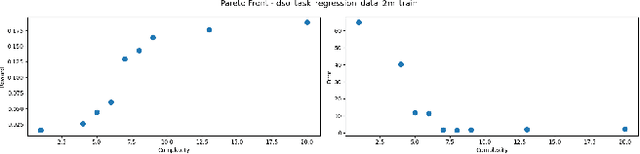
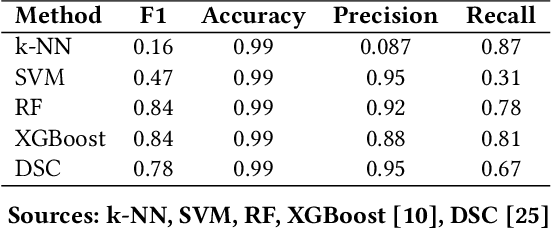
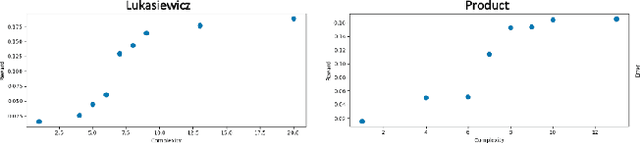
Credit card fraud detection is a critical concern for financial institutions, intensified by the rise of contactless payment technologies. While deep learning models offer high accuracy, their lack of explainability poses significant challenges in financial settings. This paper explores the integration of fuzzy logic into Deep Symbolic Regression (DSR) to enhance both performance and explainability in fraud detection. We investigate the effectiveness of different fuzzy logic implications, specifically {\L}ukasiewicz, G\"odel, and Product, in handling the complexity and uncertainty of fraud detection datasets. Our analysis suggest that the {\L}ukasiewicz implication achieves the highest F1-score and overall accuracy, while the Product implication offers a favorable balance between performance and explainability. Despite having a performance lower than state-of-the-art (SOTA) models due to information loss in data transformation, our approach provides novelty and insights into into integrating fuzzy logic into DSR for fraud detection, providing a comprehensive comparison between different implications and methods.
Enforcing Interpretability in Time Series Transformers: A Concept Bottleneck Framework
Oct 08, 2024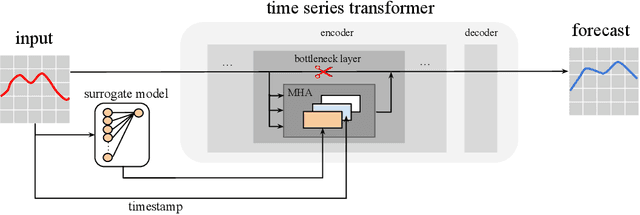
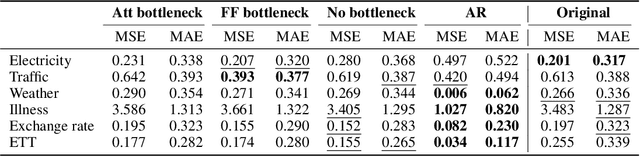
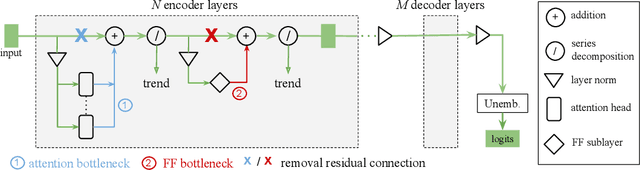
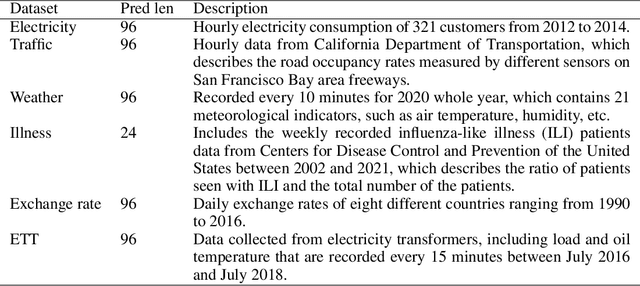
There has been a recent push of research on Transformer-based models for long-term time series forecasting, even though they are inherently difficult to interpret and explain. While there is a large body of work on interpretability methods for various domains and architectures, the interpretability of Transformer-based forecasting models remains largely unexplored. To address this gap, we develop a framework based on Concept Bottleneck Models to enforce interpretability of time series Transformers. We modify the training objective to encourage a model to develop representations similar to predefined interpretable concepts. In our experiments, we enforce similarity using Centered Kernel Alignment, and the predefined concepts include time features and an interpretable, autoregressive surrogate model (AR). We apply the framework to the Autoformer model, and present an in-depth analysis for a variety of benchmark tasks. We find that the model performance remains mostly unaffected, while the model shows much improved interpretability. Additionally, interpretable concepts become local, which makes the trained model easily intervenable. As a proof of concept, we demonstrate a successful intervention in the scenario of a time shift in the data, which eliminates the need to retrain.