 Add to Chrome
 Add to Firefox
 Add to Edge
Networked Tracking of Multiple Moving Targets in 6G Network
Apr 21, 2026
This paper considers a networked tracking architecture in 6G integrated sensing and communication (ISAC) systems, where multiple base stations (BSs) cooperatively transmit radio signals and process received echo signals to track multiple moving targets. Compared to the single-BS counterpart, networked tracking allows the moving targets to be associated with different BSs over time such that the wireless resources can be dynamically allocated among BSs based on target locations. However, networked tracking imposes new challenges for algorithm design and resource allocation. In this paper, we first design the networked Kalman Filter (NKF) that is suitable for multi-BS based tracking, then characterize the posterior Cramer-Rao bound (PCRB) under this NKF, and last design the beamforming vectors of all the BSs to minimize the tracking PCRB. Numerical results show that our dynamic beamforming design can properly associate the targets to the suitable BSs at various sensing blocks and reduce the tracking mean-squared error (MSE).

RF-LEGO: Modularized Signal Processing-Deep Learning Co-Design for RF Sensing via Deep Unrolling
Apr 11, 2026Wireless sensing, traditionally relying on signal processing (SP) techniques, has recently shifted toward data-driven deep learning (DL) to achieve performance breakthroughs. However, existing deep wireless sensing models are typically end-to-end and task-specific, lacking reusability and interpretability. We propose RF-LEGO, a modular co-design framework that transforms interpretable SP algorithms into trainable, physics-grounded DL modules through deep unrolling. By replacing hand-tuned parameters with learnable ones while preserving core processing structures and mathematical operators, RF-LEGO ensures modularity, cascadability, and structure-aligned interpretability. Specifically, we introduce three deep-unrolled modules for critical RF sensing tasks: frequency transform, spatial angle estimation, and signal detection. Extensive experiments using real-world data for Wi-Fi, millimeter-wave, UWB, and 6G sensing demonstrate that RF-LEGO significantly outperforms existing SP and DL baselines, both standalone and when integrated into multiple downstream tasks. RF-LEGO pioneers a novel SP-DL co-design paradigm for wireless sensing via deep unrolling, shedding light on efficient and interpretable deep wireless sensing solutions. Our code is available at https://github.com/aiot-lab/RF-LEGO.
"Take Me Home, Wi-Fi Drone": A Drone-based Wireless System for Wilderness Search and Rescue
Apr 10, 2026Wilderness Search and Rescue (WiSAR) represents a longstanding and critical societal challenge, demanding innovative and automatic technological solutions. In this paper, we introduce Wi2SAR, a novel autonomous drone-based wireless system for long-range, through-occlusion WiSAR operations, without relying on existing infrastructure. Our basic insight is to leverage the automatic reconnection behavior of modern Wi-Fi devices to known networks. By mimicking these networks via on-drone Wi-Fi, Wi2SAR uniquely facilitates the discovery and localization of victims through their accompanying mobile devices. Translating this simple idea into a practical system poses substantial technical challenges. Wi2SAR overcomes these challenges via three distinct innovations: (1) a rapid and energy-efficient device discovery mechanism to discover and identify the target victim, (2) a novel RSS-only, long-range direction finding approach using a 3D-printed Luneburg Lens, amplifying the directional signal strength differences and significantly extending the operational range, and (3) an adaptive drone navigation scheme that guides the drone toward the target efficiently. We implement an end-to-end prototype and evaluate Wi2SAR across various mobile devices and real-world wilderness scenarios. Experimental results demonstrate Wi2SAR's high performance, efficiency, and practicality, highlighting its potential to advance autonomous WiSAR solutions. Wi2SAR is open-sourced at https://aiot-lab.github.io/Wi2SAR to facilitate further research and real-world deployment.
* 16 pages, 12 figures, 1 table. Project page: https://aiot-lab.github.io/Wi2SAR
TaFall: Balance-Informed Fall Detection via Passive Thermal Sensing
Apr 06, 2026Falls are a major cause of injury and mortality among older adults, yet most incidents occur in private indoor environments where monitoring must balance effectiveness with privacy. Existing privacy-preserving fall detection approaches, particularly those based on radio frequency sensing, often rely on coarse motion cues, which limits reliability in real-world deployments. We introduce TaFall, a balance-informed fall detection system based on low-cost, privacy-preserving thermal array sensing. The key insight is that TaFall models a fall as a process of balance degradation and detects falls by estimating pose-driven biomechanical balance dynamics. To enable this capability from low-resolution thermal array maps, we propose (i) an appearance-motion fusion model for robust pose reconstruction, (ii) physically grounded balance-aware learning, and (iii) pose-bridged pretraining to improve robustness. TaFall achieves a detection rate of 98.26% with a false alarm rate of 0.65% on our dataset with over 3,000 fall instances from 35 participants across diverse indoor environments. In 27 day deployments across four homes, TaFall attains an ultra-low false alarm rate of 0.00126% and a pilot bathroom study confirms robustness under moisture and thermal interference. Together, these results establish TaFall as a reliable and privacy-preserving approach to fall detection in everyday living environments.
Neuro-Wideband WiFi Sensing via Self-Conditioned CSI Extrapolation
Jan 10, 2026WiFi sensing has suffered from the limited bandwidths designated for its original communication purpose, leading to fundamental limits in multipath resolution and thus multi-user sensing. Unfortunately, it is practically prohibitive to obtain large bandwidths on commercial WiFi, considering the conflict between the limited spectrum and the crowded networks. In this paper, we present Neuro-Wideband (NWB), a completely different paradigm that enables wideband WiFi sensing without specialized hardware or extra channel measurements. Our key insight is that any physical measurement of channel state information (CSI) inherently encapsulates multipath parameters, which, while unsolvable in isolation, can be transformed into an expanded form of CSI (eCSI) approximating measurements over a broader bandwidth. To ground this insight, we propose WUKONG to address NWB as a unique self-conditioned learning problem that can be trained by using any existing CSI data as self-labeled samples. WUKONG introduces a novel deep learning framework by integrating Transformer and Diffusion models, which captures sample-specific multipath parameters and transfers this sample-level knowledge to the outcome eCSI. We conduct real-world experiments to evaluate WUKONG on diverse WiFi signals across protocols and bandwidths. The results show the promising effectiveness of NWB, which is further demonstrated through case studies on localization and multi-person breathing monitoring using eCSI. Overall, the proposed NWB promises a practical pathway toward realizing wideband WiFi sensing on commodity hardware, expanding the design space of wireless sensing systems.
Generative AI Meets Wireless Sensing: Towards Wireless Foundation Model
Sep 18, 2025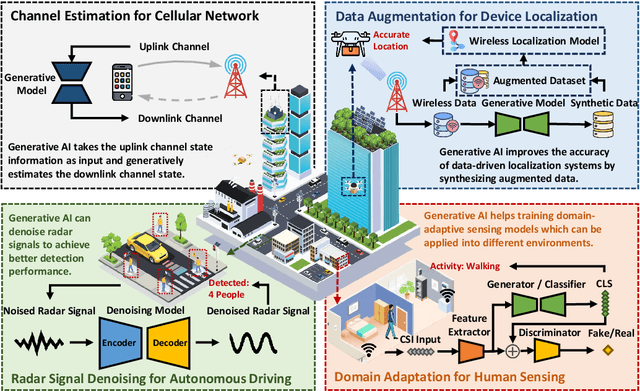
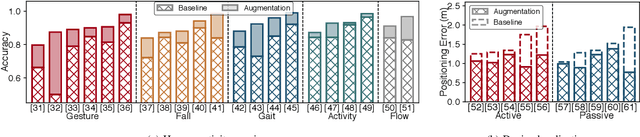
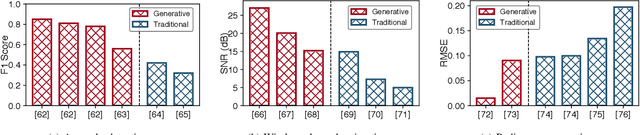
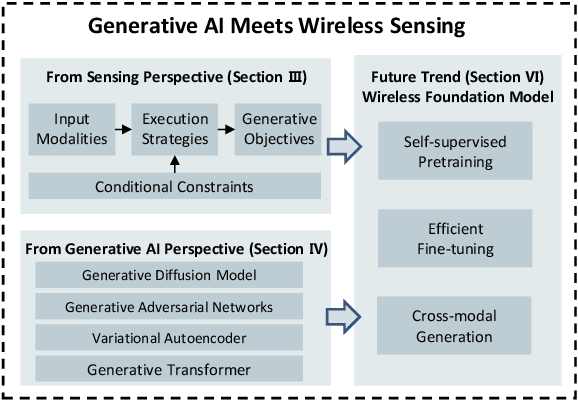
Generative Artificial Intelligence (GenAI) has made significant advancements in fields such as computer vision (CV) and natural language processing (NLP), demonstrating its capability to synthesize high-fidelity data and improve generalization. Recently, there has been growing interest in integrating GenAI into wireless sensing systems. By leveraging generative techniques such as data augmentation, domain adaptation, and denoising, wireless sensing applications, including device localization, human activity recognition, and environmental monitoring, can be significantly improved. This survey investigates the convergence of GenAI and wireless sensing from two complementary perspectives. First, we explore how GenAI can be integrated into wireless sensing pipelines, focusing on two modes of integration: as a plugin to augment task-specific models and as a solver to directly address sensing tasks. Second, we analyze the characteristics of mainstream generative models, such as Generative Adversarial Networks (GANs), Variational Autoencoders (VAEs), and diffusion models, and discuss their applicability and unique advantages across various wireless sensing tasks. We further identify key challenges in applying GenAI to wireless sensing and outline a future direction toward a wireless foundation model: a unified, pre-trained design capable of scalable, adaptable, and efficient signal understanding across diverse sensing tasks.
Unlocking Interpretability for RF Sensing: A Complex-Valued White-Box Transformer
Jul 29, 2025The empirical success of deep learning has spurred its application to the radio-frequency (RF) domain, leading to significant advances in Deep Wireless Sensing (DWS). However, most existing DWS models function as black boxes with limited interpretability, which hampers their generalizability and raises concerns in security-sensitive physical applications. In this work, inspired by the remarkable advances of white-box transformers, we present RF-CRATE, the first mathematically interpretable deep network architecture for RF sensing, grounded in the principles of complex sparse rate reduction. To accommodate the unique RF signals, we conduct non-trivial theoretical derivations that extend the original real-valued white-box transformer to the complex domain. By leveraging the CR-Calculus framework, we successfully construct a fully complex-valued white-box transformer with theoretically derived self-attention and residual multi-layer perceptron modules. Furthermore, to improve the model's ability to extract discriminative features from limited wireless data, we introduce Subspace Regularization, a novel regularization strategy that enhances feature diversity, resulting in an average performance improvement of 19.98% across multiple sensing tasks. We extensively evaluate RF-CRATE against seven baselines with multiple public and self-collected datasets involving different RF signals. The results show that RF-CRATE achieves performance on par with thoroughly engineered black-box models, while offering full mathematical interpretability. More importantly, by extending CRATE to the complex domain, RF-CRATE yields substantial improvements, achieving an average classification gain of 5.08% and reducing regression error by 10.34% across diverse sensing tasks compared to CRATE. RF-CRATE is fully open-sourced at: https://github.com/rfcrate/RF_CRATE.
Experience Paper: Scaling WiFi Sensing to Millions of Commodity Devices for Ubiquitous Home Monitoring
Jun 04, 2025WiFi-based home monitoring has emerged as a compelling alternative to traditional camera- and sensor-based solutions, offering wide coverage with minimal intrusion by leveraging existing wireless infrastructure. This paper presents key insights and lessons learned from developing and deploying a large-scale WiFi sensing solution, currently operational across over 10 million commodity off-the-shelf routers and 100 million smart bulbs worldwide. Through this extensive deployment, we identify four real-world challenges that hinder the practical adoption of prior research: 1) Non-human movements (e.g., pets) frequently trigger false positives; 2) Low-cost WiFi chipsets and heterogeneous hardware introduce inconsistencies in channel state information (CSI) measurements; 3) Motion interference in multi-user environments complicates occupant differentiation; 4) Computational constraints on edge devices and limited cloud transmission impede real-time processing. To address these challenges, we present a practical and scalable system, validated through comprehensive two-year evaluations involving 280 edge devices, across 16 scenarios, and over 4 million motion samples. Our solutions achieve an accuracy of 92.61% in diverse real-world homes while reducing false alarms due to non-human movements from 63.1% to 8.4% and lowering CSI transmission overhead by 99.72%. Notably, our system integrates sensing and communication, supporting simultaneous WiFi sensing and data transmission over home WiFi networks. While focused on home monitoring, our findings and strategies generalize to various WiFi sensing applications. By bridging the gaps between theoretical research and commercial deployment, this work offers practical insights for scaling WiFi sensing in real-world environments.
ASE: Practical Acoustic Speed Estimation Beyond Doppler via Sound Diffusion Field
Dec 28, 2024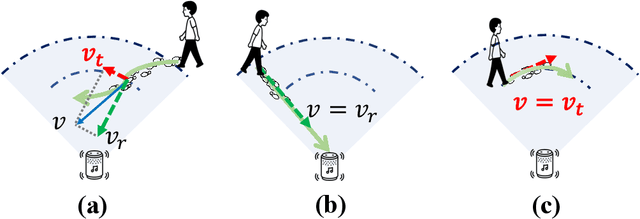
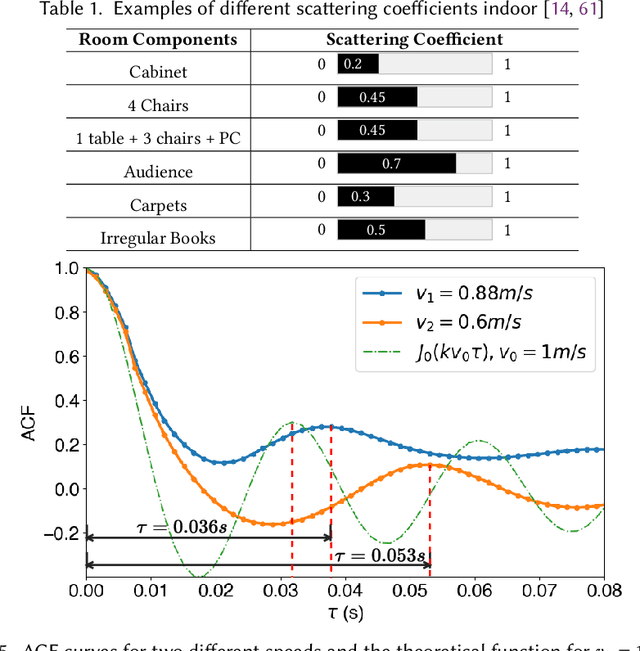
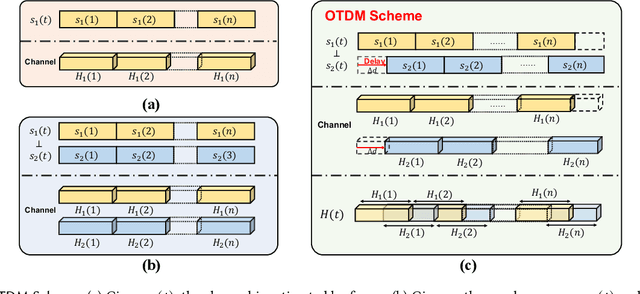
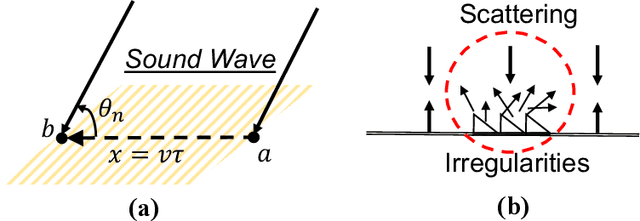
Passive human speed estimation plays a critical role in acoustic sensing. Despite extensive study, existing systems, however, suffer from various limitations: First, previous acoustic speed estimation exploits Doppler Frequency Shifts (DFS) created by moving targets and relies on microphone arrays, making them only capable of sensing the radial speed within a constrained distance. Second, the channel measurement rate proves inadequate to estimate high moving speeds. To overcome these issues, we present ASE, an accurate and robust Acoustic Speed Estimation system on a single commodity microphone. We model the sound propagation from a unique perspective of the acoustic diffusion field, and infer the speed from the acoustic spatial distribution, a completely different way of thinking about speed estimation beyond prior DFS-based approaches. We then propose a novel Orthogonal Time-Delayed Multiplexing (OTDM) scheme for acoustic channel estimation at a high rate that was previously infeasible, making it possible to estimate high speeds. We further develop novel techniques for motion detection and signal enhancement to deliver a robust and practical system. We implement and evaluate ASE through extensive real-world experiments. Our results show that ASE reliably tracks walking speed, independently of target location and direction, with a mean error of 0.13 m/s, a reduction of 2.5x from DFS, and a detection rate of 97.4% for large coverage, e.g., free walking in a 4m $\times$ 4m room. We believe ASE pushes acoustic speed estimation beyond the conventional DFS-based paradigm and will inspire exciting research in acoustic sensing.
Unfolding Target Detection with State Space Model
Oct 30, 2024
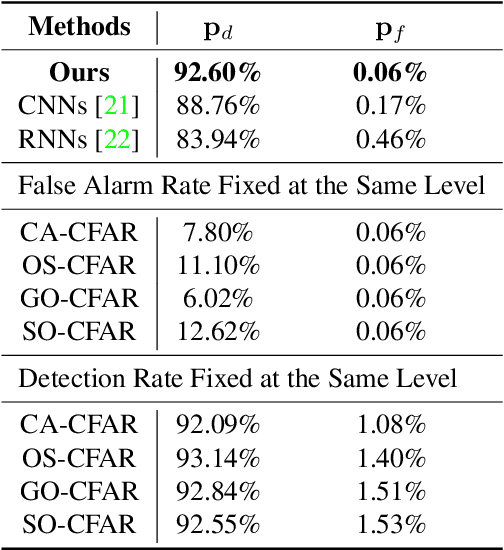
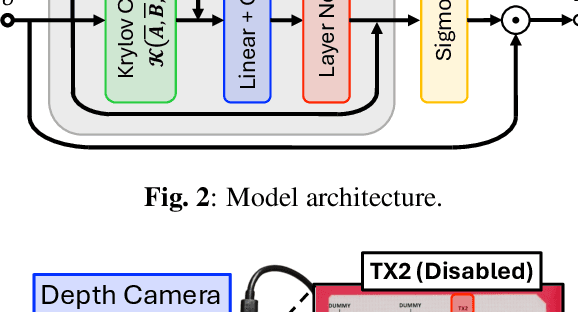
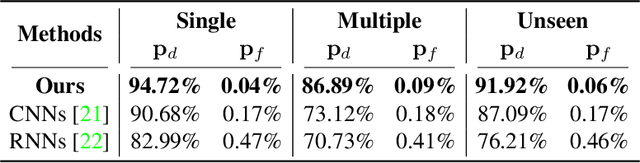
Target detection is a fundamental task in radar sensing, serving as the precursor to any further processing for various applications. Numerous detection algorithms have been proposed. Classical methods based on signal processing, e.g., the most widely used CFAR, are challenging to tune and sensitive to environmental conditions. Deep learning-based methods can be more accurate and robust, yet usually lack interpretability and physical relevance. In this paper, we introduce a novel method that combines signal processing and deep learning by unfolding the CFAR detector with a state space model architecture. By reserving the CFAR pipeline yet turning its sophisticated configurations into trainable parameters, our method achieves high detection performance without manual parameter tuning, while preserving model interpretability. We implement a lightweight model of only 260K parameters and conduct real-world experiments for human target detection using FMCW radars. The results highlight the remarkable performance of the proposed method, outperforming CFAR and its variants by 10X in detection rate and false alarm rate. Our code is open-sourced here: https://github.com/aiot-lab/NeuroDet.