 Add to Chrome
 Add to Firefox
 Add to Edge
CURE4Rec: A Benchmark for Recommendation Unlearning with Deeper Influence
Aug 26, 2024
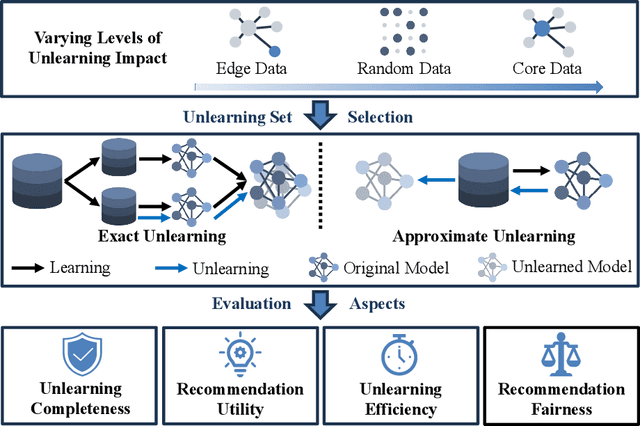

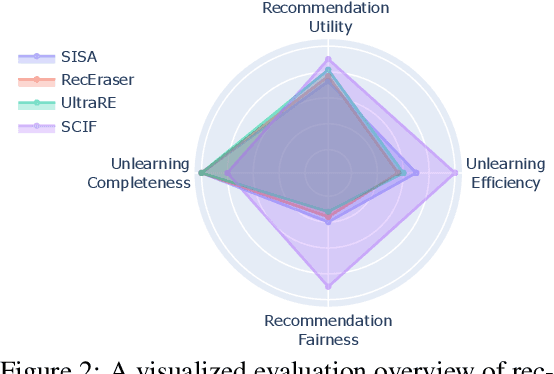

With increasing privacy concerns in artificial intelligence, regulations have mandated the right to be forgotten, granting individuals the right to withdraw their data from models. Machine unlearning has emerged as a potential solution to enable selective forgetting in models, particularly in recommender systems where historical data contains sensitive user information. Despite recent advances in recommendation unlearning, evaluating unlearning methods comprehensively remains challenging due to the absence of a unified evaluation framework and overlooked aspects of deeper influence, e.g., fairness. To address these gaps, we propose CURE4Rec, the first comprehensive benchmark for recommendation unlearning evaluation. CURE4Rec covers four aspects, i.e., unlearning Completeness, recommendation Utility, unleaRning efficiency, and recommendation fairnEss, under three data selection strategies, i.e., core data, edge data, and random data. Specifically, we consider the deeper influence of unlearning on recommendation fairness and robustness towards data with varying impact levels. We construct multiple datasets with CURE4Rec evaluation and conduct extensive experiments on existing recommendation unlearning methods. Our code is released at https://github.com/xiye7lai/CURE4Rec.

Controllable Unlearning for Image-to-Image Generative Models via $\varepsilon$-Constrained Optimization
Aug 03, 2024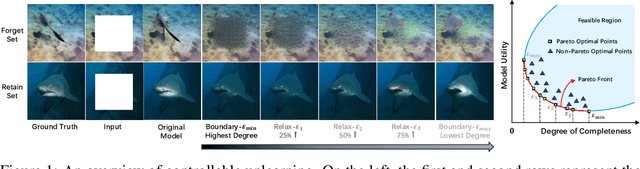
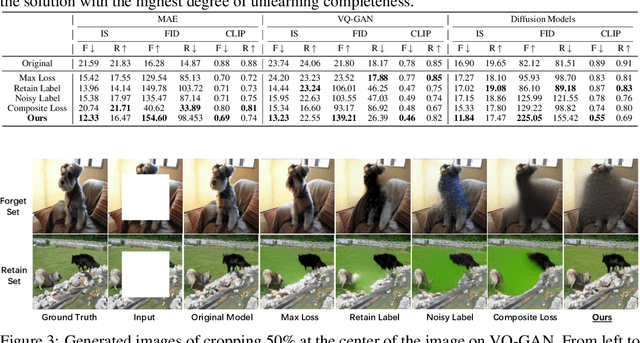
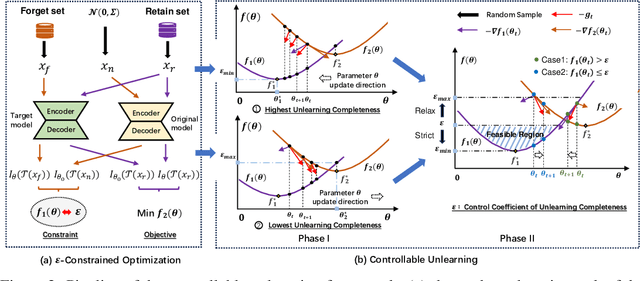
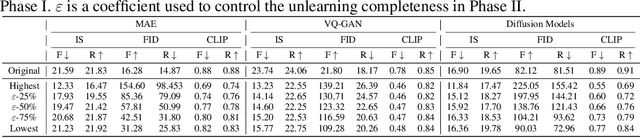
While generative models have made significant advancements in recent years, they also raise concerns such as privacy breaches and biases. Machine unlearning has emerged as a viable solution, aiming to remove specific training data, e.g., containing private information and bias, from models. In this paper, we study the machine unlearning problem in Image-to-Image (I2I) generative models. Previous studies mainly treat it as a single objective optimization problem, offering a solitary solution, thereby neglecting the varied user expectations towards the trade-off between complete unlearning and model utility. To address this issue, we propose a controllable unlearning framework that uses a control coefficient $\varepsilon$ to control the trade-off. We reformulate the I2I generative model unlearning problem into a $\varepsilon$-constrained optimization problem and solve it with a gradient-based method to find optimal solutions for unlearning boundaries. These boundaries define the valid range for the control coefficient. Within this range, every yielded solution is theoretically guaranteed with Pareto optimality. We also analyze the convergence rate of our framework under various control functions. Extensive experiments on two benchmark datasets across three mainstream I2I models demonstrate the effectiveness of our controllable unlearning framework.
Rethinking the Representation in Federated Unsupervised Learning with Non-IID Data
Mar 25, 2024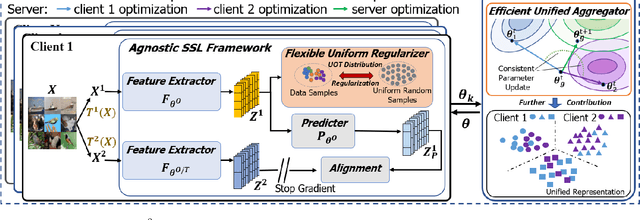
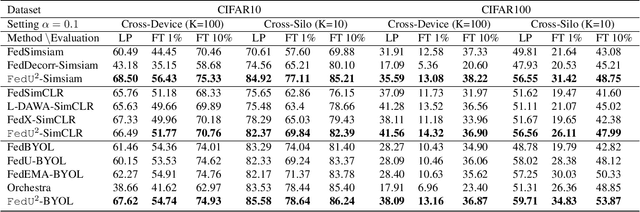
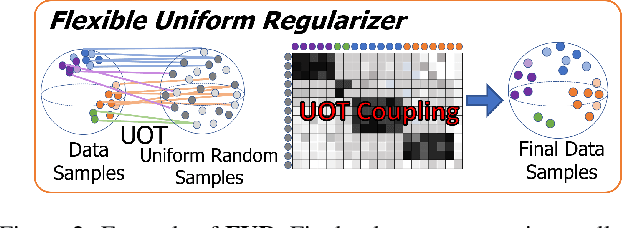
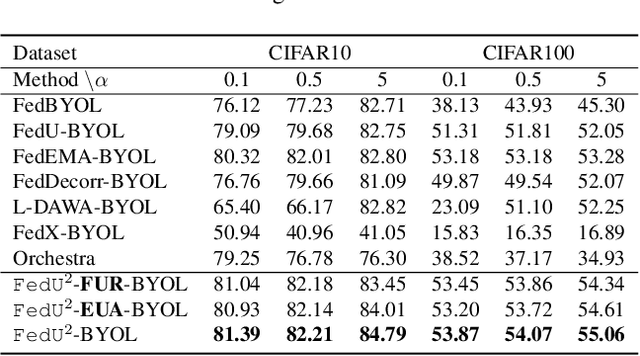
Federated learning achieves effective performance in modeling decentralized data. In practice, client data are not well-labeled, which makes it potential for federated unsupervised learning (FUSL) with non-IID data. However, the performance of existing FUSL methods suffers from insufficient representations, i.e., (1) representation collapse entanglement among local and global models, and (2) inconsistent representation spaces among local models. The former indicates that representation collapse in local model will subsequently impact the global model and other local models. The latter means that clients model data representation with inconsistent parameters due to the deficiency of supervision signals. In this work, we propose FedU2 which enhances generating uniform and unified representation in FUSL with non-IID data. Specifically, FedU2 consists of flexible uniform regularizer (FUR) and efficient unified aggregator (EUA). FUR in each client avoids representation collapse via dispersing samples uniformly, and EUA in server promotes unified representation by constraining consistent client model updating. To extensively validate the performance of FedU2, we conduct both cross-device and cross-silo evaluation experiments on two benchmark datasets, i.e., CIFAR10 and CIFAR100.
Post-Training Attribute Unlearning in Recommender Systems
Mar 11, 2024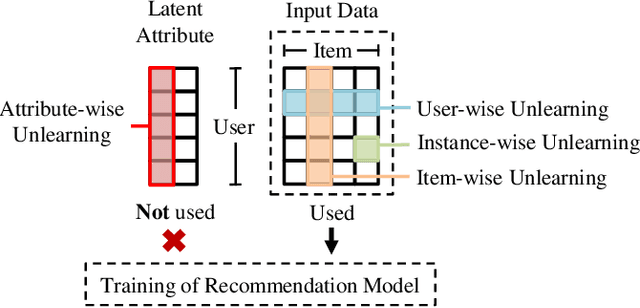
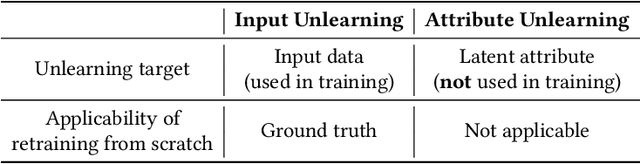
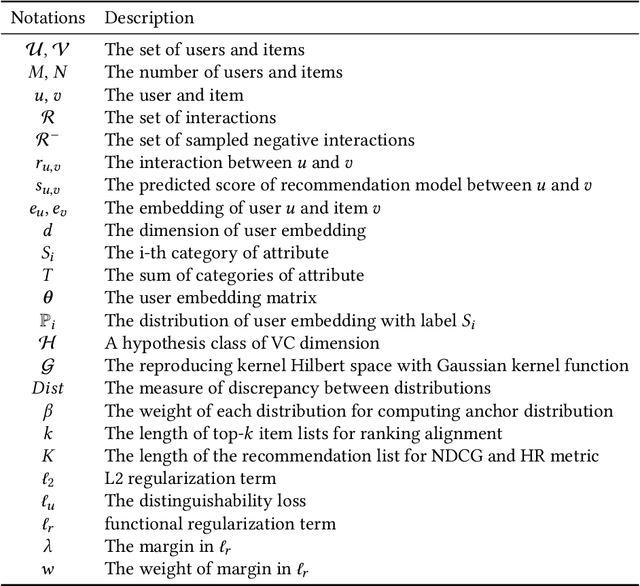
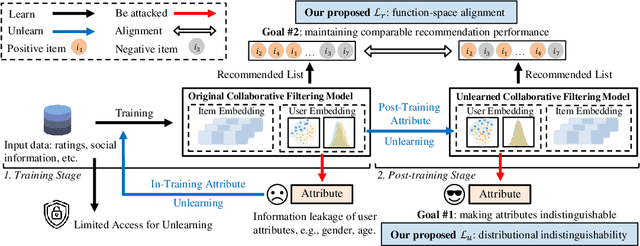
With the growing privacy concerns in recommender systems, recommendation unlearning is getting increasing attention. Existing studies predominantly use training data, i.e., model inputs, as unlearning target. However, attackers can extract private information from the model even if it has not been explicitly encountered during training. We name this unseen information as \textit{attribute} and treat it as unlearning target. To protect the sensitive attribute of users, Attribute Unlearning (AU) aims to make target attributes indistinguishable. In this paper, we focus on a strict but practical setting of AU, namely Post-Training Attribute Unlearning (PoT-AU), where unlearning can only be performed after the training of the recommendation model is completed. To address the PoT-AU problem in recommender systems, we propose a two-component loss function. The first component is distinguishability loss, where we design a distribution-based measurement to make attribute labels indistinguishable from attackers. We further extend this measurement to handle multi-class attribute cases with efficient computational overhead. The second component is regularization loss, where we explore a function-space measurement that effectively maintains recommendation performance compared to parameter-space regularization. We use stochastic gradient descent algorithm to optimize our proposed loss. Extensive experiments on four real-world datasets demonstrate the effectiveness of our proposed methods.
Personalized Behavior-Aware Transformer for Multi-Behavior Sequential Recommendation
Feb 22, 2024
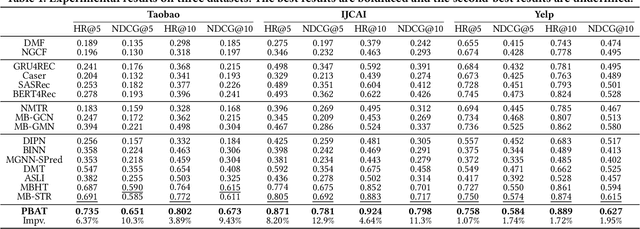

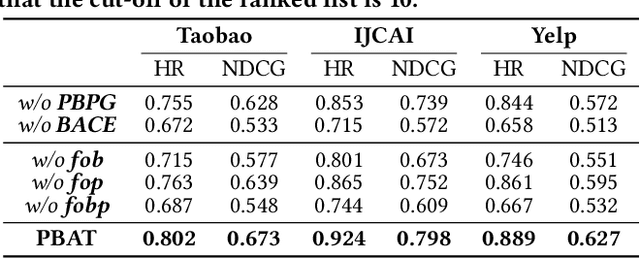
Sequential Recommendation (SR) captures users' dynamic preferences by modeling how users transit among items. However, SR models that utilize only single type of behavior interaction data encounter performance degradation when the sequences are short. To tackle this problem, we focus on Multi-Behavior Sequential Recommendation (MBSR) in this paper, which aims to leverage time-evolving heterogeneous behavioral dependencies for better exploring users' potential intents on the target behavior. Solving MBSR is challenging. On the one hand, users exhibit diverse multi-behavior patterns due to personal characteristics. On the other hand, there exists comprehensive co-influence between behavior correlations and item collaborations, the intensity of which is deeply affected by temporal factors. To tackle these challenges, we propose a Personalized Behavior-Aware Transformer framework (PBAT) for MBSR problem, which models personalized patterns and multifaceted sequential collaborations in a novel way to boost recommendation performance. First, PBAT develops a personalized behavior pattern generator in the representation layer, which extracts dynamic and discriminative behavior patterns for sequential learning. Second, PBAT reforms the self-attention layer with a behavior-aware collaboration extractor, which introduces a fused behavior-aware attention mechanism for incorporating both behavioral and temporal impacts into collaborative transitions. We conduct experiments on three benchmark datasets and the results demonstrate the effectiveness and interpretability of our framework. Our implementation code is released at https://github.com/TiliaceaeSU/PBAT.
Learning Uniform Clusters on Hypersphere for Deep Graph-level Clustering
Nov 23, 2023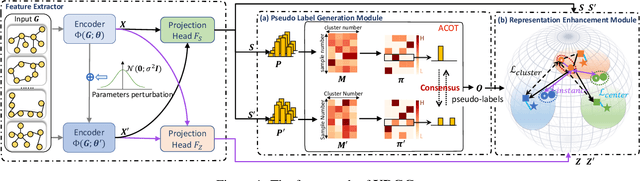
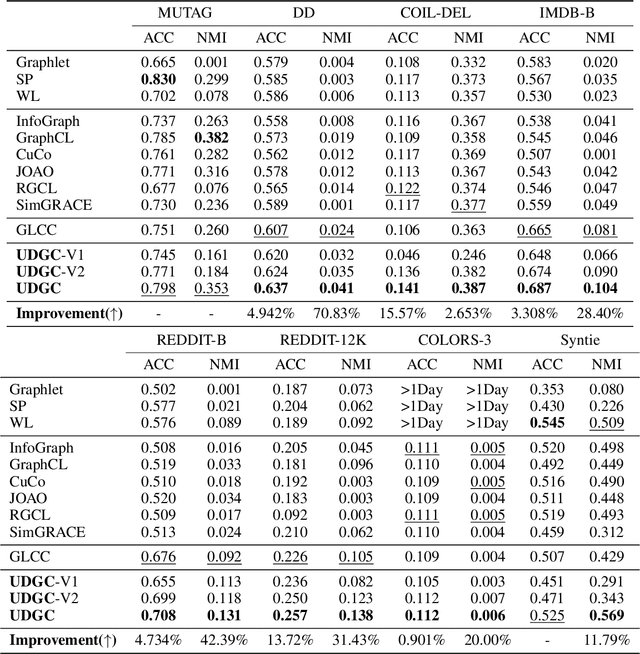
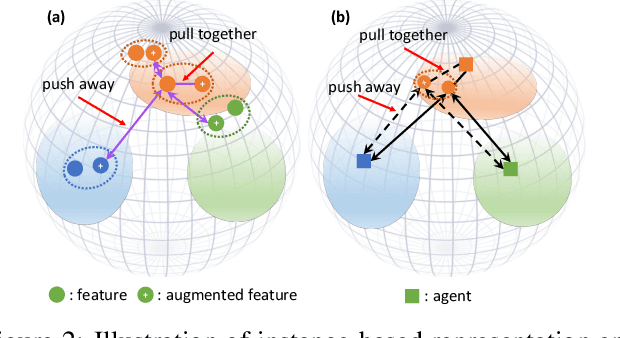
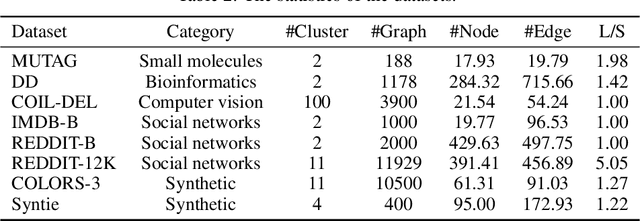
Graph clustering has been popularly studied in recent years. However, most existing graph clustering methods focus on node-level clustering, i.e., grouping nodes in a single graph into clusters. In contrast, graph-level clustering, i.e., grouping multiple graphs into clusters, remains largely unexplored. Graph-level clustering is critical in a variety of real-world applications, such as, properties prediction of molecules and community analysis in social networks. However, graph-level clustering is challenging due to the insufficient discriminability of graph-level representations, and the insufficient discriminability makes deep clustering be more likely to obtain degenerate solutions (cluster collapse). To address the issue, we propose a novel deep graph-level clustering method called Uniform Deep Graph Clustering (UDGC). UDGC assigns instances evenly to different clusters and then scatters those clusters on unit hypersphere, leading to a more uniform cluster-level distribution and a slighter cluster collapse. Specifically, we first propose Augmentation-Consensus Optimal Transport (ACOT) for generating uniformly distributed and reliable pseudo labels for partitioning clusters. Then we adopt contrastive learning to scatter those clusters. Besides, we propose Center Alignment Optimal Transport (CAOT) for guiding the model to learn better parameters, which further promotes the cluster performance. Our empirical study on eight well-known datasets demonstrates that UDGC significantly outperforms the state-of-the-art models.
Making Users Indistinguishable: Attribute-wise Unlearning in Recommender Systems
Oct 06, 2023
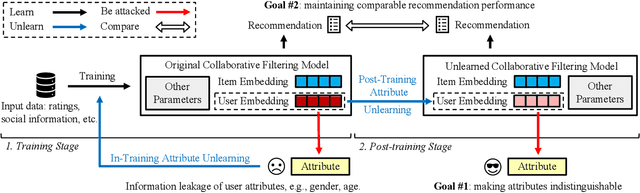


With the growing privacy concerns in recommender systems, recommendation unlearning, i.e., forgetting the impact of specific learned targets, is getting increasing attention. Existing studies predominantly use training data, i.e., model inputs, as the unlearning target. However, we find that attackers can extract private information, i.e., gender, race, and age, from a trained model even if it has not been explicitly encountered during training. We name this unseen information as attribute and treat it as the unlearning target. To protect the sensitive attribute of users, Attribute Unlearning (AU) aims to degrade attacking performance and make target attributes indistinguishable. In this paper, we focus on a strict but practical setting of AU, namely Post-Training Attribute Unlearning (PoT-AU), where unlearning can only be performed after the training of the recommendation model is completed. To address the PoT-AU problem in recommender systems, we design a two-component loss function that consists of i) distinguishability loss: making attribute labels indistinguishable from attackers, and ii) regularization loss: preventing drastic changes in the model that result in a negative impact on recommendation performance. Specifically, we investigate two types of distinguishability measurements, i.e., user-to-user and distribution-to-distribution. We use the stochastic gradient descent algorithm to optimize our proposed loss. Extensive experiments on three real-world datasets demonstrate the effectiveness of our proposed methods.
In-processing User Constrained Dominant Sets for User-Oriented Fairness in Recommender Systems
Sep 04, 2023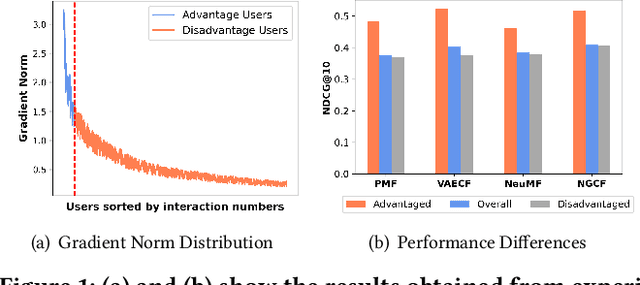
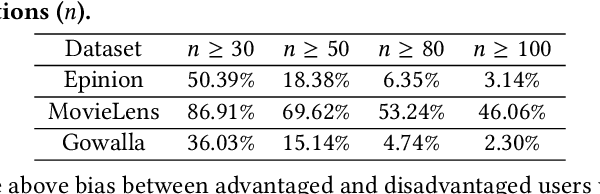
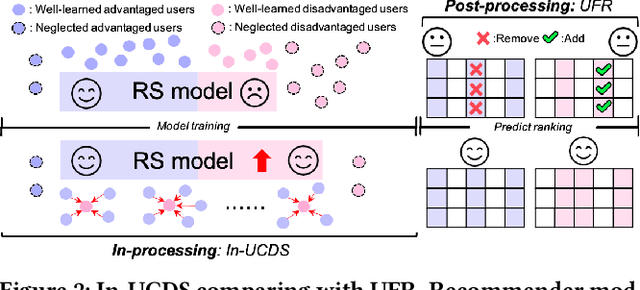
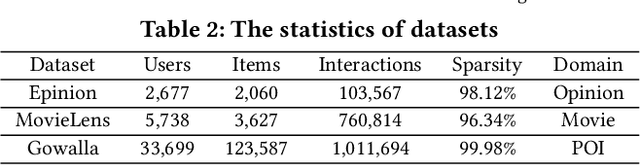
Recommender systems are typically biased toward a small group of users, leading to severe unfairness in recommendation performance, i.e., User-Oriented Fairness (UOF) issue. The existing research on UOF is limited and fails to deal with the root cause of the UOF issue: the learning process between advantaged and disadvantaged users is unfair. To tackle this issue, we propose an In-processing User Constrained Dominant Sets (In-UCDS) framework, which is a general framework that can be applied to any backbone recommendation model to achieve user-oriented fairness. We split In-UCDS into two stages, i.e., the UCDS modeling stage and the in-processing training stage. In the UCDS modeling stage, for each disadvantaged user, we extract a constrained dominant set (a user cluster) containing some advantaged users that are similar to it. In the in-processing training stage, we move the representations of disadvantaged users closer to their corresponding cluster by calculating a fairness loss. By combining the fairness loss with the original backbone model loss, we address the UOF issue and maintain the overall recommendation performance simultaneously. Comprehensive experiments on three real-world datasets demonstrate that In-UCDS outperforms the state-of-the-art methods, leading to a fairer model with better overall recommendation performance.
Defending Label Inference Attacks in Split Learning under Regression Setting
Aug 18, 2023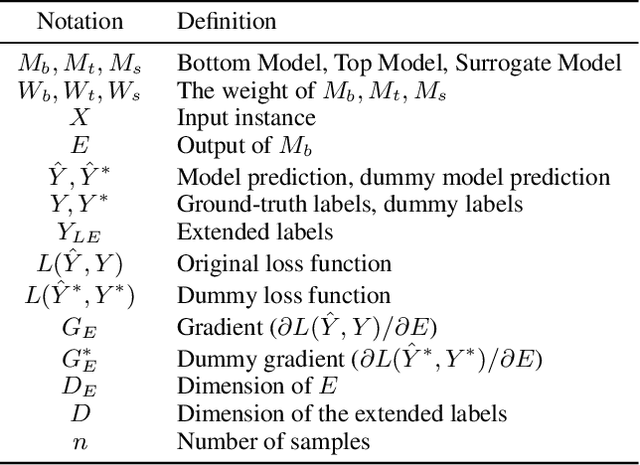
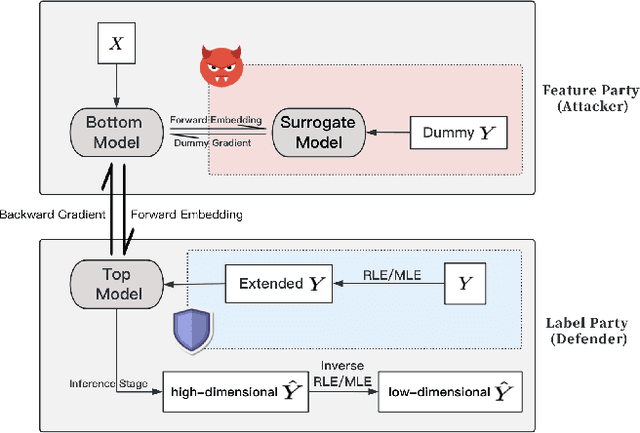
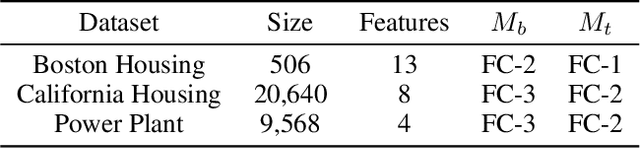
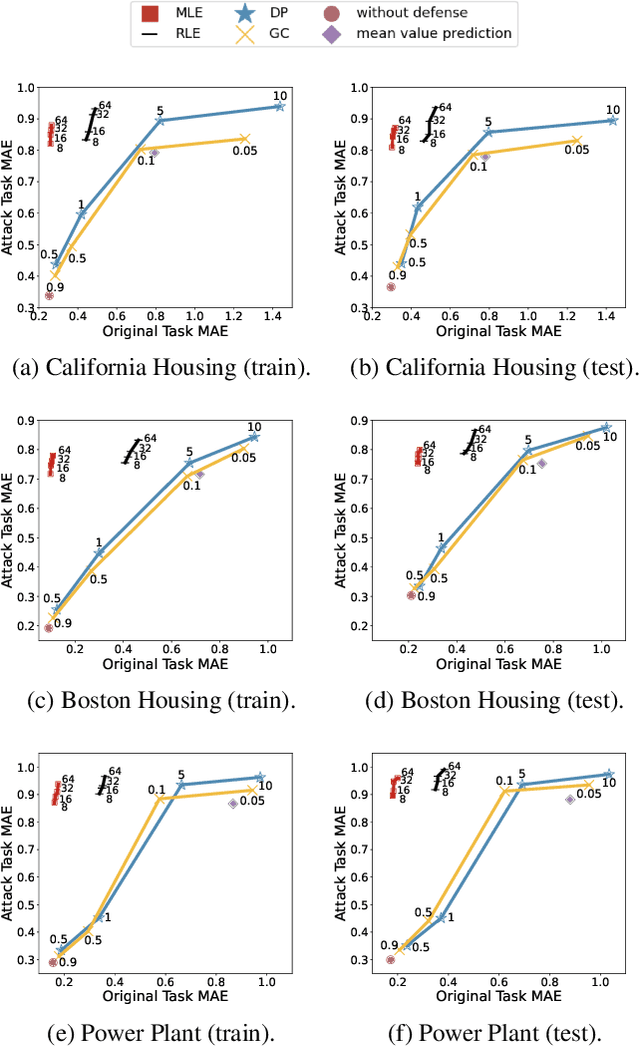
As a privacy-preserving method for implementing Vertical Federated Learning, Split Learning has been extensively researched. However, numerous studies have indicated that the privacy-preserving capability of Split Learning is insufficient. In this paper, we primarily focus on label inference attacks in Split Learning under regression setting, which are mainly implemented through the gradient inversion method. To defend against label inference attacks, we propose Random Label Extension (RLE), where labels are extended to obfuscate the label information contained in the gradients, thereby preventing the attacker from utilizing gradients to train an attack model that can infer the original labels. To further minimize the impact on the original task, we propose Model-based adaptive Label Extension (MLE), where original labels are preserved in the extended labels and dominate the training process. The experimental results show that compared to the basic defense methods, our proposed defense methods can significantly reduce the attack model's performance while preserving the original task's performance.
Joint Local Relational Augmentation and Global Nash Equilibrium for Federated Learning with Non-IID Data
Aug 17, 2023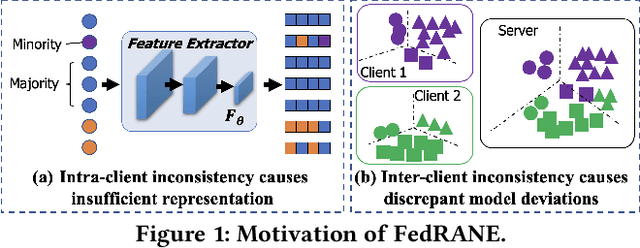
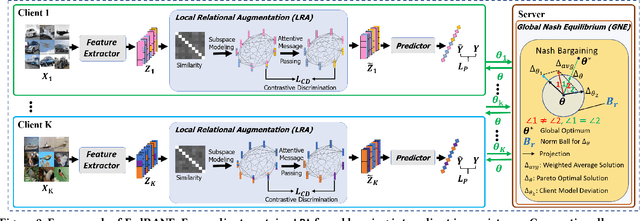
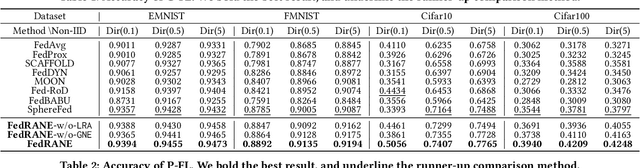
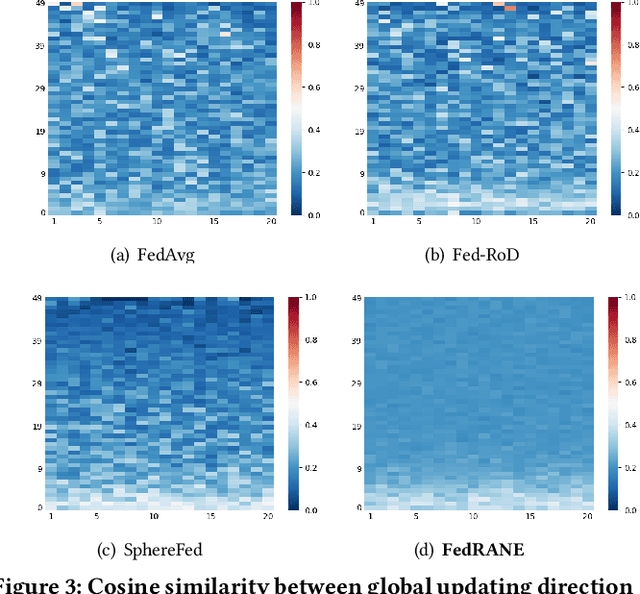
Federated learning (FL) is a distributed machine learning paradigm that needs collaboration between a server and a series of clients with decentralized data. To make FL effective in real-world applications, existing work devotes to improving the modeling of decentralized data with non-independent and identical distributions (non-IID). In non-IID settings, there are intra-client inconsistency that comes from the imbalanced data modeling, and inter-client inconsistency among heterogeneous client distributions, which not only hinders sufficient representation of the minority data, but also brings discrepant model deviations. However, previous work overlooks to tackle the above two coupling inconsistencies together. In this work, we propose FedRANE, which consists of two main modules, i.e., local relational augmentation (LRA) and global Nash equilibrium (GNE), to resolve intra- and inter-client inconsistency simultaneously. Specifically, in each client, LRA mines the similarity relations among different data samples and enhances the minority sample representations with their neighbors using attentive message passing. In server, GNE reaches an agreement among inconsistent and discrepant model deviations from clients to server, which encourages the global model to update in the direction of global optimum without breaking down the clients optimization toward their local optimums. We conduct extensive experiments on four benchmark datasets to show the superiority of FedRANE in enhancing the performance of FL with non-IID data.