 Add to Chrome
 Add to Firefox
 Add to Edge
BiasEdit: A Training-Free Bias-Detect-and-Edit Framework for Learning Fair Visual Classifiers
May 27, 2026
Visual data from the Web power image classifiers, which often underpin many web services, such as recommendation and content moderation. However, the raw Web data often contain spurious correlations and social biases, and neural networks are known for their tendency to learn biases present in data. This can reinforce unfairness in web services and the web data, leading to a vicious cycle. In the context of image classification, networks learn bias attributes for a specific class when a majority of images contain the same attribute only for a given class. Hence, training a fair and debiased classifier from a biased dataset demands handling an imbalanced problem between a majority of images with bias attributes (bias-aligned samples) and a minority without (bias-conflict samples). In this work, we introduce BiasEdit, a modular framework that automatically detects bias attributes from the original dataset and edits them to construct a debiased dataset. Specifically, BiasEdit first detects unknown bias attributes via statistical dependence and mutual information analysis of visual-linguistic representations, and then explicitly edits those attributes using text-guided image editing to generate realistic bias-conflict samples. Unlike prior works that assume known bias attributes or relies on synthetic mixing, our method operates without manual annotations and can leverage off-the-shelf vision-language and editing models. BiasEdit addresses a fundamental challenge in Web-sourced visual AI, mitigating dataset-induced bias and achieving state-of-the-art debiasing performance even when training data are fully biased.

From Volume to Value: Preference-Aligned Memory Construction for On-Device RAG
May 18, 2026With the rapid emergence of personal AI agents based on Large Language Models (LLMs), implementing them on-device has become essential for privacy and responsiveness. To handle the inherently personal and context-dependent nature of real-world requests, such agents must ground their generation in device-resident personal context. However, under tight memory budgets, the core bottleneck is what to store so that retrieval remains aligned with the user. We propose EPIC (Efficient Preference-aligned Index Construction), which focuses on user preferences as a compact and stable form of personal context and integrates them throughout the RAG pipeline. EPIC selectively retains preference-relevant information from raw data and aligns retrieval toward preference-aligned contexts. Across four benchmarks covering conversations, debates, explanations, and recommendations, EPIC reduces indexing memory by 2,404 times, improves preference-following accuracy by 20.17 percentage points, and achieves 33.33 times lower retrieval latency over the best-performing baseline. In our on-device experiment, EPIC maintains a memory footprint under 1 MB with 29.35 ms/query latency in streaming updates.
PhysHanDI: Physics-Based Reconstruction of Hand-Deformable Object Interactions
May 10, 2026While existing methods for reconstructing hand-object interactions have made impressive progress, they either focus on rigid or part-wise rigid objects-limiting their ability to model real-world objects (e.g., cloth, stuffed animals) that exhibit highly non-rigid deformations-or model deformable objects without full 3D hand reconstruction. To bridge this gap, we present PhysHanDI (Physics-based Reconstruction of Hand and Deformable Object Interactions), a framework that enables full 3D reconstruction of both interacting hands and non-rigid objects. Our key idea is to physically simulate object deformations driven by forces induced from densely reconstructed 3D hand motions, ensuring that the reconstructed object dynamics are both physically plausible and coherent with the interacting hand movements. Furthermore, we demonstrate that such simulation of object deformations can, in turn, refine and improve hand reconstruction via inverse physics. In experiments, PhysHanDI outperforms the state-of-the-art baseline across reconstruction and future prediction.
StyleID: A Perception-Aware Dataset and Metric for Stylization-Agnostic Facial Identity Recognition
Apr 23, 2026Creative face stylization aims to render portraits in diverse visual idioms such as cartoons, sketches, and paintings while retaining recognizable identity. However, current identity encoders, which are typically trained and calibrated on natural photographs, exhibit severe brittleness under stylization. They often mistake changes in texture or color palette for identity drift or fail to detect geometric exaggerations. This reveals the lack of a style-agnostic framework to evaluate and supervise identity consistency across varying styles and strengths. To address this gap, we introduce StyleID, a human perception-aware dataset and evaluation framework for facial identity under stylization. StyleID comprises two datasets: (i) StyleBench-H, a benchmark that captures human same-different verification judgments across diffusion- and flow-matching-based stylization at multiple style strengths, and (ii) StyleBench-S, a supervision set derived from psychometric recognition-strength curves obtained through controlled two-alternative forced-choice (2AFC) experiments. Leveraging StyleBench-S, we fine-tune existing semantic encoders to align their similarity orderings with human perception across styles and strengths. Experiments demonstrate that our calibrated models yield significantly higher correlation with human judgments and enhanced robustness for out-of-domain, artist drawn portraits. All of our datasets, code, and pretrained models are publicly available at https://kwanyun.github.io/StyleID_page/
MPMAvatar: Learning 3D Gaussian Avatars with Accurate and Robust Physics-Based Dynamics
Oct 02, 2025While there has been significant progress in the field of 3D avatar creation from visual observations, modeling physically plausible dynamics of humans with loose garments remains a challenging problem. Although a few existing works address this problem by leveraging physical simulation, they suffer from limited accuracy or robustness to novel animation inputs. In this work, we present MPMAvatar, a framework for creating 3D human avatars from multi-view videos that supports highly realistic, robust animation, as well as photorealistic rendering from free viewpoints. For accurate and robust dynamics modeling, our key idea is to use a Material Point Method-based simulator, which we carefully tailor to model garments with complex deformations and contact with the underlying body by incorporating an anisotropic constitutive model and a novel collision handling algorithm. We combine this dynamics modeling scheme with our canonical avatar that can be rendered using 3D Gaussian Splatting with quasi-shadowing, enabling high-fidelity rendering for physically realistic animations. In our experiments, we demonstrate that MPMAvatar significantly outperforms the existing state-of-the-art physics-based avatar in terms of (1) dynamics modeling accuracy, (2) rendering accuracy, and (3) robustness and efficiency. Additionally, we present a novel application in which our avatar generalizes to unseen interactions in a zero-shot manner-which was not achievable with previous learning-based methods due to their limited simulation generalizability. Our project page is at: https://KAISTChangmin.github.io/MPMAvatar/
Performance Analysis of IEEE 802.11bn with Coordinated TDMA on Real-Time Applications
Aug 28, 2025Wi-Fi plays a crucial role in connecting electronic devices and providing communication services in everyday life. Recently, there has been a growing demand for services that require low-latency communication, such as real-time applications. The latest amendments to Wi-Fi, IEEE 802.11bn, are being developed to address these demands with technologies such as the multiple access point coordination (MAPC). In this paper, we demonstrate that coordinated TDMA (Co-TDMA), one of the MAPC techniques, effectively reduces the latency of transmitting time-sensitive traffic. In particular, we focus on worst-case latency and jitter, which are key metrics for evaluating the performance of real-time applications. We first introduce a Co-TDMA scheduling strategy. We then investigate how this scheduling strategy impacts latency under varying levels of network congestion and traffic volume characteristics. Finally, we validate our findings through system-level simulations. Our simulation results demonstrate that Co-TDMA effectively mitigates jitter and worst-case latency for low-latency traffic, with the latter exhibiting an improvement of approximately 24%.
Kanana: Compute-efficient Bilingual Language Models
Feb 26, 2025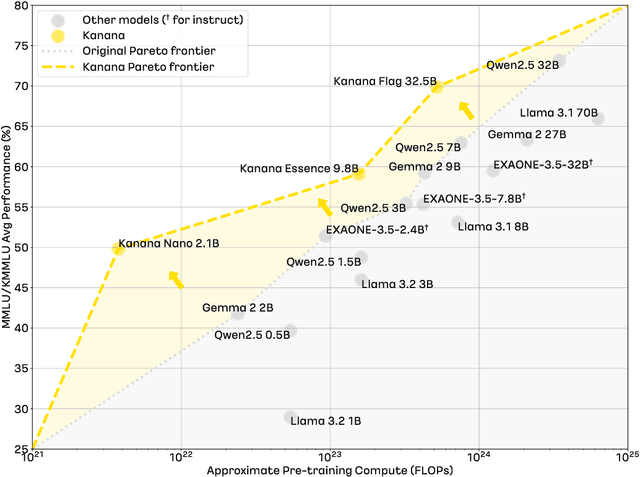
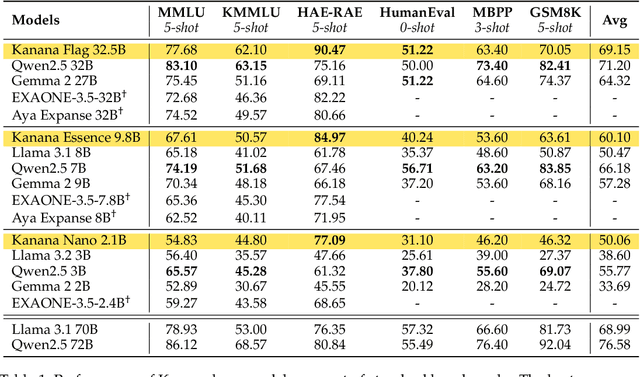
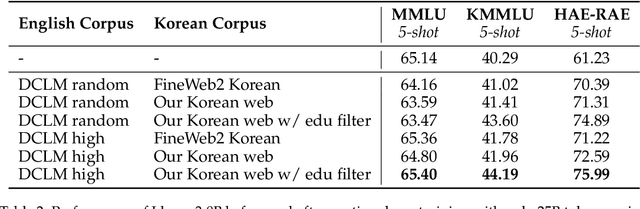
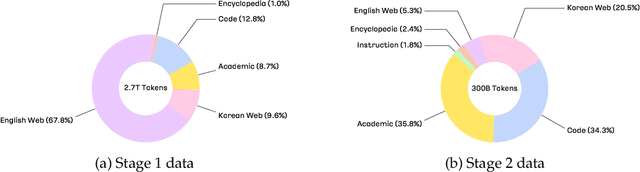
We introduce Kanana, a series of bilingual language models that demonstrate exceeding performance in Korean and competitive performance in English. The computational cost of Kanana is significantly lower than that of state-of-the-art models of similar size. The report details the techniques employed during pre-training to achieve compute-efficient yet competitive models, including high quality data filtering, staged pre-training, depth up-scaling, and pruning and distillation. Furthermore, the report outlines the methodologies utilized during the post-training of the Kanana models, encompassing supervised fine-tuning and preference optimization, aimed at enhancing their capability for seamless interaction with users. Lastly, the report elaborates on plausible approaches used for language model adaptation to specific scenarios, such as embedding, retrieval augmented generation, and function calling. The Kanana model series spans from 2.1B to 32.5B parameters with 2.1B models (base, instruct, embedding) publicly released to promote research on Korean language models.
SIn-NeRF2NeRF: Editing 3D Scenes with Instructions through Segmentation and Inpainting
Aug 23, 2024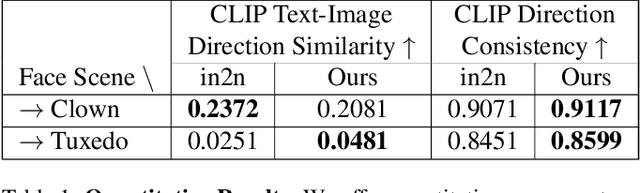
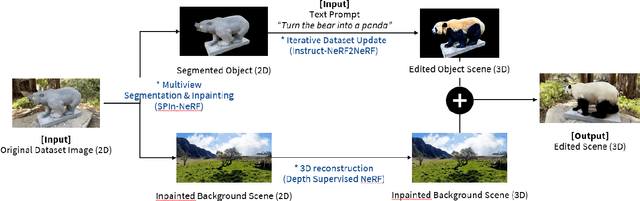
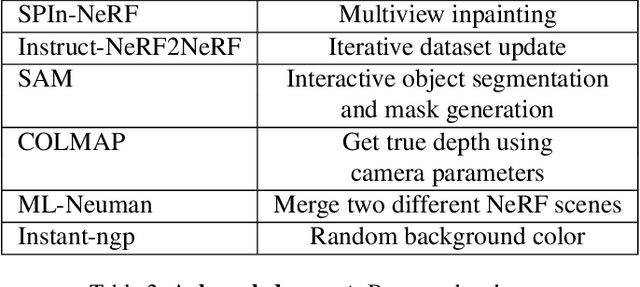

TL;DR Perform 3D object editing selectively by disentangling it from the background scene. Instruct-NeRF2NeRF (in2n) is a promising method that enables editing of 3D scenes composed of Neural Radiance Field (NeRF) using text prompts. However, it is challenging to perform geometrical modifications such as shrinking, scaling, or moving on both the background and object simultaneously. In this project, we enable geometrical changes of objects within the 3D scene by selectively editing the object after separating it from the scene. We perform object segmentation and background inpainting respectively, and demonstrate various examples of freely resizing or moving disentangled objects within the three-dimensional space.
Controlled Text Generation for Black-box Language Models via Score-based Progressive Editor
Nov 13, 2023
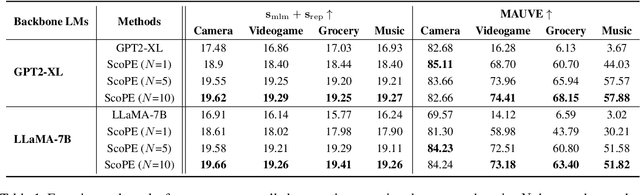
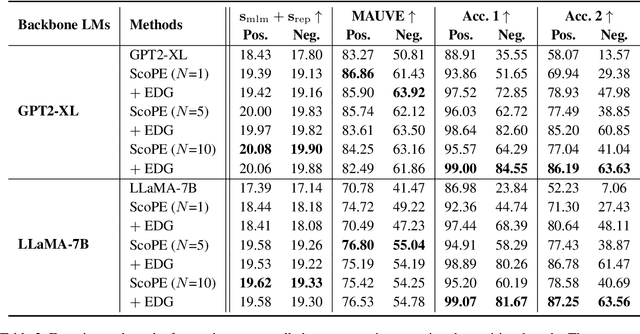
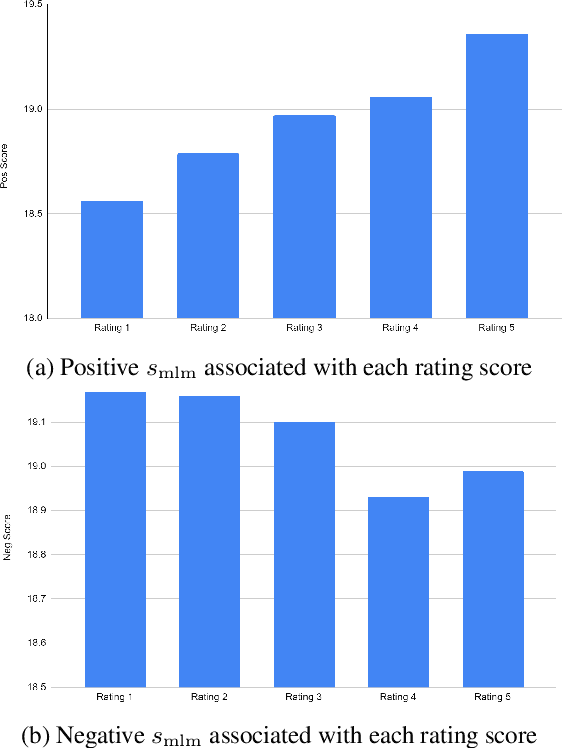
Despite recent progress in language models, generating constrained text for specific domains remains a challenge, particularly when utilizing black-box models that lack domain-specific knowledge. In this paper, we introduce ScoPE (Score-based Progressive Editor) generation, a novel approach for controlled text generation for black-box language models. We employ ScoPE to facilitate text generation in the target domain by integrating it with language models through a cascading approach. Trained to enhance the target domain score of the edited text, ScoPE progressively edits intermediate output discrete tokens to align with the target attributes throughout the auto-regressive generation process of the language model. This iterative process guides subsequent steps to produce desired output texts for the target domain. Our experimental results on diverse controlled generations demonstrate that ScoPE effectively facilitates controlled text generation for black-box language models in both in-domain and out-of-domain conditions, which is challenging for existing methods.
The Internet of Bio-Nano Things in Blood Vessels: System Design and Prototypes
Dec 21, 2022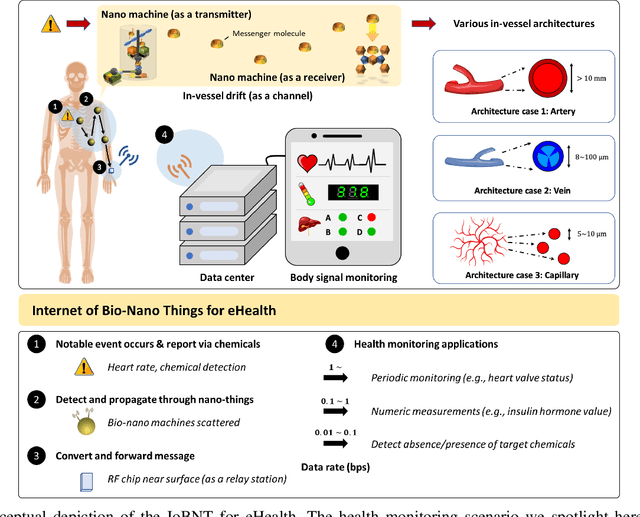
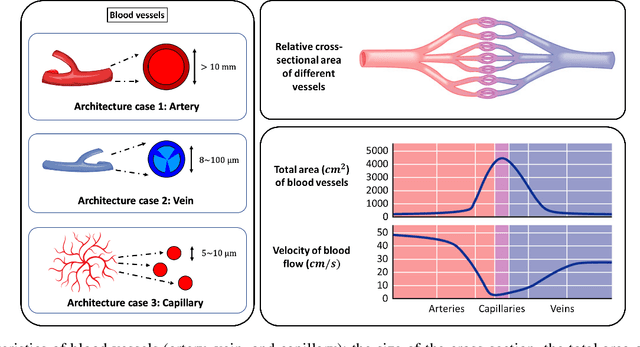
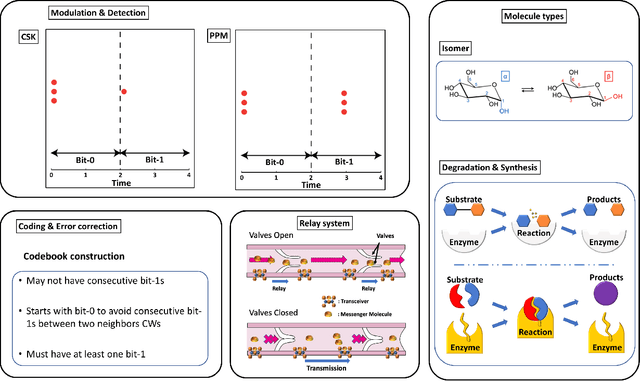
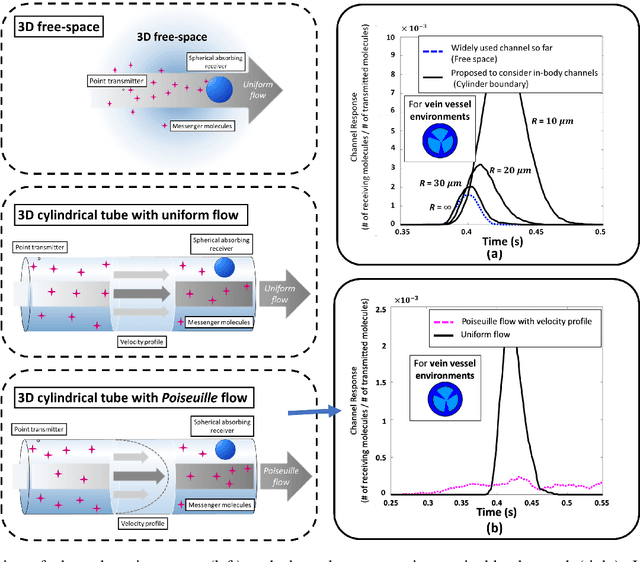
In this paper, we investigate the Internet of Bio-Nano Things (IoBNT) which relates to networks formed by molecular communications. By providing a means of communication through the ubiquitously connected blood vessels (arteries, veins, and capillaries), molecular communication-based IoBNT enables a host of new eHealth applications. For example, an organ monitoring sensor can transfer internal body signals through the IoBNT for health monitoring applications. We empirically show that blood vessel channels introduce a new set of challenges for the design of molecular communication systems in comparison to free-space channels. We then propose cylindrical duct channel models and discuss the corresponding system designs conforming to the channel characteristics. Furthermore, based on prototype implementations, we confirm that molecular communication techniques can be utilized for composing the IoBNT. We believe that the promising results presented in this work, together with the rich research challenges that lie ahead, are strong indicators that IoBNT with molecular communications can drive novel applications for emerging eHealth systems.