 Add to Chrome
 Add to Firefox
 Add to Edge
COMO: Cross-Mamba Interaction and Offset-Guided Fusion for Multimodal Object Detection
Dec 24, 2024
Single-modal object detection tasks often experience performance degradation when encountering diverse scenarios. In contrast, multimodal object detection tasks can offer more comprehensive information about object features by integrating data from various modalities. Current multimodal object detection methods generally use various fusion techniques, including conventional neural networks and transformer-based models, to implement feature fusion strategies and achieve complementary information. However, since multimodal images are captured by different sensors, there are often misalignments between them, making direct matching challenging. This misalignment hinders the ability to establish strong correlations for the same object across different modalities. In this paper, we propose a novel approach called the CrOss-Mamba interaction and Offset-guided fusion (COMO) framework for multimodal object detection tasks. The COMO framework employs the cross-mamba technique to formulate feature interaction equations, enabling multimodal serialized state computation. This results in interactive fusion outputs while reducing computational overhead and improving efficiency. Additionally, COMO leverages high-level features, which are less affected by misalignment, to facilitate interaction and transfer complementary information between modalities, addressing the positional offset challenges caused by variations in camera angles and capture times. Furthermore, COMO incorporates a global and local scanning mechanism in the cross-mamba module to capture features with local correlation, particularly in remote sensing images. To preserve low-level features, the offset-guided fusion mechanism ensures effective multiscale feature utilization, allowing the construction of a multiscale fusion data cube that enhances detection performance.

Hybrid Network- and User-Centric Scalable Cell-Free Massive MIMO for Fronthaul Signaling Minimization
Dec 20, 2024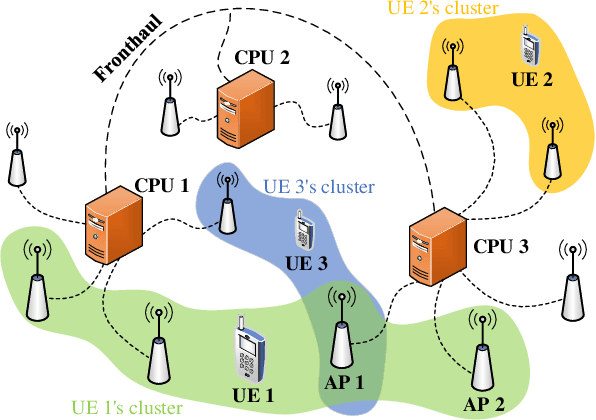
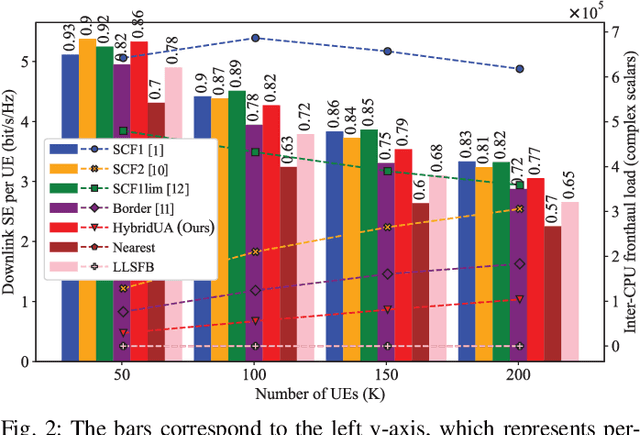
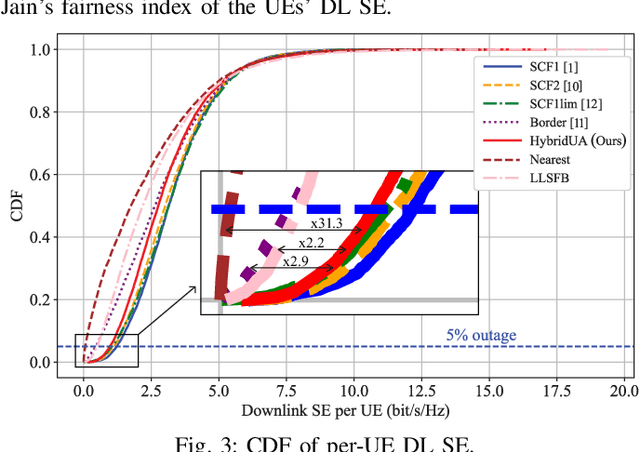
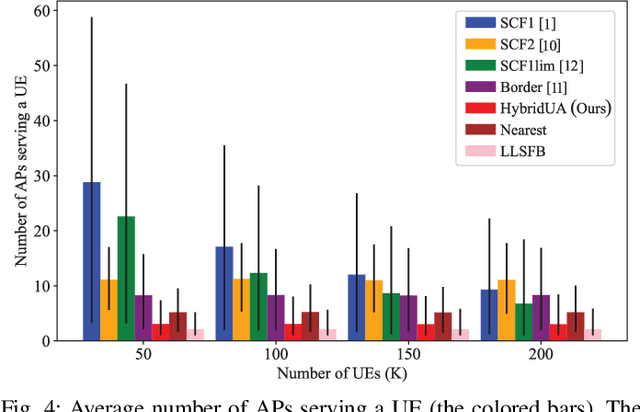
Cell-free massive multiple-input multiple-output (CFmMIMO) coordinates a great number of distributed access points (APs) with central processing units (CPUs), effectively reducing interference and ensuring uniform service quality for user equipment (UEs). However, its cooperative nature can result in intense fronthaul signaling between CPUs in large-scale networks. To reduce the inter-CPU fronthaul signaling for systems with limited fronthaul capacity, we propose a low-complexity online UE-AP association approach for scalable CFmMIMO that combines network- and user-centric clustering methodologies, relies on local channel information only, and can handle dynamic UE arrivals. Numerical results demonstrate that compared to the state-of-the-art method on fronthaul signaling minimization, our approach can save up to 94% of the fronthaul signaling load and 83% of the CPU processing power at the cost of only up to 8.6% spectral efficiency loss, or no loss in some cases.
Latent Reward: LLM-Empowered Credit Assignment in Episodic Reinforcement Learning
Dec 15, 2024


Reinforcement learning (RL) often encounters delayed and sparse feedback in real-world applications, even with only episodic rewards. Previous approaches have made some progress in reward redistribution for credit assignment but still face challenges, including training difficulties due to redundancy and ambiguous attributions stemming from overlooking the multifaceted nature of mission performance evaluation. Hopefully, Large Language Model (LLM) encompasses fruitful decision-making knowledge and provides a plausible tool for reward redistribution. Even so, deploying LLM in this case is non-trivial due to the misalignment between linguistic knowledge and the symbolic form requirement, together with inherent randomness and hallucinations in inference. To tackle these issues, we introduce LaRe, a novel LLM-empowered symbolic-based decision-making framework, to improve credit assignment. Key to LaRe is the concept of the Latent Reward, which works as a multi-dimensional performance evaluation, enabling more interpretable goal attainment from various perspectives and facilitating more effective reward redistribution. We examine that semantically generated code from LLM can bridge linguistic knowledge and symbolic latent rewards, as it is executable for symbolic objects. Meanwhile, we design latent reward self-verification to increase the stability and reliability of LLM inference. Theoretically, reward-irrelevant redundancy elimination in the latent reward benefits RL performance from more accurate reward estimation. Extensive experimental results witness that LaRe (i) achieves superior temporal credit assignment to SOTA methods, (ii) excels in allocating contributions among multiple agents, and (iii) outperforms policies trained with ground truth rewards for certain tasks.
Falcon-UI: Understanding GUI Before Following User Instructions
Dec 12, 2024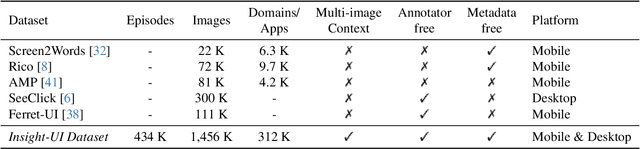
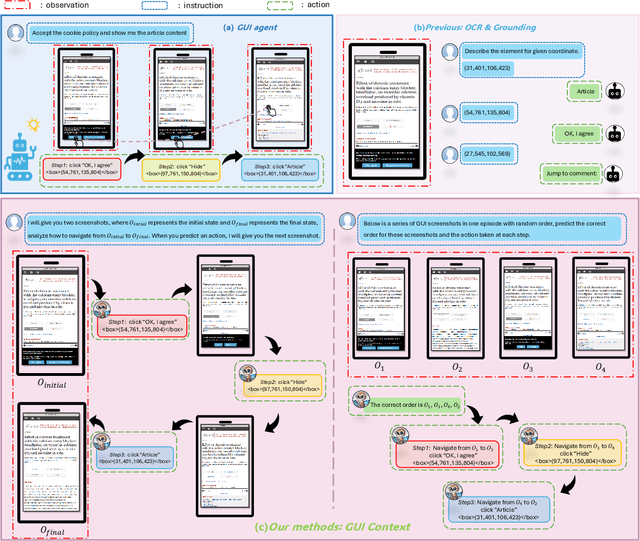

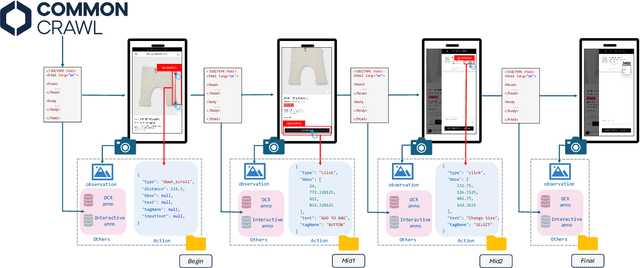
Pursuing human-like interaction for Graphical User Interface (GUI) agents requires understanding the GUI context and following user instructions. However, existing works typically couple these two aspects and focus more on instruct-following abilities, while ignoring the importance of understanding the GUI context. In this paper, we introduce an instruction-free GUI navigation dataset, termed Insight-UI Dataset, to enhance model comprehension of GUI environments. Insight-UI Dataset is automatically generated from the Common Crawl corpus, simulating various platforms -- including iOS, Android, Windows, and Linux -- across multiple resolutions on 312K domains. Although GUI interactions vary by context, diverse interfaces share common internal patterns, such as clicking an item to view its details. It implies the feasibility of independent GUI operation learning, followed by joint optimization with instruction tuning. Thereby, we develop the GUI agent model Falcon-UI, which is initially pretrained on Insight-UI Dataset and subsequently fine-tuned on Android and Web GUI datasets, including AITW, AITZ, Android Control, and Mind2Web. With 7 billion parameters, Falcon-UI achieves accuracy comparable to the 72 billion-parameter Qwen2VL on AITZ, validating the alignment between GUI context comprehension and agent performance. Our code and dataset will be open-sourced.
XLSTM-HVED: Cross-Modal Brain Tumor Segmentation and MRI Reconstruction Method Using Vision XLSTM and Heteromodal Variational Encoder-Decoder
Dec 09, 2024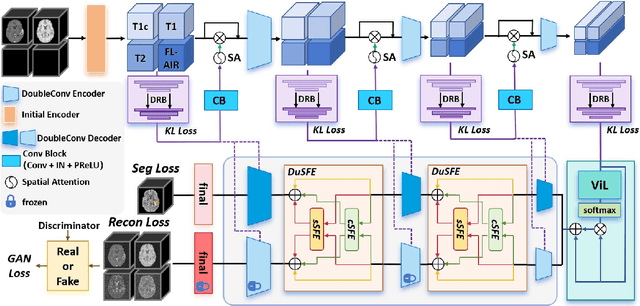
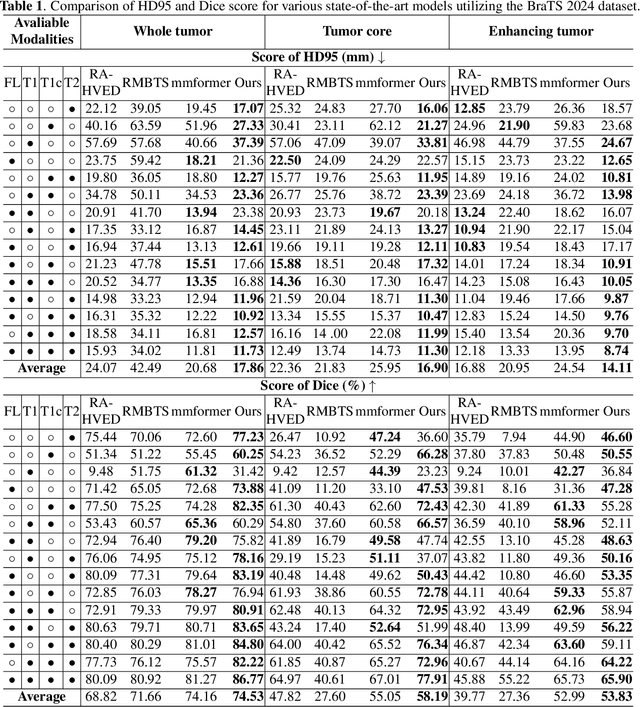
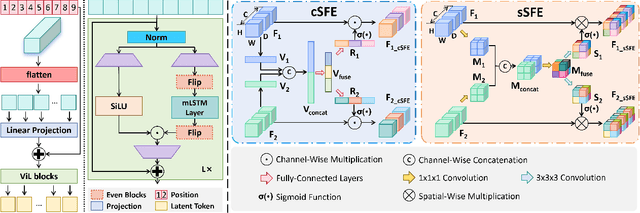

Neurogliomas are among the most aggressive forms of cancer, presenting considerable challenges in both treatment and monitoring due to their unpredictable biological behavior. Magnetic resonance imaging (MRI) is currently the preferred method for diagnosing and monitoring gliomas. However, the lack of specific imaging techniques often compromises the accuracy of tumor segmentation during the imaging process. To address this issue, we introduce the XLSTM-HVED model. This model integrates a hetero-modal encoder-decoder framework with the Vision XLSTM module to reconstruct missing MRI modalities. By deeply fusing spatial and temporal features, it enhances tumor segmentation performance. The key innovation of our approach is the Self-Attention Variational Encoder (SAVE) module, which improves the integration of modal features. Additionally, it optimizes the interaction of features between segmentation and reconstruction tasks through the Squeeze-Fusion-Excitation Cross Awareness (SFECA) module. Our experiments using the BraTS 2024 dataset demonstrate that our model significantly outperforms existing advanced methods in handling cases where modalities are missing. Our source code is available at https://github.com/Quanato607/XLSTM-HVED.
UnZipLoRA: Separating Content and Style from a Single Image
Dec 05, 2024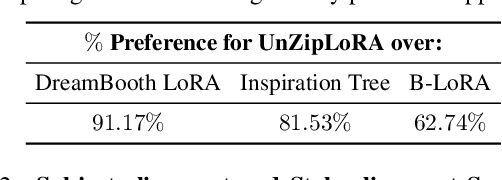
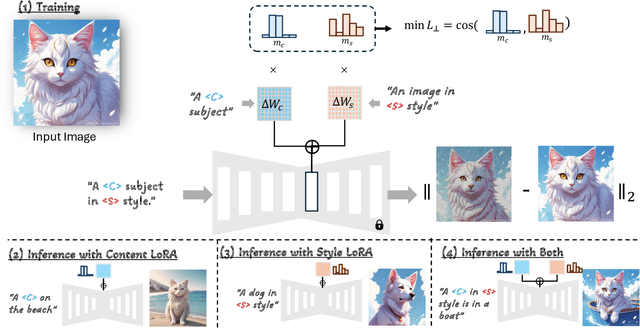
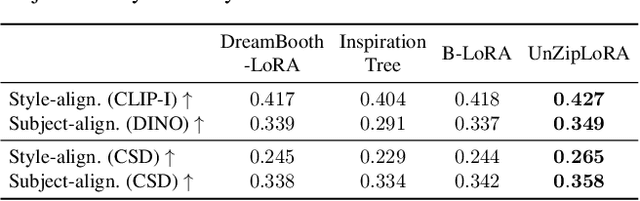
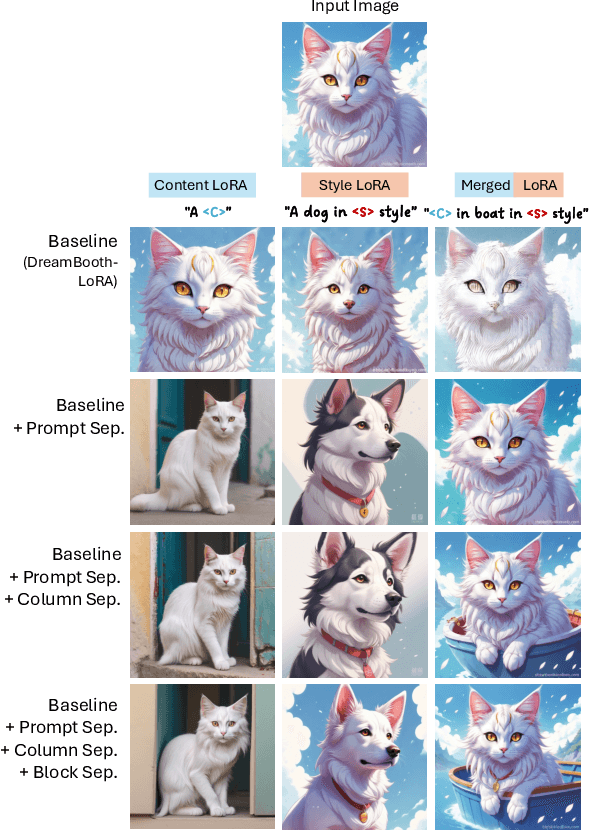
This paper introduces UnZipLoRA, a method for decomposing an image into its constituent subject and style, represented as two distinct LoRAs (Low-Rank Adaptations). Unlike existing personalization techniques that focus on either subject or style in isolation, or require separate training sets for each, UnZipLoRA disentangles these elements from a single image by training both the LoRAs simultaneously. UnZipLoRA ensures that the resulting LoRAs are compatible, i.e., they can be seamlessly combined using direct addition. UnZipLoRA enables independent manipulation and recontextualization of subject and style, including generating variations of each, applying the extracted style to new subjects, and recombining them to reconstruct the original image or create novel variations. To address the challenge of subject and style entanglement, UnZipLoRA employs a novel prompt separation technique, as well as column and block separation strategies to accurately preserve the characteristics of subject and style, and ensure compatibility between the learned LoRAs. Evaluation with human studies and quantitative metrics demonstrates UnZipLoRA's effectiveness compared to other state-of-the-art methods, including DreamBooth-LoRA, Inspiration Tree, and B-LoRA.
Advancing Myopia To Holism: Fully Contrastive Language-Image Pre-training
Nov 30, 2024
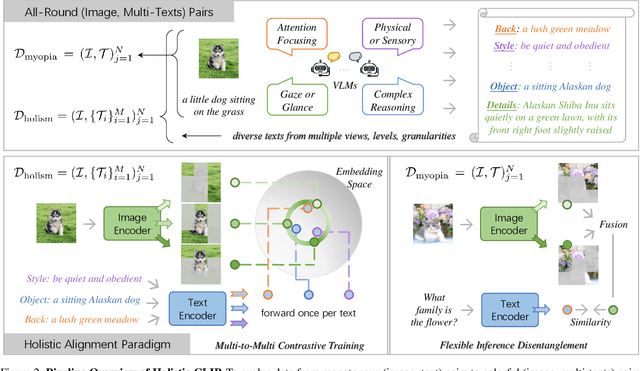


In rapidly evolving field of vision-language models (VLMs), contrastive language-image pre-training (CLIP) has made significant strides, becoming foundation for various downstream tasks. However, relying on one-to-one (image, text) contrastive paradigm to learn alignment from large-scale messy web data, CLIP faces a serious myopic dilemma, resulting in biases towards monotonous short texts and shallow visual expressivity. To overcome these issues, this paper advances CLIP into one novel holistic paradigm, by updating both diverse data and alignment optimization. To obtain colorful data with low cost, we use image-to-text captioning to generate multi-texts for each image, from multiple perspectives, granularities, and hierarchies. Two gadgets are proposed to encourage textual diversity. To match such (image, multi-texts) pairs, we modify the CLIP image encoder into multi-branch, and propose multi-to-multi contrastive optimization for image-text part-to-part matching. As a result, diverse visual embeddings are learned for each image, bringing good interpretability and generalization. Extensive experiments and ablations across over ten benchmarks indicate that our holistic CLIP significantly outperforms existing myopic CLIP, including image-text retrieval, open-vocabulary classification, and dense visual tasks.
Orthus: Autoregressive Interleaved Image-Text Generation with Modality-Specific Heads
Nov 28, 2024
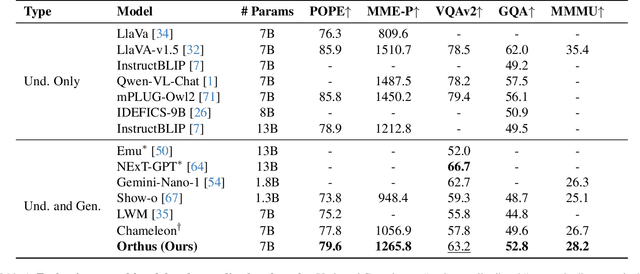

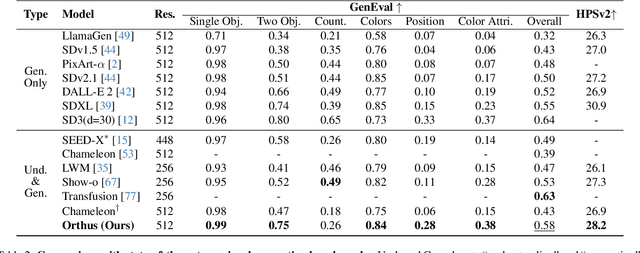
We introduce Orthus, an autoregressive (AR) transformer that excels in generating images given textual prompts, answering questions based on visual inputs, and even crafting lengthy image-text interleaved contents. Unlike prior arts on unified multimodal modeling, Orthus simultaneously copes with discrete text tokens and continuous image features under the AR modeling principle. The continuous treatment of visual signals minimizes the information loss for both image understanding and generation while the fully AR formulation renders the characterization of the correlation between modalities straightforward. The key mechanism enabling Orthus to leverage these advantages lies in its modality-specific heads -- one regular language modeling (LM) head predicts discrete text tokens and one diffusion head generates continuous image features conditioning on the output of the backbone. We devise an efficient strategy for building Orthus -- by substituting the Vector Quantization (VQ) operation in the existing unified AR model with a soft alternative, introducing a diffusion head, and tuning the added modules to reconstruct images, we can create an Orthus-base model effortlessly (e.g., within mere 72 A100 GPU hours). Orthus-base can further embrace post-training to better model interleaved images and texts. Empirically, Orthus surpasses competing baselines including Show-o and Chameleon across standard benchmarks, achieving a GenEval score of 0.58 and an MME-P score of 1265.8 using 7B parameters. Orthus also shows exceptional mixed-modality generation capabilities, reflecting the potential for handling intricate practical generation tasks.
MUSE-VL: Modeling Unified VLM through Semantic Discrete Encoding
Nov 26, 2024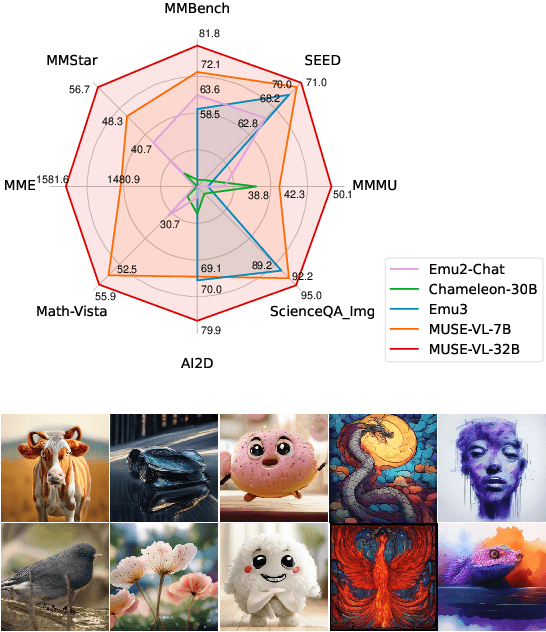
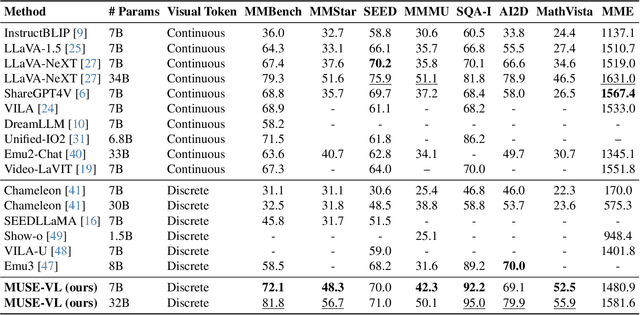
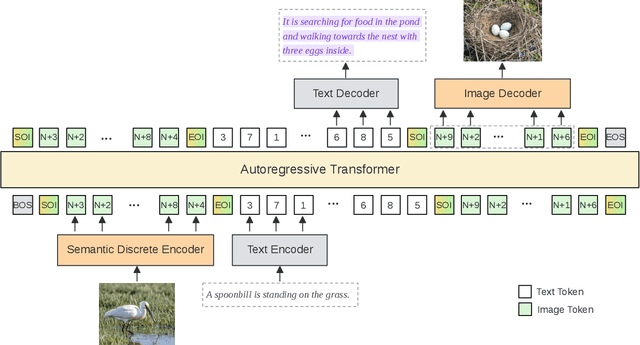

We introduce MUSE-VL, a Unified Vision-Language Model through Semantic discrete Encoding for multimodal understanding and generation. Recently, the research community has begun exploring unified models for visual generation and understanding. However, existing vision tokenizers (e.g., VQGAN) only consider low-level information, which makes it difficult to align with texture semantic features. This results in high training complexity and necessitates a large amount of training data to achieve optimal performance. Additionally, their performance is still far from dedicated understanding models. This paper proposes Semantic Discrete Encoding (SDE), which effectively aligns the information of visual tokens and language tokens by adding semantic constraints to the visual tokenizer. This greatly reduces training difficulty and improves the performance of the unified model. The proposed model significantly surpasses the previous state-of-the-art in various vision-language benchmarks and achieves better performance than dedicated understanding models.
NeRF Inpainting with Geometric Diffusion Prior and Balanced Score Distillation
Nov 23, 2024
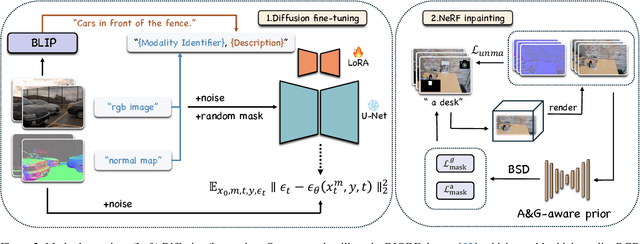
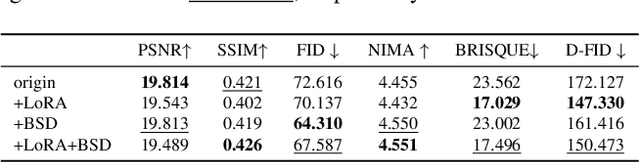

Recent advances in NeRF inpainting have leveraged pretrained diffusion models to enhance performance. However, these methods often yield suboptimal results due to their ineffective utilization of 2D diffusion priors. The limitations manifest in two critical aspects: the inadequate capture of geometric information by pretrained diffusion models and the suboptimal guidance provided by existing Score Distillation Sampling (SDS) methods. To address these problems, we introduce GB-NeRF, a novel framework that enhances NeRF inpainting through improved utilization of 2D diffusion priors. Our approach incorporates two key innovations: a fine-tuning strategy that simultaneously learns appearance and geometric priors and a specialized normal distillation loss that integrates these geometric priors into NeRF inpainting. We propose a technique called Balanced Score Distillation (BSD) that surpasses existing methods such as Score Distillation (SDS) and the improved version, Conditional Score Distillation (CSD). BSD offers improved inpainting quality in appearance and geometric aspects. Extensive experiments show that our method provides superior appearance fidelity and geometric consistency compared to existing approaches.