 Add to Chrome
 Add to Firefox
 Add to Edge
On Context Distribution Shift in Task Representation Learning for Offline Meta RL
Apr 01, 2023
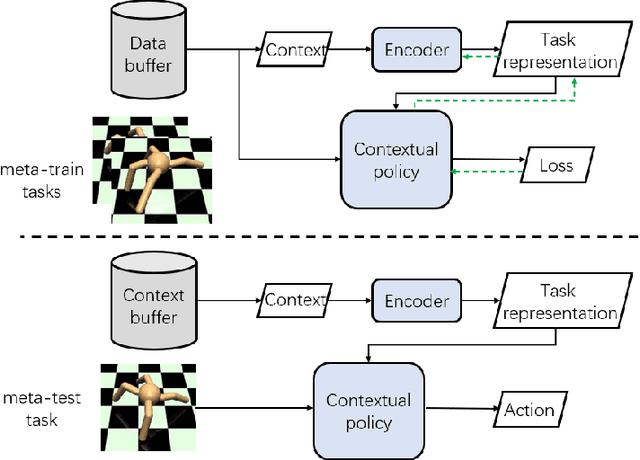
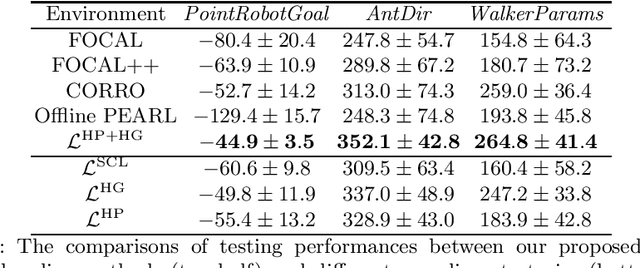
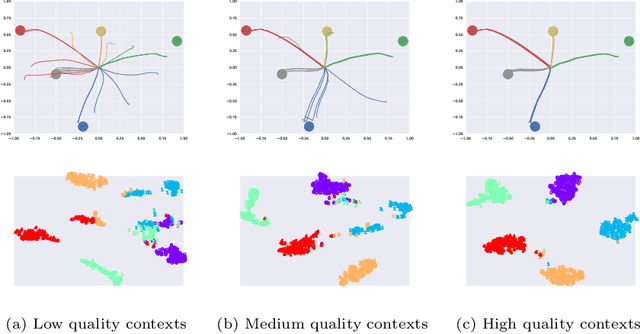
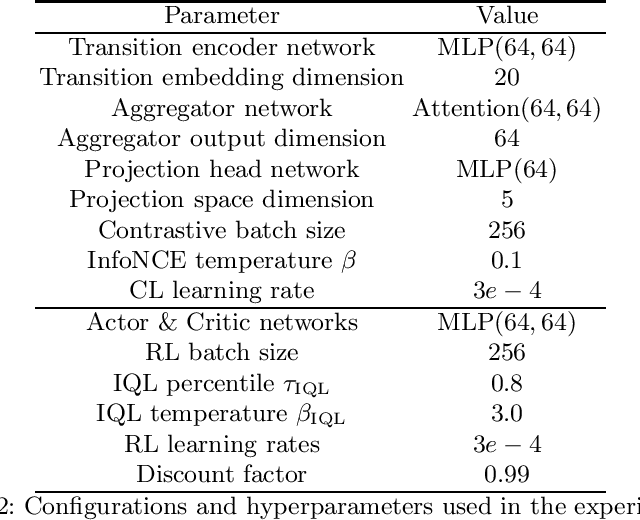
Offline meta reinforcement learning (OMRL) aims to learn transferrable knowledge from offline datasets to facilitate the learning process for new target tasks. Context-based RL employs a context encoder to rapidly adapt the agent to new tasks by inferring about the task representation, and then adjusting the acting policy based on the inferred task representation. Here we consider context-based OMRL, in particular, the issue of task representation learning for OMRL. We empirically demonstrate that the context encoder trained on offline datasets could suffer from distribution shift between the contexts used for training and testing. To tackle this issue, we propose a hard sampling based strategy for learning a robust task context encoder. Experimental results, based on distinct continuous control tasks, demonstrate that the utilization of our technique results in more robust task representations and better testing performance in terms of accumulated returns, compared with baseline methods. Our code is available at https://github.com/ZJLAB-AMMI/HS-OMRL.

Futures Quantitative Investment with Heterogeneous Continual Graph Neural Network
Mar 29, 2023It is a challenging problem to predict trends of futures prices with traditional econometric models as one needs to consider not only futures' historical data but also correlations among different futures. Spatial-temporal graph neural networks (STGNNs) have great advantages in dealing with such kind of spatial-temporal data. However, we cannot directly apply STGNNs to high-frequency future data because future investors have to consider both the long-term and short-term characteristics when doing decision-making. To capture both the long-term and short-term features, we exploit more label information by designing four heterogeneous tasks: price regression, price moving average regression, price gap regression (within a short interval), and change-point detection, which involve both long-term and short-term scenes. To make full use of these labels, we train our model in a continual manner. Traditional continual GNNs define the gradient of prices as the parameter important to overcome catastrophic forgetting (CF). Unfortunately, the losses of the four heterogeneous tasks lie in different spaces. Hence it is improper to calculate the parameter importance with their losses. We propose to calculate parameter importance with mutual information between original observations and the extracted features. The empirical results based on 49 commodity futures demonstrate that our model has higher prediction performance on capturing long-term or short-term dynamic change.
Commonsense Knowledge Assisted Deep Learning for Resource-constrained and Fine-grained Object Detection
Mar 21, 2023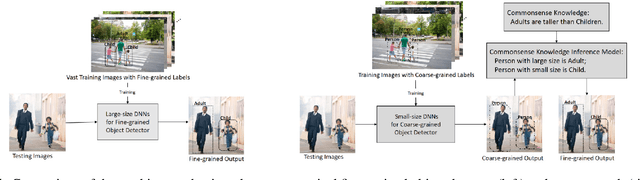
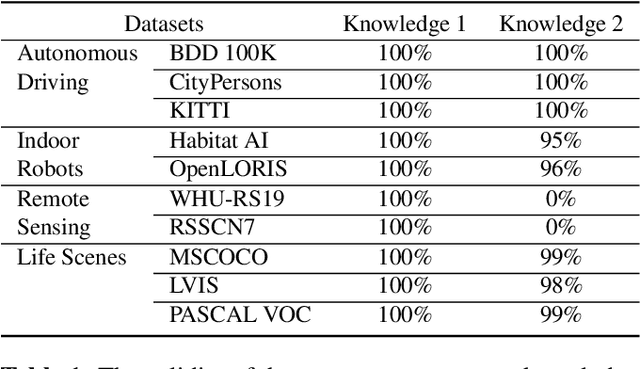

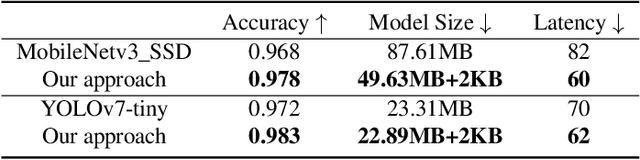
In this paper, we consider fine-grained image object detection in resource-constrained cases such as edge computing. Deep learning (DL), namely learning with deep neural networks (DNNs), has become the dominating approach to object detection. To achieve accurate fine-grained detection, one needs to employ a large enough DNN model and a vast amount of data annotations, which brings a challenge for using modern DL object detectors in resource-constrained cases. To this end, we propose an approach, which leverages commonsense knowledge to assist a coarse-grained object detector to get accurate fine-grained detection results. Specifically, we introduce a commonsense knowledge inference module (CKIM) to translate coarse-grained labels given by a backbone lightweight coarse-grained DL detector to fine-grained labels. We consider both crisp-rule and fuzzy-rule based inference in our CKIM; the latter is used to handle ambiguity in the target semantic labels. We implement our method based on several modern DL detectors, namely YOLOv4, Mobilenetv3-SSD and YOLOv7-tiny. Experiment results show that our approach outperforms benchmark detectors remarkably in terms of accuracy, model size and processing latency.
Toward NeuroDM: Where Computational Neuroscience Meets Data Mining
Mar 07, 2023At the intersection of computational neuroscience (CN) and data mining (DM), we advocate a holistic view toward their rich connections. On the one hand, fundamental concepts in neuroscience such as saliency, memory, and emotion can find novel applications in data mining. On the other hand, multimodal imaging has opened the door for data mining to facilitate the extraction of important cognitive and behavioral information from multimodal neural data. By NeuroDM, we advocate for more collaboration between CN and DM to expedite the advances in two well-established fields. The analogy between the over-parameterization of biological and artificial neural networks might suggest a unifying perspective of advancing both fields.
Pose-Controllable 3D Facial Animation Synthesis using Hierarchical Audio-Vertex Attention
Feb 24, 2023


Most of the existing audio-driven 3D facial animation methods suffered from the lack of detailed facial expression and head pose, resulting in unsatisfactory experience of human-robot interaction. In this paper, a novel pose-controllable 3D facial animation synthesis method is proposed by utilizing hierarchical audio-vertex attention. To synthesize real and detailed expression, a hierarchical decomposition strategy is proposed to encode the audio signal into both a global latent feature and a local vertex-wise control feature. Then the local and global audio features combined with vertex spatial features are used to predict the final consistent facial animation via a graph convolutional neural network by fusing the intrinsic spatial topology structure of the face model and the corresponding semantic feature of the audio. To accomplish pose-controllable animation, we introduce a novel pose attribute augmentation method by utilizing the 2D talking face technique. Experimental results indicate that the proposed method can produce more realistic facial expressions and head posture movements. Qualitative and quantitative experiments show that the proposed method achieves competitive performance against state-of-the-art methods.
3D Colored Shape Reconstruction from a Single RGB Image through Diffusion
Feb 11, 2023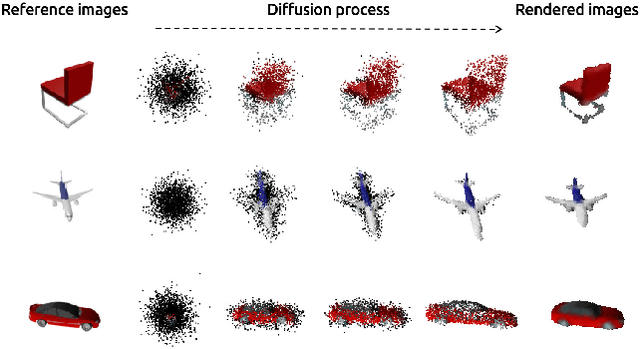
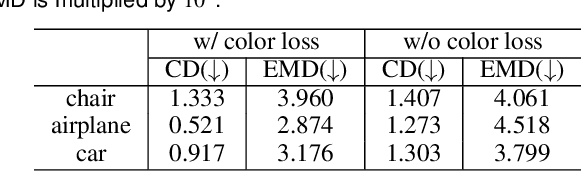
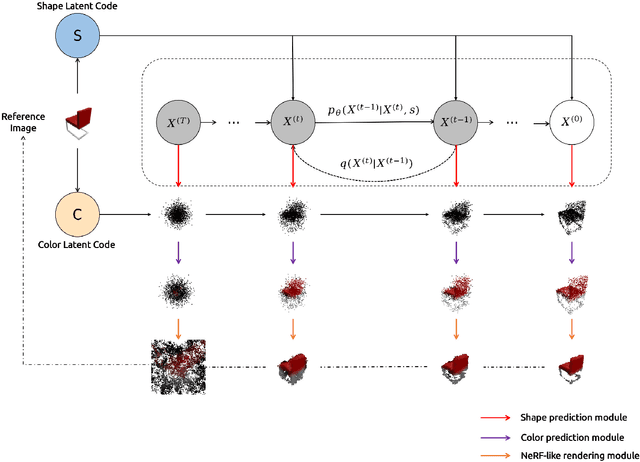
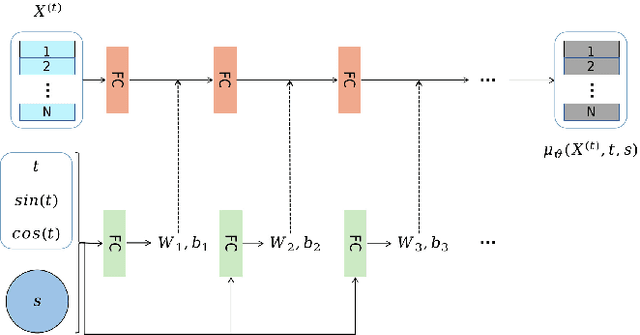
We propose a novel 3d colored shape reconstruction method from a single RGB image through diffusion model. Diffusion models have shown great development potentials for high-quality 3D shape generation. However, most existing work based on diffusion models only focus on geometric shape generation, they cannot either accomplish 3D reconstruction from a single image, or produce 3D geometric shape with color information. In this work, we propose to reconstruct a 3D colored shape from a single RGB image through a novel conditional diffusion model. The reverse process of the proposed diffusion model is consisted of three modules, shape prediction module, color prediction module and NeRF-like rendering module. In shape prediction module, the reference RGB image is first encoded into a high-level shape feature and then the shape feature is utilized as a condition to predict the reverse geometric noise in diffusion model. Then the color of each 3D point updated in shape prediction module is predicted by color prediction module. Finally, a NeRF-like rendering module is designed to render the colored point cloud predicted by the former two modules to 2D image space to guide the training conditioned only on a reference image. As far as the authors know, the proposed method is the first diffusion model for 3D colored shape reconstruction from a single RGB image. Experimental results demonstrate that the proposed method achieves competitive performance on colored 3D shape reconstruction, and the ablation study validates the positive role of the color prediction module in improving the reconstruction quality of 3D geometric point cloud.
A Reduction-based Framework for Sequential Decision Making with Delayed Feedback
Feb 06, 2023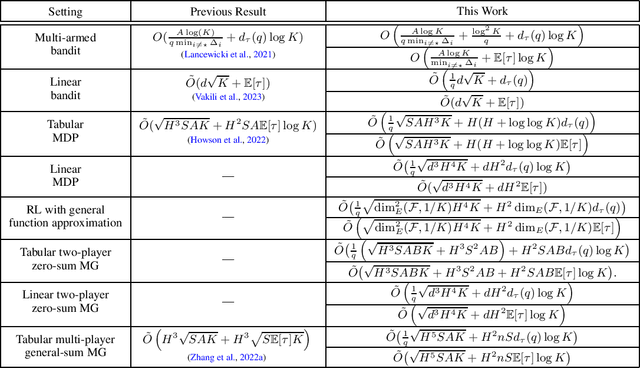
We study stochastic delayed feedback in general multi-agent sequential decision making, which includes bandits, single-agent Markov decision processes (MDPs), and Markov games (MGs). We propose a novel reduction-based framework, which turns any multi-batched algorithm for sequential decision making with instantaneous feedback into a sample-efficient algorithm that can handle stochastic delays in sequential decision making. By plugging different multi-batched algorithms into our framework, we provide several examples demonstrating that our framework not only matches or improves existing results for bandits, tabular MDPs, and tabular MGs, but also provides the first line of studies on delays in sequential decision making with function approximation. In summary, we provide a complete set of sharp results for multi-agent sequential decision making with delayed feedback.
Bayesian Self-Supervised Contrastive Learning
Feb 02, 2023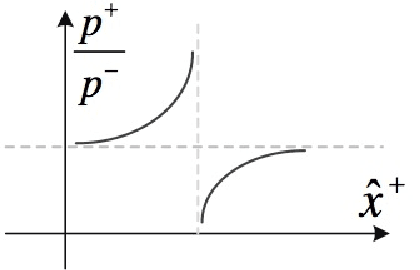

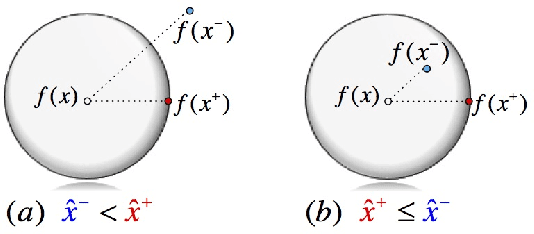
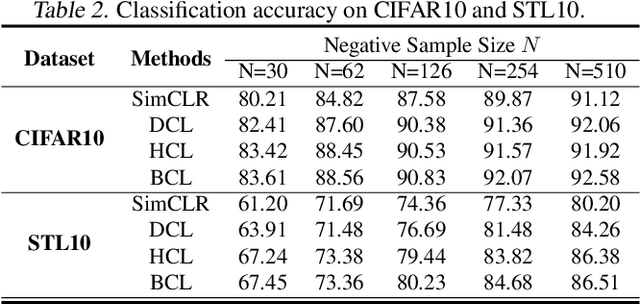
Recent years have witnessed many successful applications of contrastive learning in diverse domains, yet its self-supervised version still remains many exciting challenges. As the negative samples are drawn from unlabeled datasets, a randomly selected sample may be actually a false negative to an anchor, leading to incorrect encoder training. This paper proposes a new self-supervised contrastive loss called the BCL loss that still uses random samples from the unlabeled data while correcting the resulting bias with importance weights. The key idea is to design the desired sampling distribution for sampling hard true negative samples under the Bayesian framework. The prominent advantage lies in that the desired sampling distribution is a parametric structure, with a location parameter for debiasing false negative and concentration parameter for mining hard negative, respectively. Experiments validate the effectiveness and superiority of the BCL loss.
DALI: Dynamically Adjusted Label Importance for Noisy Partial Label Learning
Jan 28, 2023Noisy partial label learning (noisy PLL) is an important branch of weakly supervised learning. Unlike PLL where the ground-truth label must reside in the candidate set, noisy PLL relaxes this constraint and allows the ground-truth label may not be in the candidate set. To address this problem, existing works attempt to detect noisy samples and estimate the ground-truth label for each noisy sample. However, detection errors are inevitable, and these errors will accumulate during training and continuously affect model optimization. To address this challenge, we propose a novel framework for noisy PLL, called ``Dynamically Adjusted Label Importance (DALI)''. It aims to reduce the negative impact of detection errors by trading off the initial candidate set and model outputs with theoretical guarantees. Experimental results on multiple datasets demonstrate that our DALI succeeds over existing state-of-the-art approaches on noisy PLL. Our code will soon be publicly available.
Fine-Grained Selective Similarity Integration for Drug-Target Interaction Prediction
Dec 01, 2022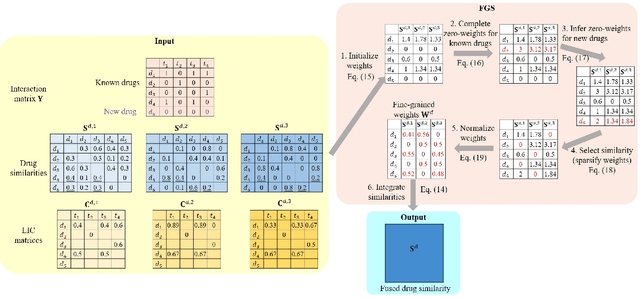
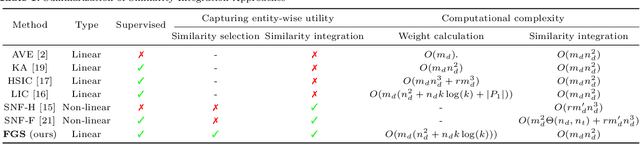
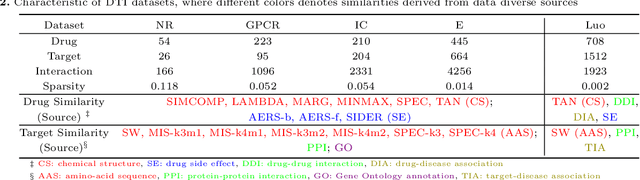
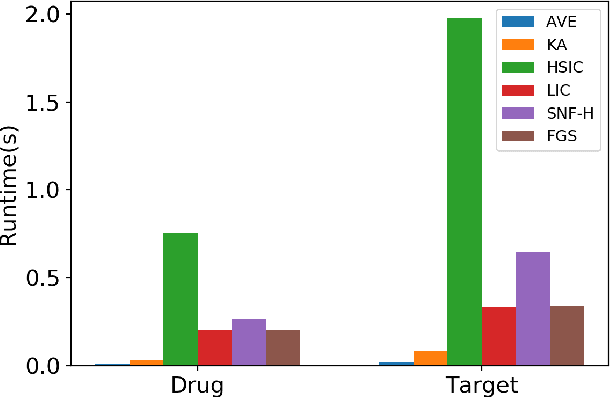
The discovery of drug-target interactions (DTIs) is a pivotal process in pharmaceutical development. Computational approaches are a promising and efficient alternative to tedious and costly wet-lab experiments for predicting novel DTIs from numerous candidates. Recently, with the availability of abundant heterogeneous biological information from diverse data sources, computational methods have been able to leverage multiple drug and target similarities to boost the performance of DTI prediction. Similarity integration is an effective and flexible strategy to extract crucial information across complementary similarity views, providing a compressed input for any similarity-based DTI prediction model. However, existing similarity integration methods filter and fuse similarities from a global perspective, neglecting the utility of similarity views for each drug and target. In this study, we propose a Fine-Grained Selective similarity integration approach, called FGS, which employs a local interaction consistency-based weight matrix to capture and exploit the importance of similarities at a finer granularity in both similarity selection and combination steps. We evaluate FGS on five DTI prediction datasets under various prediction settings. Experimental results show that our method not only outperforms similarity integration competitors with comparable computational costs, but also achieves better prediction performance than state-of-the-art DTI prediction approaches by collaborating with conventional base models. Furthermore, case studies on the analysis of similarity weights and on the verification of novel predictions confirm the practical ability of FGS.