 Add to Chrome
 Add to Firefox
 Add to Edge
Failing Gracefully: Mitigating Impact of Inevitable Robot Failures
Aug 05, 2026
Service robots operate in household environments shared with humans, pets, and everyday objects, where they are highly susceptible to failures such as software crashes, hardware degradation, or unpredictable interactions. While roboticists strive to minimize failures, some remain inevitable, making it critical to mitigate their potential consequences for safe and reliable deployment. This paper introduces a novel safety formulation that evaluates both the probability of impactful interactions between robots and surrounding entities during failures, and the severity of their outcomes. By quantifying the impact of failures on different entities, our approach enables robots to make informed planning decisions that balance safety with task efficiency. To support systematic evaluation, we also present FailBench, a MuJoCo-based simulation framework for studying robot-environment interactions under diverse failure modes, including sensing issues and actuator malfunctions. Together, our safety formulation and FailBench provide a foundation for developing safer and more robust motion plans and learned policies in real-world household environments.

Improving Medical Image Generative Models with Fréchet Distance Loss
Jul 14, 2026Diffusion generative models have demonstrated immense potential for synthetic medical image generation. However, these models often struggle to capture complex morphological characteristics of heterogeneous tumors with irregular boundaries, limiting their utility for downstream clinical tasks such as segmentation. This limitation stems from the standard denoising objective: minimizing a per-pixel error, which smooths high-variance irregular structures characteristic of tumors. To address this, we propose finetuning these generative models with Fréchet Distance loss (FD-loss). FD-loss aligns the first and second order feature statistics of real and generated images in a pretrained encoder space, encouraging the generator to capture complex structural variations characteristic of heterogeneous tumors. We integrate FD-loss across diverse architectural settings, using both natural- and medical-image encoders on multiple liver and brain cancer datasets spanning CT and MRI modalities. Downstream segmentation networks trained on our FD-regularized synthetic data consistently achieve superior performance, improving tumor DSC by $>$$5\%$ over unregularized synthetic augmentation alone. Qualitative analysis suggests these gains are associated with more faithful tumor synthesis and fewer segmentation hallucinations. Our results show FD-loss as an effective regularizer for medical image generative models to improve clinical workflows.
AI-generated data contamination erodes pathological variability and diagnostic reliability
Jan 21, 2026Generative artificial intelligence (AI) is rapidly populating medical records with synthetic content, creating a feedback loop where future models are increasingly at risk of training on uncurated AI-generated data. However, the clinical consequences of this AI-generated data contamination remain unexplored. Here, we show that in the absence of mandatory human verification, this self-referential cycle drives a rapid erosion of pathological variability and diagnostic reliability. By analysing more than 800,000 synthetic data points across clinical text generation, vision-language reporting, and medical image synthesis, we find that models progressively converge toward generic phenotypes regardless of the model architecture. Specifically, rare but critical findings, including pneumothorax and effusions, vanish from the synthetic content generated by AI models, while demographic representations skew heavily toward middle-aged male phenotypes. Crucially, this degradation is masked by false diagnostic confidence; models continue to issue reassuring reports while failing to detect life-threatening pathology, with false reassurance rates tripling to 40%. Blinded physician evaluation confirms that this decoupling of confidence and accuracy renders AI-generated documentation clinically useless after just two generations. We systematically evaluate three mitigation strategies, finding that while synthetic volume scaling fails to prevent collapse, mixing real data with quality-aware filtering effectively preserves diversity. Ultimately, our results suggest that without policy-mandated human oversight, the deployment of generative AI threatens to degrade the very healthcare data ecosystems it relies upon.
Adversarial Machine Learning -- Industry Perspectives
Feb 04, 2020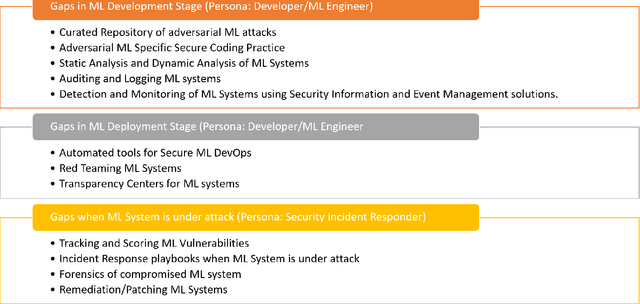
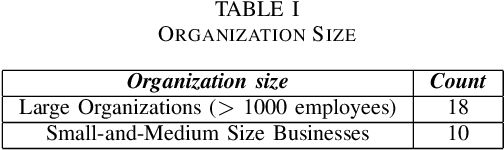
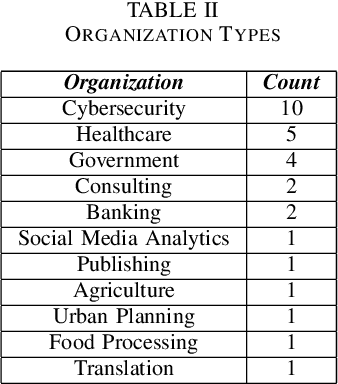
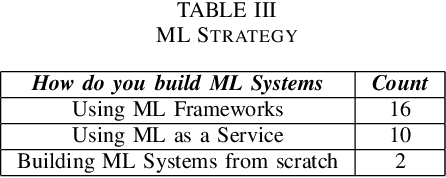
Based on interviews with 28 organizations, we found that industry practitioners are not equipped with tactical and strategic tools to protect, detect and respond to attacks on their Machine Learning (ML) systems. We leverage the insights from the interviews and we enumerate the gaps in perspective in securing machine learning systems when viewed in the context of traditional software security development. We write this paper from the perspective of two personas: developers/ML engineers and security incident responders who are tasked with securing ML systems as they are designed, developed and deployed ML systems. The goal of this paper is to engage researchers to revise and amend the Security Development Lifecycle for industrial-grade software in the adversarial ML era.