 Add to Chrome
 Add to Firefox
 Add to Edge
Graph Neural Networks for Misinformation Detection: Performance-Efficiency Trade-offs
Apr 09, 2026
The rapid spread of online misinformation has led to increasingly complex detection models, including large language models and hybrid architectures. However, their computational cost and deployment limitations raise concerns about practical applicability. In this work, we benchmark graph neural networks (GNNs) against non-graph-based machine learning methods under controlled and comparable conditions. We evaluate lightweight GNN architectures (GCN, GraphSAGE, GAT, ChebNet) against Logistic Regression, Support Vector Machines, and Multilayer Perceptrons across seven public datasets in English, Indonesian, and Polish. All models use identical TF-IDF features to isolate the impact of relational structure. Performance is measured using F1 score, with inference time reported to assess efficiency. GNNs consistently outperform non-graph baselines across all datasets. For example, GraphSAGE achieves 96.8% F1 on Kaggle and 91.9% on WELFake, compared to 73.2% and 66.8% for MLP, respectively. On COVID-19, GraphSAGE reaches 90.5% F1 vs. 74.9%, while ChebNet attains 79.1% vs. 66.4% on FakeNewsNet. These gains are achieved with comparable or lower inference times. Overall, the results show that classic GNNs remain effective and efficient, challenging the need for increasingly complex architectures in misinformation detection.

ProtoFlow: Mitigating Forgetting in Class-Incremental Remote Sensing Segmentation via Low-Curvature Prototype Flow
Apr 03, 2026Remote sensing segmentation in real deployment is inherently continual: new semantic categories emerge, and acquisition conditions shift across seasons, cities, and sensors. Despite recent progress, many incremental approaches still treat training steps as isolated updates, which leaves representation drift and forgetting insufficiently controlled. We present ProtoFlow, a time-aware prototype dynamics framework that models class prototypes as trajectories and learns their evolution with an explicit temporal vector field. By jointly enforcing low-curvature motion and inter-class separation, ProtoFlow stabilizes prototype geometry throughout incremental learning. Experiments on standard class- and domain-incremental remote sensing benchmarks show consistent gains over strong baselines, including up to 1.5-2.0 points improvement in mIoUall, together with reduced forgetting. These results suggest that explicitly modeling temporal prototype evolution is a practical and interpretable strategy for robust continual remote sensing segmentation.
Learning to Attack: A Bandit Approach to Adversarial Context Poisoning
Feb 28, 2026Neural contextual bandits are vulnerable to adversarial attacks, where subtle perturbations to rewards, actions, or contexts induce suboptimal decisions. We introduce AdvBandit, a black-box adaptive attack that formulates context poisoning as a continuous-armed bandit problem, enabling the attacker to jointly learn and exploit the victim's evolving policy. The attacker requires no access to the victim's internal parameters, reward function, or gradient information; instead, it constructs a surrogate model using a maximum-entropy inverse reinforcement learning module from observed context-action pairs and optimizes perturbations against this surrogate using projected gradient descent. An upper confidence bound-aware Gaussian process guides arm selection. An attack-budget control mechanism is also introduced to limit detection risk and overhead. We provide theoretical guarantees, including sublinear attacker regret and lower bounds on victim regret linear in the number of attacks. Experiments on three real-world datasets (Yelp, MovieLens, and Disin) against various victim contextual bandits demonstrate that our attack model achieves higher cumulative victim regret than state-of-the-art baselines.
Smart Buildings Energy Consumption Forecasting using Adaptive Evolutionary Ensemble Learning Models
Jun 13, 2025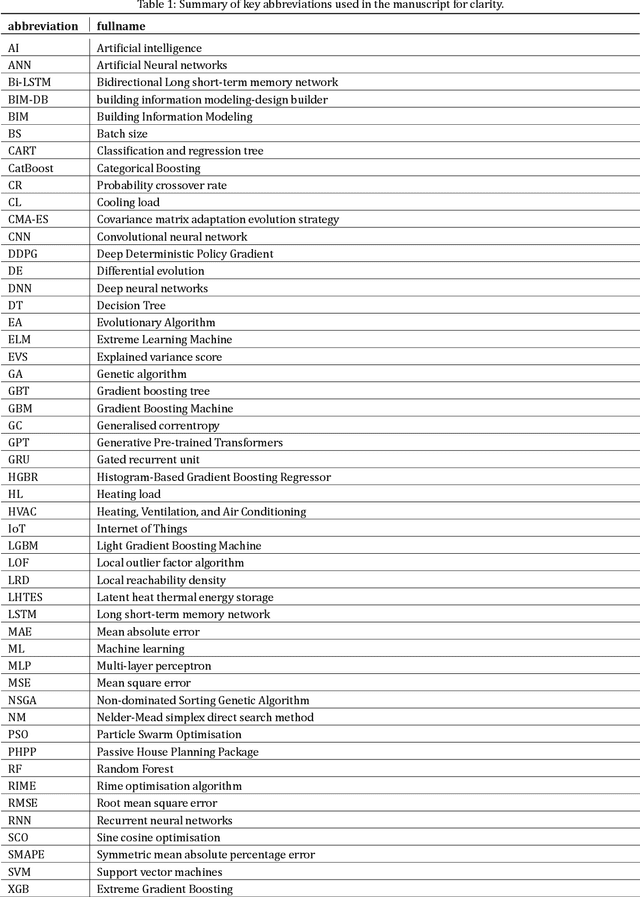
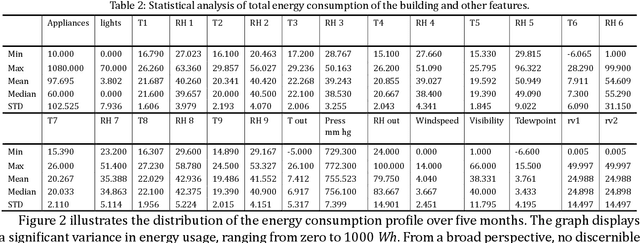
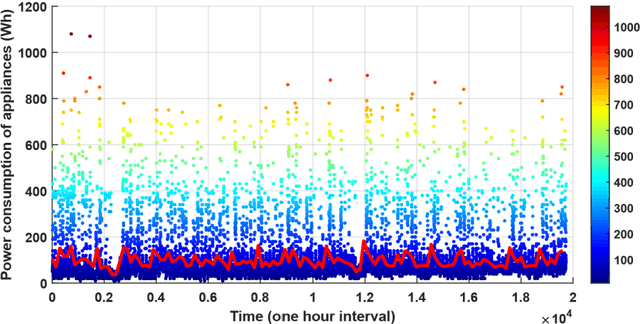
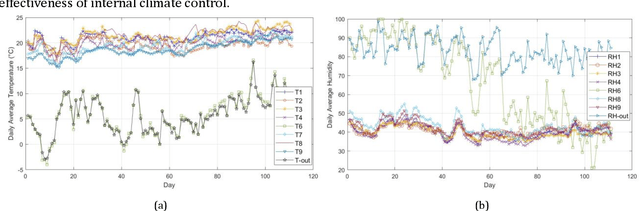
Smart buildings are gaining popularity because they can enhance energy efficiency, lower costs, improve security, and provide a more comfortable and convenient environment for building occupants. A considerable portion of the global energy supply is consumed in the building sector and plays a pivotal role in future decarbonization pathways. To manage energy consumption and improve energy efficiency in smart buildings, developing reliable and accurate energy demand forecasting is crucial and meaningful. However, extending an effective predictive model for the total energy use of appliances at the building level is challenging because of temporal oscillations and complex linear and non-linear patterns. This paper proposes three hybrid ensemble predictive models, incorporating Bagging, Stacking, and Voting mechanisms combined with a fast and effective evolutionary hyper-parameters tuner. The performance of the proposed energy forecasting model was evaluated using a hybrid dataset comprising meteorological parameters, appliance energy use, temperature, humidity, and lighting energy consumption from various sections of a building, collected by 18 sensors located in Stambroek, Mons, Belgium. To provide a comparative framework and investigate the efficiency of the proposed predictive model, 15 popular machine learning (ML) models, including two classic ML models, three NNs, a Decision Tree (DT), a Random Forest (RF), two Deep Learning (DL) and six Ensemble models, were compared. The prediction results indicate that the adaptive evolutionary bagging model surpassed other predictive models in both accuracy and learning error. Notably, it achieved accuracy gains of 12.6%, 13.7%, 12.9%, 27.04%, and 17.4% compared to Extreme Gradient Boosting (XGB), Categorical Boosting (CatBoost), GBM, LGBM, and Random Forest (RF).
Hybrid Wave-wind System Power Optimisation Using Effective Ensemble Covariance Matrix Adaptation Evolutionary Algorithm
May 28, 2025Floating hybrid wind-wave systems combine offshore wind platforms with wave energy converters (WECs) to create cost-effective and reliable energy solutions. Adequately designed and tuned WECs are essential to avoid unwanted loads disrupting turbine motion while efficiently harvesting wave energy. These systems diversify energy sources, enhancing energy security and reducing supply risks while providing a more consistent power output by smoothing energy production variability. However, optimising such systems is complex due to the physical and hydrodynamic interactions between components, resulting in a challenging optimisation space. This study uses a 5-MW OC4-DeepCwind semi-submersible platform with three spherical WECs to explore these synergies. To address these challenges, we propose an effective ensemble optimisation (EEA) technique that combines covariance matrix adaptation, novelty search, and discretisation techniques. To evaluate the EEA performance, we used four sea sites located along Australia's southern coast. In this framework, geometry and power take-off parameters are simultaneously optimised to maximise the average power output of the hybrid wind-wave system. Ensemble optimisation methods enhance performance, flexibility, and robustness by identifying the best algorithm or combination of algorithms for a given problem, addressing issues like premature convergence, stagnation, and poor search space exploration. The EEA was benchmarked against 14 advanced optimisation methods, demonstrating superior solution quality and convergence rates. EEA improved total power output by 111%, 95%, and 52% compared to WOA, EO, and AHA, respectively. Additionally, in comparisons with advanced methods, LSHADE, SaNSDE, and SLPSO, EEA achieved absorbed power enhancements of 498%, 638%, and 349% at the Sydney sea site, showcasing its effectiveness in optimising hybrid energy systems.
Kolmogorov-Arnold networks for metal surface defect classification
Jan 10, 2025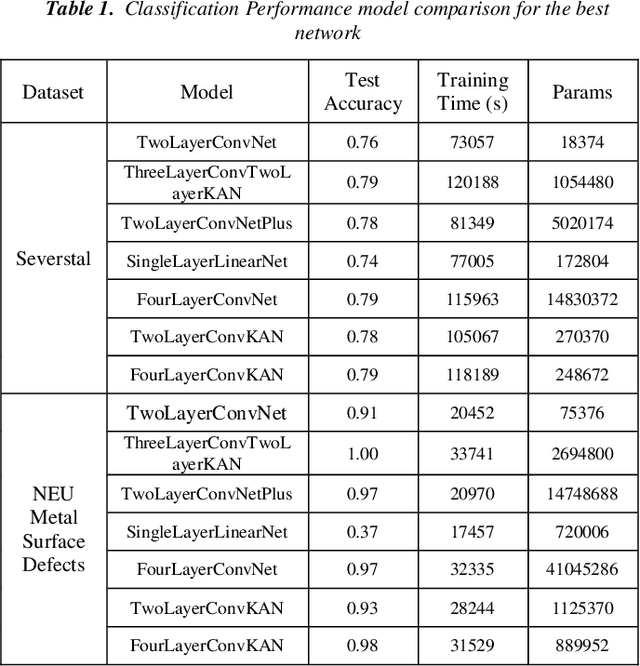
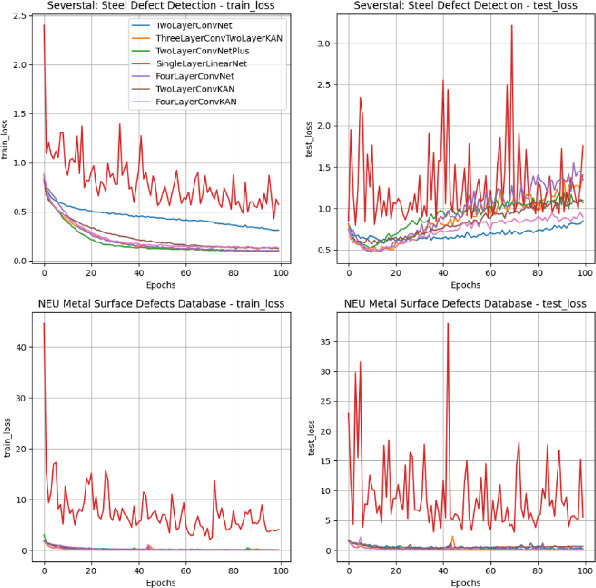
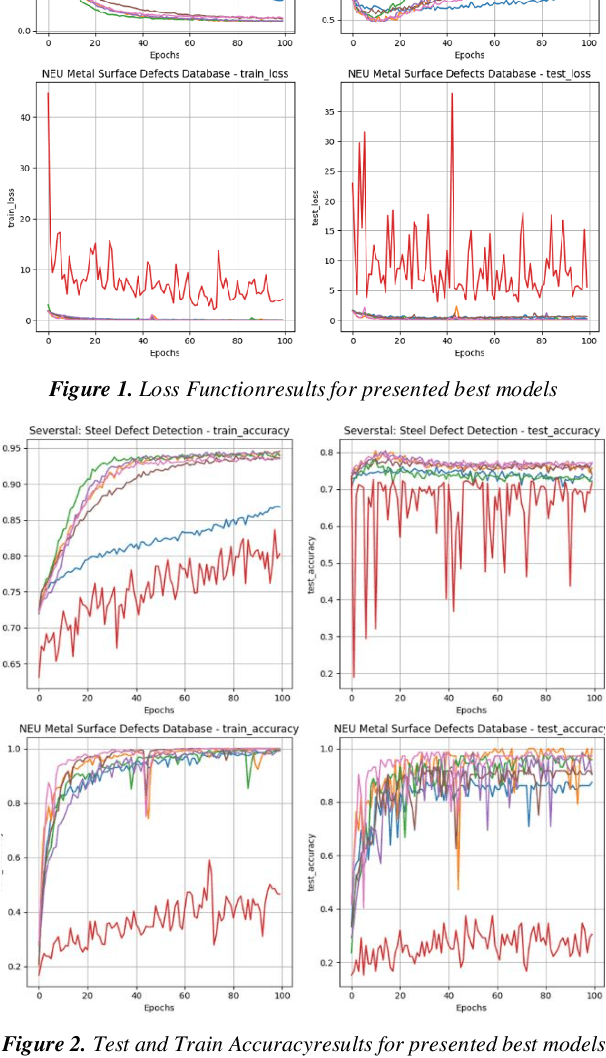
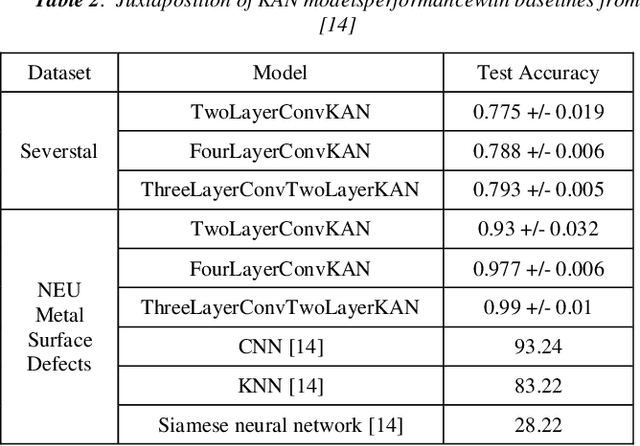
This paper presents the application of Kolmogorov-Arnold Networks (KAN) in classifying metal surface defects. Specifically, steel surfaces are analyzed to detect defects such as cracks, inclusions, patches, pitted surfaces, and scratches. Drawing on the Kolmogorov-Arnold theorem, KAN provides a novel approach compared to conventional multilayer perceptrons (MLPs), facilitating more efficient function approximation by utilizing spline functions. The results show that KAN networks can achieve better accuracy than convolutional neural networks (CNNs) with fewer parameters, resulting in faster convergence and improved performance in image classification.
A Review of 315 Benchmark and Test Functions for Machine Learning Optimization Algorithms and Metaheuristics with Mathematical and Visual Descriptions
Jun 13, 2024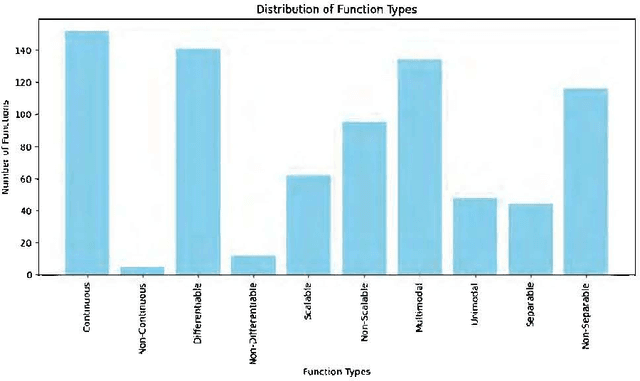
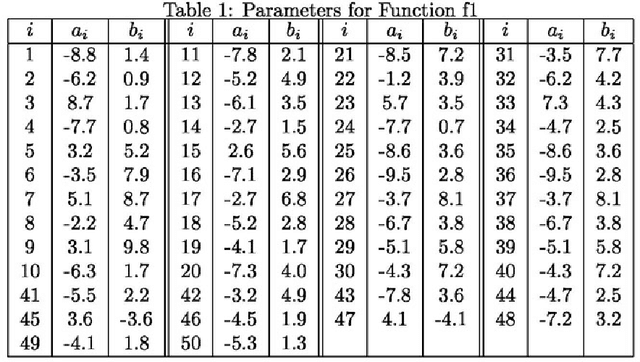
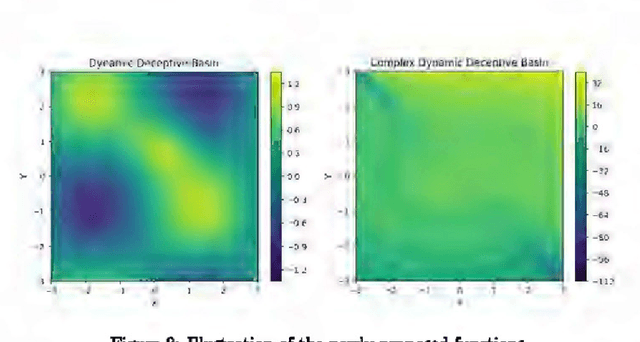
In the rapidly evolving optimization and metaheuristics domains, the efficacy of algorithms is crucially determined by the benchmark (test) functions. While several functions have been developed and derived over the past decades, little information is available on the mathematical and visual description, range of suitability, and applications of many such functions. To bridge this knowledge gap, this review provides an exhaustive survey of more than 300 benchmark functions used in the evaluation of optimization and metaheuristics algorithms. This review first catalogs benchmark and test functions based on their characteristics, complexity, properties, visuals, and domain implications to offer a wide view that aids in selecting appropriate benchmarks for various algorithmic challenges. This review also lists the 25 most commonly used functions in the open literature and proposes two new, highly dimensional, dynamic and challenging functions that could be used for testing new algorithms. Finally, this review identifies gaps in current benchmarking practices and suggests directions for future research.
Clustering in Dynamic Environments: A Framework for Benchmark Dataset Generation With Heterogeneous Changes
Feb 24, 2024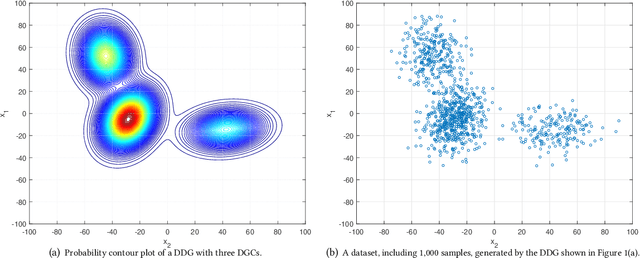
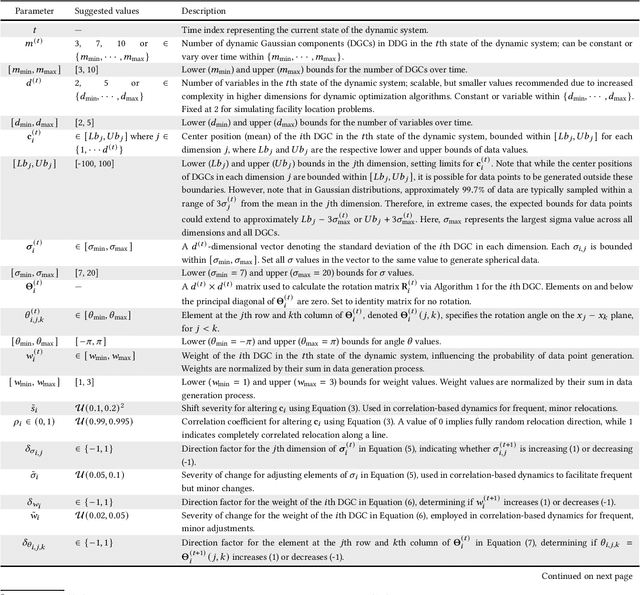
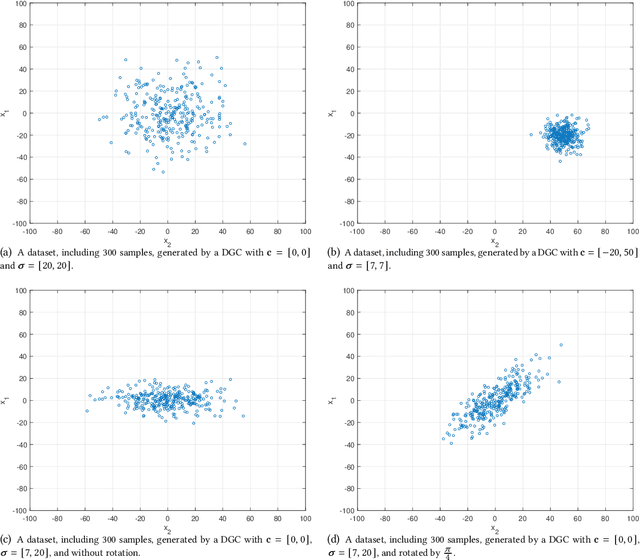

Clustering in dynamic environments is of increasing importance, with broad applications ranging from real-time data analysis and online unsupervised learning to dynamic facility location problems. While meta-heuristics have shown promising effectiveness in static clustering tasks, their application for tracking optimal clustering solutions or robust clustering over time in dynamic environments remains largely underexplored. This is partly due to a lack of dynamic datasets with diverse, controllable, and realistic dynamic characteristics, hindering systematic performance evaluations of clustering algorithms in various dynamic scenarios. This deficiency leads to a gap in our understanding and capability to effectively design algorithms for clustering in dynamic environments. To bridge this gap, this paper introduces the Dynamic Dataset Generator (DDG). DDG features multiple dynamic Gaussian components integrated with a range of heterogeneous, local, and global changes. These changes vary in spatial and temporal severity, patterns, and domain of influence, providing a comprehensive tool for simulating a wide range of dynamic scenarios.
Semantic-Preserving Feature Partitioning for Multi-View Ensemble Learning
Jan 11, 2024In machine learning, the exponential growth of data and the associated ``curse of dimensionality'' pose significant challenges, particularly with expansive yet sparse datasets. Addressing these challenges, multi-view ensemble learning (MEL) has emerged as a transformative approach, with feature partitioning (FP) playing a pivotal role in constructing artificial views for MEL. Our study introduces the Semantic-Preserving Feature Partitioning (SPFP) algorithm, a novel method grounded in information theory. The SPFP algorithm effectively partitions datasets into multiple semantically consistent views, enhancing the MEL process. Through extensive experiments on eight real-world datasets, ranging from high-dimensional with limited instances to low-dimensional with high instances, our method demonstrates notable efficacy. It maintains model accuracy while significantly improving uncertainty measures in scenarios where high generalization performance is achievable. Conversely, it retains uncertainty metrics while enhancing accuracy where high generalization accuracy is less attainable. An effect size analysis further reveals that the SPFP algorithm outperforms benchmark models by large effect size and reduces computational demands through effective dimensionality reduction. The substantial effect sizes observed in most experiments underscore the algorithm's significant improvements in model performance.
GNBG-Generated Test Suite for Box-Constrained Numerical Global Optimization
Dec 12, 2023This document introduces a set of 24 box-constrained numerical global optimization problem instances, systematically constructed using the Generalized Numerical Benchmark Generator (GNBG). These instances cover a broad spectrum of problem features, including varying degrees of modality, ruggedness, symmetry, conditioning, variable interaction structures, basin linearity, and deceptiveness. Purposefully designed, this test suite offers varying difficulty levels and problem characteristics, facilitating rigorous evaluation and comparative analysis of optimization algorithms. By presenting these problems, we aim to provide researchers with a structured platform to assess the strengths and weaknesses of their algorithms against challenges with known, controlled characteristics. For reproducibility, the MATLAB source code for this test suite is publicly available.