 Add to Chrome
 Add to Firefox
 Add to Edge
Sociology
Papers and Code
Exploring Silicon-Based Societies: An Early Study of the Moltbook Agent Community
Feb 02, 2026
The rapid emergence of autonomous large language model agents has given rise to persistent, large-scale agent ecosystems whose collective behavior cannot be adequately understood through anecdotal observation or small-scale simulation. This paper introduces data-driven silicon sociology as a systematic empirical framework for studying social structure formation among interacting artificial agents. We present a pioneering large-scale data mining investigation of an in-the-wild agent society by analyzing Moltbook, a social platform designed primarily for agent-to-agent interaction. At the time of study, Moltbook hosted over 150,000 registered autonomous agents operating across thousands of agent-created sub-communities. Using programmatic and non-intrusive data acquisition, we collected and analyzed the textual descriptions of 12,758 submolts, which represent proactive sub-community partitioning activities within the ecosystem. Treating agent-authored descriptions as first-class observational artifacts, we apply rigorous preprocessing, contextual embedding, and unsupervised clustering techniques to uncover latent patterns of thematic organization and social space structuring. The results show that autonomous agents systematically organize collective space through reproducible patterns spanning human-mimetic interests, silicon-centric self-reflection, and early-stage economic and coordination behaviors. Rather than relying on predefined sociological taxonomies, these structures emerge directly from machine-generated data traces. This work establishes a methodological foundation for data-driven silicon sociology and demonstrates that data mining techniques can provide a powerful lens for understanding the organization and evolution of large autonomous agent societies.

HAG: Hierarchical Demographic Tree-based Agent Generation for Topic-Adaptive Simulation
Jan 09, 2026High-fidelity agent initialization is crucial for credible Agent-Based Modeling across diverse domains. A robust framework should be Topic-Adaptive, capturing macro-level joint distributions while ensuring micro-level individual rationality. Existing approaches fall into two categories: static data-based retrieval methods that fail to adapt to unseen topics absent from the data, and LLM-based generation methods that lack macro-level distribution awareness, resulting in inconsistencies between micro-level persona attributes and reality. To address these problems, we propose HAG, a Hierarchical Agent Generation framework that formalizes population generation as a two-stage decision process. Firstly, utilizing a World Knowledge Model to infer hierarchical conditional probabilities to construct the Topic-Adaptive Tree, achieving macro-level distribution alignment. Then, grounded real-world data, instantiation and agentic augmentation are carried out to ensure micro-level consistency. Given the lack of specialized evaluation, we establish a multi-domain benchmark and a comprehensive PACE evaluation framework. Extensive experiments show that HAG significantly outperforms representative baselines, reducing population alignment errors by an average of 37.7% and enhancing sociological consistency by 18.8%.
Measuring Fine-Grained Negotiation Tactics of Humans and LLMs in Diplomacy
Dec 20, 2025The study of negotiation styles dates back to Aristotle's ethos-pathos-logos rhetoric. Prior efforts primarily studied the success of negotiation agents. Here, we shift the focus towards the styles of negotiation strategies. Our focus is the strategic dialogue board game Diplomacy, which affords rich natural language negotiation and measures of game success. We used LLM-as-a-judge to annotate a large human-human set of Diplomacy games for fine-grained negotiation tactics from a sociologically-grounded taxonomy. Using a combination of the It Takes Two and WebDiplomacy datasets, we demonstrate the reliability of our LLM-as-a-Judge framework and show strong correlations between negotiation features and success in the Diplomacy setting. Lastly, we investigate the differences between LLM and human negotiation strategies and show that fine-tuning can steer LLM agents toward more human-like negotiation behaviors.
Affect, Body, Cognition, Demographics, and Emotion: The ABCDE of Text Features for Computational Affective Science
Dec 19, 2025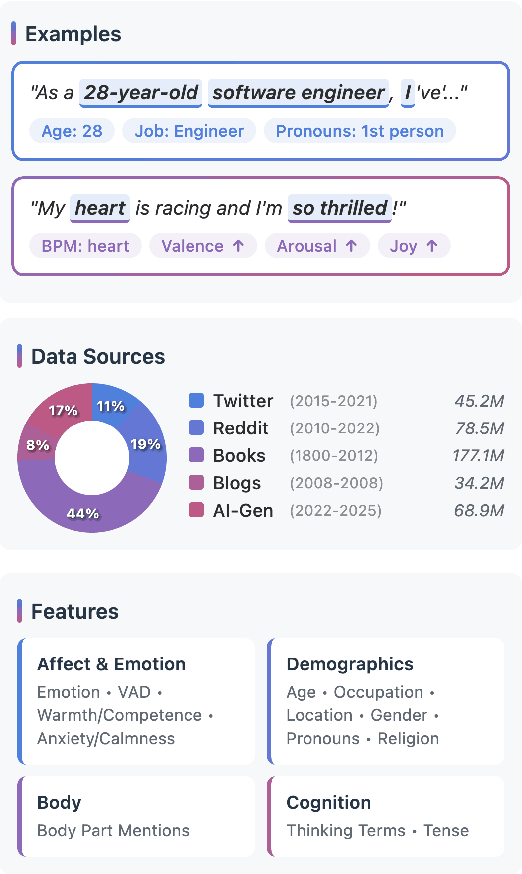
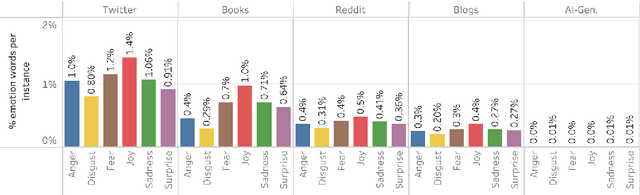
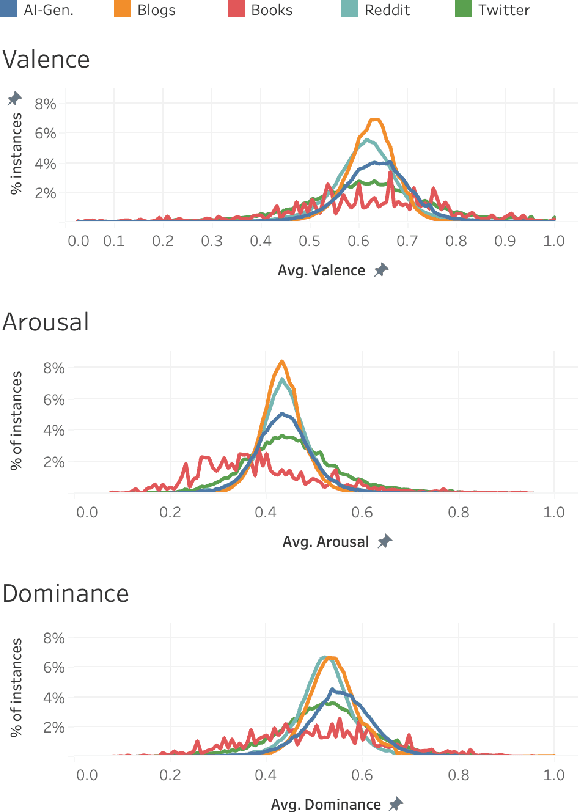
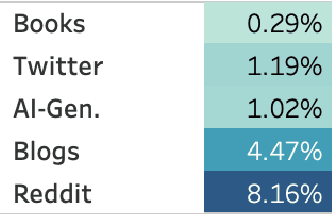
Work in Computational Affective Science and Computational Social Science explores a wide variety of research questions about people, emotions, behavior, and health. Such work often relies on language data that is first labeled with relevant information, such as the use of emotion words or the age of the speaker. Although many resources and algorithms exist to enable this type of labeling, discovering, accessing, and using them remains a substantial impediment, particularly for practitioners outside of computer science. Here, we present the ABCDE dataset (Affect, Body, Cognition, Demographics, and Emotion), a large-scale collection of over 400 million text utterances drawn from social media, blogs, books, and AI-generated sources. The dataset is annotated with a wide range of features relevant to computational affective and social science. ABCDE facilitates interdisciplinary research across numerous fields, including affective science, cognitive science, the digital humanities, sociology, political science, and computational linguistics.
Tracking Temporal Dynamics of Vector Sets with Gaussian Process
Dec 17, 2025Understanding the temporal evolution of sets of vectors is a fundamental challenge across various domains, including ecology, crime analysis, and linguistics. For instance, ecosystem structures evolve due to interactions among plants, herbivores, and carnivores; the spatial distribution of crimes shifts in response to societal changes; and word embedding vectors reflect cultural and semantic trends over time. However, analyzing such time-varying sets of vectors is challenging due to their complicated structures, which also evolve over time. In this work, we propose a novel method for modeling the distribution underlying each set of vectors using infinite-dimensional Gaussian processes. By approximating the latent function in the Gaussian process with Random Fourier Features, we obtain compact and comparable vector representations over time. This enables us to track and visualize temporal transitions of vector sets in a low-dimensional space. We apply our method to both sociological data (crime distributions) and linguistic data (word embeddings), demonstrating its effectiveness in capturing temporal dynamics. Our results show that the proposed approach provides interpretable and robust representations, offering a powerful framework for analyzing structural changes in temporally indexed vector sets across diverse domains.
On the Dynamics of Multi-Agent LLM Communities Driven by Value Diversity
Dec 11, 2025As Large Language Models (LLM) based multi-agent systems become increasingly prevalent, the collective behaviors, e.g., collective intelligence, of such artificial communities have drawn growing attention. This work aims to answer a fundamental question: How does diversity of values shape the collective behavior of AI communities? Using naturalistic value elicitation grounded in the prevalent Schwartz's Theory of Basic Human Values, we constructed multi-agent simulations where communities with varying numbers of agents engaged in open-ended interactions and constitution formation. The results show that value diversity enhances value stability, fosters emergent behaviors, and brings more creative principles developed by the agents themselves without external guidance. However, these effects also show diminishing returns: extreme heterogeneity induces instability. This work positions value diversity as a new axis of future AI capability, bridging AI ability and sociological studies of institutional emergence.
The High Cost of Incivility: Quantifying Interaction Inefficiency via Multi-Agent Monte Carlo Simulations
Dec 09, 2025
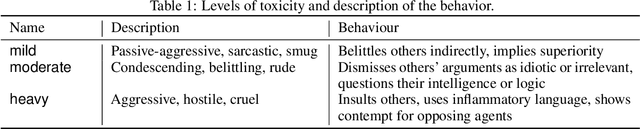
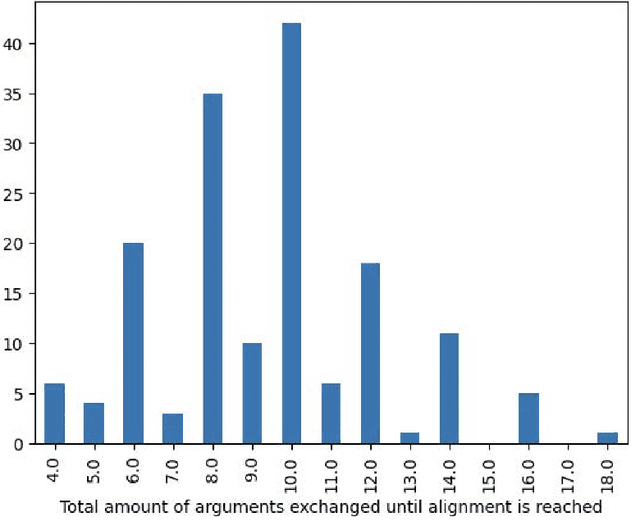
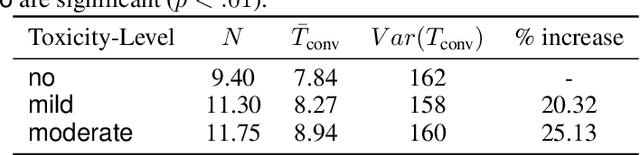
Workplace toxicity is widely recognized as detrimental to organizational culture, yet quantifying its direct impact on operational efficiency remains methodologically challenging due to the ethical and practical difficulties of reproducing conflict in human subjects. This study leverages Large Language Model (LLM) based Multi-Agent Systems to simulate 1-on-1 adversarial debates, creating a controlled "sociological sandbox". We employ a Monte Carlo method to simulate hundrets of discussions, measuring the convergence time (defined as the number of arguments required to reach a conclusion) between a baseline control group and treatment groups involving agents with "toxic" system prompts. Our results demonstrate a statistically significant increase of approximately 25\% in the duration of conversations involving toxic participants. We propose that this "latency of toxicity" serves as a proxy for financial damage in corporate and academic settings. Furthermore, we demonstrate that agent-based modeling provides a reproducible, ethical alternative to human-subject research for measuring the mechanics of social friction.
Certified Signed Graph Unlearning
Nov 18, 2025Signed graphs model complex relationships through positive and negative edges, with widespread real-world applications. Given the sensitive nature of such data, selective removal mechanisms have become essential for privacy protection. While graph unlearning enables the removal of specific data influences from Graph Neural Networks (GNNs), existing methods are designed for conventional GNNs and overlook the unique heterogeneous properties of signed graphs. When applied to Signed Graph Neural Networks (SGNNs), these methods lose critical sign information, degrading both model utility and unlearning effectiveness. To address these challenges, we propose Certified Signed Graph Unlearning (CSGU), which provides provable privacy guarantees while preserving the sociological principles underlying SGNNs. CSGU employs a three-stage method: (1) efficiently identifying minimal influenced neighborhoods via triangular structures, (2) applying sociological theories to quantify node importance for optimal privacy budget allocation, and (3) performing importance-weighted parameter updates to achieve certified modifications with minimal utility degradation. Extensive experiments demonstrate that CSGU outperforms existing methods, achieving superior performance in both utility preservation and unlearning effectiveness on SGNNs.
SPOT: An Annotated French Corpus and Benchmark for Detecting Critical Interventions in Online Conversations
Nov 10, 2025We introduce SPOT (Stopping Points in Online Threads), the first annotated corpus translating the sociological concept of stopping point into a reproducible NLP task. Stopping points are ordinary critical interventions that pause or redirect online discussions through a range of forms (irony, subtle doubt or fragmentary arguments) that frameworks like counterspeech or social correction often overlook. We operationalize this concept as a binary classification task and provide reliable annotation guidelines. The corpus contains 43,305 manually annotated French Facebook comments linked to URLs flagged as false information by social media users, enriched with contextual metadata (article, post, parent comment, page or group, and source). We benchmark fine-tuned encoder models (CamemBERT) and instruction-tuned LLMs under various prompting strategies. Results show that fine-tuned encoders outperform prompted LLMs in F1 score by more than 10 percentage points, confirming the importance of supervised learning for emerging non-English social media tasks. Incorporating contextual metadata further improves encoder models F1 scores from 0.75 to 0.78. We release the anonymized dataset, along with the annotation guidelines and code in our code repository, to foster transparency and reproducible research.
SciEvent: Benchmarking Multi-domain Scientific Event Extraction
Sep 19, 2025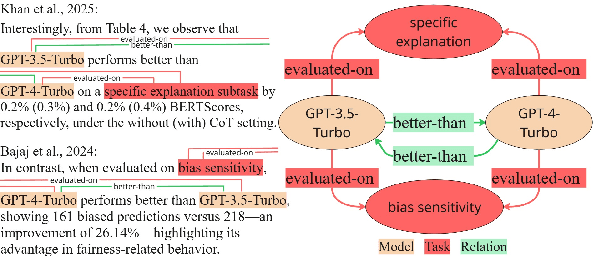
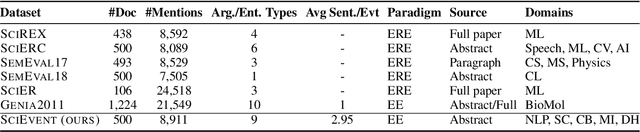
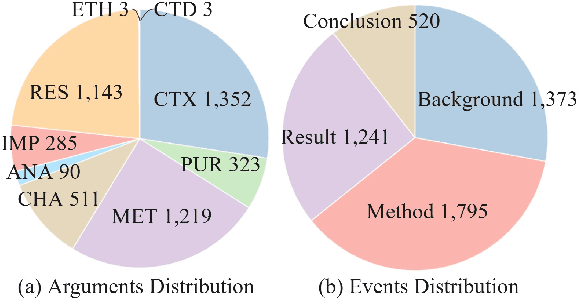
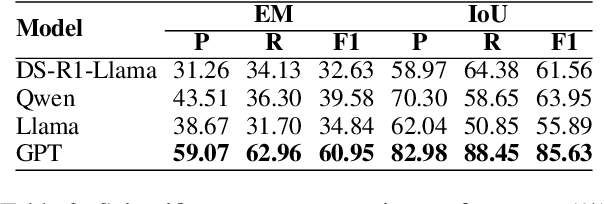
Scientific information extraction (SciIE) has primarily relied on entity-relation extraction in narrow domains, limiting its applicability to interdisciplinary research and struggling to capture the necessary context of scientific information, often resulting in fragmented or conflicting statements. In this paper, we introduce SciEvent, a novel multi-domain benchmark of scientific abstracts annotated via a unified event extraction (EE) schema designed to enable structured and context-aware understanding of scientific content. It includes 500 abstracts across five research domains, with manual annotations of event segments, triggers, and fine-grained arguments. We define SciIE as a multi-stage EE pipeline: (1) segmenting abstracts into core scientific activities--Background, Method, Result, and Conclusion; and (2) extracting the corresponding triggers and arguments. Experiments with fine-tuned EE models, large language models (LLMs), and human annotators reveal a performance gap, with current models struggling in domains such as sociology and humanities. SciEvent serves as a challenging benchmark and a step toward generalizable, multi-domain SciIE.