 Add to Chrome
 Add to Firefox
 Add to Edge
Respiratory Rate Estimation
Papers and Code
mmWave-Diffusion:A Novel Framework for Respiration Sensing Using Observation-Anchored Conditional Diffusion Model
Mar 21, 2026
Millimeter-wave (mmWave) radar enables contactless respiratory sensing,yet fine-grained monitoring is often degraded by nonstationary interference from body micromotions.To achieve micromotion interference removal,we propose mmWave-Diffusion,an observation-anchored conditional diffusion framework that directly models the residual between radar phase observations and the respiratory ground truth,and initializes sampling within an observation-consistent neighborhood rather than from Gaussian noise-thereby aligning the generative process with the measurement physics and reducing inference overhead. The accompanying Radar Diffusion Transformer (RDT) is explicitly conditioned on phase observations, enforces strict one-to-one temporal alignment via patch-level dual positional encodings, and injects local physical priors through banded-mask multi-head cross-attention, enabling robust denoising and interference removal in just 20 reverse steps. Evaluated on 13.25 hours of synchronized radar-respiration data, mmWave-Diffusion achieves state-of-the-art waveform reconstruction and respiratory-rate estimation with strong generalization. Code repository:https://github.com/goodluckyongw/mmWave-Diffusion.

Deriving Health Metrics from the Photoplethysmogram: Benchmarks and Insights from MIMIC-III-Ext-PPG
Mar 23, 2026Photoplethysmography (PPG) is one of the most widely captured biosignals for clinical prediction tasks, yet PPG-based algorithms are typically trained on small-scale datasets of uncertain quality, which hinders meaningful algorithm comparisons. We present a comprehensive benchmark for PPG-based clinical prediction using the \dbname~dataset, establishing baselines across the full spectrum of clinically relevant applications: multi-class heart rhythm classification, and regression of physiological parameters including respiratory rate (RR), heart rate (HR), and blood pressure (BP). Most notably, we provide the first comprehensive assessment of PPG for general arrhythmia detection beyond atrial fibrillation (AF) and atrial flutter (AFLT), with performance stratified by BP, HR, and demographic subgroups. Using established deep learning architectures, we achieved strong performance for AF detection (AUROC = 0.96) and accurate physiological parameter estimation (RR MAE: 2.97 bpm; HR MAE: 1.13 bpm; SBP/DBP MAE: 16.13/8.70 mmHg). Cross-dataset validation demonstrates excellent generalizability for AF detection (AUROC = 0.97), while clinical subgroup analysis reveals marked performance differences across subgroups by BP, HR, and demographic strata. These variations appear to reflect population-specific waveform differences rather than systematic bias in model behavior. This framework establishes the first integrated benchmark for multi-task PPG-based clinical prediction, demonstrating that PPG signals can effectively support multiple simultaneous monitoring tasks and providing essential baselines for future algorithm development.
Trade-Offs in FMCW Radar-Based Respiration and Heart Rate Variability
Mar 10, 2026This study presents a comprehensive experimental assessment of a low-cost frequency-modulated continuous-wave (FMCW) multiple-input multiple-output (MIMO) radar for non-contact vital sign monitoring, focusing on respiratory rate (RR) and heart rate (HR) estimation. The influence of sensing distance and number of transmitted chirps on measurement accuracy is systematically quantified. Results exhibit a U-shaped error profile with optimal performance near $70~cm$, achieving mean absolute errors of $0.8~bpm$ for RR and $3.2~bpm$ for HR. Accuracy deteriorates at short ($<60~cm$) and long ($>100~cm$) distances due to multipath, near-field, and signal-to-noise effects. Increasing chirp count enhances performance: RR errors converge asymptotically for $\geq96$ chirps, while HR requires at least 96 chirps for stable detection. Variability metrics, including heart and respiratory rate variability, remain less accurate ($>15$--$30\%$ error), indicating limited capability in capturing instantaneous fluctuations. These findings define a fundamental trade-off: the radar ensures robust estimation of average RR and HR but exhibits restricted precision in high-resolution beat-to-beat and breath-to-breath monitoring.
EvoMorph: Counterfactual Explanations for Continuous Time-Series Extrinsic Regression Applied to Photoplethysmography
Jan 15, 2026Wearable devices enable continuous, population-scale monitoring of physiological signals, such as photoplethysmography (PPG), creating new opportunities for data-driven clinical assessment. Time-series extrinsic regression (TSER) models increasingly leverage PPG signals to estimate clinically relevant outcomes, including heart rate, respiratory rate, and oxygen saturation. For clinical reasoning and trust, however, single point estimates alone are insufficient: clinicians must also understand whether predictions are stable under physiologically plausible variations and to what extent realistic, attainable changes in physiological signals would meaningfully alter a model's prediction. Counterfactual explanations (CFE) address these "what-if" questions, yet existing time series CFE generation methods are largely restricted to classification, overlook waveform morphology, and often produce physiologically implausible signals, limiting their applicability to continuous biomedical time series. To address these limitations, we introduce EvoMorph, a multi-objective evolutionary framework for generating physiologically plausible and diverse CFE for TSER applications. EvoMorph optimizes morphology-aware objectives defined on interpretable signal descriptors and applies transformations to preserve the waveform structure. We evaluated EvoMorph on three PPG datasets (heart rate, respiratory rate, and oxygen saturation) against a nearest-unlike-neighbor baseline. In addition, in a case study, we evaluated EvoMorph as a tool for uncertainty quantification by relating counterfactual sensitivity to bootstrap-ensemble uncertainty and data-density measures. Overall, EvoMorph enables the generation of physiologically-aware counterfactuals for continuous biomedical signals and supports uncertainty-aware interpretability, advancing trustworthy model analysis for clinical time-series applications.
Quality-Aware Framework for Video-Derived Respiratory Signals
Dec 16, 2025
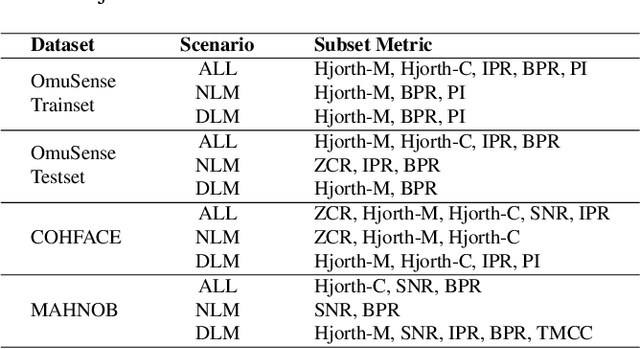
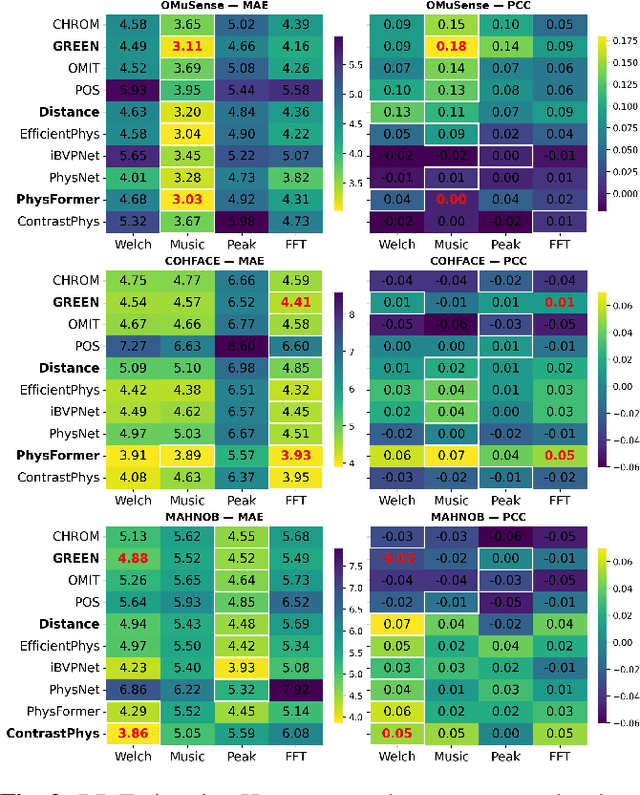
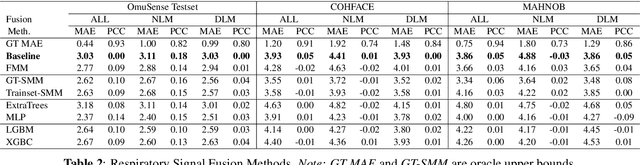
Video-based respiratory rate (RR) estimation is often unreliable due to inconsistent signal quality across extraction methods. We present a predictive, quality-aware framework that integrates heterogeneous signal sources with dynamic assessment of reliability. Ten signals are extracted from facial remote photoplethysmography (rPPG), upper-body motion, and deep learning pipelines, and analyzed using four spectral estimators: Welch's method, Multiple Signal Classification (MUSIC), Fast Fourier Transform (FFT), and peak detection. Segment-level quality indices are then used to train machine learning models that predict accuracy or select the most reliable signal. This enables adaptive signal fusion and quality-based segment filtering. Experiments on three public datasets (OMuSense-23, COHFACE, MAHNOB-HCI) show that the proposed framework achieves lower RR estimation errors than individual methods in most cases, with performance gains depending on dataset characteristics. These findings highlight the potential of quality-driven predictive modeling to deliver scalable and generalizable video-based respiratory monitoring solutions.
Reperio-rPPG: Relational Temporal Graph Neural Networks for Periodicity Learning in Remote Physiological Measurement
Nov 08, 2025Remote photoplethysmography (rPPG) is an emerging contactless physiological sensing technique that leverages subtle color variations in facial videos to estimate vital signs such as heart rate and respiratory rate. This non-invasive method has gained traction across diverse domains, including telemedicine, affective computing, driver fatigue detection, and health monitoring, owing to its scalability and convenience. Despite significant progress in remote physiological signal measurement, a crucial characteristic - the intrinsic periodicity - has often been underexplored or insufficiently modeled in previous approaches, limiting their ability to capture fine-grained temporal dynamics under real-world conditions. To bridge this gap, we propose Reperio-rPPG, a novel framework that strategically integrates Relational Convolutional Networks with a Graph Transformer to effectively capture the periodic structure inherent in physiological signals. Additionally, recognizing the limited diversity of existing rPPG datasets, we further introduce a tailored CutMix augmentation to enhance the model's generalizability. Extensive experiments conducted on three widely used benchmark datasets - PURE, UBFC-rPPG, and MMPD - demonstrate that Reperio-rPPG not only achieves state-of-the-art performance but also exhibits remarkable robustness under various motion (e.g., stationary, rotation, talking, walking) and illumination conditions (e.g., nature, low LED, high LED). The code is publicly available at https://github.com/deconasser/Reperio-rPPG.
VitalLens 2.0: High-Fidelity rPPG for Heart Rate Variability Estimation from Face Video
Oct 30, 2025This report introduces VitalLens 2.0, a new deep learning model for estimating physiological signals from face video. This new model demonstrates a significant leap in accuracy for remote photoplethysmography (rPPG), enabling the robust estimation of not only heart rate (HR) and respiratory rate (RR) but also Heart Rate Variability (HRV) metrics. This advance is achieved through a combination of a new model architecture and a substantial increase in the size and diversity of our training data, now totaling 1,413 unique individuals. We evaluate VitalLens 2.0 on a new, combined test set of 422 unique individuals from four public and private datasets. When averaging results by individual, VitalLens 2.0 achieves a Mean Absolute Error (MAE) of 1.57 bpm for HR, 1.08 bpm for RR, 10.18 ms for HRV-SDNN, and 16.45 ms for HRV-RMSSD. These results represent a new state-of-the-art, significantly outperforming previous methods. This model is now available to developers via the VitalLens API at https://rouast.com/api.
Gaze into the Heart: A Multi-View Video Dataset for rPPG and Health Biomarkers Estimation
Aug 25, 2025Progress in remote PhotoPlethysmoGraphy (rPPG) is limited by the critical issues of existing publicly available datasets: small size, privacy concerns with facial videos, and lack of diversity in conditions. The paper introduces a novel comprehensive large-scale multi-view video dataset for rPPG and health biomarkers estimation. Our dataset comprises 3600 synchronized video recordings from 600 subjects, captured under varied conditions (resting and post-exercise) using multiple consumer-grade cameras at different angles. To enable multimodal analysis of physiological states, each recording is paired with a 100 Hz PPG signal and extended health metrics, such as electrocardiogram, arterial blood pressure, biomarkers, temperature, oxygen saturation, respiratory rate, and stress level. Using this data, we train an efficient rPPG model and compare its quality with existing approaches in cross-dataset scenarios. The public release of our dataset and model should significantly speed up the progress in the development of AI medical assistants.
A Dataset and Toolkit for Multiparameter Cardiovascular Physiology Sensing on Rings
May 08, 2025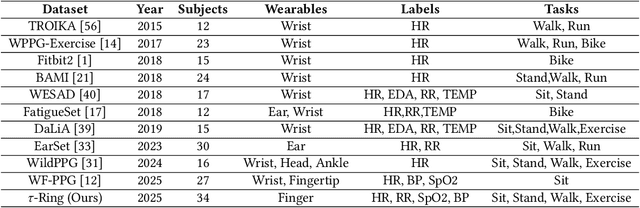
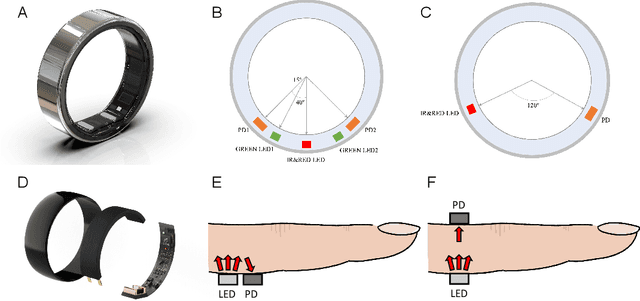
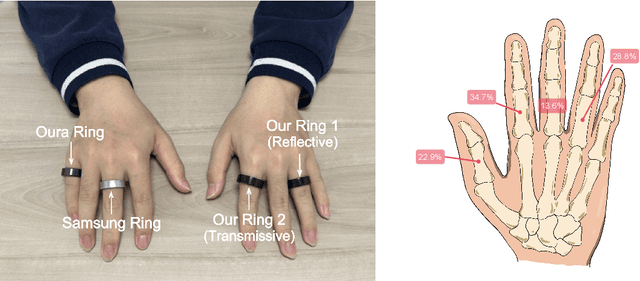
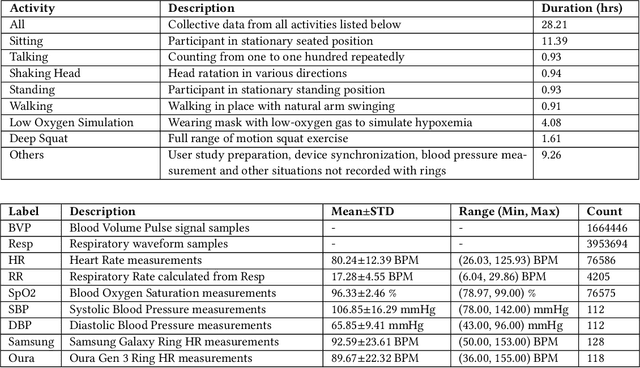
Smart rings offer a convenient way to continuously and unobtrusively monitor cardiovascular physiological signals. However, a gap remains between the ring hardware and reliable methods for estimating cardiovascular parameters, partly due to the lack of publicly available datasets and standardized analysis tools. In this work, we present $\tau$-Ring, the first open-source ring-based dataset designed for cardiovascular physiological sensing. The dataset comprises photoplethysmography signals (infrared and red channels) and 3-axis accelerometer data collected from two rings (reflective and transmissive optical paths), with 28.21 hours of raw data from 34 subjects across seven activities. $\tau$-Ring encompasses both stationary and motion scenarios, as well as stimulus-evoked abnormal physiological states, annotated with four ground-truth labels: heart rate, respiratory rate, oxygen saturation, and blood pressure. Using our proposed RingTool toolkit, we evaluated three widely-used physics-based methods and four cutting-edge deep learning approaches. Our results show superior performance compared to commercial rings, achieving best MAE values of 5.18 BPM for heart rate, 2.98 BPM for respiratory rate, 3.22\% for oxygen saturation, and 13.33/7.56 mmHg for systolic/diastolic blood pressure estimation. The open-sourced dataset and toolkit aim to foster further research and community-driven advances in ring-based cardiovascular health sensing.
A computer vision method to estimate ventilation rate of Atlantic salmon in sea fish farms
Apr 28, 2025The increasing demand for aquaculture production necessitates the development of innovative, intelligent tools to effectively monitor and manage fish health and welfare. While non-invasive video monitoring has become a common practice in finfish aquaculture, existing intelligent monitoring methods predominantly focus on assessing body condition or fish swimming patterns and are often developed and evaluated in controlled tank environments, without demonstrating their applicability to real-world aquaculture settings in open sea farms. This underscores the necessity for methods that can monitor physiological traits directly within the production environment of sea fish farms. To this end, we have developed a computer vision method for monitoring ventilation rates of Atlantic salmon (Salmo salar), which was specifically designed for videos recorded in the production environment of commercial sea fish farms using the existing infrastructure. Our approach uses a fish head detection model, which classifies the mouth state as either open or closed using a convolutional neural network. This is followed with multiple object tracking to create temporal sequences of fish swimming across the field of view of the underwater video camera to estimate ventilation rates. The method demonstrated high efficiency, achieving a Pearson correlation coefficient of 0.82 between ground truth and predicted ventilation rates in a test set of 100 fish collected independently of the training data. By accurately identifying pens where fish exhibit signs of respiratory distress, our method offers broad applicability and the potential to transform fish health and welfare monitoring in finfish aquaculture.