 Add to Chrome
 Add to Firefox
 Add to Edge
Indoor 60 GHz Radio Channel Dataset Enabling Digital Twin Construction
May 07, 2026
The ambitious performance targets of modern wireless networks, including 6G and Industrial IoT (IIoT) systems, necessitate advanced hardware platforms utilizing millimeter-wave (mmWave) technology. High-frequency signals provide the bandwidth and low latency required for these systems, but rely on beamforming to overcome path loss and exploit channel sparsity. This kind of architecture provides all the specifications needed to build a SLAM (Simultaneous Localization and Mapping) system. This paper presents a dataset based on a validated, high-performance testbed integrating a Xilinx Zynq UltraScale+ RFSoC with a Sivers 60 GHz beamforming front-end. We demonstrate a novel methodology using segment-scrambled, quasi-orthogonal chirp waveforms to perform rapid exhaustive beamspace sampling. The system is integrated with Pynq Linux for real-time control and high-speed waveform upload. We present a high-density spatial dataset consisting of 350 measurement points across a 1.95 m x 3.60 m indoor grid. We exploited the system's ability to scan 63 transmit directions and construct a complete 63x63 beamspace intensity map in 200us. This dataset serves as a benchmark for spatial channel modeling, Digital Twins and Integrated Sensing and Communication (ISAC) research.

Trade-Offs in FMCW Radar-Based Respiration and Heart Rate Variability
Mar 10, 2026This study presents a comprehensive experimental assessment of a low-cost frequency-modulated continuous-wave (FMCW) multiple-input multiple-output (MIMO) radar for non-contact vital sign monitoring, focusing on respiratory rate (RR) and heart rate (HR) estimation. The influence of sensing distance and number of transmitted chirps on measurement accuracy is systematically quantified. Results exhibit a U-shaped error profile with optimal performance near $70~cm$, achieving mean absolute errors of $0.8~bpm$ for RR and $3.2~bpm$ for HR. Accuracy deteriorates at short ($<60~cm$) and long ($>100~cm$) distances due to multipath, near-field, and signal-to-noise effects. Increasing chirp count enhances performance: RR errors converge asymptotically for $\geq96$ chirps, while HR requires at least 96 chirps for stable detection. Variability metrics, including heart and respiratory rate variability, remain less accurate ($>15$--$30\%$ error), indicating limited capability in capturing instantaneous fluctuations. These findings define a fundamental trade-off: the radar ensures robust estimation of average RR and HR but exhibits restricted precision in high-resolution beat-to-beat and breath-to-breath monitoring.
Digital Twin-Based Beamforming for Interference Mitigation in AF Relay MIMO Systems
Feb 26, 2026Beamforming in multiple-input multiple-output (MIMO) systems should take interference mitigation into account. However, for beamform design, accurate channel state information (CSI) is needed, which is often difficult to obtain due to channel variability, feedback overhead, or hardware constraints. For example, amplify-and-forward (AF) relays passively forward signals without measurement, precluding full CSI acquisition to and from the relay. To address these issues, this paper introduces a novel prediction-assisted optimization (PAO) framework for beamform design in AF relay-assisted multiuser MIMO systems. The proposed solution in the AF relay aims at maximizing the signal-plus-interference-to-noise ratio (SINR). Unlike other methods, PAO relies solely on received power measurements, making it suitable for scenarios where CSI is unreliable or unavailable. PAO consists of two stages: a supervised-learning-based neural network (NN) that predicts the positions of transmitters using signal observations, and an optimization algorithm, guided by a digital twin (DT), that iteratively refines the beam direction of the relay in a simulated radio environment. As a key contribution, we validate the proposed framework using realistic measurements collected on a custom-built experimental millimeter wave (mmWave) platform, which enables training of the NN model under practical wireless conditions. The estimated information is then used to update the digital twin with knowledge of the surrounding environment, enabling online optimization. Numerical results show the trade-off between localization accuracy and beamforming performance and confirm that PAO maintains robustness even in the presence of localization errors while reducing the need for real-world measurements.
CoBA: Integrated Deep Learning Model for Reliable Low-Altitude UAV Classification in mmWave Radio Networks
Jan 28, 2026Uncrewed Aerial Vehicles (UAVs) are increasingly used in civilian and industrial applications, making secure low-altitude operations crucial. In dense mmWave environments, accurately classifying low-altitude UAVs as either inside authorized or restricted airspaces remains challenging, requiring models that handle complex propagation and signal variability. This paper proposes a deep learning model, referred to as CoBA, which stands for integrated Convolutional Neural Network (CNN), Bidirectional Long Short-Term Memory (BiLSTM), and Attention which leverages Fifth Generation (5G) millimeter-wave (mmWave) radio measurements to classify UAV operations in authorized and restricted airspaces at low altitude. The proposed CoBA model integrates convolutional, bidirectional recurrent, and attention layers to capture both spatial and temporal patterns in UAV radio measurements. To validate the model, a dedicated dataset is collected using the 5G mmWave network at TalTech, with controlled low altitude UAV flights in authorized and restricted scenarios. The model is evaluated against conventional ML models and a fingerprinting-based benchmark. Experimental results show that CoBA achieves superior accuracy, significantly outperforming all baseline models and demonstrating its potential for reliable and regulated UAV airspace monitoring.
Autonomous Sensing UAV for Accurate Multi-User Identification and Localization in Cellular Networks
Nov 17, 2025This paper presents an autonomous sensing frame- work for identifying and localizing multiple users in Fifth Generation (5G) networks using an Unmanned Aerial Vehicle (UAV) that is not part of the serving access network. Unlike conventional aerial serving nodes, the proposed UAV operates passively and is dedicated solely to sensing. It captures Uplink (UL) Sounding Reference Signals (SRS), and requires virtually no coordination with the network infrastructure. A complete signal processing chain is proposed and developed, encompassing synchronization, user identification, and localization, all executed onboard UAV during flight. The system autonomously plans and adapts its mission workflow to estimate multiple user positions within a single deployment, integrating flight control with real-time sensing. Extensive simulations and a full-scale low- altitude experimental campaign validate the approach, showing localization errors below 3 m in rural field tests and below 8 m in urban simulation scenarios, while reliably identifying each user. The results confirm the feasibility of infrastructure-independent sensing UAVs as a core element of the emerging Low Altitude Economy (LAE), supporting situational awareness and rapid deployment in emergency or connectivity-limited environments.
Digital Twins of the EM Environment: Benchmark for Ray Launching Models
Jun 07, 2024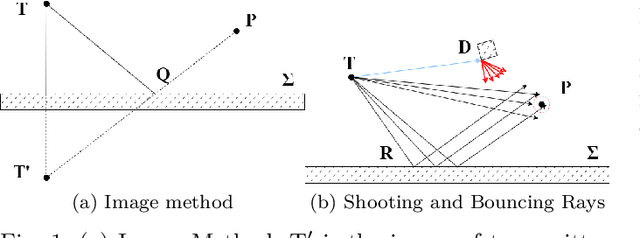
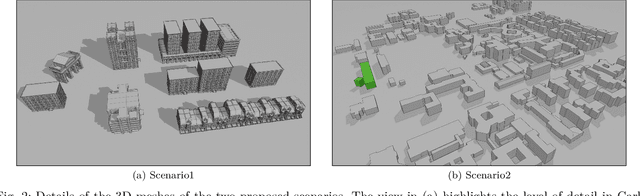
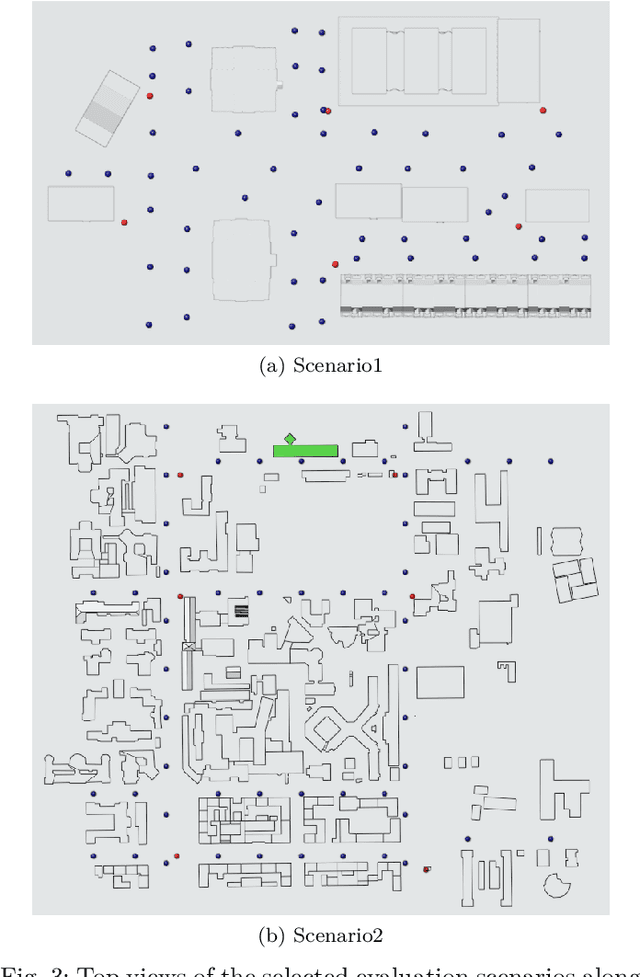
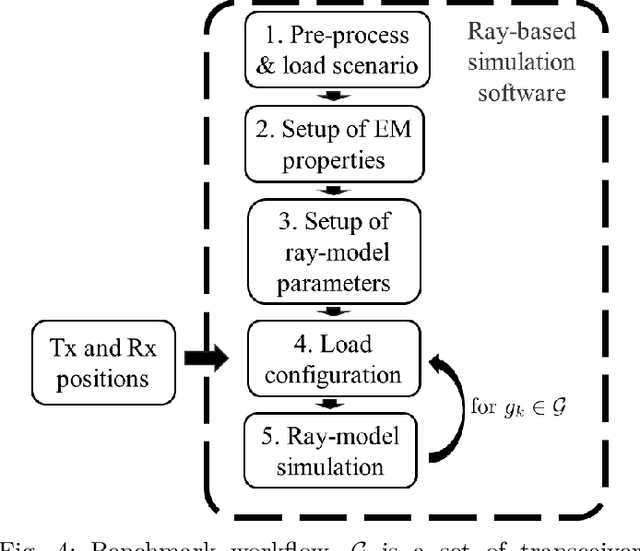
Digital Twin has emerged as a promising paradigm for accurately representing the electromagnetic (EM) wireless environments. The resulting virtual representation of the reality facilitates comprehensive insights into the propagation environment, empowering multi-layer decision-making processes at the physical communication level. This paper investigates the digitization of wireless communication propagation, with particular emphasis on the indispensable aspect of ray-based propagation simulation for real-time Digital Twins. A benchmark for ray-based propagation simulations is presented to evaluate computational time, with two urban scenarios characterized by different mesh complexity, single and multiple wireless link configurations, and simulations with/without diffuse scattering. Exhaustive empirical analyses are performed showing and comparing the behavior of different ray-based solutions. By offering standardized simulations and scenarios, this work provides a technical benchmark for practitioners involved in the implementation of real-time Digital Twins and optimization of ray-based propagation models.
Integrated Communication and Imaging: Design, Analysis, and Performances of COSMIC Waveforms
May 29, 2024

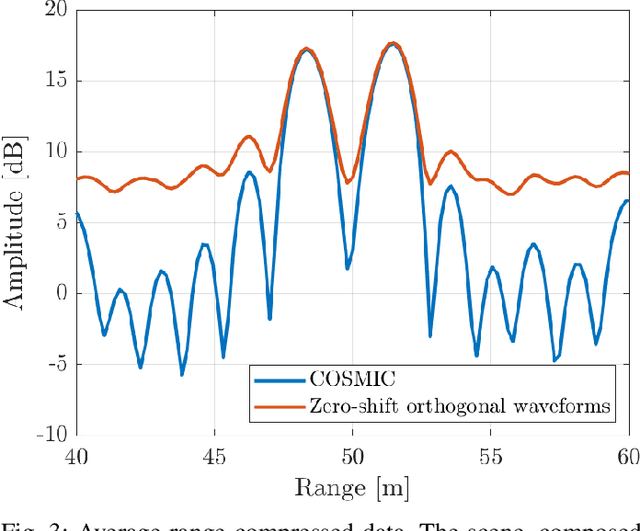
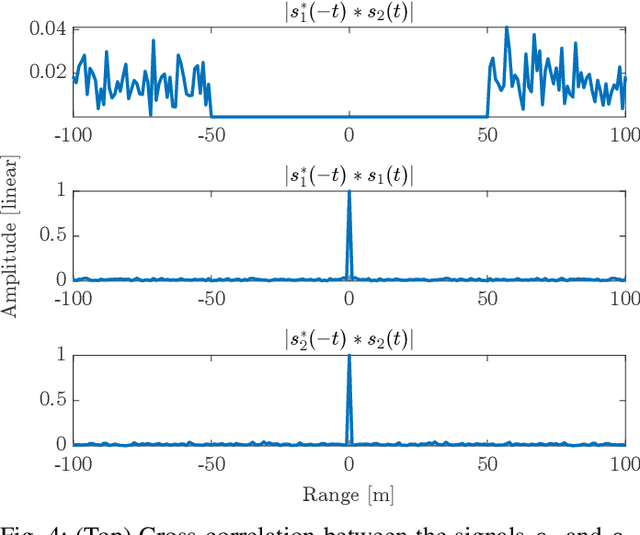
This paper proposes a novel waveform design method named COSMIC (Connectivity-Oriented Sensing Method for Imaging and Communication). These waveforms are engineered to convey communication symbols while adhering to an extended orthogonality condition, enabling their use in generating radio images of the environment. A Multiple-Input Multiple-Output (MIMO) Radar-Communication (RadCom) device transmits COSMIC waveforms from each antenna simultaneously within the same time window and frequency band, indicating that orthogonality is not achieved by space, time, or frequency multiplexing. Indeed, orthogonality among the waveforms is achieved by leveraging the degrees of freedom provided by the assumption that the field of view is limited or significantly smaller than the transmitted signals' length. The RadCom device receives and processes the echoes from an infinite number of infinitesimal scatterers within its field of view, constructing an electromagnetic image of the environment. Concurrently, these waveforms can also carry information to other connected network entities. This work provides the algebraic concepts used to generate COSMIC waveforms. Moreover, an opportunistic optimization of the imaging and communication efficiency is discussed. Simulation results demonstrate that COSMIC waveforms enable accurate environmental imaging while maintaining acceptable communication performances.
Artificial Neural Networks-based Real-time Classification of ENG Signals for Implanted Nerve Interfaces
Apr 02, 2024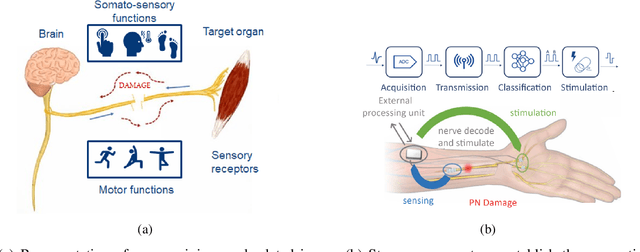
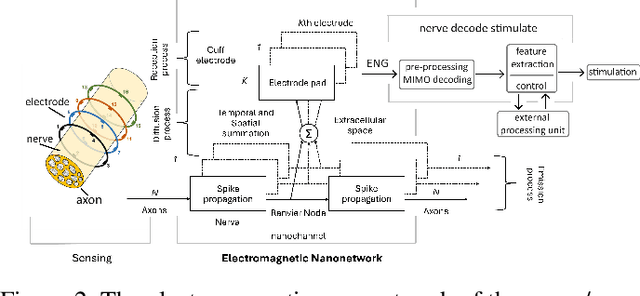
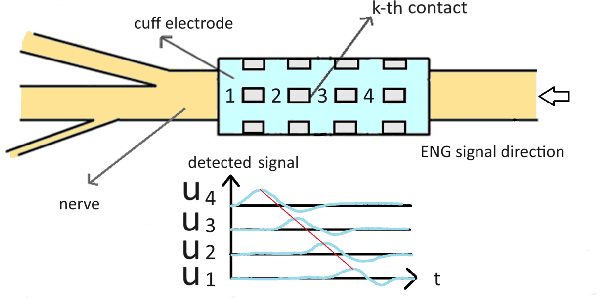
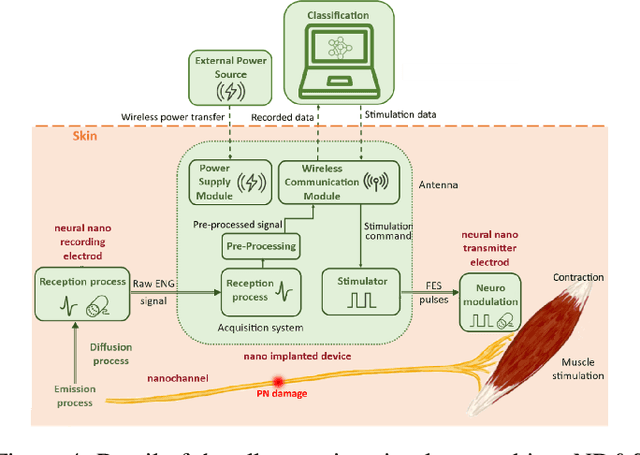
Neuropathies are gaining higher relevance in clinical settings, as they risk permanently jeopardizing a person's life. To support the recovery of patients, the use of fully implanted devices is emerging as one of the most promising solutions. However, these devices, even if becoming an integral part of a fully complex neural nanonetwork system, pose numerous challenges. In this article, we address one of them, which consists of the classification of motor/sensory stimuli. The task is performed by exploring four different types of artificial neural networks (ANNs) to extract various sensory stimuli from the electroneurographic (ENG) signal measured in the sciatic nerve of rats. Different sizes of the data sets are considered to analyze the feasibility of the investigated ANNs for real-time classification through a comparison of their performance in terms of accuracy, F1-score, and prediction time. The design of the ANNs takes advantage of the modelling of the ENG signal as a multiple-input multiple-output (MIMO) system to describe the measures taken by state-of-the-art implanted nerve interfaces. These are based on the use of multi-contact cuff electrodes to achieve nanoscale spatial discrimination of the nerve activity. The MIMO ENG signal model is another contribution of this paper. Our results show that some ANNs are more suitable for real-time applications, being capable of achieving accuracies over $90\%$ for signal windows of $100$ and $200\,$ms with a low enough processing time to be effective for pathology recovery.
Exploring ISAC Technology for UAV SAR Imaging
Jan 19, 2024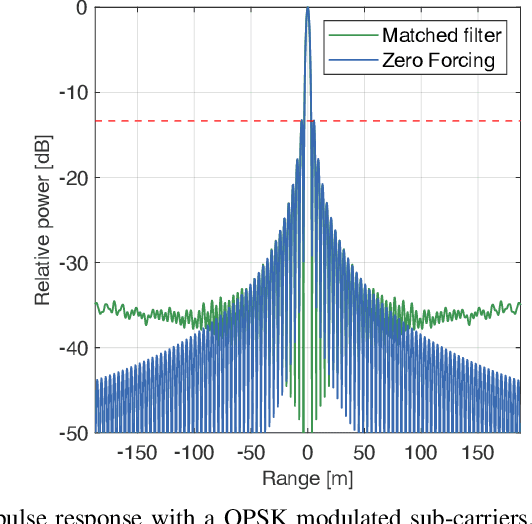
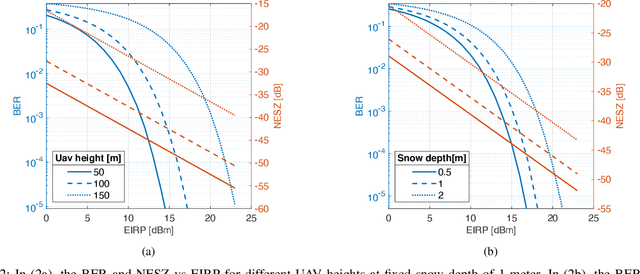
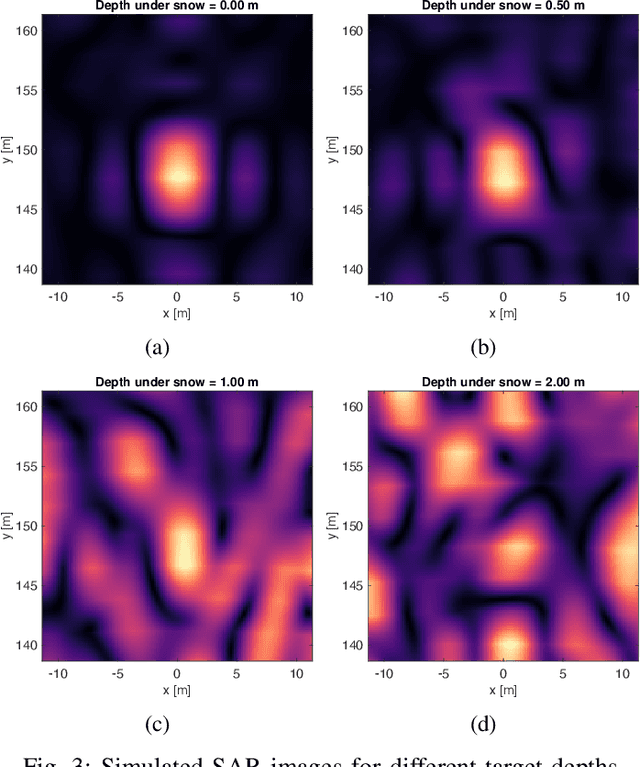
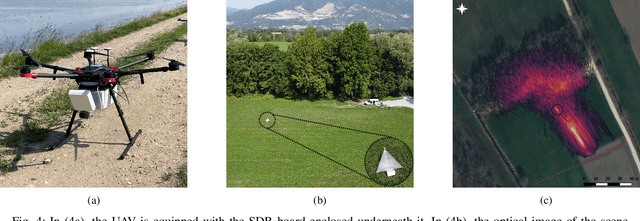
This paper illustrates the potential of an Integrated Sensing and Communication (ISAC) system, operating in the sub-6 GHz frequency range, for Synthetic Aperture Radar (SAR) imaging via an Unmanned Aerial Vehicle (UAV) employed as an aerial base station. The primary aim is to validate the system's ability to generate SAR imagery within the confines of modern communication standards, including considerations like power limits, carrier frequency, bandwidth, and other relevant parameters. The paper presents two methods for processing the signal reflected by the scene. Additionally, we analyze two key performance indicators for their respective fields, the Noise Equivalent Sigma Zero (NESZ) and the Bit Error Rate (BER), using the QUAsi Deterministic RadIo channel GenerAtor (QuaDRiGa), demonstrating the system's capability to image buried targets in challenging scenarios. The paper shows simulated Impulse Response Functions (IRF) as possible pulse compression techniques under different assumptions. An experimental campaign is conducted to validate the proposed setup by producing a SAR image of the environment captured using a UAV flying with a Software-Defined Radio (SDR) as a payload.
On the Achievable Rate of MIMO Narrowband PLC with Spatio-Temporal Correlated Noise
Aug 28, 2023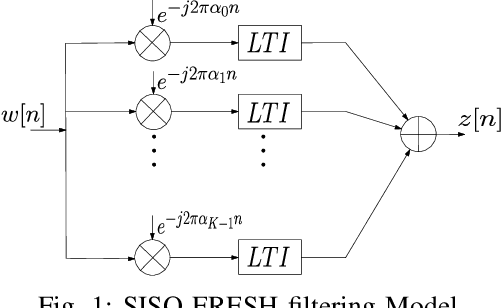
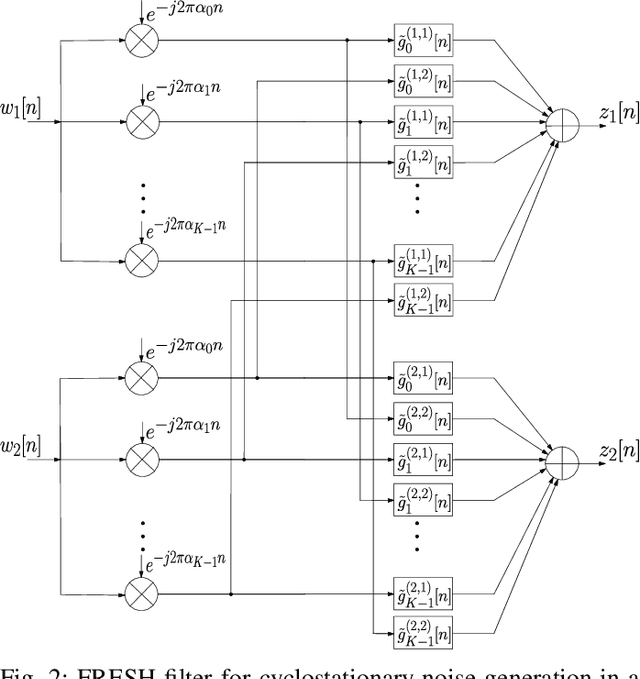
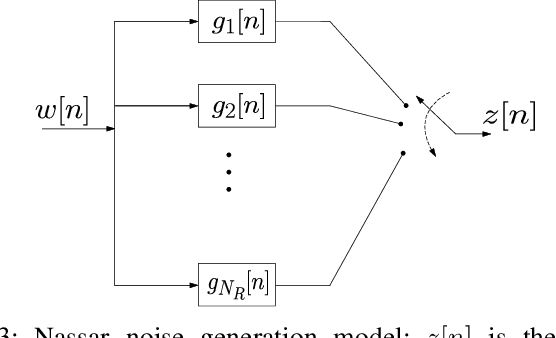
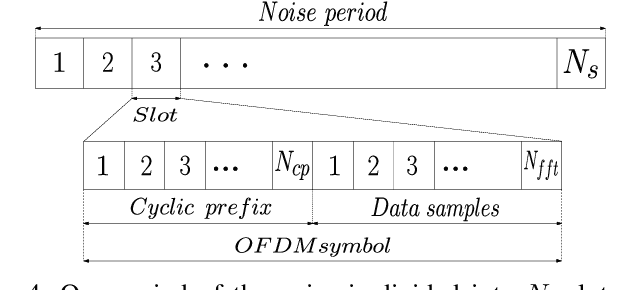
Narrowband power line communication (NB-PLC) systems are an attractive solution for supporting current and future smart grids. A technology proposed to enhance data rate in NB-PLC is multiple-input multiple-output (MIMO) transmission over multiple power line phases. To achieve reliable communication over MIMO NB-PLC, a key challenge is to take into account and mitigate the effects of temporally and spatially correlated cyclostationary noise. Noise samples in a cycle can be divided into three classes with different distributions, i.e. Gaussian, moderate impulsive, and strong impulsive. However, in this paper we first show that the impulsive classes in their turn can be divided into sub-classes with normal distributions and, after deriving the theoretical capacity, two noise sample sets with such characteristics are used to evaluate achievable information rates: one sample set is the measured noise in laboratory and the other is produced through MIMO frequency-shift (FRESH) filtering. The achievable information rates are attained by means of a spatio-temporal whitening of the portions of the cyclostationary correlated noise samples that belong to the Gaussian sub-classes. The proposed approach can be useful to design the optimal receiver in terms of bit allocation using waterfilling algorithm and to adapt modulation order.