 Add to Chrome
 Add to Firefox
 Add to Edge
Deriving Health Metrics from the Photoplethysmogram: Benchmarks and Insights from MIMIC-III-Ext-PPG
Mar 23, 2026
Photoplethysmography (PPG) is one of the most widely captured biosignals for clinical prediction tasks, yet PPG-based algorithms are typically trained on small-scale datasets of uncertain quality, which hinders meaningful algorithm comparisons. We present a comprehensive benchmark for PPG-based clinical prediction using the \dbname~dataset, establishing baselines across the full spectrum of clinically relevant applications: multi-class heart rhythm classification, and regression of physiological parameters including respiratory rate (RR), heart rate (HR), and blood pressure (BP). Most notably, we provide the first comprehensive assessment of PPG for general arrhythmia detection beyond atrial fibrillation (AF) and atrial flutter (AFLT), with performance stratified by BP, HR, and demographic subgroups. Using established deep learning architectures, we achieved strong performance for AF detection (AUROC = 0.96) and accurate physiological parameter estimation (RR MAE: 2.97 bpm; HR MAE: 1.13 bpm; SBP/DBP MAE: 16.13/8.70 mmHg). Cross-dataset validation demonstrates excellent generalizability for AF detection (AUROC = 0.97), while clinical subgroup analysis reveals marked performance differences across subgroups by BP, HR, and demographic strata. These variations appear to reflect population-specific waveform differences rather than systematic bias in model behavior. This framework establishes the first integrated benchmark for multi-task PPG-based clinical prediction, demonstrating that PPG signals can effectively support multiple simultaneous monitoring tasks and providing essential baselines for future algorithm development.

Machine-learning for photoplethysmography analysis: Benchmarking feature, image, and signal-based approaches
Feb 27, 2025


Photoplethysmography (PPG) is a widely used non-invasive physiological sensing technique, suitable for various clinical applications. Such clinical applications are increasingly supported by machine learning methods, raising the question of the most appropriate input representation and model choice. Comprehensive comparisons, in particular across different input representations, are scarce. We address this gap in the research landscape by a comprehensive benchmarking study covering three kinds of input representations, interpretable features, image representations and raw waveforms, across prototypical regression and classification use cases: blood pressure and atrial fibrillation prediction. In both cases, the best results are achieved by deep neural networks operating on raw time series as input representations. Within this model class, best results are achieved by modern convolutional neural networks (CNNs). but depending on the task setup, shallow CNNs are often also very competitive. We envision that these results will be insightful for researchers to guide their choice on machine learning tasks for PPG data, even beyond the use cases presented in this work.
ECG Feature Importance Rankings: Cardiologists vs. Algorithms
Apr 05, 2023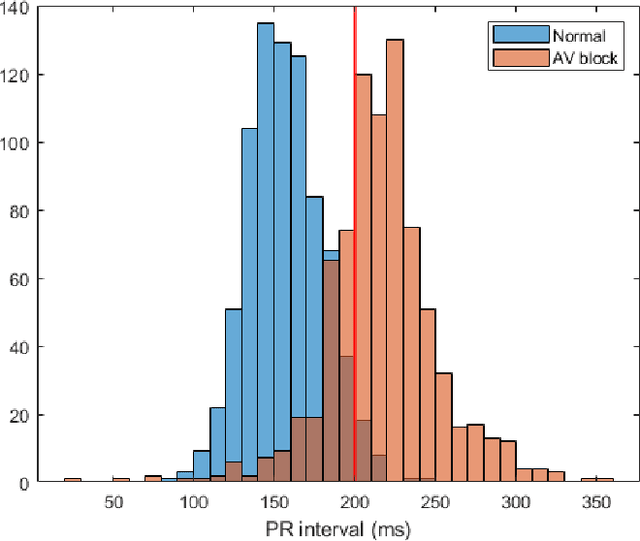
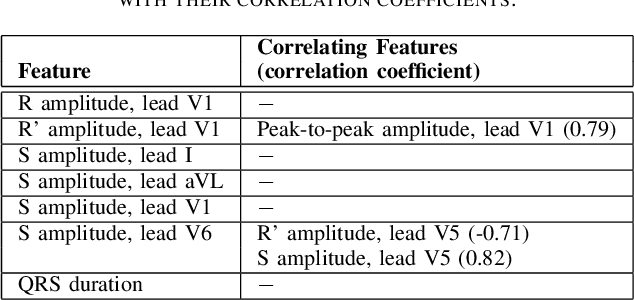
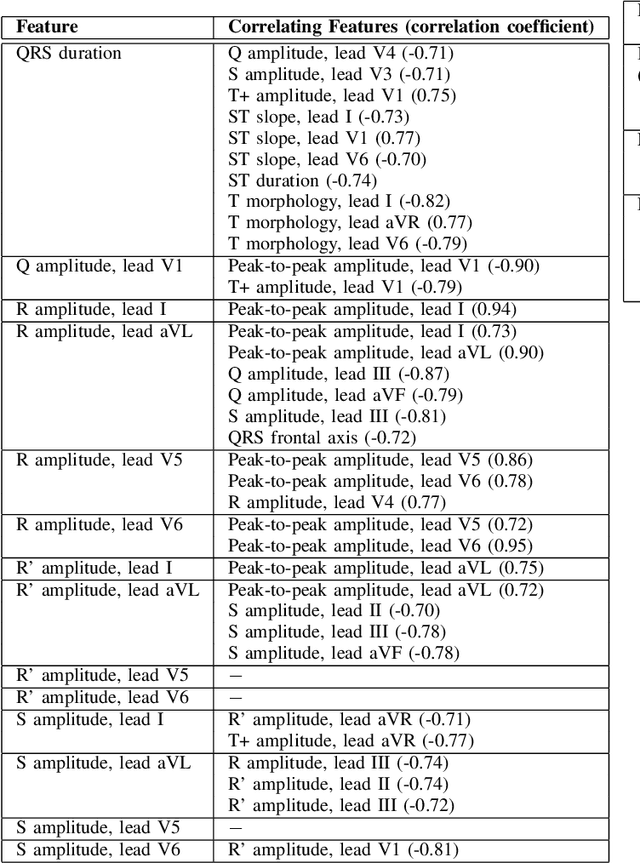
Feature importance methods promise to provide a ranking of features according to importance for a given classification task. A wide range of methods exist but their rankings often disagree and they are inherently difficult to evaluate due to a lack of ground truth beyond synthetic datasets. In this work, we put feature importance methods to the test on real-world data in the domain of cardiology, where we try to distinguish three specific pathologies from healthy subjects based on ECG features comparing to features used in cardiologists' decision rules as ground truth. Some methods generally performed well and others performed poorly, while some methods did well on some but not all of the problems considered.