 Add to Chrome
 Add to Firefox
 Add to Edge
Re Tacred
Papers and Code
Re-Representation in Sentential Relation Extraction with Sequence Routing Algorithm
Aug 28, 2025
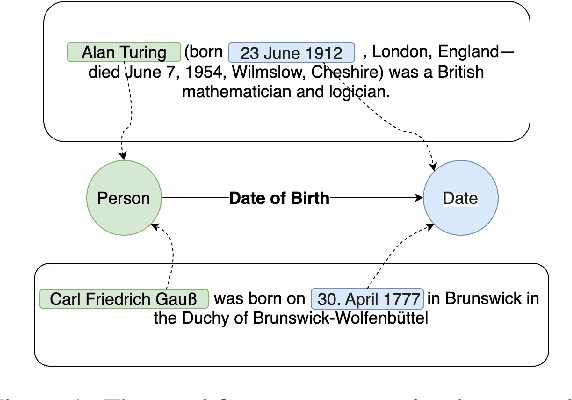
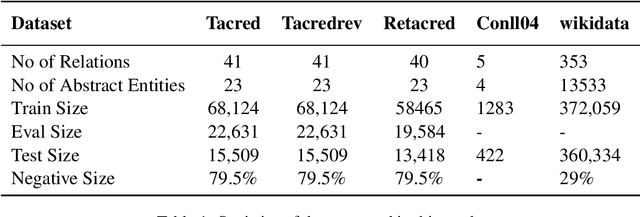
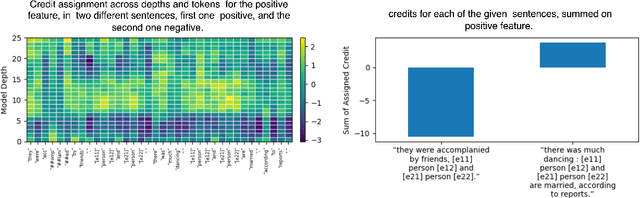
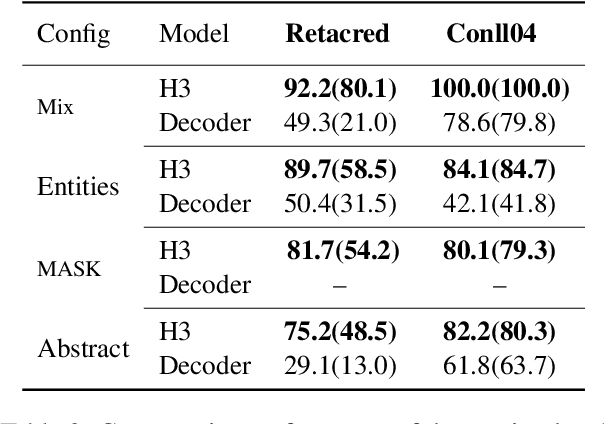
Sentential relation extraction (RE) is an important task in natural language processing (NLP). In this paper we propose to do sentential RE with dynamic routing in capsules. We first show that the proposed approach outperform state of the art on common sentential relation extraction datasets Tacred, Tacredrev, Retacred, and Conll04. We then investigate potential reasons for its good performance on the mentioned datasets, and yet low performance on another similar, yet larger sentential RE dataset, Wikidata. As such, we identify noise in Wikidata labels as one of the reasons that can hinder performance. Additionally, we show associativity of better performance with better re-representation, a term from neuroscience referred to change of representation in human brain to improve the match at comparison time. As example, in the given analogous terms King:Queen::Man:Woman, at comparison time, and as a result of re-representation, the similarity between related head terms (King,Man), and tail terms (Queen,Woman) increases. As such, our observation show that our proposed model can do re-representation better than the vanilla model compared with. To that end, beside noise in the labels of the distantly supervised RE datasets, we propose re-representation as a challenge in sentential RE.

Post-Training Language Models for Continual Relation Extraction
Apr 07, 2025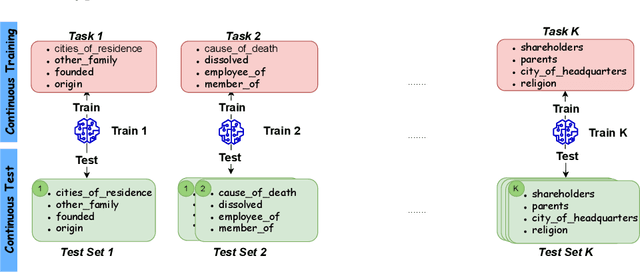
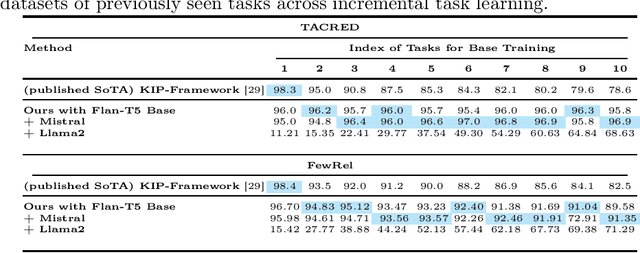
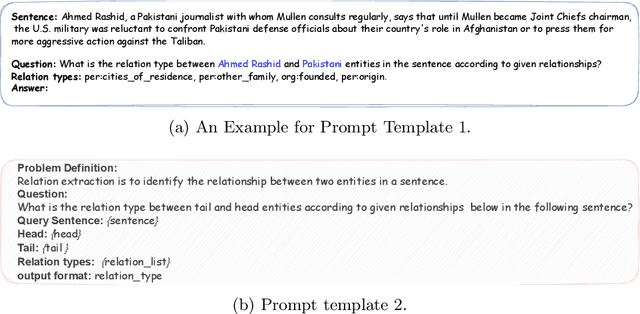
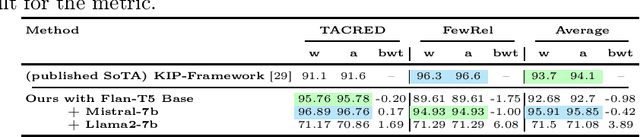
Real-world data, such as news articles, social media posts, and chatbot conversations, is inherently dynamic and non-stationary, presenting significant challenges for constructing real-time structured representations through knowledge graphs (KGs). Relation Extraction (RE), a fundamental component of KG creation, often struggles to adapt to evolving data when traditional models rely on static, outdated datasets. Continual Relation Extraction (CRE) methods tackle this issue by incrementally learning new relations while preserving previously acquired knowledge. This study investigates the application of pre-trained language models (PLMs), specifically large language models (LLMs), to CRE, with a focus on leveraging memory replay to address catastrophic forgetting. We evaluate decoder-only models (eg, Mistral-7B and Llama2-7B) and encoder-decoder models (eg, Flan-T5 Base) on the TACRED and FewRel datasets. Task-incremental fine-tuning of LLMs demonstrates superior performance over earlier approaches using encoder-only models like BERT on TACRED, excelling in seen-task accuracy and overall performance (measured by whole and average accuracy), particularly with the Mistral and Flan-T5 models. Results on FewRel are similarly promising, achieving second place in whole and average accuracy metrics. This work underscores critical factors in knowledge transfer, language model architecture, and KG completeness, advancing CRE with LLMs and memory replay for dynamic, real-time relation extraction.
Beyond the Numbers: Transparency in Relation Extraction Benchmark Creation and Leaderboards
Nov 07, 2024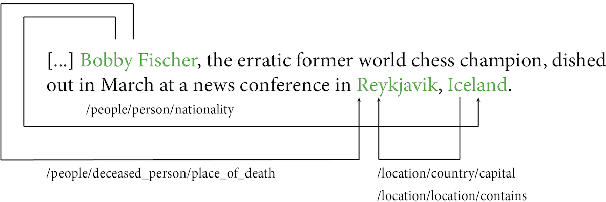
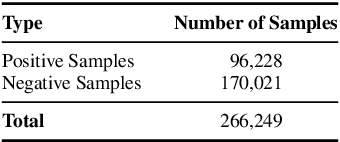
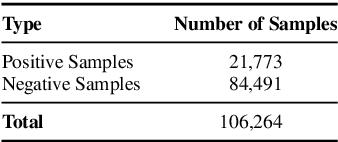
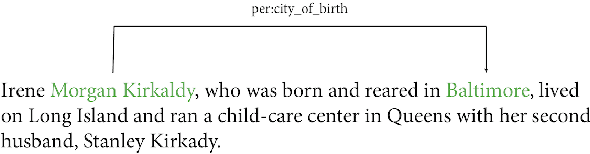
This paper investigates the transparency in the creation of benchmarks and the use of leaderboards for measuring progress in NLP, with a focus on the relation extraction (RE) task. Existing RE benchmarks often suffer from insufficient documentation, lacking crucial details such as data sources, inter-annotator agreement, the algorithms used for the selection of instances for datasets, and information on potential biases like dataset imbalance. Progress in RE is frequently measured by leaderboards that rank systems based on evaluation methods, typically limited to aggregate metrics like F1-score. However, the absence of detailed performance analysis beyond these metrics can obscure the true generalisation capabilities of models. Our analysis reveals that widely used RE benchmarks, such as TACRED and NYT, tend to be highly imbalanced and contain noisy labels. Moreover, the lack of class-based performance metrics fails to accurately reflect model performance across datasets with a large number of relation types. These limitations should be carefully considered when reporting progress in RE. While our discussion centers on the transparency of RE benchmarks and leaderboards, the observations we discuss are broadly applicable to other NLP tasks as well. Rather than undermining the significance and value of existing RE benchmarks and the development of new models, this paper advocates for improved documentation and more rigorous evaluation to advance the field.
Relation Extraction with Fine-Tuned Large Language Models in Retrieval Augmented Generation Frameworks
Jun 24, 2024
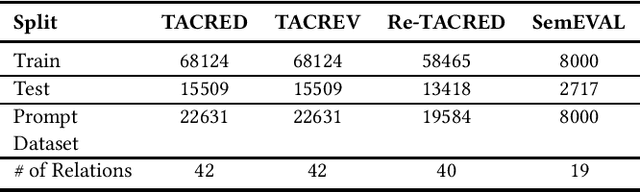
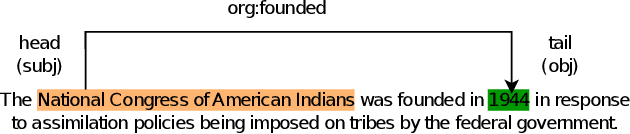
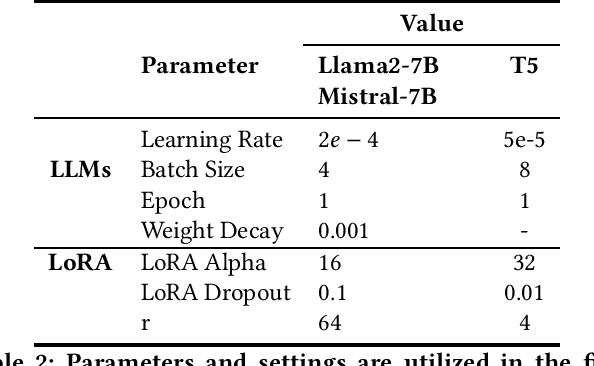
Information Extraction (IE) is crucial for converting unstructured data into structured formats like Knowledge Graphs (KGs). A key task within IE is Relation Extraction (RE), which identifies relationships between entities in text. Various RE methods exist, including supervised, unsupervised, weakly supervised, and rule-based approaches. Recent studies leveraging pre-trained language models (PLMs) have shown significant success in this area. In the current era dominated by Large Language Models (LLMs), fine-tuning these models can overcome limitations associated with zero-shot LLM prompting-based RE methods, especially regarding domain adaptation challenges and identifying implicit relations between entities in sentences. These implicit relations, which cannot be easily extracted from a sentence's dependency tree, require logical inference for accurate identification. This work explores the performance of fine-tuned LLMs and their integration into the Retrieval Augmented-based (RAG) RE approach to address the challenges of identifying implicit relations at the sentence level, particularly when LLMs act as generators within the RAG framework. Empirical evaluations on the TACRED, TACRED-Revisited (TACREV), Re-TACRED, and SemEVAL datasets show significant performance improvements with fine-tuned LLMs, including Llama2-7B, Mistral-7B, and T5 (Large). Notably, our approach achieves substantial gains on SemEVAL, where implicit relations are common, surpassing previous results on this dataset. Additionally, our method outperforms previous works on TACRED, TACREV, and Re-TACRED, demonstrating exceptional performance across diverse evaluation scenarios.
Retrieval-Augmented Generation-based Relation Extraction
Apr 20, 2024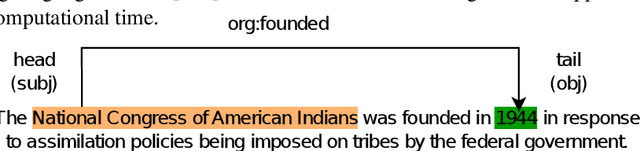
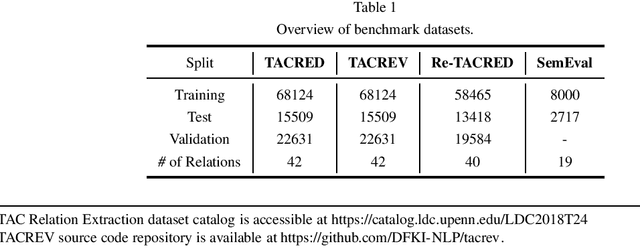
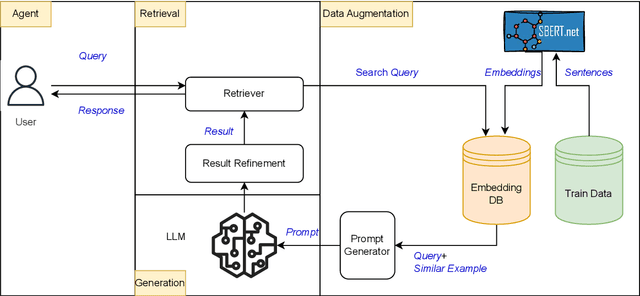
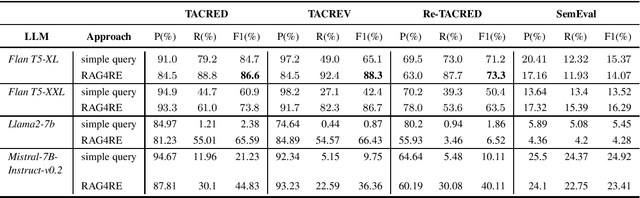
Information Extraction (IE) is a transformative process that converts unstructured text data into a structured format by employing entity and relation extraction (RE) methodologies. The identification of the relation between a pair of entities plays a crucial role within this framework. Despite the existence of various techniques for relation extraction, their efficacy heavily relies on access to labeled data and substantial computational resources. In addressing these challenges, Large Language Models (LLMs) emerge as promising solutions; however, they might return hallucinating responses due to their own training data. To overcome these limitations, Retrieved-Augmented Generation-based Relation Extraction (RAG4RE) in this work is proposed, offering a pathway to enhance the performance of relation extraction tasks. This work evaluated the effectiveness of our RAG4RE approach utilizing different LLMs. Through the utilization of established benchmarks, such as TACRED, TACREV, Re-TACRED, and SemEval RE datasets, our aim is to comprehensively evaluate the efficacy of our RAG4RE approach. In particularly, we leverage prominent LLMs including Flan T5, Llama2, and Mistral in our investigation. The results of our study demonstrate that our RAG4RE approach surpasses performance of traditional RE approaches based solely on LLMs, particularly evident in the TACRED dataset and its variations. Furthermore, our approach exhibits remarkable performance compared to previous RE methodologies across both TACRED and TACREV datasets, underscoring its efficacy and potential for advancing RE tasks in natural language processing.
Noise in Relation Classification Dataset TACRED: Characterization and Reduction
Nov 21, 2023The overarching objective of this paper is two-fold. First, to explore model-based approaches to characterize the primary cause of the noise. in the RE dataset TACRED Second, to identify the potentially noisy instances. Towards the first objective, we analyze predictions and performance of state-of-the-art (SOTA) models to identify the root cause of noise in the dataset. Our analysis of TACRED shows that the majority of the noise in the dataset originates from the instances labeled as no-relation which are negative examples. For the second objective, we explore two nearest-neighbor-based strategies to automatically identify potentially noisy examples for elimination and reannotation. Our first strategy, referred to as Intrinsic Strategy (IS), is based on the assumption that positive examples are clean. Thus, we have used false-negative predictions to identify noisy negative examples. Whereas, our second approach, referred to as Extrinsic Strategy, is based on using a clean subset of the dataset to identify potentially noisy negative examples. Finally, we retrained the SOTA models on the eliminated and reannotated dataset. Our empirical results based on two SOTA models trained on TACRED-E following the IS show an average 4% F1-score improvement, whereas reannotation (TACRED-R) does not improve the original results. However, following ES, SOTA models show the average F1-score improvement of 3.8% and 4.4% when trained on respective eliminated (TACRED-EN) and reannotated (TACRED-RN) datasets respectively. We further extended the ES for cleaning positive examples as well, which resulted in an average performance improvement of 5.8% and 5.6% for the eliminated (TACRED-ENP) and reannotated (TACRED-RNP) datasets respectively.
A Causal View of Entity Bias in Language Models
May 24, 2023Entity bias widely affects pretrained (large) language models, causing them to excessively rely on (biased) parametric knowledge to make unfaithful predictions. Although causality-inspired methods have shown great potential to mitigate entity bias, it is hard to precisely estimate the parameters of underlying causal models in practice. The rise of black-box LLMs also makes the situation even worse, because of their inaccessible parameters and uncalibrated logits. To address these problems, we propose a specific structured causal model (SCM) whose parameters are comparatively easier to estimate. Building upon this SCM, we propose causal intervention techniques to mitigate entity bias for both white-box and black-box settings. The proposed causal intervention perturbs the original entity with neighboring entities. This intervention reduces specific biasing information pertaining to the original entity while still preserving sufficient common predictive information from similar entities. When evaluated on the relation extraction task, our training-time intervention significantly improves the F1 score of RoBERTa by 5.7 points on EntRED, in which spurious shortcuts between entities and labels are removed. Meanwhile, our in-context intervention effectively reduces the knowledge conflicts between parametric knowledge and contextual knowledge in GPT-3.5 and improves the F1 score by 9.14 points on a challenging test set derived from Re-TACRED.
Sentence-Level Relation Extraction via Contrastive Learning with Descriptive Relation Prompts
Apr 11, 2023
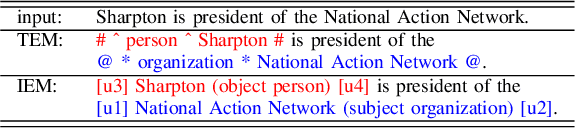
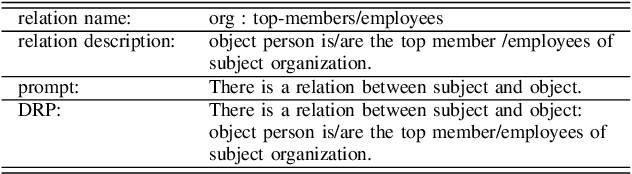
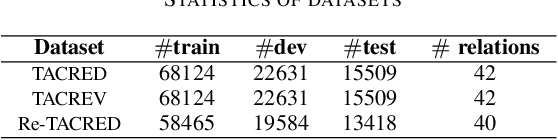
Sentence-level relation extraction aims to identify the relation between two entities for a given sentence. The existing works mostly focus on obtaining a better entity representation and adopting a multi-label classifier for relation extraction. A major limitation of these works is that they ignore background relational knowledge and the interrelation between entity types and candidate relations. In this work, we propose a new paradigm, Contrastive Learning with Descriptive Relation Prompts(CTL-DRP), to jointly consider entity information, relational knowledge and entity type restrictions. In particular, we introduce an improved entity marker and descriptive relation prompts when generating contextual embedding, and utilize contrastive learning to rank the restricted candidate relations. The CTL-DRP obtains a competitive F1-score of 76.7% on TACRED. Furthermore, the new presented paradigm achieves F1-scores of 85.8% and 91.6% on TACREV and Re-TACRED respectively, which are both the state-of-the-art performance.
EntRED: Benchmarking Relation Extraction with Fewer Shortcuts
May 22, 2023Entity names play an effective role in relation extraction (RE) and often influence model performance. As a result, the entity names in the benchmarks' test sets significantly influence the evaluation of RE models. In this work, we find that the standard RE benchmarks' datasets have a large portion of incorrect entity annotations, low entity name diversity, and are prone to have shortcuts from entity names to ground-truth relations. These issues make the standard benchmarks far from reflecting the real-world scenarios. Hence, in this work, we present EntRED, a challenging RE benchmark with reduced shortcuts and higher diversity of entities. To build EntRED, we propose an end-to-end entity replacement pipeline based on causal inference (CI): ERIC. ERIC performs type-constrained replacements on entities to reduce the shortcuts from entity bias to ground-truth relations. ERIC applies CI in two aspects: 1) targeting the instances that need entity replacements, and 2) determining the candidate entities for replacements. We apply ERIC on TACRED to produce EntRED. Our EntRED evaluates whether the RE model can correctly extract the relations from the text instead of relying on entity bias. Empirical results reveal that even the strong RE model has a significant performance drop on EntRED, which memorizes entity name patterns instead of reasoning from the textual context. We release ERIC's source code and the EntRED benchmark at https://github.com/wangywUST/ENTRED.
GPT-RE: In-context Learning for Relation Extraction using Large Language Models
May 03, 2023


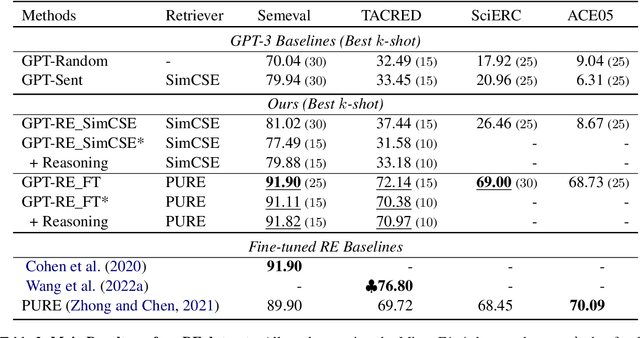
In spite of the potential for ground-breaking achievements offered by large language models (LLMs) (e.g., GPT-3), they still lag significantly behind fully-supervised baselines (e.g., fine-tuned BERT) in relation extraction (RE). This is due to the two major shortcomings of LLMs in RE: (1) low relevance regarding entity and relation in retrieved demonstrations for in-context learning; and (2) the strong inclination to wrongly classify NULL examples into other pre-defined labels. In this paper, we propose GPT-RE to bridge the gap between LLMs and fully-supervised baselines. GPT-RE successfully addresses the aforementioned issues by (1) incorporating task-specific entity representations in demonstration retrieval; and (2) enriching the demonstrations with gold label-induced reasoning logic. We evaluate GPT-RE on four widely-used RE datasets, and observe that GPT-RE achieves improvements over not only existing GPT-3 baselines, but also fully-supervised baselines. Specifically, GPT-RE achieves SOTA performances on the Semeval and SciERC datasets, and competitive performances on the TACRED and ACE05 datasets.