 Add to Chrome
 Add to Firefox
 Add to Edge
Mask R-cnn
Papers and Code
PlankFormer: Robust Plankton Instance Segmentation via MAE-Pretrained Vision Transformers and Pseudo Community Image Generation
Apr 20, 2026
Plankton monitoring is essential for assessing aquatic ecosystems but is limited by the labor-intensive nature of manual microscopic analysis. Automating the segmentation of plankton from crowded images is crucial, however, it faces two major challenges: (i) the scarcity of pixel-level annotated datasets and (ii) the difficulty of distinguishing plankton from debris and overlapping individuals using conventional CNN-based methods. To address these issues, we propose PlankFormer, a novel framework for plankton instance segmentation. First, to overcome the data shortage, we introduce a method to generate labeled Pseudo Community Images (PCI) by synthesizing individual plankton images onto diverse backgrounds, including those created by generative models. Second, we propose a segmentation model utilizing a Vision Transformer (ViT) backbone with a Mask2Former decoder. To robustly capture the global structural features of plankton against occlusion and debris, we employ a Masked Autoencoder (MAE) for self-supervised pre-training on unlabeled individual images. Experimental results on real-world datasets demonstrate that our method significantly outperforms conventional methods, such as Mask R-CNN, particularly in challenging environments with high debris density. We demonstrate that our synthetic training strategy and MAE-based architecture enable high-precision segmentation with requiring less manual annotations for individual plankton images.

FRTSearch: Unified Detection and Parameter Inference of Fast Radio Transients using Instance Segmentation
Apr 14, 2026The exponential growth of data from modern radio telescopes presents a significant challenge to traditional single-pulse search algorithms, which are computationally intensive and prone to high false-positive rates due to Radio Frequency Interference (RFI). In this work, we introduce FRTSearch, an end-to-end framework unifying the detection and physical characterization of Fast Radio Transients (FRTs). Leveraging the morphological universality of dispersive trajectories in time-frequency dynamic spectra, we reframe FRT detection as a pattern recognition problem governed by the cold plasma dispersion relation. To facilitate this, we constructed CRAFTS-FRT, a pixel-level annotated dataset derived from the Commensal Radio Astronomy FAST Survey (CRAFTS), comprising 2{,}392 instances across diverse source classes. This dataset enables the training of a Mask R-CNN model for precise trajectory segmentation. Coupled with our physics-driven IMPIC algorithm, the framework maps the geometric coordinates of segmented trajectories to directly infer the Dispersion Measure (DM) and Time of Arrival (ToA). Benchmarking on the FAST-FREX dataset shows that FRTSearch achieves a 98.0\% recall, competitive with exhaustive search methods, while reducing false positives by over 99.9\% compared to PRESTO and delivering a processing speedup of up to $13.9\times$. Furthermore, the framework demonstrates robust cross-facility generalization, detecting all 19 tested FRBs from the ASKAP survey without retraining. By shifting the paradigm from ``search-then-identify'' to ``detect-and-infer,'' FRTSearch provides a scalable, high-precision solution for real-time discovery in the era of petabyte-scale radio astronomy.
AI Driven Soccer Analysis Using Computer Vision
Apr 09, 2026Sport analysis is crucial for team performance since it provides actionable data that can inform coaching decisions, improve player performance, and enhance team strategies. To analyze more complex features from game footage, a computer vision model can be used to identify and track key entities from the field. We propose the use of an object detection and tracking system to predict player positioning throughout the game. To translate this to positioning in relation to the field dimensions, we use a point prediction model to identify key points on the field and combine these with known field dimensions to extract actual distances. For the player-identification model, object detection models like YOLO and Faster R-CNN are evaluated on the accuracy of our custom video footage using multiple different evaluation metrics. The goal is to identify the best model for object identification to obtain the most accurate results when paired with SAM2 (Segment Anything Model 2) for segmentation and tracking. For the key point detection model, we use a CNN model to find consistent locations in the soccer field. Through homography, the positions of points and objects in the camera perspective will be transformed to a real-ground perspective. The segmented player masks from SAM2 are transformed from camera perspective to real-world field coordinates through homography, regardless of camera angle or movement. The transformed real-world coordinates can be used to calculate valuable tactical insights including player speed, distance covered, positioning heatmaps, and more complex team statistics, providing coaches and players with actionable performance data previously unavailable from standard video analysis.
Can Large Multimodal Models Inspect Buildings? A Hierarchical Benchmark for Structural Pathology Reasoning
Mar 20, 2026Automated building facade inspection is a critical component of urban resilience and smart city maintenance. Traditionally, this field has relied on specialized discriminative models (e.g., YOLO, Mask R-CNN) that excel at pixel-level localization but are constrained to passive perception and worse generization without the visual understandng to interpret structural topology. Large Multimodal Models (LMMs) promise a paradigm shift toward active reasoning, yet their application in such high-stakes engineering domains lacks rigorous evaluation standards. To bridge this gap, we introduce a human-in-the-loop semi-automated annotation framework, leveraging expert-proposal verification to unify 12 fragmented datasets into a standardized, hierarchical ontology. Building on this foundation, we present \textit{DefectBench}, the first multi-dimensional benchmark designed to interrogate LMMs beyond basic semantic recognition. \textit{DefectBench} evaluates 18 state-of-the-art (SOTA) LMMs across three escalating cognitive dimensions: Semantic Perception, Spatial Localization, and Generative Geometry Segmentation. Extensive experiments reveal that while current LMMs demonstrate exceptional topological awareness and semantic understanding (effectively diagnosing "what" and "how"), they exhibit significant deficiencies in metric localization precision ("where"). Crucially, however, we validate the viability of zero-shot generative segmentation, showing that general-purpose foundation models can rival specialized supervised networks without domain-specific training. This work provides both a rigorous benchmarking standard and a high-quality open-source database, establishing a new baseline for the advancement of autonomous AI agents in civil engineering.
A Study on Real-time Object Detection using Deep Learning
Feb 17, 2026Object detection has compelling applications over a range of domains, including human-computer interfaces, security and video surveillance, navigation and road traffic monitoring, transportation systems, industrial automation healthcare, the world of Augmented Reality (AR) and Virtual Reality (VR), environment monitoring and activity identification. Applications of real time object detection in all these areas provide dynamic analysis of the visual information that helps in immediate decision making. Furthermore, advanced deep learning algorithms leverage the progress in the field of object detection providing more accurate and efficient solutions. There are some outstanding deep learning algorithms for object detection which includes, Faster R CNN(Region-based Convolutional Neural Network),Mask R-CNN, Cascade R-CNN, YOLO (You Only Look Once), SSD (Single Shot Multibox Detector), RetinaNet etc. This article goes into great detail on how deep learning algorithms are used to enhance real time object recognition. It provides information on the different object detection models available, open benchmark datasets, and studies on the use of object detection models in a range of applications. Additionally, controlled studies are provided to compare various strategies and produce some illuminating findings. Last but not least, a number of encouraging challenges and approaches are offered as suggestions for further investigation in both relevant deep learning approaches and object recognition.
Sparse Data Tree Canopy Segmentation: Fine-Tuning Leading Pretrained Models on Only 150 Images
Jan 16, 2026Tree canopy detection from aerial imagery is an important task for environmental monitoring, urban planning, and ecosystem analysis. Simulating real-life data annotation scarcity, the Solafune Tree Canopy Detection competition provides a small and imbalanced dataset of only 150 annotated images, posing significant challenges for training deep models without severe overfitting. In this work, we evaluate five representative architectures, YOLOv11, Mask R-CNN, DeepLabv3, Swin-UNet, and DINOv2, to assess their suitability for canopy segmentation under extreme data scarcity. Our experiments show that pretrained convolution-based models, particularly YOLOv11 and Mask R-CNN, generalize significantly better than pretrained transformer-based models. DeeplabV3, Swin-UNet and DINOv2 underperform likely due to differences between semantic and instance segmentation tasks, the high data requirements of Vision Transformers, and the lack of strong inductive biases. These findings confirm that transformer-based architectures struggle in low-data regimes without substantial pretraining or augmentation and that differences between semantic and instance segmentation further affect model performance. We provide a detailed analysis of training strategies, augmentation policies, and model behavior under the small-data constraint and demonstrate that lightweight CNN-based methods remain the most reliable for canopy detection on limited imagery.
A Physics-Constrained, Design-Driven Methodology for Defect Dataset Generation in Optical Lithography
Dec 09, 2025The efficacy of Artificial Intelligence (AI) in micro/nano manufacturing is fundamentally constrained by the scarcity of high-quality and physically grounded training data for defect inspection. Lithography defect data from semiconductor industry are rarely accessible for research use, resulting in a shortage of publicly available datasets. To address this bottleneck in lithography, this study proposes a novel methodology for generating large-scale, physically valid defect datasets with pixel-level annotations. The framework begins with the ab initio synthesis of defect layouts using controllable, physics-constrained mathematical morphology operations (erosion and dilation) applied to the original design-level layout. These synthesized layouts, together with their defect-free counterparts, are fabricated into physical samples via high-fidelity digital micromirror device (DMD)-based lithography. Optical micrographs of the synthesized defect samples and their defect-free references are then compared to create consistent defect delineation annotations. Using this methodology, we constructed a comprehensive dataset of 3,530 Optical micrographs containing 13,365 annotated defect instances including four classes: bridge, burr, pinch, and contamination. Each defect instance is annotated with a pixel-accurate segmentation mask, preserving full contour and geometry. The segmentation-based Mask R-CNN achieves AP@0.5 of 0.980, 0.965, and 0.971, compared with 0.740, 0.719, and 0.717 for Faster R-CNN on bridge, burr, and pinch classes, representing a mean AP@0.5 improvement of approximately 34%. For the contamination class, Mask R-CNN achieves an AP@0.5 roughly 42% higher than Faster R-CNN. These consistent gains demonstrate that our proposed methodology to generate defect datasets with pixel-level annotations is feasible for robust AI-based Measurement/Inspection (MI) in semiconductor fabrication.
A Scalable Pipeline Combining Procedural 3D Graphics and Guided Diffusion for Photorealistic Synthetic Training Data Generation in White Button Mushroom Segmentation
Dec 09, 2025Industrial mushroom cultivation increasingly relies on computer vision for monitoring and automated harvesting. However, developing accurate detection and segmentation models requires large, precisely annotated datasets that are costly to produce. Synthetic data provides a scalable alternative, yet often lacks sufficient realism to generalize to real-world scenarios. This paper presents a novel workflow that integrates 3D rendering in Blender with a constrained diffusion model to automatically generate high-quality annotated, photorealistic synthetic images of Agaricus Bisporus mushrooms. This approach preserves full control over 3D scene configuration and annotations while achieving photorealism without the need for specialized computer graphics expertise. We release two synthetic datasets (each containing 6,000 images depicting over 250k mushroom instances) and evaluate Mask R-CNN models trained on them in a zero-shot setting. When tested on two independent real-world datasets (including a newly collected benchmark), our method achieves state-of-the-art segmentation performance (F1 = 0.859 on M18K), despite using only synthetic training data. Although the approach is demonstrated on Agaricus Bisporus mushrooms, the proposed pipeline can be readily adapted to other mushroom species or to other agricultural domains, such as fruit and leaf detection.
Computer Vision based group activity detection and action spotting
Nov 17, 2025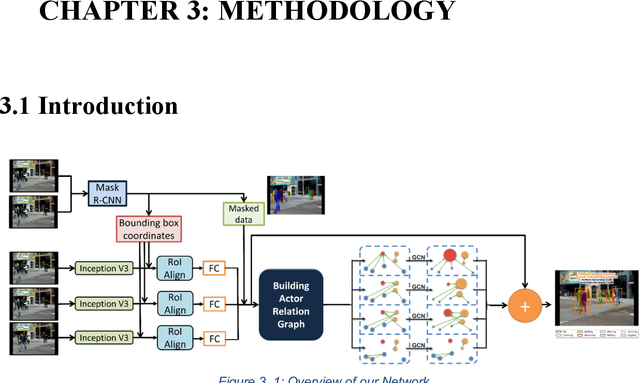
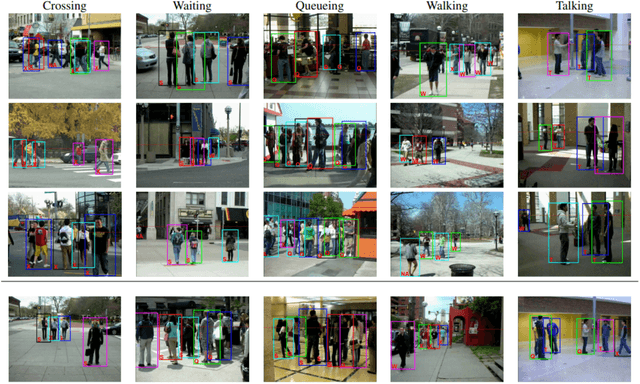
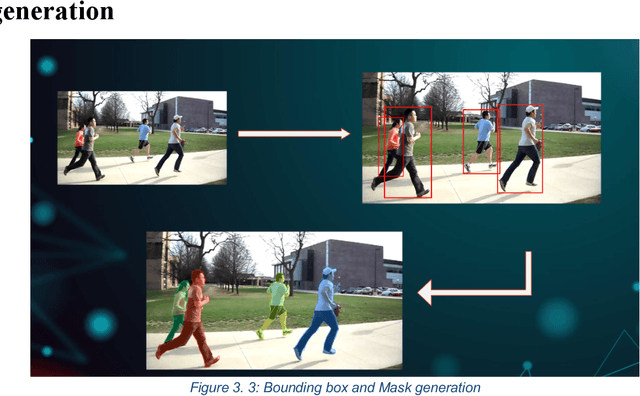
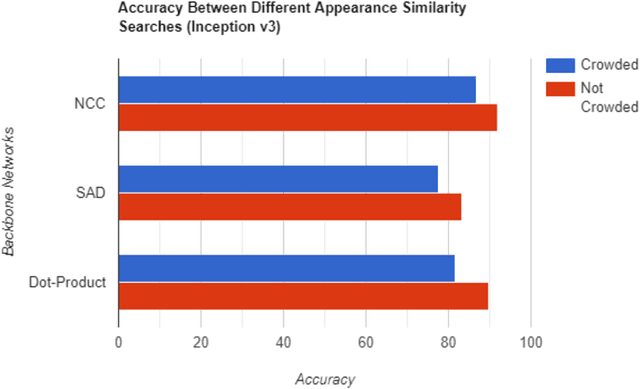
Group activity detection in multi-person scenes is challenging due to complex human interactions, occlusions, and variations in appearance over time. This work presents a computer vision based framework for group activity recognition and action spotting using a combination of deep learning models and graph based relational reasoning. The system first applies Mask R-CNN to obtain accurate actor localization through bounding boxes and instance masks. Multiple backbone networks, including Inception V3, MobileNet, and VGG16, are used to extract feature maps, and RoIAlign is applied to preserve spatial alignment when generating actor specific features. The mask information is then fused with the feature maps to obtain refined masked feature representations for each actor. To model interactions between individuals, we construct Actor Relation Graphs that encode appearance similarity and positional relations using methods such as normalized cross correlation, sum of absolute differences, and dot product. Graph Convolutional Networks operate on these graphs to reason about relationships and predict both individual actions and group level activities. Experiments on the Collective Activity dataset demonstrate that the combination of mask based feature refinement, robust similarity search, and graph neural network reasoning leads to improved recognition performance across both crowded and non crowded scenarios. This approach highlights the potential of integrating segmentation, feature extraction, and relational graph reasoning for complex video understanding tasks.
Deep Learning for Accurate Vision-based Catch Composition in Tropical Tuna Purse Seiners
Nov 19, 2025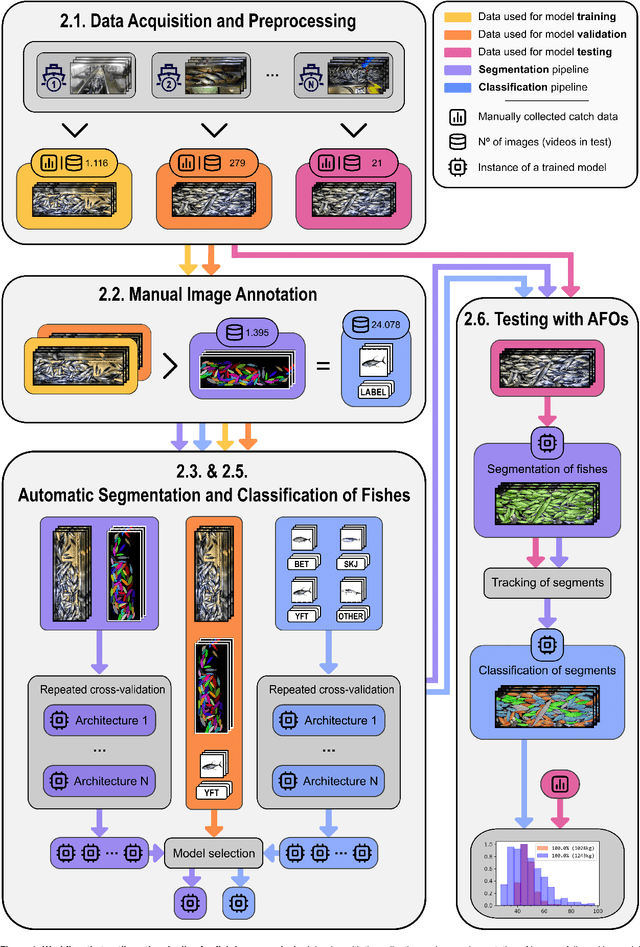
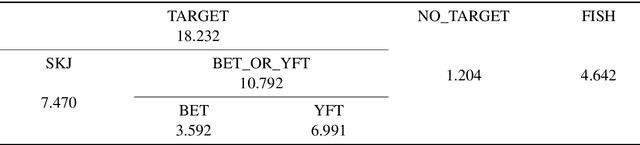
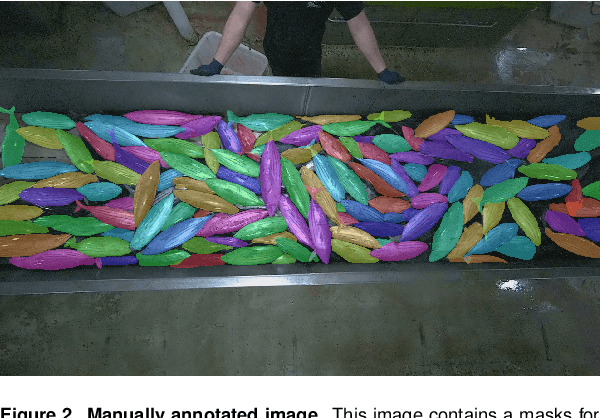

Purse seiners play a crucial role in tuna fishing, as approximately 69% of the world's tropical tuna is caught using this gear. All tuna Regional Fisheries Management Organizations have established minimum standards to use electronic monitoring (EM) in fisheries in addition to traditional observers. The EM systems produce a massive amount of video data that human analysts must process. Integrating artificial intelligence (AI) into their workflow can decrease that workload and improve the accuracy of the reports. However, species identification still poses significant challenges for AI, as achieving balanced performance across all species requires appropriate training data. Here, we quantify the difficulty experts face to distinguish bigeye tuna (BET, Thunnus Obesus) from yellowfin tuna (YFT, Thunnus Albacares) using images captured by EM systems. We found inter-expert agreements of 42.9% $\pm$ 35.6% for BET and 57.1% $\pm$ 35.6% for YFT. We then present a multi-stage pipeline to estimate the species composition of the catches using a reliable ground-truth dataset based on identifications made by observers on board. Three segmentation approaches are compared: Mask R-CNN, a combination of DINOv2 with SAM2, and a integration of YOLOv9 with SAM2. We found that the latest performs the best, with a validation mean average precision of 0.66 $\pm$ 0.03 and a recall of 0.88 $\pm$ 0.03. Segmented individuals are tracked using ByteTrack. For classification, we evaluate a standard multiclass classification model and a hierarchical approach, finding a superior generalization by the hierarchical. All our models were cross-validated during training and tested on fishing operations with fully known catch composition. Combining YOLOv9-SAM2 with the hierarchical classification produced the best estimations, with 84.8% of the individuals being segmented and classified with a mean average error of 4.5%.