 Add to Chrome
 Add to Firefox
 Add to Edge
Iris Segmentation
Iris segmentation is the process of identifying and extracting the iris region from an eye image for biometric identification.
Papers and Code
An Open-Source Framework for Quality-Assured Smartphone-Based Visible Light Iris Recognition
Dec 17, 2025
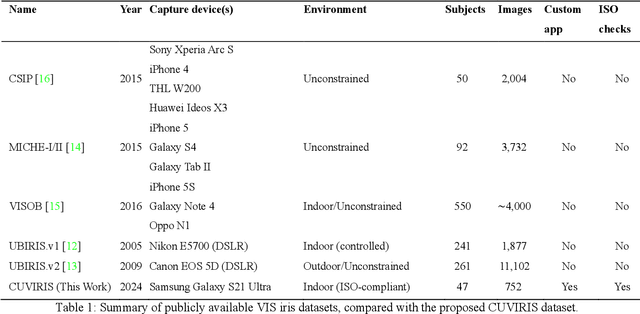
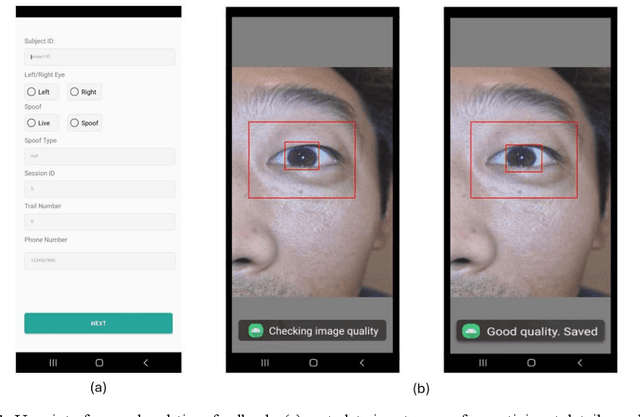
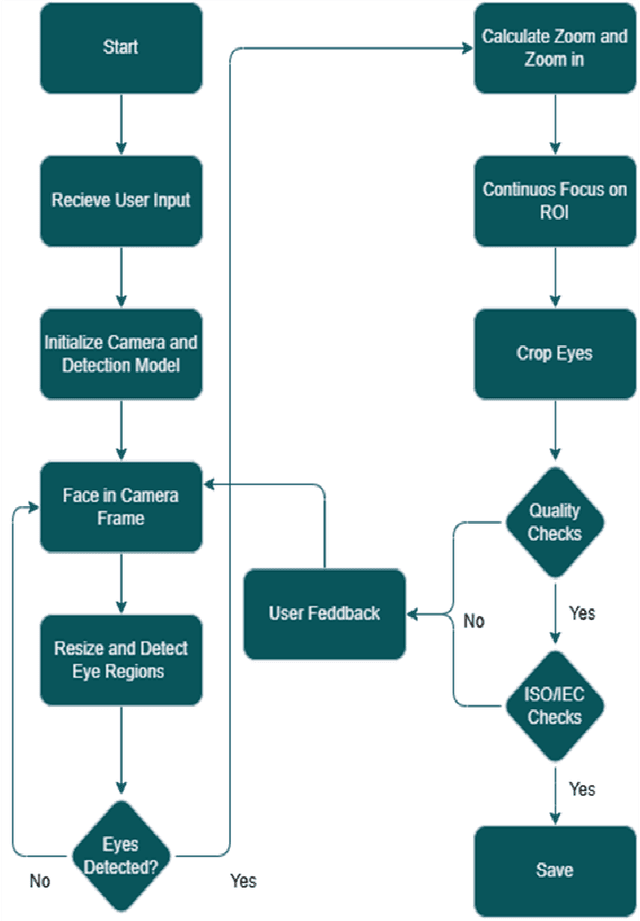
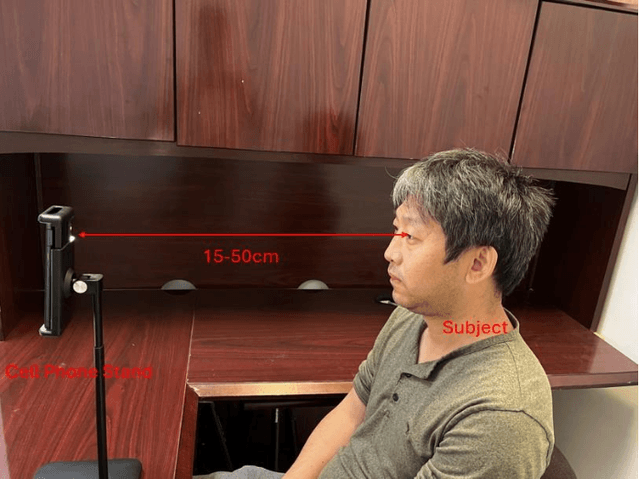
Smartphone-based iris recognition in the visible spectrum (VIS) offers a low-cost and accessible biometric alternative but remains a challenge due to lighting variability, pigmentation effects, and the limited adoption of standardized capture protocols. In this work, we present CUVIRIS, a dataset of 752 ISO/IEC 29794-6 compliant iris images from 47 subjects, collected with a custom Android application that enforces real-time framing, sharpness assessment, and quality feedback. We further introduce LightIrisNet, a MobileNetV3-based multi-task segmentation model optimized for on-device deployment. In addition, we adapt IrisFormer, a transformer-based matcher, to the VIS domain. We evaluate OSIRIS and IrisFormer under a standardized protocol and benchmark against published CNN baselines reported in prior work. On CUVIRIS, the open-source OSIRIS system achieves a TAR of 97.9% at FAR = 0.01 (EER = 0.76%), while IrisFormer, trained only on the UBIRIS.v2 dataset, achieves an EER of 0.057\%. To support reproducibility, we release the Android application, LightIrisNet, trained IrisFormer weights, and a subset of the CUVIRIS dataset. These results show that, with standardized acquisition and VIS-adapted lightweight models, accurate iris recognition on commodity smartphones is feasible under controlled conditions, bringing this modality closer to practical deployment.

A Study of Gender Classification Techniques Based on Iris Images: A Deep Survey and Analysis
Aug 07, 2025Gender classification is attractive in a range of applications, including surveillance and monitoring, corporate profiling, and human-computer interaction. Individuals' identities may be gleaned from information about their gender, which is a kind of soft biometric.Over the years, several methods for determining a person's gender have been devised. Some of the most well-known ones are based on physical characteristics like face, fingerprint, palmprint, DNA, ears, gait, and iris. On the other hand, facial features account for the vast majority of gender classification methods. Also, the iris is a significant biometric trait because the iris, according to research, remains basically constant during an individual's life. Besides that, the iris is externally visible and is non-invasive to the user, which is important for practical applications. Furthermore, there are already high-quality methods for segmenting and encoding iris images, and the current methods facilitate selecting and extracting attribute vectors from iris textures. This study discusses several approaches to determining gender. The previous works of literature are briefly reviewed. Additionally, there are a variety of methodologies for different steps of gender classification. This study provides researchers with knowledge and analysis of the existing gender classification approaches. Also, it will assist researchers who are interested in this specific area, as well as highlight the gaps and challenges in the field, and finally provide suggestions and future paths for improvement.
* 13 Pages, 8 Figures, 1 Table
Colors Matter: AI-Driven Exploration of Human Feature Colors
May 20, 2025This study presents a robust framework that leverages advanced imaging techniques and machine learning for feature extraction and classification of key human attributes-namely skin tone, hair color, iris color, and vein-based undertones. The system employs a multi-stage pipeline involving face detection, region segmentation, and dominant color extraction to isolate and analyze these features. Techniques such as X-means clustering, alongside perceptually uniform distance metrics like Delta E (CIEDE2000), are applied within both LAB and HSV color spaces to enhance the accuracy of color differentiation. For classification, the dominant tones of the skin, hair, and iris are extracted and matched to a custom tone scale, while vein analysis from wrist images enables undertone classification into "Warm" or "Cool" based on LAB differences. Each module uses targeted segmentation and color space transformations to ensure perceptual precision. The system achieves up to 80% accuracy in tone classification using the Delta E-HSV method with Gaussian blur, demonstrating reliable performance across varied lighting and image conditions. This work highlights the potential of AI-powered color analysis and feature extraction for delivering inclusive, precise, and nuanced classification, supporting applications in beauty technology, digital personalization, and visual analytics.
Show and Segment: Universal Medical Image Segmentation via In-Context Learning
Mar 25, 2025Medical image segmentation remains challenging due to the vast diversity of anatomical structures, imaging modalities, and segmentation tasks. While deep learning has made significant advances, current approaches struggle to generalize as they require task-specific training or fine-tuning on unseen classes. We present Iris, a novel In-context Reference Image guided Segmentation framework that enables flexible adaptation to novel tasks through the use of reference examples without fine-tuning. At its core, Iris features a lightweight context task encoding module that distills task-specific information from reference context image-label pairs. This rich context embedding information is used to guide the segmentation of target objects. By decoupling task encoding from inference, Iris supports diverse strategies from one-shot inference and context example ensemble to object-level context example retrieval and in-context tuning. Through comprehensive evaluation across twelve datasets, we demonstrate that Iris performs strongly compared to task-specific models on in-distribution tasks. On seven held-out datasets, Iris shows superior generalization to out-of-distribution data and unseen classes. Further, Iris's task encoding module can automatically discover anatomical relationships across datasets and modalities, offering insights into medical objects without explicit anatomical supervision.
Trade-offs in Privacy-Preserving Eye Tracking through Iris Obfuscation: A Benchmarking Study
Apr 15, 2025
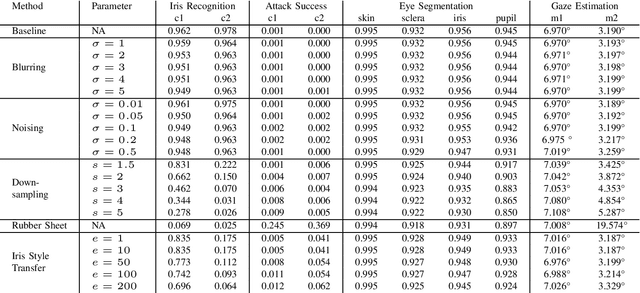
Recent developments in hardware, computer graphics, and AI may soon enable AR/VR head-mounted displays (HMDs) to become everyday devices like smartphones and tablets. Eye trackers within HMDs provide a special opportunity for such setups as it is possible to facilitate gaze-based research and interaction. However, estimating users' gaze information often requires raw eye images and videos that contain iris textures, which are considered a gold standard biometric for user authentication, and this raises privacy concerns. Previous research in the eye-tracking community focused on obfuscating iris textures while keeping utility tasks such as gaze estimation accurate. Despite these attempts, there is no comprehensive benchmark that evaluates state-of-the-art approaches. Considering all, in this paper, we benchmark blurring, noising, downsampling, rubber sheet model, and iris style transfer to obfuscate user identity, and compare their impact on image quality, privacy, utility, and risk of imposter attack on two datasets. We use eye segmentation and gaze estimation as utility tasks, and reduction in iris recognition accuracy as a measure of privacy protection, and false acceptance rate to estimate risk of attack. Our experiments show that canonical image processing methods like blurring and noising cause a marginal impact on deep learning-based tasks. While downsampling, rubber sheet model, and iris style transfer are effective in hiding user identifiers, iris style transfer, with higher computation cost, outperforms others in both utility tasks, and is more resilient against spoof attacks. Our analyses indicate that there is no universal optimal approach to balance privacy, utility, and computation burden. Therefore, we recommend practitioners consider the strengths and weaknesses of each approach, and possible combinations of those to reach an optimal privacy-utility trade-off.
Iris Style Transfer: Enhancing Iris Recognition with Style Features and Privacy Preservation through Neural Style Transfer
Mar 06, 2025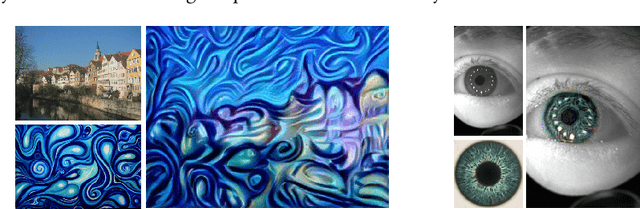
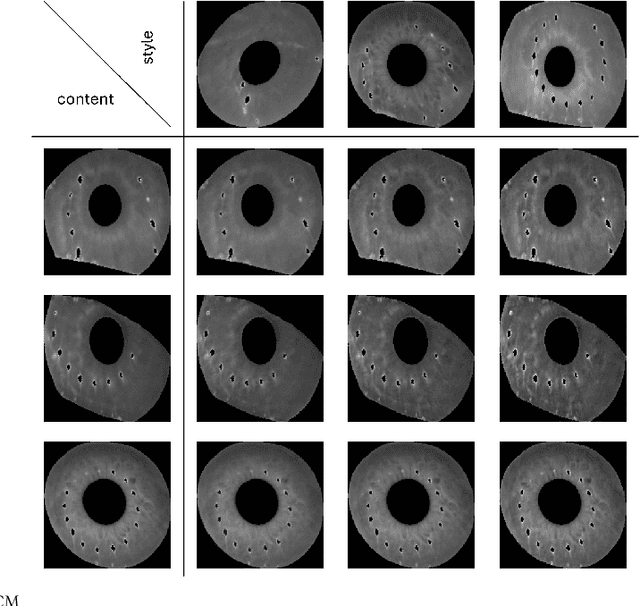
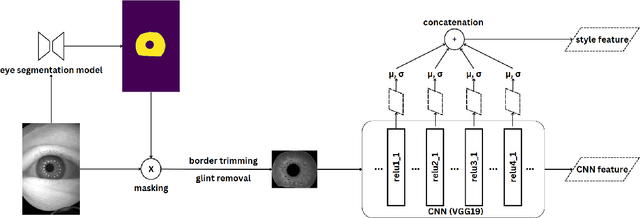

Iris texture is widely regarded as a gold standard biometric modality for authentication and identification. The demand for robust iris recognition methods, coupled with growing security and privacy concerns regarding iris attacks, has escalated recently. Inspired by neural style transfer, an advanced technique that leverages neural networks to separate content and style features, we hypothesize that iris texture's style features provide a reliable foundation for recognition and are more resilient to variations like rotation and perspective shifts than traditional approaches. Our experimental results support this hypothesis, showing a significantly higher classification accuracy compared to conventional features. Further, we propose using neural style transfer to mask identifiable iris style features, ensuring the protection of sensitive biometric information while maintaining the utility of eye images for tasks like eye segmentation and gaze estimation. This work opens new avenues for iris-oriented, secure, and privacy-aware biometric systems.
Iris Recognition for Infants
Jan 02, 2025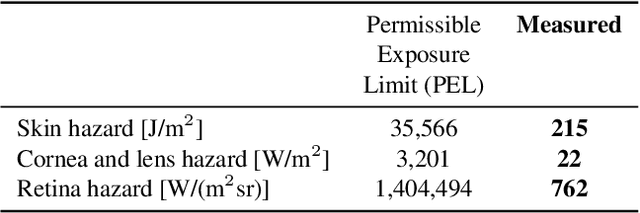
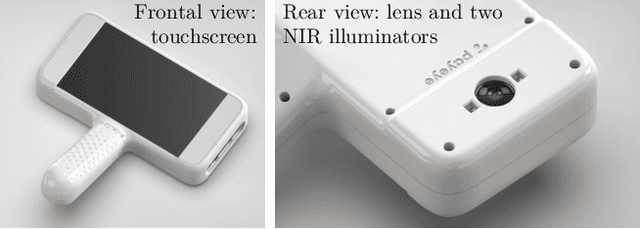
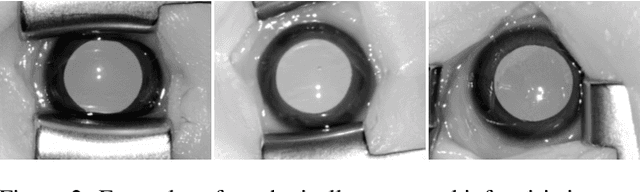
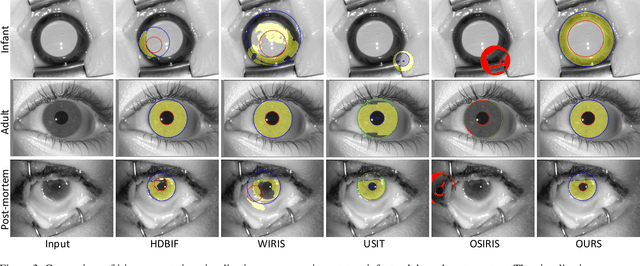
Non-invasive, efficient, physical token-less, accurate and stable identification methods for newborns may prevent baby swapping at birth, limit baby abductions and improve post-natal health monitoring across geographies, within the context of both the formal (i.e., hospitals) and informal (i.e., humanitarian and fragile settings) health sectors. This paper explores the feasibility of application iris recognition to build biometric identifiers for 4-6 week old infants. We (a) collected near infrared (NIR) iris images from 17 infants using a specially-designed NIR iris sensor; (b) evaluated six iris recognition methods to assess readiness of the state-of-the-art iris recognition to be applied to newborns and infants; (c) proposed a new segmentation model that correctly detects iris texture within infants iris images, and coupled it with several iris texture encoding approaches to offer, to the first of our knowledge, a fully-operational infant iris recognition system; and, (d) trained a StyleGAN-based model to synthesize iris images mimicking samples acquired from infants to deliver to the research community privacy-safe infant iris images. The proposed system, incorporating the specially-designed iris sensor and segmenter, and applied to the collected infant iris samples, achieved Equal Error Rate (EER) of 3\% and Area Under ROC Curve (AUC) of 99\%, compared to EER$\geq$20\% and AUC$\leq$88\% obtained for state of the art adult iris recognition systems. This suggests that it may be feasible to design methods that succesfully extract biometric features from infant irises.
UNCA: A Neutrosophic-Based Framework for Robust Clustering and Enhanced Data Interpretation
Feb 23, 2025Accurately representing the complex linkages and inherent uncertainties included in huge datasets is still a major difficulty in the field of data clustering. We address these issues with our proposed Unified Neutrosophic Clustering Algorithm (UNCA), which combines a multifaceted strategy with Neutrosophic logic to improve clustering performance. UNCA starts with a full-fledged similarity examination via a {\lambda}-cutting matrix that filters meaningful relationships between each two points of data. Then, we initialize centroids for Neutrosophic K-Means clustering, where the membership values are based on their degrees of truth, indeterminacy and falsity. The algorithm then integrates with a dynamic network visualization and MST (Minimum Spanning Tree) so that a visual interpretation of the relationships between the clusters can be clearly represented. UNCA employs SingleValued Neutrosophic Sets (SVNSs) to refine cluster assignments, and after fuzzifying similarity measures, guarantees a precise clustering result. The final step involves solidifying the clustering results through defuzzification methods, offering definitive cluster assignments. According to the performance evaluation results, UNCA outperforms conventional approaches in several metrics: it achieved a Silhouette Score of 0.89 on the Iris Dataset, a Davies-Bouldin Index of 0.59 on the Wine Dataset, an Adjusted Rand Index (ARI) of 0.76 on the Digits Dataset, and a Normalized Mutual Information (NMI) of 0.80 on the Customer Segmentation Dataset. These results demonstrate how UNCA enhances interpretability and resilience in addition to improving clustering accuracy when contrasted with Fuzzy C-Means (FCM), Neutrosophic C-Means (NCM), as well as Kernel Neutrosophic C-Means (KNCM). This makes UNCA a useful tool for complex data processing tasks
Smartphone-based Iris Recognition through High-Quality Visible Spectrum Iris Capture
Dec 17, 2024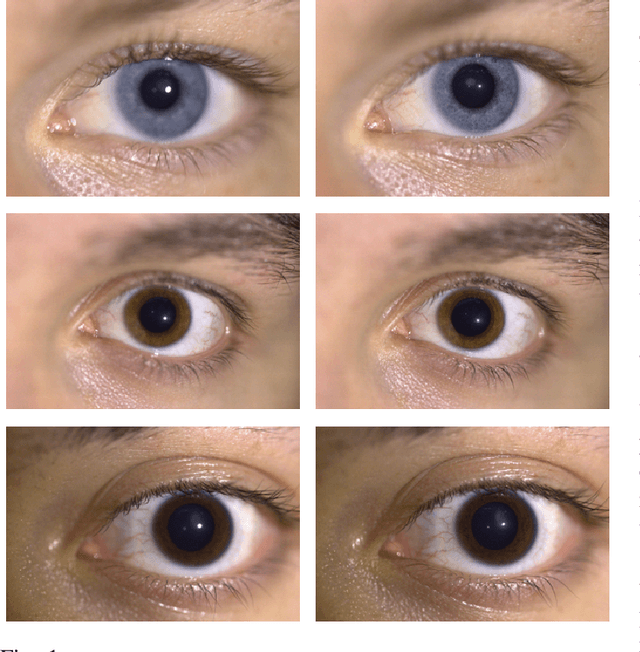
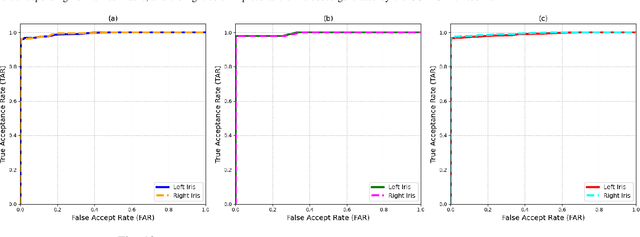
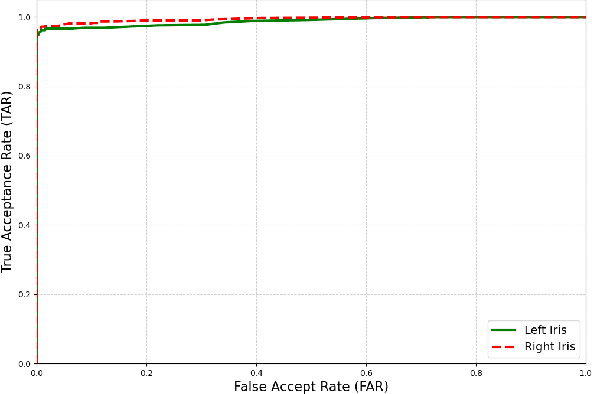
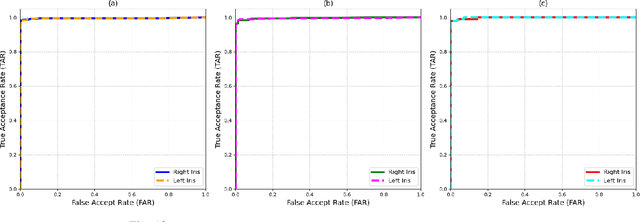
Iris recognition is widely acknowledged for its exceptional accuracy in biometric authentication, traditionally relying on near-infrared (NIR) imaging. Recently, visible spectrum (VIS) imaging via accessible smartphone cameras has been explored for biometric capture. However, a thorough study of iris recognition using smartphone-captured 'High-Quality' VIS images and cross-spectral matching with previously enrolled NIR images has not been conducted. The primary challenge lies in capturing high-quality biometrics, a known limitation of smartphone cameras. This study introduces a novel Android application designed to consistently capture high-quality VIS iris images through automated focus and zoom adjustments. The application integrates a YOLOv3-tiny model for precise eye and iris detection and a lightweight Ghost-Attention U-Net (G-ATTU-Net) for segmentation, while adhering to ISO/IEC 29794-6 standards for image quality. The approach was validated using smartphone-captured VIS and NIR iris images from 47 subjects, achieving a True Acceptance Rate (TAR) of 96.57% for VIS images and 97.95% for NIR images, with consistent performance across various capture distances and iris colors. This robust solution is expected to significantly advance the field of iris biometrics, with important implications for enhancing smartphone security.
IRIS: Interactive Responsive Intelligent Segmentation for 3D Affordance Analysis
Sep 17, 2024Recent advancements in large language and vision-language models have significantly enhanced multimodal understanding, yet translating high-level linguistic instructions into precise robotic actions in 3D space remains challenging. This paper introduces IRIS (Interactive Responsive Intelligent Segmentation), a novel training-free multimodal system for 3D affordance segmentation, alongside a benchmark for evaluating interactive language-guided affordance in everyday environments. IRIS integrates a large multimodal model with a specialized 3D vision network, enabling seamless fusion of 2D and 3D visual understanding with language comprehension. To facilitate evaluation, we present a dataset of 10 typical indoor environments, each with 50 images annotated for object actions and 3D affordance segmentation. Extensive experiments demonstrate IRIS's capability in handling interactive 3D affordance segmentation tasks across diverse settings, showcasing competitive performance across various metrics. Our results highlight IRIS's potential for enhancing human-robot interaction based on affordance understanding in complex indoor environments, advancing the development of more intuitive and efficient robotic systems for real-world applications.