 Add to Chrome
 Add to Firefox
 Add to Edge
Beyond Mortality: Advancements in Post-Mortem Iris Recognition through Data Collection and Computer-Aided Forensic Examination
Mar 27, 2026
Post-mortem iris recognition brings both hope to the forensic community (a short-term but accurate and fast means of verifying identity) as well as concerns to society (its potential illicit use in post-mortem impersonation). These hopes and concerns have grown along with the volume of research in post-mortem iris recognition. Barriers to further progress in post-mortem iris recognition include the difficult nature of data collection, and the resulting small number of approaches designed specifically for comparing iris images of deceased subjects. This paper makes several unique contributions to mitigate these barriers. First, we have collected and we offer a new dataset of NIR (compliant with ISO/IEC 19794-6 where possible) and visible-light iris images collected after demise from 259 subjects, with the largest PMI (post-mortem interval) being 1,674 hours. For one subject, the data has been collected before and after death, the first such case ever published. Second, the collected dataset was combined with publicly-available post-mortem samples to assess the current state of the art in automatic forensic iris recognition with five iris recognition methods and data originating from 338 deceased subjects. These experiments include analyses of how selected demographic factors influence recognition performance. Thirdly, this study implements a model for detecting post-mortem iris images, which can be considered as presentation attacks. Finally, we offer an open-source forensic tool integrating three post-mortem iris recognition methods with explainability elements added to make the comparison process more human-interpretable.

Iris Recognition for Infants
Jan 02, 2025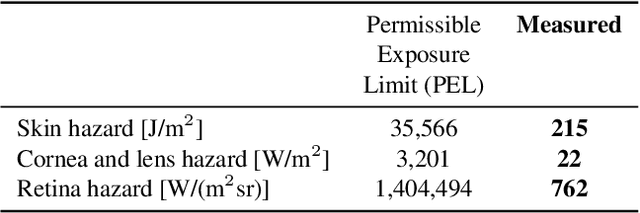
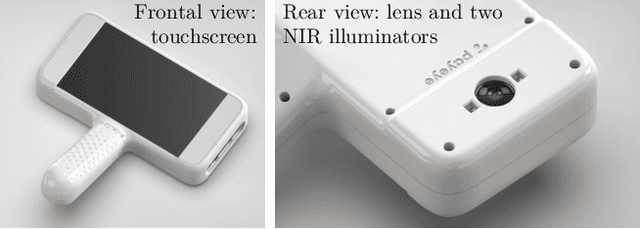
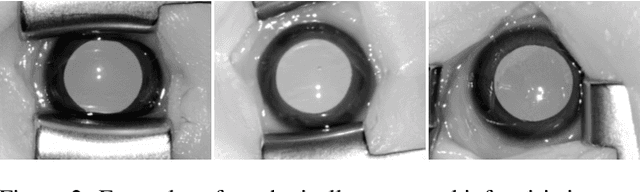
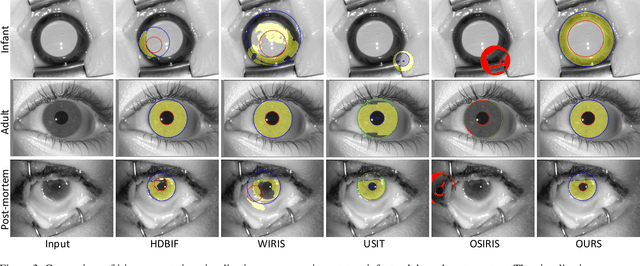
Non-invasive, efficient, physical token-less, accurate and stable identification methods for newborns may prevent baby swapping at birth, limit baby abductions and improve post-natal health monitoring across geographies, within the context of both the formal (i.e., hospitals) and informal (i.e., humanitarian and fragile settings) health sectors. This paper explores the feasibility of application iris recognition to build biometric identifiers for 4-6 week old infants. We (a) collected near infrared (NIR) iris images from 17 infants using a specially-designed NIR iris sensor; (b) evaluated six iris recognition methods to assess readiness of the state-of-the-art iris recognition to be applied to newborns and infants; (c) proposed a new segmentation model that correctly detects iris texture within infants iris images, and coupled it with several iris texture encoding approaches to offer, to the first of our knowledge, a fully-operational infant iris recognition system; and, (d) trained a StyleGAN-based model to synthesize iris images mimicking samples acquired from infants to deliver to the research community privacy-safe infant iris images. The proposed system, incorporating the specially-designed iris sensor and segmenter, and applied to the collected infant iris samples, achieved Equal Error Rate (EER) of 3\% and Area Under ROC Curve (AUC) of 99\%, compared to EER$\geq$20\% and AUC$\leq$88\% obtained for state of the art adult iris recognition systems. This suggests that it may be feasible to design methods that succesfully extract biometric features from infant irises.
Forensic Iris Image-Based Post-Mortem Interval Estimation
Apr 15, 2024Post-mortem iris recognition is an emerging application of iris-based human identification in a forensic setup. One factor that may be useful in conditioning iris recognition methods is the tissue decomposition level, which is correlated with the post-mortem interval (PMI), i.g., the number of hours that have elapsed since death. PMI, however, is not always available, and its precise estimation remains one of the core challenges in forensic examination. This paper presents the first known to us method of PMI estimation directly from forensic iris images. To assess the feasibility of the iris-based PMI estimation, convolutional neural networks-based models (VGG19, DenseNet121, ResNet152, and Inception_v3) were trained to predict the PMI from (a) near-infrared (NIR), (b) visible (RGB), and (c) multispectral forensic iris images. Models were evaluated following a 10-fold cross-validation in (S1) sample-disjoint, (S2) subject-disjoint, and (S3) cross-dataset scenarios. We found that using the multispectral data offers a spectacularly low mean absolute error (MAE) of approximately 3.5 hours in scenario (S1), a bit worse MAE of approximately 17.5 hours in scenario (S2), and an MAE of approximately 69.0 hours of in the scenario (S3). This suggests that if the environmental conditions are favorable (e.g., bodies are kept in low temperatures), forensic iris images provide features that are indicative of the PMI and can be automatically estimated. The source codes and model weights are made available with the paper.
Forensic Iris Image Synthesis
Dec 07, 2023
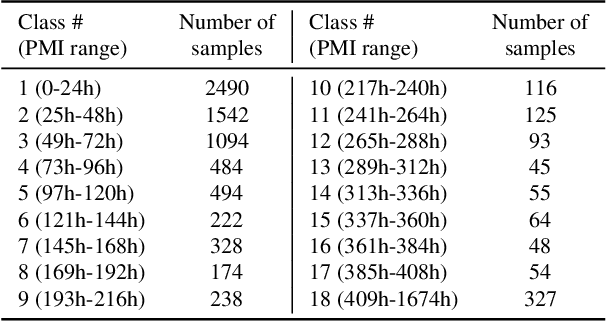
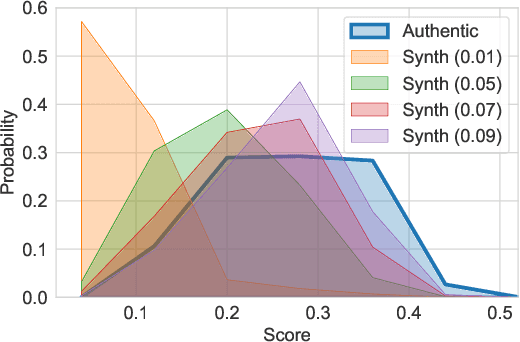
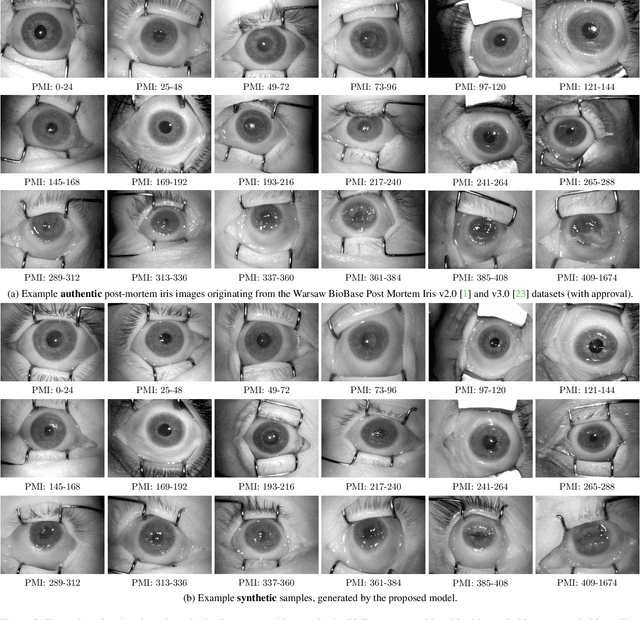
Post-mortem iris recognition is an emerging application of iris-based human identification in a forensic setup, able to correctly identify deceased subjects even three weeks post-mortem. This technique thus is considered as an important component of future forensic toolkits. The current advancements in this field are seriously slowed down by exceptionally difficult data collection, which can happen in mortuary conditions, at crime scenes, or in ``body farm'' facilities. This paper makes a novel contribution to facilitate progress in post-mortem iris recognition by offering a conditional StyleGAN-based iris synthesis model, trained on the largest-available dataset of post-mortem iris samples acquired from more than 350 subjects, generating -- through appropriate exploration of StyleGAN latent space -- multiple within-class (same identity) and between-class (different new identities) post-mortem iris images, compliant with ISO/IEC 29794-6, and with decomposition deformations controlled by the requested PMI (post mortem interval). Besides an obvious application to enhance the existing, very sparse, post-mortem iris datasets to advance -- among others -- iris presentation attack endeavors, we anticipate it may be useful to generate samples that would expose professional forensic human examiners to never-seen-before deformations for various PMIs, increasing their training effectiveness. The source codes and model weights are made available with the paper.