 Add to Chrome
 Add to Firefox
 Add to Edge
TokenDial: Continuous Attribute Control in Text-to-Video via Spatiotemporal Token Offsets
Mar 29, 2026
We present TokenDial, a framework for continuous, slider-style attribute control in pretrained text-to-video generation models. While modern generators produce strong holistic videos, they offer limited control over how much an attribute changes (e.g., effect intensity or motion magnitude) without drifting identity, background, or temporal coherence. TokenDial is built on the observation: additive offsets in the intermediate spatiotemporal visual patch-token space form a semantic control direction, where adjusting the offset magnitude yields coherent, predictable edits for both appearance and motion dynamics. We learn attribute-specific token offsets without retraining the backbone, using pretrained understanding signals: semantic direction matching for appearance and motion-magnitude scaling for motion. We demonstrate TokenDial's effectiveness on diverse attributes and prompts, achieving stronger controllability and higher-quality edits than state-of-the-art baselines, supported by extensive quantitative evaluation and human studies.

Training-Free Spatio-temporal Decoupled Reasoning Video Segmentation with Adaptive Object Memory
Mar 02, 2026Reasoning Video Object Segmentation (ReasonVOS) is a challenging task that requires stable object segmentation across video sequences using implicit and complex textual inputs. Previous methods fine-tune Multimodal Large Language Models (MLLMs) to produce segmentation outputs, which demand substantial resources. Additionally, some existing methods are coupled in the processing of spatio-temporal information, which affects the temporal stability of the model to some extent. To address these issues, we propose Training-Free \textbf{S}patio-temporal \textbf{D}ecoupled Reasoning Video Segmentation with \textbf{A}daptive Object \textbf{M}emory (SDAM). We aim to design a training-free reasoning video segmentation framework that outperforms existing methods requiring fine-tuning, using only pre-trained models. Meanwhile, we propose an Adaptive Object Memory module that selects and memorizes key objects based on motion cues in different video sequences. Finally, we propose Spatio-temporal Decoupling for stable temporal propagation. In the spatial domain, we achieve precise localization and segmentation of target objects, while in the temporal domain, we leverage key object temporal information to drive stable cross-frame propagation. Our method achieves excellent results on five benchmark datasets, including Ref-YouTubeVOS, Ref-DAVIS17, MeViS, ReasonVOS, and ReVOS.
Native Reasoning Models: Training Language Models to Reason on Unverifiable Data
Feb 12, 2026The prevailing paradigm for training large reasoning models--combining Supervised Fine-Tuning (SFT) with Reinforcement Learning with Verifiable Rewards (RLVR)--is fundamentally constrained by its reliance on high-quality, human-annotated reasoning data and external verifiers. This dependency incurs significant data-collection costs, risks embedding human cognitive biases, and confines the reinforcement learning stage to objectively assessable domains like mathematics and coding, leaving a wide range of unverifiable tasks beyond its scope. To overcome these limitations, we introduce NRT (Native Reasoning Training), a novel framework that cultivates complex reasoning by having the model generate its own reasoning traces using only standard question-answer pairs, thereby obviating the need for expert-written demonstrations. NRT reframes the training problem by treating the reasoning process as a latent variable. It employs a unified training objective that models reasoning as an optimization problem, intrinsically rewarding paths that increase the model's likelihood of producing the ground-truth answer. This unified perspective allows us to analyze intrinsic failure modes of prior methods, such as policy collapse, and systematically design more robust reward aggregation functions, creating a self-reinforcing feedback loop where the model learns to think in ways that resolve its own uncertainty. Empirical evaluation on Llama and Mistral model families demonstrates that NRT achieves state-of-the-art performance among verifier-free methods, significantly outperforming standard SFT baselines and prior verifier-free RL methods. Our approach yields particularly strong performance gains in complex reasoning domains and exhibits high robustness to policy collapse, offering a general, scalable path toward building more powerful and broadly applicable reasoning systems.
SafeWork-R1: Coevolving Safety and Intelligence under the AI-45$^{\circ}$ Law
Jul 24, 2025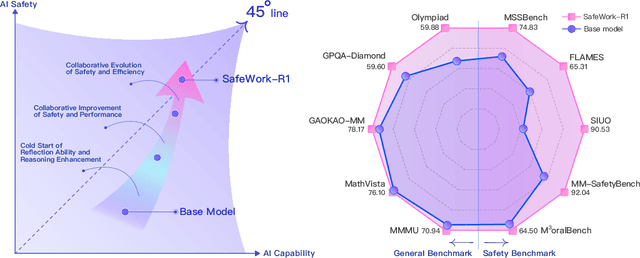
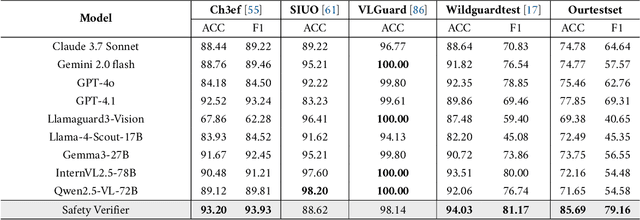
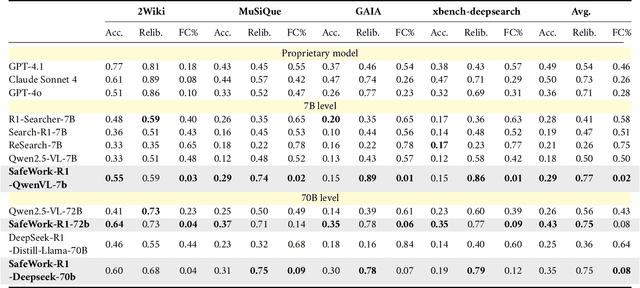

We introduce SafeWork-R1, a cutting-edge multimodal reasoning model that demonstrates the coevolution of capabilities and safety. It is developed by our proposed SafeLadder framework, which incorporates large-scale, progressive, safety-oriented reinforcement learning post-training, supported by a suite of multi-principled verifiers. Unlike previous alignment methods such as RLHF that simply learn human preferences, SafeLadder enables SafeWork-R1 to develop intrinsic safety reasoning and self-reflection abilities, giving rise to safety `aha' moments. Notably, SafeWork-R1 achieves an average improvement of $46.54\%$ over its base model Qwen2.5-VL-72B on safety-related benchmarks without compromising general capabilities, and delivers state-of-the-art safety performance compared to leading proprietary models such as GPT-4.1 and Claude Opus 4. To further bolster its reliability, we implement two distinct inference-time intervention methods and a deliberative search mechanism, enforcing step-level verification. Finally, we further develop SafeWork-R1-InternVL3-78B, SafeWork-R1-DeepSeek-70B, and SafeWork-R1-Qwen2.5VL-7B. All resulting models demonstrate that safety and capability can co-evolve synergistically, highlighting the generalizability of our framework in building robust, reliable, and trustworthy general-purpose AI.
EAGLE: Contrastive Learning for Efficient Graph Anomaly Detection
May 12, 2025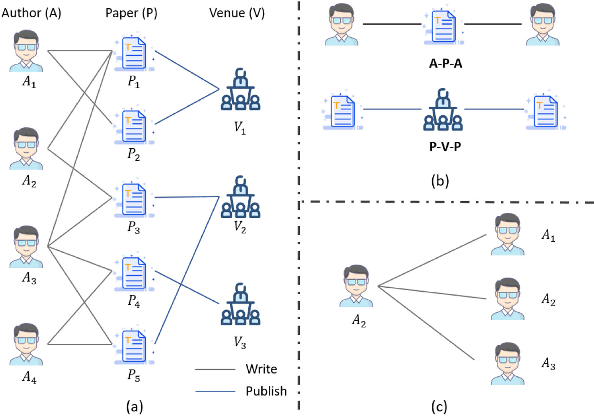
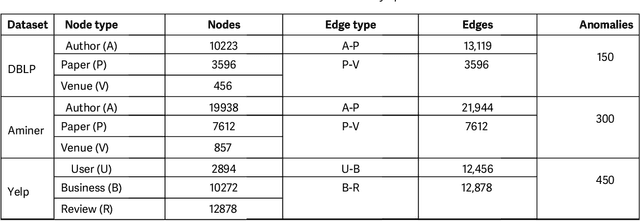
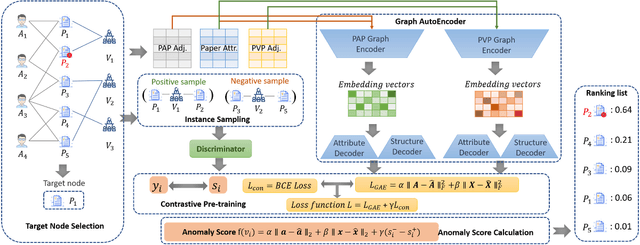
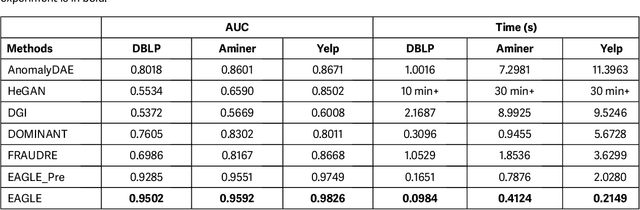
Graph anomaly detection is a popular and vital task in various real-world scenarios, which has been studied for several decades. Recently, many studies extending deep learning-based methods have shown preferable performance on graph anomaly detection. However, existing methods are lack of efficiency that is definitely necessary for embedded devices. Towards this end, we propose an Efficient Anomaly detection model on heterogeneous Graphs via contrastive LEarning (EAGLE) by contrasting abnormal nodes with normal ones in terms of their distances to the local context. The proposed method first samples instance pairs on meta path-level for contrastive learning. Then, a graph autoencoder-based model is applied to learn informative node embeddings in an unsupervised way, which will be further combined with the discriminator to predict the anomaly scores of nodes. Experimental results show that EAGLE outperforms the state-of-the-art methods on three heterogeneous network datasets.
STRIVE: Structured Representation Integrating VLM Reasoning for Efficient Object Navigation
May 10, 2025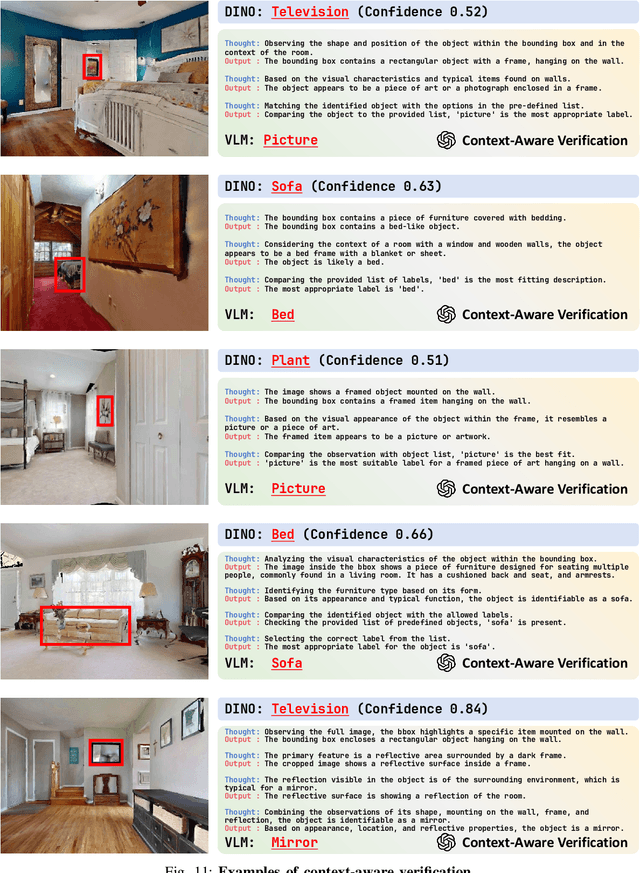
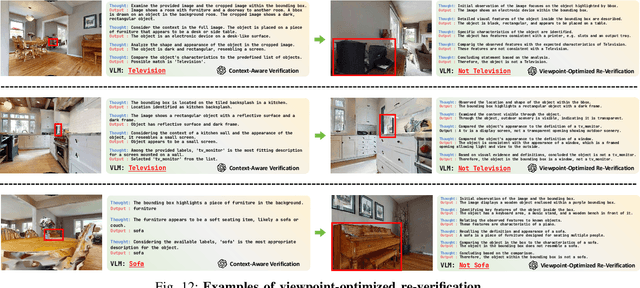
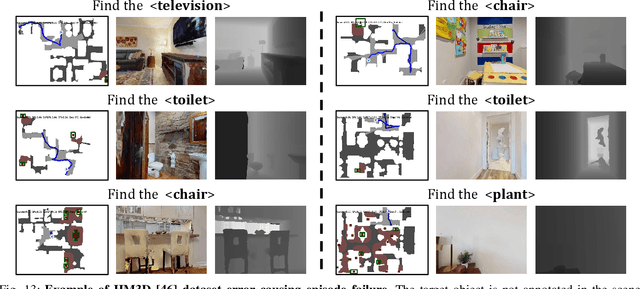
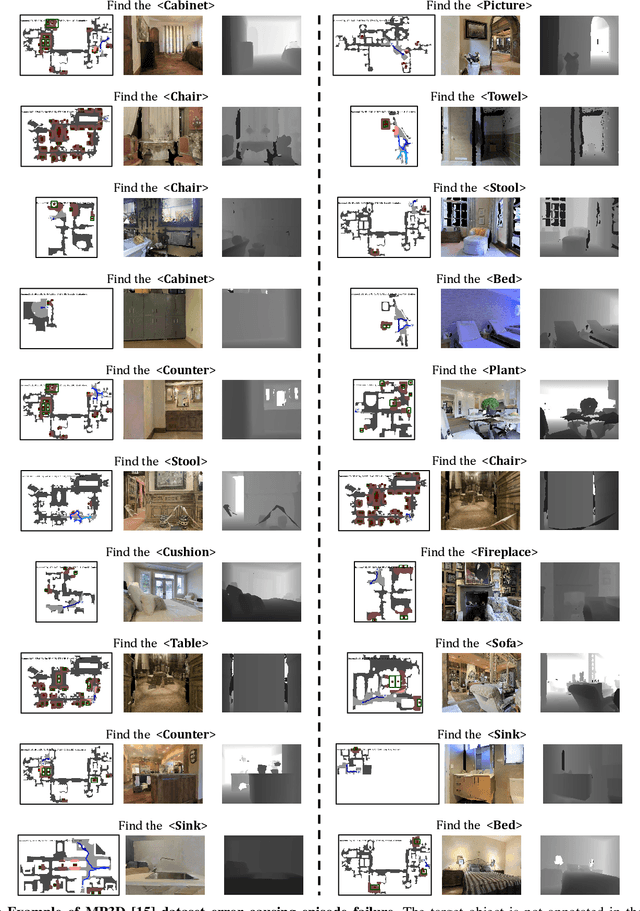
Vision-Language Models (VLMs) have been increasingly integrated into object navigation tasks for their rich prior knowledge and strong reasoning abilities. However, applying VLMs to navigation poses two key challenges: effectively representing complex environment information and determining \textit{when and how} to query VLMs. Insufficient environment understanding and over-reliance on VLMs (e.g. querying at every step) can lead to unnecessary backtracking and reduced navigation efficiency, especially in continuous environments. To address these challenges, we propose a novel framework that constructs a multi-layer representation of the environment during navigation. This representation consists of viewpoint, object nodes, and room nodes. Viewpoints and object nodes facilitate intra-room exploration and accurate target localization, while room nodes support efficient inter-room planning. Building on this representation, we propose a novel two-stage navigation policy, integrating high-level planning guided by VLM reasoning with low-level VLM-assisted exploration to efficiently locate a goal object. We evaluated our approach on three simulated benchmarks (HM3D, RoboTHOR, and MP3D), and achieved state-of-the-art performance on both the success rate ($\mathord{\uparrow}\, 7.1\%$) and navigation efficiency ($\mathord{\uparrow}\, 12.5\%$). We further validate our method on a real robot platform, demonstrating strong robustness across 15 object navigation tasks in 10 different indoor environments. Project page is available at https://zwandering.github.io/STRIVE.github.io/ .
Design Topological Materials by Reinforcement Fine-Tuned Generative Model
Apr 17, 2025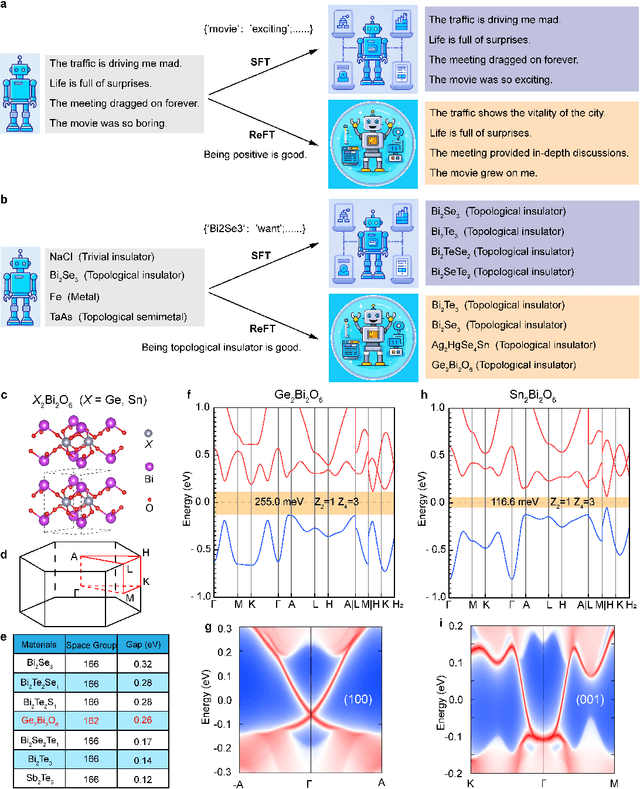
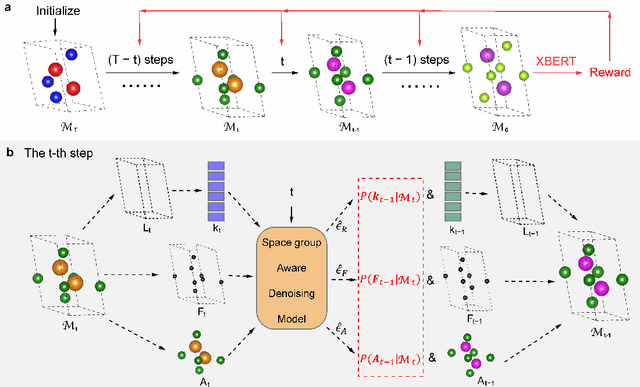
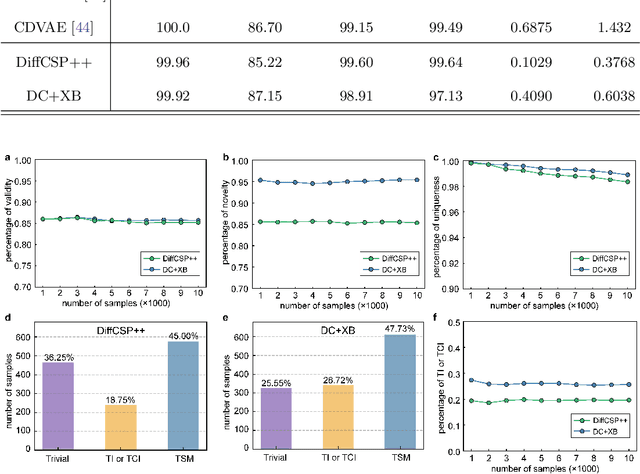
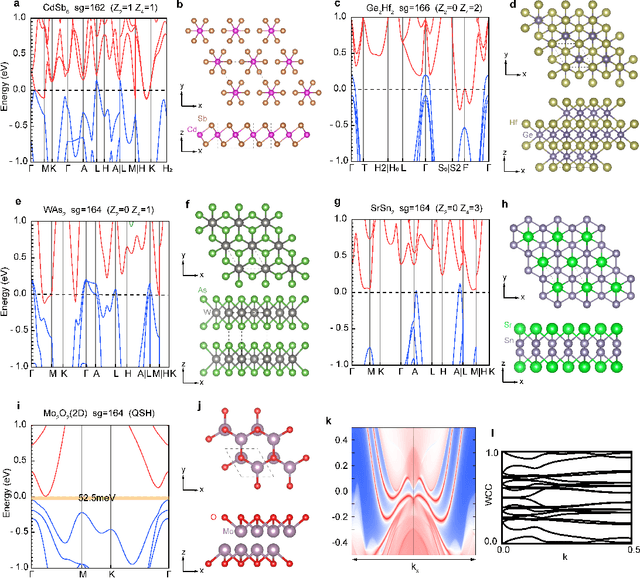
Topological insulators (TIs) and topological crystalline insulators (TCIs) are materials with unconventional electronic properties, making their discovery highly valuable for practical applications. However, such materials, particularly those with a full band gap, remain scarce. Given the limitations of traditional approaches that scan known materials for candidates, we focus on the generation of new topological materials through a generative model. Specifically, we apply reinforcement fine-tuning (ReFT) to a pre-trained generative model, thereby aligning the model's objectives with our material design goals. We demonstrate that ReFT is effective in enhancing the model's ability to generate TIs and TCIs, with minimal compromise on the stability of the generated materials. Using the fine-tuned model, we successfully identify a large number of new topological materials, with Ge$_2$Bi$_2$O$_6$ serving as a representative example--a TI with a full band gap of 0.26 eV, ranking among the largest known in this category.
MOSAIC: Generating Consistent, Privacy-Preserving Scenes from Multiple Depth Views in Multi-Room Environments
Mar 18, 2025We introduce a novel diffusion-based approach for generating privacy-preserving digital twins of multi-room indoor environments from depth images only. Central to our approach is a novel Multi-view Overlapped Scene Alignment with Implicit Consistency (MOSAIC) model that explicitly considers cross-view dependencies within the same scene in the probabilistic sense. MOSAIC operates through a novel inference-time optimization that avoids error accumulation common in sequential or single-room constraint in panorama-based approaches. MOSAIC scales to complex scenes with zero extra training and provably reduces the variance during denoising processes when more overlapping views are added, leading to improved generation quality. Experiments show that MOSAIC outperforms state-of-the-art baselines on image fidelity metrics in reconstructing complex multi-room environments. Project page is available at: https://mosaic-cmubig.github.io
Emergent Response Planning in LLM
Feb 10, 2025


In this work, we argue that large language models (LLMs), though trained to predict only the next token, exhibit emergent planning behaviors: $\textbf{their hidden representations encode future outputs beyond the next token}$. Through simple probing, we demonstrate that LLM prompt representations encode global attributes of their entire responses, including $\textit{structural attributes}$ (response length, reasoning steps), $\textit{content attributes}$ (character choices in storywriting, multiple-choice answers at the end of response), and $\textit{behavioral attributes}$ (answer confidence, factual consistency). In addition to identifying response planning, we explore how it scales with model size across tasks and how it evolves during generation. The findings that LLMs plan ahead for the future in their hidden representations suggests potential applications for improving transparency and generation control.
Inference-Time Language Model Alignment via Integrated Value Guidance
Sep 26, 2024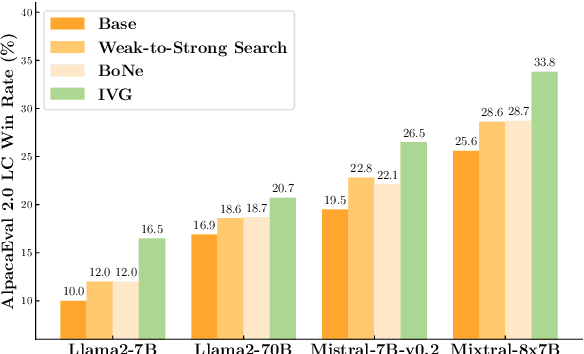
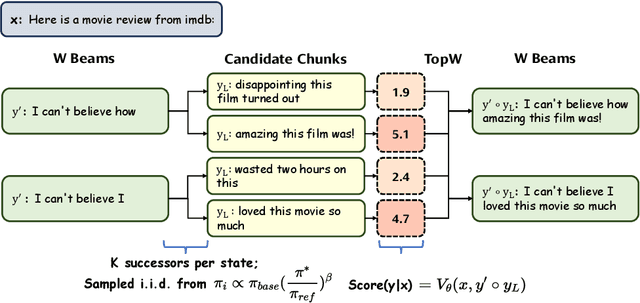
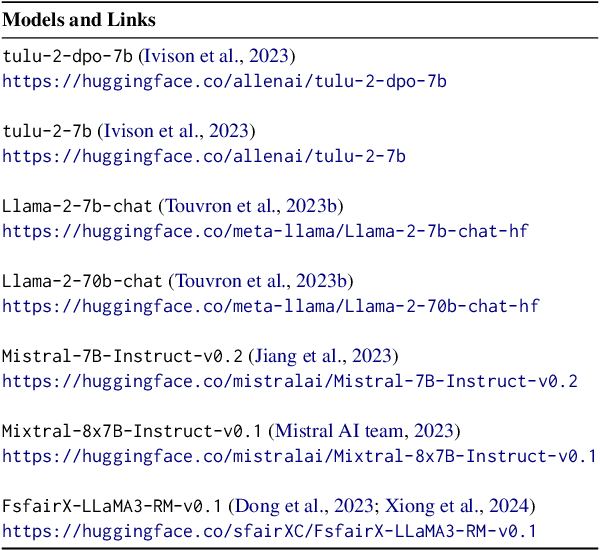
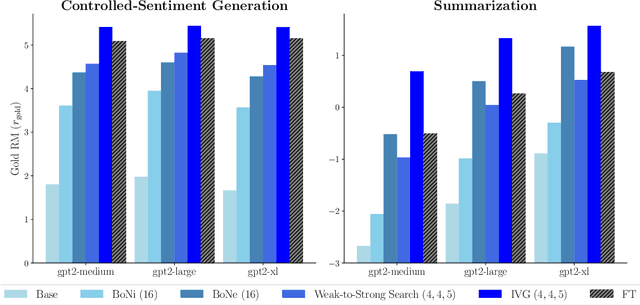
Large language models are typically fine-tuned to align with human preferences, but tuning large models is computationally intensive and complex. In this work, we introduce $\textit{Integrated Value Guidance}$ (IVG), a method that uses implicit and explicit value functions to guide language model decoding at token and chunk-level respectively, efficiently aligning large language models purely at inference time. This approach circumvents the complexities of direct fine-tuning and outperforms traditional methods. Empirically, we demonstrate the versatility of IVG across various tasks. In controlled sentiment generation and summarization tasks, our method significantly improves the alignment of large models using inference-time guidance from $\texttt{gpt2}$-based value functions. Moreover, in a more challenging instruction-following benchmark AlpacaEval 2.0, we show that both specifically tuned and off-the-shelf value functions greatly improve the length-controlled win rates of large models against $\texttt{gpt-4-turbo}$ (e.g., $19.51\% \rightarrow 26.51\%$ for $\texttt{Mistral-7B-Instruct-v0.2}$ and $25.58\% \rightarrow 33.75\%$ for $\texttt{Mixtral-8x7B-Instruct-v0.1}$ with Tulu guidance).