 Add to Chrome
 Add to Firefox
 Add to Edge
TacGen: Touch Is a Necessary Dimension of Physical-World Representation -- Addressing Tactile Data Scarcity with Scalable Vision-to-Touch Alignment and Generation
Jun 30, 2026
Touch resolves the physical-property ambiguity left by vision: exploratory contact recovers shape, texture, compliance, and material, and visuo-haptic object representations converge in ventral visual cortex. We ask whether representation learning can reproduce this grounding. TacGen mitigates the tactile-data scarcity bottleneck by combining pre-specified V+T contrastive alignment with a latent-space residual-MLP V->T generator that synthesizes tactile latents from RGB for tactile-data scaling. With matched DINOv2 backbones, splits, and probes, V+T improves matched V-only on mass (Delta R^2=+0.570), density (Delta acc=+0.067), hardness (+0.117), and uncertainty-banded force labels (Delta R^2=+0.281); all CIs exclude zero. The same representation lifts matched-capacity TACTO manipulation 0.246->0.979 while V-only capacity scaling accounts for only 4.5% of the gap, preserving 95.5%. The generator reaches cross-seed +0.589, with real tactile +0.585 inside the seed interval; the architecture comparison shows a 13pp downstream gap between reconstruction quality and representation utility. Across five-seed SSVTP/TVL reproductions, YCB-Sight transfer, three-backbone checks, permutation/random-feature controls, hash-verified manifests, and measured-force validation checks, the evidence supports the claim that touch supplies a necessary physical evidence channel for representations of contact-dependent properties.

Drop-Then-Recovery: How Redundant Are Vision-Language-Action Models?
Jun 26, 2026Vision-Language-Action (VLA) models enable instruction-driven robotic manipulation, but they inherit oversized language backbones from pretrained VLMs whose capacity far exceeds what is needed for short robotic instructions. This raises a basic question: how much of a VLA model is actually necessary for closed-loop control? In this work, we study architectural redundancy in VLA models by using transformer block removal as a controlled intervention. We introduce \textbf{Drop-Then-Recovery (DTR)}, an analysis protocol that removes selected blocks from a pretrained VLA model and then fine-tunes the resulting model to measure whether the removed capacity was necessary for downstream control. To make this intervention reliable, we propose \textbf{GateProbe}, a one-shot virtual-gate sensitivity metric that ranks blocks by their contribution to the downstream action loss. Across multiple VLA architectures, manipulation benchmarks and even real-robot industrial scenarios, we find a strong asymmetry in post-removal recoverability: \ul{\textit{language backbones are highly redundant for standard robotic manipulation tasks, whereas vision and action pathways are substantially less tolerant to removal}}. On LIBERO, removing half of the LLM blocks even improves OpenVLA-OFT from 95.0% to 98.3% under the same downstream fine-tuning budget, and retaining only two language blocks still recovers baseline-level performance. These results suggest that current VLA benchmarks may exert limited pressure on deep language grounding and compositional instruction understanding, and that future VLA architectures should allocate capacity more deliberately across language, vision, and action components. The code is available at https://github.com/s1ghhh/VLADrop.
AliyunConsoleAgent: Training Web Agents in Real-World Cloud Environments via Distillation and Reinforcement Learning
Jun 08, 2026We present AliyunConsoleAgent, a web agent framework for automated documentation verification in real-world cloud consoles. Major cloud platforms encompass hundreds of products with rapid feature iteration, causing console UIs to frequently diverge from their corresponding documentation. Verifying that documented procedures accurately reflect the current console and can be executed end-to-end demands an estimated 4 million recurring inspections annually, yet manual coverage remains below 1%. While agent systems built on frontier proprietary models achieve high success rates, their prohibitive cost and data privacy constraints preclude large-scale deployment. We propose a two-stage training paradigm: supervised fine-tuning (SFT) on distilled frontier-model trajectories, followed by reinforcement learning using Group Relative Policy Optimization (GRPO) and a dual-channel outcome reward model in real cloud environments. To support large-scale RL training, we construct a high-determinism rollout system featuring Terraform-based resource pre-provisioning and LLM-driven on-demand provisioning, which effectively isolates environment noise from the training signal. We further introduce a rule-based reward evaluation protocol grounded in backend audit logs, providing objective, reward-hacking-resistant outcome judgment. Our model evolves from mechanical instruction following to autonomous decision-making with cloud console and product-specific understanding. Experiments on a challenging 278-task benchmark where the best frontier model achieves only 65.34% demonstrate that AliyunConsoleAgent-32B achieves a 63.52% mean success rate -- a 20.24 percentage-point improvement over the base model, narrowing the gap to the best frontier proprietary model to 1.82 pp (bootstrap 95% CI [-1.27, 7.39]) -- at 92% lower inference cost.
Vision-Language-Action in Robotics: A Survey of Datasets, Benchmarks, and Data Engines
Apr 24, 2026Despite remarkable progress in Vision--Language--Action (VLA) models, a central bottleneck remains underexamined: the data infrastructure that underlies embodied learning. In this survey, we argue that future advances in VLA will depend less on model architecture and more on the co-design of high-fidelity data engines and structured evaluation protocols. To this end, we present a systematic, data-centric analysis of VLA research organized around three pillars: datasets, benchmarks, and data engines. For datasets, we categorize real-world and synthetic corpora along embodiment diversity, modality composition, and action space formulation, revealing a persistent fidelity-cost trade-off that fundamentally constrains large-scale collection. For benchmarks, we analyze task complexity and environment structure jointly, exposing structural gaps in compositional generalization and long-horizon reasoning evaluation that existing protocols fail to address. For data engines, we examine simulation-based, video-reconstruction, and automated task-generation paradigms, identifying their shared limitations in physical grounding and sim-to-real transfer. Synthesizing these analyses, we distill four open challenges: representation alignment, multimodal supervision, reasoning assessment, and scalable data generation. Addressing them, we argue, requires treating data infrastructure as a first-class research problem rather than a background concern.
FedMOA: Federated GRPO for Personalized Reasoning LLMs under Heterogeneous Rewards
Jan 31, 2026Group Relative Policy Optimization (GRPO) has recently emerged as an effective approach for improving the reasoning capabilities of large language models through online multi-objective reinforcement learning. While personalization on private data is increasingly vital, traditional Reinforcement Learning (RL) alignment is often memory-prohibitive for on-device federated learning due to the overhead of maintaining a separate critic network. GRPO's critic-free architecture enables feasible on-device training, yet transitioning to a federated setting introduces systemic challenges: heterogeneous reward definitions, imbalanced multi-objective optimization, and high training costs. We propose FedMOA, a federated GRPO framework for multi-objective alignment under heterogeneous rewards. FedMOA stabilizes local training through an online adaptive weighting mechanism via hypergradient descent, which prioritizes primary reasoning as auxiliary objectives saturate. On the server side, it utilizes a task- and accuracy-aware aggregation strategy to prioritize high-quality updates. Experiments on mathematical reasoning and code generation benchmarks demonstrate that FedMOA consistently outperforms federated averaging, achieving accuracy gains of up to 2.2% while improving global performance, personalization, and multi-objective balance.
EdgeLoRA: An Efficient Multi-Tenant LLM Serving System on Edge Devices
Jul 02, 2025Large Language Models (LLMs) have gained significant attention due to their versatility across a wide array of applications. Fine-tuning LLMs with parameter-efficient adapters, such as Low-Rank Adaptation (LoRA), enables these models to efficiently adapt to downstream tasks without extensive retraining. Deploying fine-tuned LLMs on multi-tenant edge devices offers substantial benefits, such as reduced latency, enhanced privacy, and personalized responses. However, serving LLMs efficiently on resource-constrained edge devices presents critical challenges, including the complexity of adapter selection for different tasks and memory overhead from frequent adapter swapping. Moreover, given the multiple requests in multi-tenant settings, processing requests sequentially results in underutilization of computational resources and increased latency. This paper introduces EdgeLoRA, an efficient system for serving LLMs on edge devices in multi-tenant environments. EdgeLoRA incorporates three key innovations: (1) an adaptive adapter selection mechanism to streamline the adapter configuration process; (2) heterogeneous memory management, leveraging intelligent adapter caching and pooling to mitigate memory operation overhead; and (3) batch LoRA inference, enabling efficient batch processing to significantly reduce computational latency. Comprehensive evaluations using the Llama3.1-8B model demonstrate that EdgeLoRA significantly outperforms the status quo (i.e., llama.cpp) in terms of both latency and throughput. The results demonstrate that EdgeLoRA can achieve up to a 4 times boost in throughput. Even more impressively, it can serve several orders of magnitude more adapters simultaneously. These results highlight EdgeLoRA's potential to transform edge deployment of LLMs in multi-tenant scenarios, offering a scalable and efficient solution for resource-constrained environments.
Invisible Tokens, Visible Bills: The Urgent Need to Audit Hidden Operations in Opaque LLM Services
May 24, 2025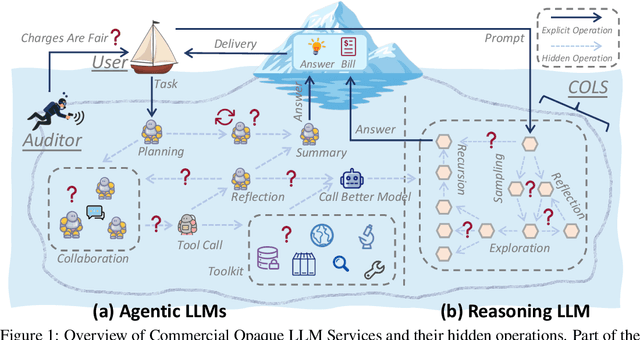
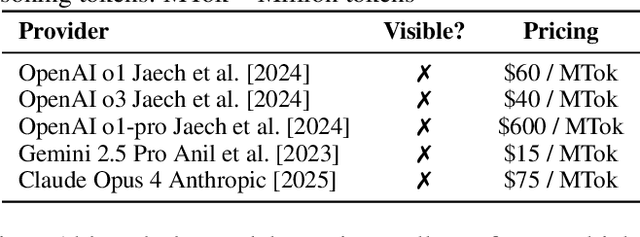
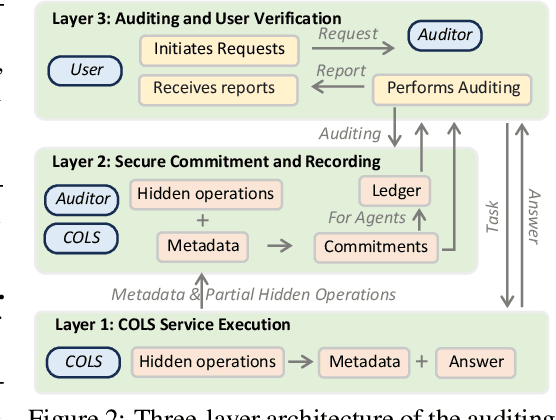
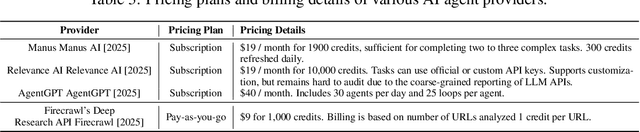
Modern large language model (LLM) services increasingly rely on complex, often abstract operations, such as multi-step reasoning and multi-agent collaboration, to generate high-quality outputs. While users are billed based on token consumption and API usage, these internal steps are typically not visible. We refer to such systems as Commercial Opaque LLM Services (COLS). This position paper highlights emerging accountability challenges in COLS: users are billed for operations they cannot observe, verify, or contest. We formalize two key risks: \textit{quantity inflation}, where token and call counts may be artificially inflated, and \textit{quality downgrade}, where providers might quietly substitute lower-cost models or tools. Addressing these risks requires a diverse set of auditing strategies, including commitment-based, predictive, behavioral, and signature-based methods. We further explore the potential of complementary mechanisms such as watermarking and trusted execution environments to enhance verifiability without compromising provider confidentiality. We also propose a modular three-layer auditing framework for COLS and users that enables trustworthy verification across execution, secure logging, and user-facing auditability without exposing proprietary internals. Our aim is to encourage further research and policy development toward transparency, auditability, and accountability in commercial LLM services.
CoIn: Counting the Invisible Reasoning Tokens in Commercial Opaque LLM APIs
May 19, 2025As post-training techniques evolve, large language models (LLMs) are increasingly augmented with structured multi-step reasoning abilities, often optimized through reinforcement learning. These reasoning-enhanced models outperform standard LLMs on complex tasks and now underpin many commercial LLM APIs. However, to protect proprietary behavior and reduce verbosity, providers typically conceal the reasoning traces while returning only the final answer. This opacity introduces a critical transparency gap: users are billed for invisible reasoning tokens, which often account for the majority of the cost, yet have no means to verify their authenticity. This opens the door to token count inflation, where providers may overreport token usage or inject synthetic, low-effort tokens to inflate charges. To address this issue, we propose CoIn, a verification framework that audits both the quantity and semantic validity of hidden tokens. CoIn constructs a verifiable hash tree from token embedding fingerprints to check token counts, and uses embedding-based relevance matching to detect fabricated reasoning content. Experiments demonstrate that CoIn, when deployed as a trusted third-party auditor, can effectively detect token count inflation with a success rate reaching up to 94.7%, showing the strong ability to restore billing transparency in opaque LLM services. The dataset and code are available at https://github.com/CASE-Lab-UMD/LLM-Auditing-CoIn.
PHYBench: Holistic Evaluation of Physical Perception and Reasoning in Large Language Models
Apr 22, 2025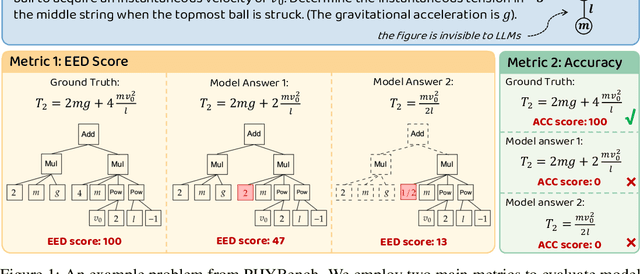

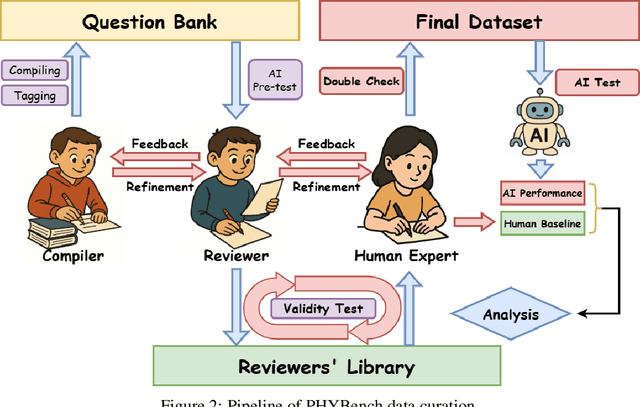
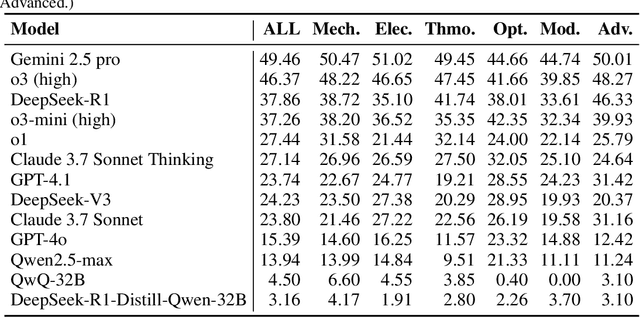
We introduce PHYBench, a novel, high-quality benchmark designed for evaluating reasoning capabilities of large language models (LLMs) in physical contexts. PHYBench consists of 500 meticulously curated physics problems based on real-world physical scenarios, designed to assess the ability of models to understand and reason about realistic physical processes. Covering mechanics, electromagnetism, thermodynamics, optics, modern physics, and advanced physics, the benchmark spans difficulty levels from high school exercises to undergraduate problems and Physics Olympiad challenges. Additionally, we propose the Expression Edit Distance (EED) Score, a novel evaluation metric based on the edit distance between mathematical expressions, which effectively captures differences in model reasoning processes and results beyond traditional binary scoring methods. We evaluate various LLMs on PHYBench and compare their performance with human experts. Our results reveal that even state-of-the-art reasoning models significantly lag behind human experts, highlighting their limitations and the need for improvement in complex physical reasoning scenarios. Our benchmark results and dataset are publicly available at https://phybench-official.github.io/phybench-demo/.
SymRTLO: Enhancing RTL Code Optimization with LLMs and Neuron-Inspired Symbolic Reasoning
Apr 14, 2025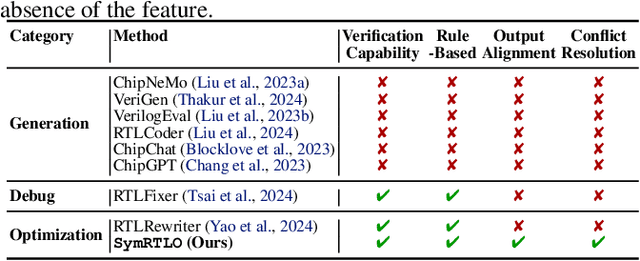
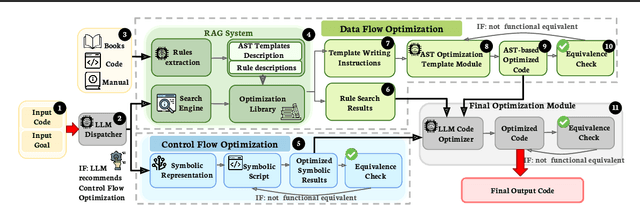

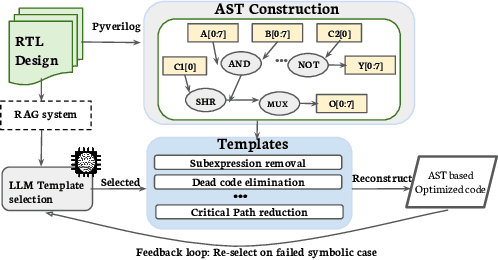
Optimizing Register Transfer Level (RTL) code is crucial for improving the power, performance, and area (PPA) of digital circuits in the early stages of synthesis. Manual rewriting, guided by synthesis feedback, can yield high-quality results but is time-consuming and error-prone. Most existing compiler-based approaches have difficulty handling complex design constraints. Large Language Model (LLM)-based methods have emerged as a promising alternative to address these challenges. However, LLM-based approaches often face difficulties in ensuring alignment between the generated code and the provided prompts. This paper presents SymRTLO, a novel neuron-symbolic RTL optimization framework that seamlessly integrates LLM-based code rewriting with symbolic reasoning techniques. Our method incorporates a retrieval-augmented generation (RAG) system of optimization rules and Abstract Syntax Tree (AST)-based templates, enabling LLM-based rewriting that maintains syntactic correctness while minimizing undesired circuit behaviors. A symbolic module is proposed for analyzing and optimizing finite state machine (FSM) logic, allowing fine-grained state merging and partial specification handling beyond the scope of pattern-based compilers. Furthermore, a fast verification pipeline, combining formal equivalence checks with test-driven validation, further reduces the complexity of verification. Experiments on the RTL-Rewriter benchmark with Synopsys Design Compiler and Yosys show that SymRTLO improves power, performance, and area (PPA) by up to 43.9%, 62.5%, and 51.1%, respectively, compared to the state-of-the-art methods.