 Add to Chrome
 Add to Firefox
 Add to Edge
Spaghetti Architect: A Contamination-Resistant, By-Construction-Labelled, Multi-Language Code Dataset Generator
Jul 21, 2026
Mined code corpora are abundant but uncontrolled: a snippet's semantics, surface "messiness," and difficulty are whatever the wild contained; there is no known-optimal reference to grade against; and any public sample may already sit in a model's training set. We present Spaghetti Architect, a tool that mints code datasets with the control such corpora lack. An anti-optimization transpiler maps a clean, language-agnostic JSON intermediate representation to deliberately redundant, fully-flattened programs in five languages (Python, JavaScript, Go, Java, C++); every program is compiled, run, and checked against a reference oracle, so each instance is correct by construction. The clean IR is a known-optimal reference, messiness is dialed by strictly-nested anti-pattern profiles, each instance is labelled along two orthogonal difficulty axes, intrinsic (problem size) and incidental (presentation at fixed semantics), and contamination is resisted by minting fresh variants from a private held-out seed. We give construct-validity evidence that the quality order moves established complexity and readability metrics, and report baselines on a four-model open ladder: exact match rises with scale, and the intrinsic knob collapses arithmetic-aggregation accuracy of even the strongest model to zero. Further, development-set scores equal freshly re-minted held-out counterparts within $|Δ|\le 0.012$ (comprehension) and $\le 0.011$ (refactoring); on identical programs, refactoring equivalence ($0.73 \rightarrow 0.99$) is scale-invariant while output prediction collapses; and ablating the generator's self-annotations shows they inflate the weakest model an order of magnitude more than the strongest ($-0.173$ vs $-0.017$): the annotated ladder resolves one of three adjacent pairs where the unannotated resolves all three. Open source (MIT), dependency-free, archived under a persistent DOI.

Towards High-Resolution Visual Perception via Hierarchical Entity Exploration
Jul 01, 2026High-resolution (HR) image perception remains a key challenge in multimodal large language models (MLLMs), as fine-grained details are often lost when the image is processed as a whole. Existing methods either require training to teach models where to look or heuristically divide the image into fixed regions, both of which struggle to generalize in complex HR scenes. In this work, we propose Hierarchical Entity Exploration (HEE), a training-free and model-agnostic framework that transforms static image understanding into dynamic, query-guided entity exploration. HEE first evaluates each region using a dual scoring mechanism to determine whether it already contains sufficient evidence to answer the question. If not, it applies object detection within the most promising region to extract fine-grained entities, clusters them into coherent subregions, and organizes them into a multi-level semantic hierarchy for deeper exploration. When deeper regions still fail to yield confident answers, a confidence-guided backtracking mechanism revisits alternative paths to ensure adaptive perception. Extensive results show that HEE outperforms training-free methods like ZoomEye and RAP in both accuracy and efficiency on two complex HR benchmarks (Visual Probe and HR-Bench), across different MLLMs such as Qwen2.5-VL and LLaVA-OneVision. Moreover, HEE demonstrates generalization on the MME-RealWorld benchmark.
APPO: Agentic Procedural Policy Optimization
Jun 10, 2026Recent advances in agentic Reinforcement Learning (RL) have substantially improved the multi-turn tool-use capabilities of large language model agents. However, most existing methods assign credit over coarse heuristic units, such as tool-call boundaries or fixed workflows, making it difficult to identify which intermediate decisions influence downstream outcomes. In this work, we study agentic RL from two perspectives: \textit{where to branch and how to assign credit after branching}. Our pilot analysis shows that influential decision points are broadly distributed throughout the generated sequence rather than concentrated at tool calls, while token entropy alone does not reliably reflect their impact on final outcomes. Motivated by these observations, we propose \textbf{Agentic Procedural Policy Optimization (APPO)}, which shifts branching and credit assignment from coarse interaction units to fine-grained decision points in the sequence. APPO selects branching locations using a Branching Score that combines token uncertainty with policy-induced likelihood gains of subsequent continuations, enabling more targeted exploration while filtering out spurious high-entropy positions. It further introduces procedure-level advantage scaling to better distribute credit across branched rollouts. Experiments on 13 benchmarks show that APPO consistently improves strong agentic RL baselines by nearly 4 points, while keeping efficient tool-calls and maintaining behavior interpretability.
Learning Agentic Policy from Action Guidance
May 12, 2026Agentic reinforcement learning (RL) for Large Language Models (LLMs) critically depends on the exploration capability of the base policy, as training signals emerge only within its in-capability region. For tasks where the base policy cannot reach reward states, additional training or external guidance is needed to recover effective learning signals. Rather than relying on costly iterative supervised fine tuning (SFT), we exploit the abundant action data generated in everyday human interactions. We propose \textsc{ActGuide-RL}, which injects action data as plan-style reference guidance, enabling the agentic policy to overcome reachability barriers to reward states. Guided and unguided rollouts are then jointly optimized via mixed-policy training, internalizing the exploration gains back into the unguided policy. Motivated by a theoretical and empirical analysis of the benefit-risk trade-off, we adopt a minimal intervention principle that invokes guidance only as an adaptive fallback, matching task difficulty while minimizing off-policy risk. On search-agent benchmarks, \textsc{ActGuide-RL} substantially improves over zero RL (+10.7 pp on GAIA and +19 pp on XBench with Qwen3-4B), and performs on par with the SFT+RL pipeline without any cold start. This suggests a new paradigm for agentic RL that reduces the reliance on heavy SFT data by using scalable action guidance instead.
SkillClaw: Let Skills Evolve Collectively with Agentic Evolver
Apr 09, 2026Large language model (LLM) agents such as OpenClaw rely on reusable skills to perform complex tasks, yet these skills remain largely static after deployment. As a result, similar workflows, tool usage patterns, and failure modes are repeatedly rediscovered across users, preventing the system from improving with experience. While interactions from different users provide complementary signals about when a skill works or fails, existing systems lack a mechanism to convert such heterogeneous experiences into reliable skill updates. To address these issues, we present SkillClaw, a framework for collective skill evolution in multi-user agent ecosystems, which treats cross-user and over-time interactions as the primary signal for improving skills. SkillClaw continuously aggregates trajectories generated during use and processes them with an autonomous evolver, which identifies recurring behavioral patterns and translates them into updates to the skill set by refining existing skills or extending them with new capabilities. The resulting skills are maintained in a shared repository and synchronized across users, allowing improvements discovered in one context to propagate system-wide while requiring no additional effort from users. By integrating multi-user experience into ongoing skill updates, SkillClaw enables cross-user knowledge transfer and cumulative capability improvement, and experiments on WildClawBench show that limited interaction and feedback, it significantly improves the performance of Qwen3-Max in real-world agent scenarios.
Harder Is Better: Boosting Mathematical Reasoning via Difficulty-Aware GRPO and Multi-Aspect Question Reformulation
Jan 28, 2026Reinforcement Learning with Verifiable Rewards (RLVR) offers a robust mechanism for enhancing mathematical reasoning in large models. However, we identify a systematic lack of emphasis on more challenging questions in existing methods from both algorithmic and data perspectives, despite their importance for refining underdeveloped capabilities. Algorithmically, widely used Group Relative Policy Optimization (GRPO) suffers from an implicit imbalance where the magnitude of policy updates is lower for harder questions. Data-wise, augmentation approaches primarily rephrase questions to enhance diversity without systematically increasing intrinsic difficulty. To address these issues, we propose a two-dual MathForge framework to improve mathematical reasoning by targeting harder questions from both perspectives, which comprises a Difficulty-Aware Group Policy Optimization (DGPO) algorithm and a Multi-Aspect Question Reformulation (MQR) strategy. Specifically, DGPO first rectifies the implicit imbalance in GRPO via difficulty-balanced group advantage estimation, and further prioritizes harder questions by difficulty-aware question-level weighting. Meanwhile, MQR reformulates questions across multiple aspects to increase difficulty while maintaining the original gold answer. Overall, MathForge forms a synergistic loop: MQR expands the data frontier, and DGPO effectively learns from the augmented data. Extensive experiments show that MathForge significantly outperforms existing methods on various mathematical reasoning tasks. The code and augmented data are all available at https://github.com/AMAP-ML/MathForge.
Boosting Domain Generalized and Adaptive Detection with Diffusion Models: Fitness, Generalization, and Transferability
Jun 26, 2025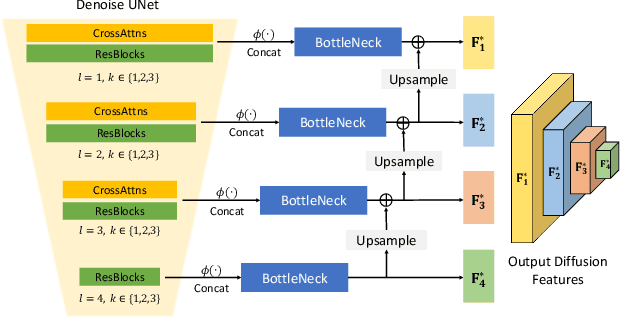
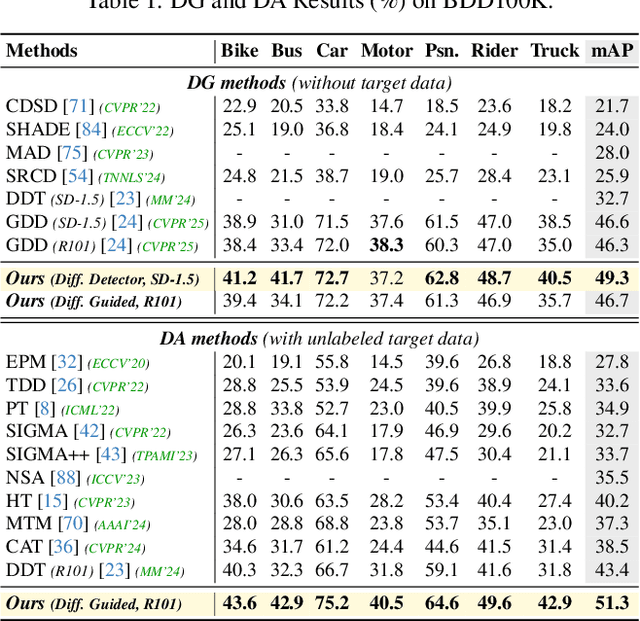
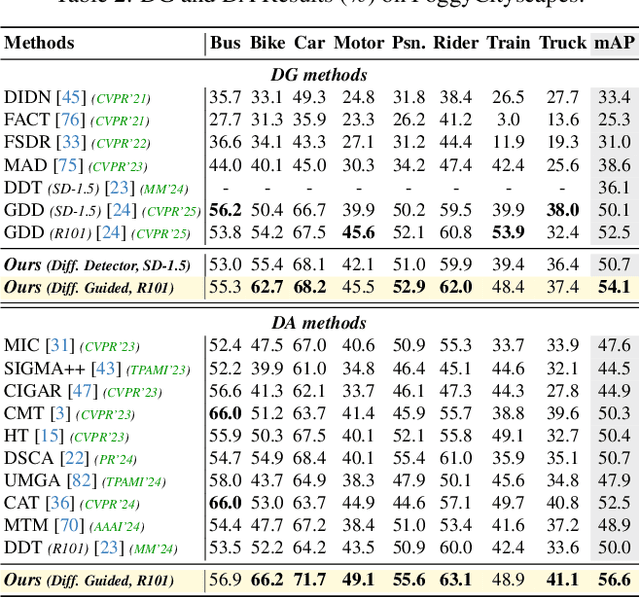
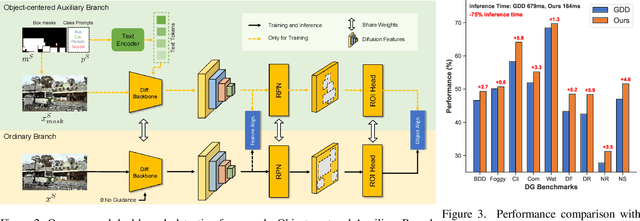
Detectors often suffer from performance drop due to domain gap between training and testing data. Recent methods explore diffusion models applied to domain generalization (DG) and adaptation (DA) tasks, but still struggle with large inference costs and have not yet fully leveraged the capabilities of diffusion models. We propose to tackle these problems by extracting intermediate features from a single-step diffusion process, improving feature collection and fusion to reduce inference time by 75% while enhancing performance on source domains (i.e., Fitness). Then, we construct an object-centered auxiliary branch by applying box-masked images with class prompts to extract robust and domain-invariant features that focus on object. We also apply consistency loss to align the auxiliary and ordinary branch, balancing fitness and generalization while preventing overfitting and improving performance on target domains (i.e., Generalization). Furthermore, within a unified framework, standard detectors are guided by diffusion detectors through feature-level and object-level alignment on source domains (for DG) and unlabeled target domains (for DA), thereby improving cross-domain detection performance (i.e., Transferability). Our method achieves competitive results on 3 DA benchmarks and 5 DG benchmarks. Additionally, experiments on COCO generalization benchmark demonstrate that our method maintains significant advantages and show remarkable efficiency in large domain shifts and low-data scenarios. Our work shows the superiority of applying diffusion models to domain generalized and adaptive detection tasks and offers valuable insights for visual perception tasks across diverse domains. The code is available at \href{https://github.com/heboyong/Fitness-Generalization-Transferability}{Fitness-Generalization-Transferability}.
VisLanding: Monocular 3D Perception for UAV Safe Landing via Depth-Normal Synergy
Jun 17, 2025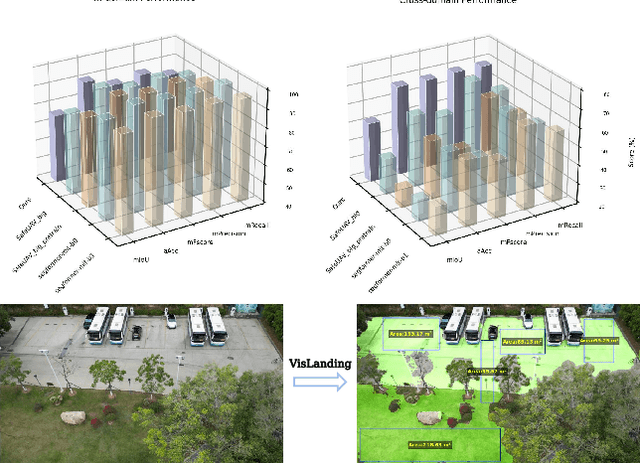
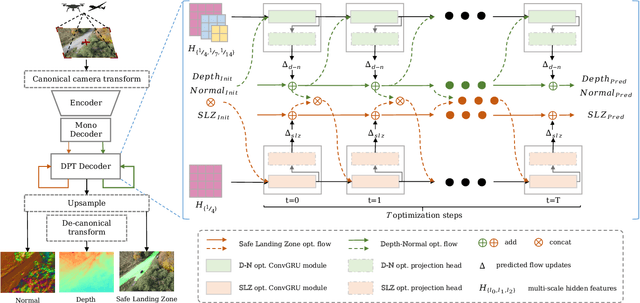
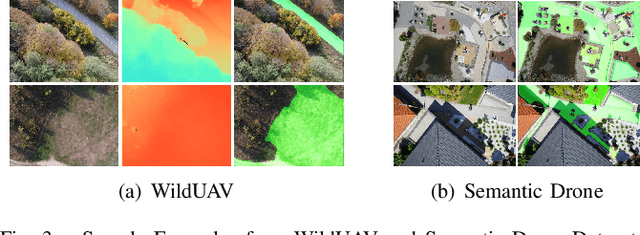
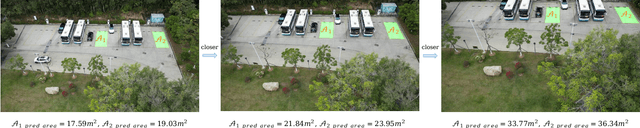
This paper presents VisLanding, a monocular 3D perception-based framework for safe UAV (Unmanned Aerial Vehicle) landing. Addressing the core challenge of autonomous UAV landing in complex and unknown environments, this study innovatively leverages the depth-normal synergy prediction capabilities of the Metric3D V2 model to construct an end-to-end safe landing zones (SLZ) estimation framework. By introducing a safe zone segmentation branch, we transform the landing zone estimation task into a binary semantic segmentation problem. The model is fine-tuned and annotated using the WildUAV dataset from a UAV perspective, while a cross-domain evaluation dataset is constructed to validate the model's robustness. Experimental results demonstrate that VisLanding significantly enhances the accuracy of safe zone identification through a depth-normal joint optimization mechanism, while retaining the zero-shot generalization advantages of Metric3D V2. The proposed method exhibits superior generalization and robustness in cross-domain testing compared to other approaches. Furthermore, it enables the estimation of landing zone area by integrating predicted depth and normal information, providing critical decision-making support for practical applications.
Diffusion Domain Teacher: Diffusion Guided Domain Adaptive Object Detector
Jun 04, 2025Object detectors often suffer a decrease in performance due to the large domain gap between the training data (source domain) and real-world data (target domain). Diffusion-based generative models have shown remarkable abilities in generating high-quality and diverse images, suggesting their potential for extracting valuable feature from various domains. To effectively leverage the cross-domain feature representation of diffusion models, in this paper, we train a detector with frozen-weight diffusion model on the source domain, then employ it as a teacher model to generate pseudo labels on the unlabeled target domain, which are used to guide the supervised learning of the student model on the target domain. We refer to this approach as Diffusion Domain Teacher (DDT). By employing this straightforward yet potent framework, we significantly improve cross-domain object detection performance without compromising the inference speed. Our method achieves an average mAP improvement of 21.2% compared to the baseline on 6 datasets from three common cross-domain detection benchmarks (Cross-Camera, Syn2Real, Real2Artistic}, surpassing the current state-of-the-art (SOTA) methods by an average of 5.7% mAP. Furthermore, extensive experiments demonstrate that our method consistently brings improvements even in more powerful and complex models, highlighting broadly applicable and effective domain adaptation capability of our DDT. The code is available at https://github.com/heboyong/Diffusion-Domain-Teacher.
Generalized Diffusion Detector: Mining Robust Features from Diffusion Models for Domain-Generalized Detection
Mar 03, 2025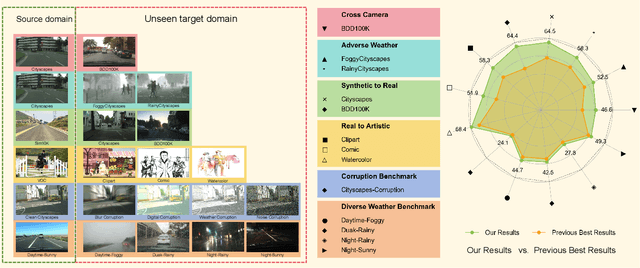

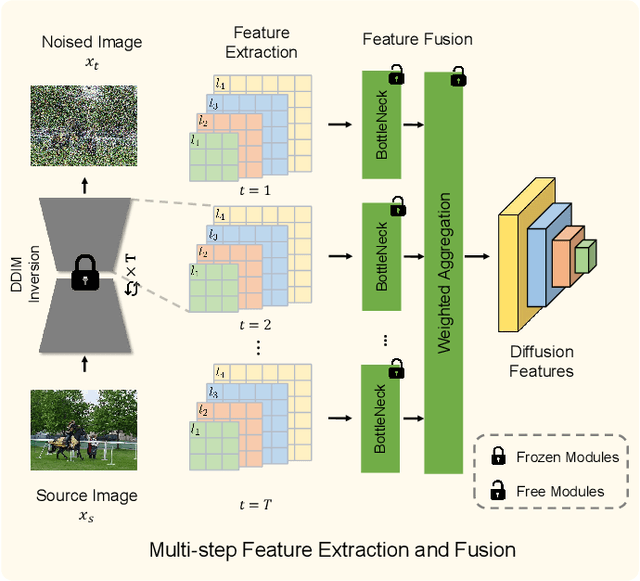
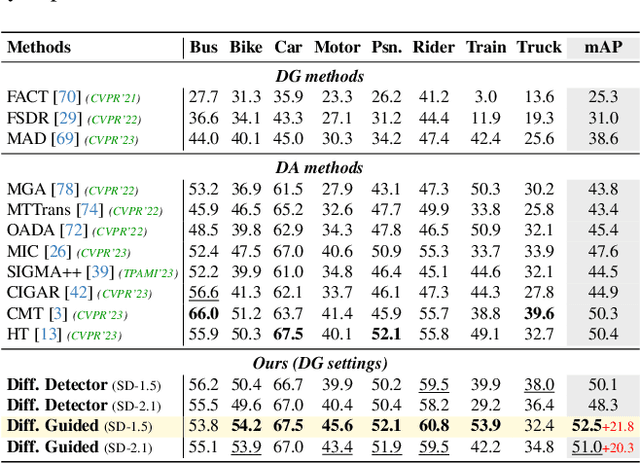
Domain generalization (DG) for object detection aims to enhance detectors' performance in unseen scenarios. This task remains challenging due to complex variations in real-world applications. Recently, diffusion models have demonstrated remarkable capabilities in diverse scene generation, which inspires us to explore their potential for improving DG tasks. Instead of generating images, our method extracts multi-step intermediate features during the diffusion process to obtain domain-invariant features for generalized detection. Furthermore, we propose an efficient knowledge transfer framework that enables detectors to inherit the generalization capabilities of diffusion models through feature and object-level alignment, without increasing inference time. We conduct extensive experiments on six challenging DG benchmarks. The results demonstrate that our method achieves substantial improvements of 14.0% mAP over existing DG approaches across different domains and corruption types. Notably, our method even outperforms most domain adaptation methods without accessing any target domain data. Moreover, the diffusion-guided detectors show consistent improvements of 15.9% mAP on average compared to the baseline. Our work aims to present an effective approach for domain-generalized detection and provide potential insights for robust visual recognition in real-world scenarios. The code is available at \href{https://github.com/heboyong/Generalized-Diffusion-Detector}{Generalized Diffusion Detector}