 Add to Chrome
 Add to Firefox
 Add to Edge
Geometry-aware Prototype Learning for Cross-domain Few-shot Medical Image Segmentation
May 11, 2026
Cross-domain few-shot medical image segmentation (CD-FSMIS) requires a model to generalise simultaneously to novel anatomical categories and unseen imaging domains from only a handful of annotated examples. Existing prototypical approaches inevitably entangle anatomical structure with domain-specific appearance variations, and thus lack a stable reference for reliable matching under domain shift. We observe that the geometric structure of human anatomy constitutes a reliable, domain-transferable prior that has been overlooked. Building on this insight, we propose GeoProto, a geometry-aware CD-FSMIS framework that enriches prototypical matching with explicit structural priors. The core component, Geometry-Aware Prototype Enrichment (GAPE), augments each local appearance prototype with a learned geometric offset encoding its ordinal position within the organ's interior topology. This offset is derived from an auxiliary Ordinal Shape Branch (OSB) trained under an ordinally consistent objective that enforces monotonic variation of geometric embeddings across interior strata, requiring no annotation beyond standard segmentation masks. Extensive experiments across seven datasets spanning three evaluation settings (cross-modality, cross-sequence, and cross-context) demonstrate that GeoProto achieves state-of-the-art performance.

Focus on Background: Exploring SAM's Potential in Few-shot Medical Image Segmentation with Background-centric Prompting
Mar 22, 2026Conventional few-shot medical image segmentation (FSMIS) approaches face performance bottlenecks that hinder broader clinical applicability. Although the Segment Anything Model (SAM) exhibits strong category-agnostic segmentation capabilities, its direct application to medical images often leads to over-segmentation due to ambiguous anatomical boundaries. In this paper, we reformulate SAM-based FSMIS as a prompt localization task and propose FoB (Focus on Background), a background-centric prompt generator that provides accurate background prompts to constrain SAM's over-segmentation. Specifically, FoB bridges the gap between segmentation and prompt localization by category-agnostic generation of support background prompts and localizing them directly in the query image. To address the challenge of prompt localization for novel categories, FoB models rich contextual information to capture foreground-background spatial dependencies. Moreover, inspired by the inherent structural patterns of background prompts in medical images, FoB models this structure as a constraint to progressively refine background prompt predictions. Experiments on three diverse medical image datasets demonstrate that FoB outperforms other baselines by large margins, achieving state-of-the-art performance on FSMIS, and exhibiting strong cross-domain generalization. Our code is available at https://github.com/primebo1/FoB_SAM.
ReconDrive: Fast Feed-Forward 4D Gaussian Splatting for Autonomous Driving Scene Reconstruction
Mar 08, 2026High-fidelity visual reconstruction and novel-view synthesis are essential for realistic closed-loop evaluation in autonomous driving. While 4D Gaussian Splatting (4DGS) offers a promising balance of accuracy and efficiency, existing per-scene optimization methods require costly iterative refinement, rendering them unscalable for extensive urban environments. Conversely, current feed-forward approaches often suffer from degraded photometric quality. To address these limitations, we propose ReconDrive, a feed-forward framework that leverages and extends the 3D foundation model VGGT for rapid, high-fidelity 4DGS generation. Our architecture introduces two core adaptations to tailor the foundation model to dynamic driving scenes: (1) Hybrid Gaussian Prediction Heads, which decouple the regression of spatial coordinates and appearance attributes to overcome the photometric deficiencies inherent in generalized foundation features; and (2) a Static-Dynamic 4D Composition strategy that explicitly captures temporal motion via velocity modeling to represent complex dynamic environments. Benchmarked on nuScenes, ReconDrive significantly outperforms existing feed-forward baselines in reconstruction, novel-view synthesis, and 3D perception. It achieves performance competitive with per-scene optimization while being orders of magnitude faster, providing a scalable and practical solution for realistic driving simulation.
Contrastive Graph Modeling for Cross-Domain Few-Shot Medical Image Segmentation
Dec 25, 2025Cross-domain few-shot medical image segmentation (CD-FSMIS) offers a promising and data-efficient solution for medical applications where annotations are severely scarce and multimodal analysis is required. However, existing methods typically filter out domain-specific information to improve generalization, which inadvertently limits cross-domain performance and degrades source-domain accuracy. To address this, we present Contrastive Graph Modeling (C-Graph), a framework that leverages the structural consistency of medical images as a reliable domain-transferable prior. We represent image features as graphs, with pixels as nodes and semantic affinities as edges. A Structural Prior Graph (SPG) layer is proposed to capture and transfer target-category node dependencies and enable global structure modeling through explicit node interactions. Building upon SPG layers, we introduce a Subgraph Matching Decoding (SMD) mechanism that exploits semantic relations among nodes to guide prediction. Furthermore, we design a Confusion-minimizing Node Contrast (CNC) loss to mitigate node ambiguity and subgraph heterogeneity by contrastively enhancing node discriminability in the graph space. Our method significantly outperforms prior CD-FSMIS approaches across multiple cross-domain benchmarks, achieving state-of-the-art performance while simultaneously preserving strong segmentation accuracy on the source domain.
FAMNet: Frequency-aware Matching Network for Cross-domain Few-shot Medical Image Segmentation
Dec 12, 2024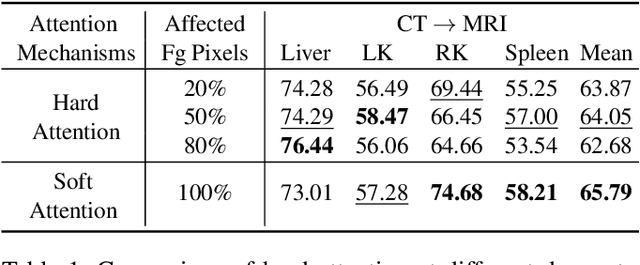
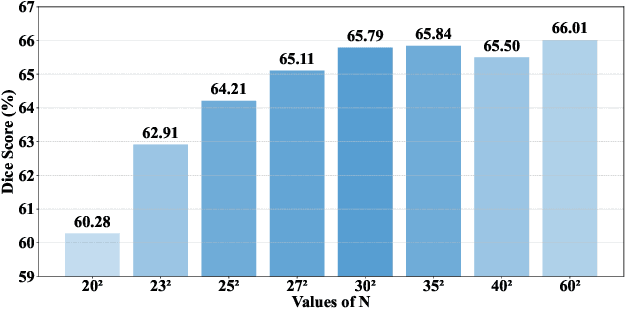
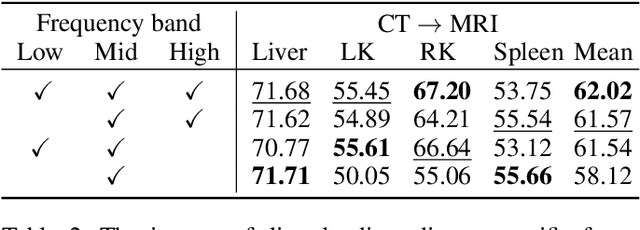
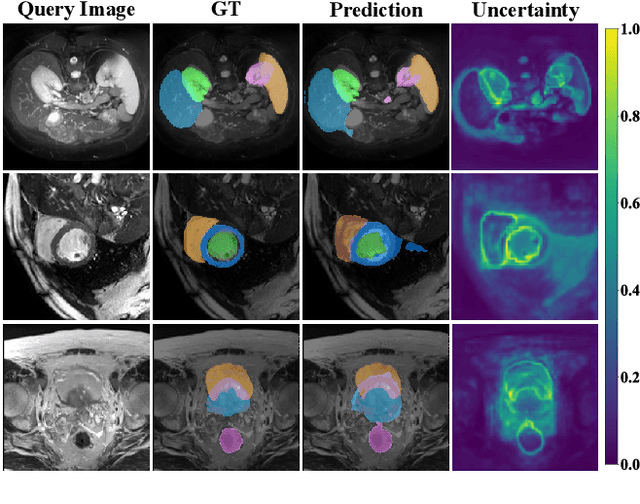
Existing few-shot medical image segmentation (FSMIS) models fail to address a practical issue in medical imaging: the domain shift caused by different imaging techniques, which limits the applicability to current FSMIS tasks. To overcome this limitation, we focus on the cross-domain few-shot medical image segmentation (CD-FSMIS) task, aiming to develop a generalized model capable of adapting to a broader range of medical image segmentation scenarios with limited labeled data from the novel target domain. Inspired by the characteristics of frequency domain similarity across different domains, we propose a Frequency-aware Matching Network (FAMNet), which includes two key components: a Frequency-aware Matching (FAM) module and a Multi-Spectral Fusion (MSF) module. The FAM module tackles two problems during the meta-learning phase: 1) intra-domain variance caused by the inherent support-query bias, due to the different appearances of organs and lesions, and 2) inter-domain variance caused by different medical imaging techniques. Additionally, we design an MSF module to integrate the different frequency features decoupled by the FAM module, and further mitigate the impact of inter-domain variance on the model's segmentation performance. Combining these two modules, our FAMNet surpasses existing FSMIS models and Cross-domain Few-shot Semantic Segmentation models on three cross-domain datasets, achieving state-of-the-art performance in the CD-FSMIS task.