 Add to Chrome
 Add to Firefox
 Add to Edge
ST-WAM: Semantic-Temporal World Action Model for Robust Manipulation under Visual Distribution Shifts
Jul 31, 2026
World Action Models (WAMs) have emerged as a promising paradigm by jointly modeling robot actions and future visual dynamics. However, their reliance on pixel-generative future supervision can entangle action-relevant state transitions with task-irrelevant visual content, limiting robustness under visual distribution shifts. We identify Training-Distribution Hallucination, a recurring phenomenon in which futures conditioned on visually shifted observations hallucinate training-domain content rather than remain faithful to the current scene. A controlled frame-triplet diagnosis further shows that DINOv3 features remain more stable across visual shifts while better preserving task-state distinctions than Wan-VAE latents. Rather than correcting the predicted futures, we propose Semantic-Temporal WAM (ST-WAM) to improve action robustness by using DINOv3 as a shared semantic representation for future prediction and history retrieval while retaining fine-grained VAE dynamics. Its Dual-Space Future Experts (DSFE) jointly predict future VAE latents and DINO features, while Current-Anchored Intent Retrieval (CAIR) retrieves task-relevant evidence from recent DINO history under the current visual-language context. ST-WAM is trained end-to-end without additional embodied pretraining or task-specific annotations, and requires no explicit future generation at inference. It achieves 98.7% on LIBERO and 92.8% on RoboTwin 2.0; more importantly, compared with Fast-WAM, it improves zero-shot LIBERO-Plus performance by 21.3 percentage points and more than doubles real-world success under visual shifts from 25.8% to 61.5%. These results demonstrate that semantic-temporal modeling effectively complements pixel-generative dynamics for robust manipulation.

Comparing the Performance of Foundation Model Derived Embeddings with Traditional Approaches for Distant Metastasis Prediction in Head and Neck Cancer
Jul 28, 2026Background: Early prediction of distant metastasis (DM) risk in head and neck cancer (HNC) can enable timely interventions that may improve treatment outcomes. Many current machine learning methods rely on prior knowledge of the region of interest such as tumor segmentations, which require expert knowledge, is time-consuming and introduces user-dependent variability. Medical image-based foundation models have recently been developed for specific imaging modalities to streamline down-stream prediction tasks by extracting modality-relevant features. Purpose: In this study, we evaluate the effectiveness of using a foundation model as the feature extractor to predict DM risk in HNC patients and compare its performance with traditional approaches that require prior knowledge on the regions of interest. Methods: Preoperative CT images of 2327 patients from the RADCURE dataset were used. Three features-sets were created including radiomics, deep-learning based features, and CT Foundation derived features. The feature-sets were used individually in a multi-layer perceptron (MLP) to predict DM risk. Results: The model using CT Foundation embeddings outperformed the radiomics and deep learning-based models, achieving a Receiver Operating Characteristic Area Under the Curve (AUC) of 0.791, compared to AUC values of 0.772 and 0.753 for the radiomics and deep learning-based models, respectively. The CT Foundation based model had similar performance to a model that combined the use of radiomics and deep learning-based features that achieved an AUC of 0.794. Conclusions: Features based on foundation models offer a promising alternative to traditional radiomics while reducing the need for domain expertise and extensively annotated datasets. Their minimal preprocessing requirements also make them a more accessible and scalable option.
SoftVTBench: A Safety-Aware Visuo-Tactile Benchmark for Physically Constrained Robotic Manipulation of Deformable Objects
Jul 05, 2026Deformable object manipulation poses challenges beyond task completion: successful execution must also maintain safe physical interaction, holding the object stably without slip or drop while avoiding excessive deformation. However, existing manipulation benchmarks are predominantly success-oriented and rarely evaluate whether a policy remains physically safe throughout execution. We present SoftVTBench, a safety-aware visuo-tactile benchmark for physically constrained deformable object manipulation. Built in Isaac Sim with finite-element-simulated deformable objects, SoftVTBench provides multi-view RGB observations, RGB tactile sensing with marker motion, proprioception, and language instructions, and defines four matched task suites over object type (deformable vs. rigid) and variation axis (object vs. spatial). It separately reports Goal Success and Safety Success; the latter additionally requires no drop and peak deformation below a calibrated object-specific threshold, measured from policy-hidden privileged Finite Element Method (FEM) states. We implement pi0.5-based baselines under this protocol. Experiments show that success-only evaluation substantially overstates policy performance, as a large fraction of goal-completing rollouts still violate physical safety. Furthermore, incorporating tactile sensing improves Safety Success (e.g., from 21.4% to 35.6% on object-centric deformable tasks) and reduces object deformation during execution, while maintaining comparable Goal Success. SoftVTBench provides a reproducible benchmark for studying visuo-tactile deformable manipulation under physical interaction constraints.
CounterScene: Counterfactual Causal Reasoning in Generative World Models for Safety-Critical Closed-Loop Evaluation
Mar 22, 2026Generating safety-critical driving scenarios requires understanding why dangerous interactions arise, rather than merely forcing collisions. However, existing methods rely on heuristic adversarial agent selection and unstructured perturbations, lacking explicit modeling of interaction dependencies and thus exhibiting a realism--adversarial trade-off. We present CounterScene, a framework that endows closed-loop generative BEV world models with structured counterfactual reasoning for safety-critical scenario generation. Given a safe scene, CounterScene asks: what if the causally critical agent had behaved differently? To answer this, we introduce causal adversarial agent identification to identify the critical agent and classify conflict types, and develop a conflict-aware interactive world model in which a causal interaction graph is used to explicitly model dynamic inter-agent dependencies. Building on this structure, stage-adaptive counterfactual guidance performs minimal interventions on the identified agent, removing its spatial and temporal safety margins while allowing risk to emerge through natural interaction propagation. Extensive experiments on nuScenes demonstrate that CounterScene achieves the strongest adversarial effectiveness while maintaining superior trajectory realism across all horizons, improving long-horizon collision rate from 12.3% to 22.7% over the strongest baseline with better realism (ADE 1.88 vs.2.09). Notably, this advantage further widens over longer rollouts, and CounterScene generalizes zero-shot to nuPlan with state-of-the-art realism.
ReconDrive: Fast Feed-Forward 4D Gaussian Splatting for Autonomous Driving Scene Reconstruction
Mar 08, 2026High-fidelity visual reconstruction and novel-view synthesis are essential for realistic closed-loop evaluation in autonomous driving. While 4D Gaussian Splatting (4DGS) offers a promising balance of accuracy and efficiency, existing per-scene optimization methods require costly iterative refinement, rendering them unscalable for extensive urban environments. Conversely, current feed-forward approaches often suffer from degraded photometric quality. To address these limitations, we propose ReconDrive, a feed-forward framework that leverages and extends the 3D foundation model VGGT for rapid, high-fidelity 4DGS generation. Our architecture introduces two core adaptations to tailor the foundation model to dynamic driving scenes: (1) Hybrid Gaussian Prediction Heads, which decouple the regression of spatial coordinates and appearance attributes to overcome the photometric deficiencies inherent in generalized foundation features; and (2) a Static-Dynamic 4D Composition strategy that explicitly captures temporal motion via velocity modeling to represent complex dynamic environments. Benchmarked on nuScenes, ReconDrive significantly outperforms existing feed-forward baselines in reconstruction, novel-view synthesis, and 3D perception. It achieves performance competitive with per-scene optimization while being orders of magnitude faster, providing a scalable and practical solution for realistic driving simulation.
Generative Adversarial Networks Bridging Art and Machine Intelligence
Feb 09, 2025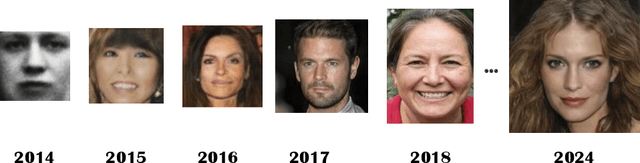

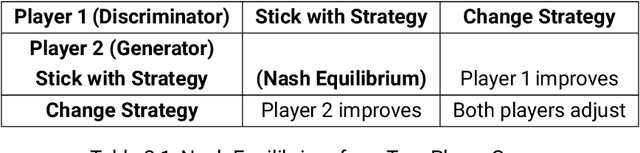

Generative Adversarial Networks (GAN) have greatly influenced the development of computer vision and artificial intelligence in the past decade and also connected art and machine intelligence together. This book begins with a detailed introduction to the fundamental principles and historical development of GANs, contrasting them with traditional generative models and elucidating the core adversarial mechanisms through illustrative Python examples. The text systematically addresses the mathematical and theoretical underpinnings including probability theory, statistics, and game theory providing a solid framework for understanding the objectives, loss functions, and optimisation challenges inherent to GAN training. Subsequent chapters review classic variants such as Conditional GANs, DCGANs, InfoGAN, and LAPGAN before progressing to advanced training methodologies like Wasserstein GANs, GANs with gradient penalty, least squares GANs, and spectral normalisation techniques. The book further examines architectural enhancements and task-specific adaptations in generators and discriminators, showcasing practical implementations in high resolution image generation, artistic style transfer, video synthesis, text to image generation and other multimedia applications. The concluding sections offer insights into emerging research trends, including self-attention mechanisms, transformer-based generative models, and a comparative analysis with diffusion models, thus charting promising directions for future developments in both academic and applied settings.
Deep Learning Model Security: Threats and Defenses
Dec 12, 2024
Deep learning has transformed AI applications but faces critical security challenges, including adversarial attacks, data poisoning, model theft, and privacy leakage. This survey examines these vulnerabilities, detailing their mechanisms and impact on model integrity and confidentiality. Practical implementations, including adversarial examples, label flipping, and backdoor attacks, are explored alongside defenses such as adversarial training, differential privacy, and federated learning, highlighting their strengths and limitations. Advanced methods like contrastive and self-supervised learning are presented for enhancing robustness. The survey concludes with future directions, emphasizing automated defenses, zero-trust architectures, and the security challenges of large AI models. A balanced approach to performance and security is essential for developing reliable deep learning systems.
Deep Learning, Machine Learning, Advancing Big Data Analytics and Management
Dec 03, 2024

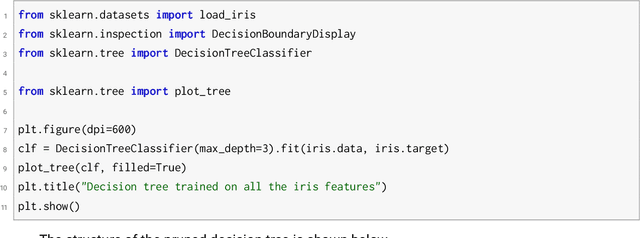
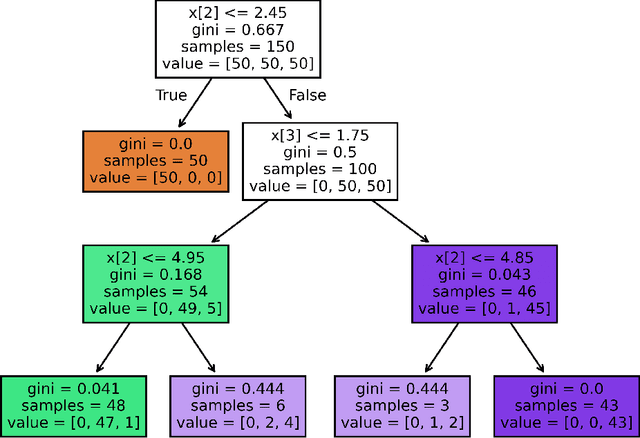
Advancements in artificial intelligence, machine learning, and deep learning have catalyzed the transformation of big data analytics and management into pivotal domains for research and application. This work explores the theoretical foundations, methodological advancements, and practical implementations of these technologies, emphasizing their role in uncovering actionable insights from massive, high-dimensional datasets. The study presents a systematic overview of data preprocessing techniques, including data cleaning, normalization, integration, and dimensionality reduction, to prepare raw data for analysis. Core analytics methodologies such as classification, clustering, regression, and anomaly detection are examined, with a focus on algorithmic innovation and scalability. Furthermore, the text delves into state-of-the-art frameworks for data mining and predictive modeling, highlighting the role of neural networks, support vector machines, and ensemble methods in tackling complex analytical challenges. Special emphasis is placed on the convergence of big data with distributed computing paradigms, including cloud and edge computing, to address challenges in storage, computation, and real-time analytics. The integration of ethical considerations, including data privacy and compliance with global standards, ensures a holistic perspective on data management. Practical applications across healthcare, finance, marketing, and policy-making illustrate the real-world impact of these technologies. Through comprehensive case studies and Python-based implementations, this work equips researchers, practitioners, and data enthusiasts with the tools to navigate the complexities of modern data analytics. It bridges the gap between theory and practice, fostering the development of innovative solutions for managing and leveraging data in the era of artificial intelligence.
A Comprehensive Guide to Explainable AI: From Classical Models to LLMs
Dec 01, 2024


Explainable Artificial Intelligence (XAI) addresses the growing need for transparency and interpretability in AI systems, enabling trust and accountability in decision-making processes. This book offers a comprehensive guide to XAI, bridging foundational concepts with advanced methodologies. It explores interpretability in traditional models such as Decision Trees, Linear Regression, and Support Vector Machines, alongside the challenges of explaining deep learning architectures like CNNs, RNNs, and Large Language Models (LLMs), including BERT, GPT, and T5. The book presents practical techniques such as SHAP, LIME, Grad-CAM, counterfactual explanations, and causal inference, supported by Python code examples for real-world applications. Case studies illustrate XAI's role in healthcare, finance, and policymaking, demonstrating its impact on fairness and decision support. The book also covers evaluation metrics for explanation quality, an overview of cutting-edge XAI tools and frameworks, and emerging research directions, such as interpretability in federated learning and ethical AI considerations. Designed for a broad audience, this resource equips readers with the theoretical insights and practical skills needed to master XAI. Hands-on examples and additional resources are available at the companion GitHub repository: https://github.com/Echoslayer/XAI_From_Classical_Models_to_LLMs.
Generative Modeling of Molecular Dynamics Trajectories
Sep 26, 2024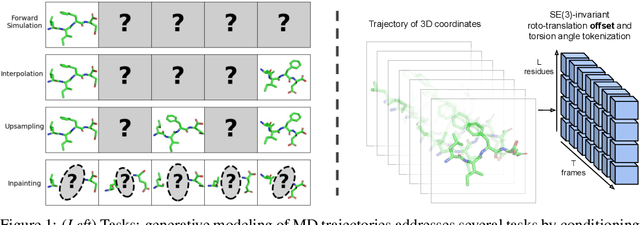


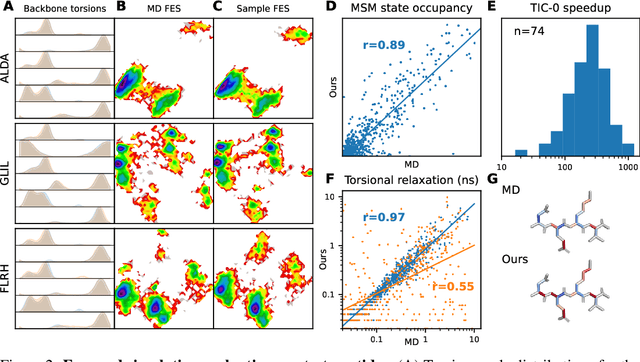
Molecular dynamics (MD) is a powerful technique for studying microscopic phenomena, but its computational cost has driven significant interest in the development of deep learning-based surrogate models. We introduce generative modeling of molecular trajectories as a paradigm for learning flexible multi-task surrogate models of MD from data. By conditioning on appropriately chosen frames of the trajectory, we show such generative models can be adapted to diverse tasks such as forward simulation, transition path sampling, and trajectory upsampling. By alternatively conditioning on part of the molecular system and inpainting the rest, we also demonstrate the first steps towards dynamics-conditioned molecular design. We validate the full set of these capabilities on tetrapeptide simulations and show that our model can produce reasonable ensembles of protein monomers. Altogether, our work illustrates how generative modeling can unlock value from MD data towards diverse downstream tasks that are not straightforward to address with existing methods or even MD itself. Code is available at https://github.com/bjing2016/mdgen.