 Add to Chrome
 Add to Firefox
 Add to Edge
Kimi K3: Open Frontier Intelligence
Jul 27, 2026
We introduce Kimi K3, a 2.8T parameter Mixture-of-Experts model with 104 billion activated parameters, native vision capabilities, and a 1-million-token context window. Kimi K3 is built on Kimi Delta Attention and Attention Residuals, which improve information flow across sequence length and model depth. Together with Stable LatentMoE, which effectively activates 16 of 896 routed experts per token, and refined training and data recipes, these advances yield an approximately 2.5x improvement in overall scaling efficiency over Kimi K2. Post-training highlights reinforcement learning across general, agentic, and coding domains and multiple reasoning-effort levels, enabling compositional generalization and robust long-horizon execution. At 2.8T scale, Kimi K3 is supported by infrastructure advances in multiple areas: algorithm-system co-design for KDA, perfectly balanced expert-parallel training with efficient memory management, million-token agentic RL with persistent rollout and sandbox states, and deployment innovations. Extensive evaluations show that Kimi K3 achieves frontier-level performance across long-horizon coding, agentic, knowledge, reasoning, and vision tasks. While its overall performance still trails the most powerful proprietary models, namely Claude Fable 5 and GPT-5.6 Sol, Kimi K3 consistently outperforms other open and proprietary models evaluated in our suite. We release the full Kimi K3 model weights to facilitate future research and accelerate the broader deployment and adoption of frontier intelligence.

Attention Residuals
Mar 16, 2026Residual connections with PreNorm are standard in modern LLMs, yet they accumulate all layer outputs with fixed unit weights. This uniform aggregation causes uncontrolled hidden-state growth with depth, progressively diluting each layer's contribution. We propose Attention Residuals (AttnRes), which replaces this fixed accumulation with softmax attention over preceding layer outputs, allowing each layer to selectively aggregate earlier representations with learned, input-dependent weights. To address the memory and communication overhead of attending over all preceding layer outputs for large-scale model training, we introduce Block AttnRes, which partitions layers into blocks and attends over block-level representations, reducing the memory footprint while preserving most of the gains of full AttnRes. Combined with cache-based pipeline communication and a two-phase computation strategy, Block AttnRes becomes a practical drop-in replacement for standard residual connections with minimal overhead. Scaling law experiments confirm that the improvement is consistent across model sizes, and ablations validate the benefit of content-dependent depth-wise selection. We further integrate AttnRes into the Kimi Linear architecture (48B total / 3B activated parameters) and pre-train on 1.4T tokens, where AttnRes mitigates PreNorm dilution, yielding more uniform output magnitudes and gradient distribution across depth, and improves downstream performance across all evaluated tasks.
Kimi K2.5: Visual Agentic Intelligence
Feb 02, 2026We introduce Kimi K2.5, an open-source multimodal agentic model designed to advance general agentic intelligence. K2.5 emphasizes the joint optimization of text and vision so that two modalities enhance each other. This includes a series of techniques such as joint text-vision pre-training, zero-vision SFT, and joint text-vision reinforcement learning. Building on this multimodal foundation, K2.5 introduces Agent Swarm, a self-directed parallel agent orchestration framework that dynamically decomposes complex tasks into heterogeneous sub-problems and executes them concurrently. Extensive evaluations show that Kimi K2.5 achieves state-of-the-art results across various domains including coding, vision, reasoning, and agentic tasks. Agent Swarm also reduces latency by up to $4.5\times$ over single-agent baselines. We release the post-trained Kimi K2.5 model checkpoint to facilitate future research and real-world applications of agentic intelligence.
Demonstration Augmentation for Zero-shot In-context Learning
Jun 03, 2024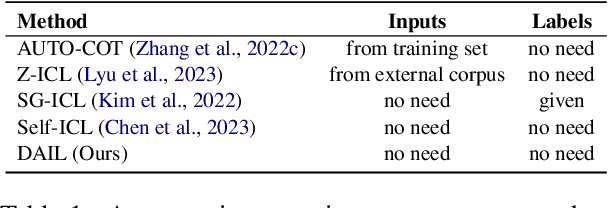
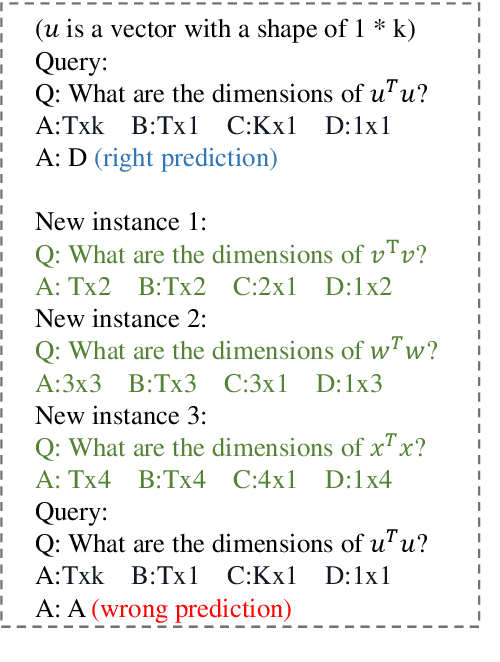
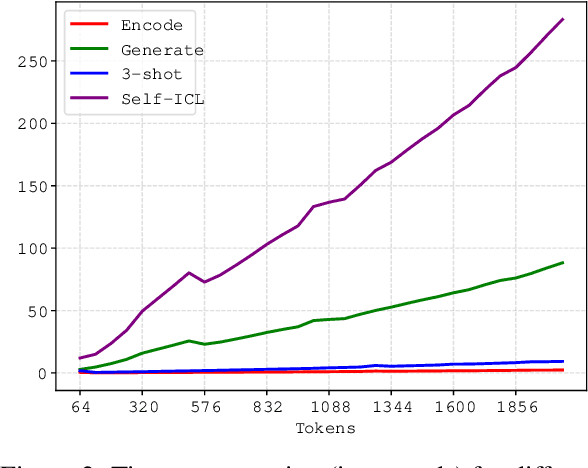

Large Language Models (LLMs) have demonstrated an impressive capability known as In-context Learning (ICL), which enables them to acquire knowledge from textual demonstrations without the need for parameter updates. However, many studies have highlighted that the model's performance is sensitive to the choice of demonstrations, presenting a significant challenge for practical applications where we lack prior knowledge of user queries. Consequently, we need to construct an extensive demonstration pool and incorporate external databases to assist the model, leading to considerable time and financial costs. In light of this, some recent research has shifted focus towards zero-shot ICL, aiming to reduce the model's reliance on external information by leveraging their inherent generative capabilities. Despite the effectiveness of these approaches, the content generated by the model may be unreliable, and the generation process is time-consuming. To address these issues, we propose Demonstration Augmentation for In-context Learning (DAIL), which employs the model's previously predicted historical samples as demonstrations for subsequent ones. DAIL brings no additional inference cost and does not rely on the model's generative capabilities. Our experiments reveal that DAIL can significantly improve the model's performance over direct zero-shot inference and can even outperform few-shot ICL without any external information.
A Survey Of Regression Algorithms And Connections With Deep Learning
Apr 26, 2021


Regression has attracted immense interest lately due to its effectiveness in tasks like predicting values. And Regression is of widespread use in multiple fields such as Economics, Finance, Business, Biology and so on. While considerable studies have proposed some impressive models, few of them have provided a whole picture regarding how and to what extent Regression has developed. With the aim of aiding beginners in understanding the relationships among different Regression algorithms, this paper characterizes a broad and thoughtful selection of recent regression algorithms, providing an organized and comprehensive overview of existing work and models utilized frequently. In this paper, the relationship between Regression and Deep Learning is also discussed and a conclusion can be drawn that Deep Learning can be more powerful as an combination with Regression models in the future.