 Add to Chrome
 Add to Firefox
 Add to Edge
Hallucinations as Orthogonal Noise: Inference-Time Manifold Alignment via Dynamic Contextual Orthogonalization
Jun 02, 2026
Hallucination in Large Language Models (LLMs), characterized by the generation of content inconsistent with contextual facts or logical constraints -- remains a persistent challenge for reliable deployment. In this work, we address this issue through a geometric framework rooted in the linear representation hypothesis. We propose that hallucinations manifest as orthogonal noise relative to the semantic manifold of the residual stream. Specifically, we hypothesize that while attention heads ideally propagate information congruent with the context subspace, hallucinations arise when specific heads introduce components orthogonal to this subspace, disrupting the coherence of the latent representation. Based on this formulation, we introduce Dynamic Contextual Orthogonalization (DCO), an inference-time intervention method. DCO utilizes the input residual stream as a dynamic context anchor to perform orthogonal decomposition on attention head outputs. To distinguish between context-aligned semantic updates and divergent noise, DCO employs a layer-wise Z-score suppression mechanism that selectively attenuates outlier orthogonal components based on statistical distributions. Evaluations on Llama-3-8B and 70B across benchmarks such as XSum, NQ-Swap, and IFEval demonstrate that DCO achieves superior contextual faithfulness compared to state-of-the-art intervention baselines. Furthermore, DCO maintains high performance on knowledge-intensive tasks like TriviaQA and TruthfulQA, effectively mitigating the trade-off between hallucination suppression and parametric knowledge retention often observed in existing methods. Our findings validate the geometric interpretation of hallucinations and establish DCO as a computationally efficient approach for enforcing manifold alignment.Our code is available at https://github.com/Harry-Miral/DCO

Resonant Context Anchoring: Decoupling Attention Routing and Signal Gain at Inference Time
Jun 01, 2026Large Language Models (LLMs) frequently exhibit "contextual disregard" when faced with input evidence that conflicts with their internal parametric memory, leading to persistent factual hallucinations. Existing mitigation strategies primarily rely on suppressing specific neuron activations or employing computationally expensive contrastive decoding mechanisms, which often result in increased perplexity or significantly elevated inference latency. To address these limitations, we propose Resonant Context Anchoring (RCA), a lightweight inference-time intervention method grounded in the perspective of residual stream signal dynamics. RCA aims to resolve the signal attenuation of external evidence during its propagation through deep networks. The core mechanism involves the orthogonal decoupling of routing logic and information magnitude within the self-attention module. By utilizing raw pre-softmax attention scores as an instantaneous metric of semantic alignment, we construct a dynamic gain field via non-linear rectification to selectively amplify the norms of value vectors corresponding to context tokens, without altering the attention probability distribution. This mechanism effectively elevates the signal-to-noise ratio (SNR) of input evidence within the residual stream mixture, thereby robustly anchoring the generation trajectory to the truthful context during inference. Extensive experiments on the Llama-3 model series demonstrate that RCA significantly improves contextual faithfulness across multiple factual consistency and strong knowledge-conflict tasks, effectively suppressing parametric hallucinations. Furthermore, results confirm that as a training-free and computationally negligible plug-and-play module, RCA achieves a Pareto improvement in faithfulness and fluency while maintaining the model's general language understanding capabilities.
PMG: Parameterized Motion Generator for Human-like Locomotion Control
Feb 13, 2026Recent advances in data-driven reinforcement learning and motion tracking have substantially improved humanoid locomotion, yet critical practical challenges remain. In particular, while low-level motion tracking and trajectory-following controllers are mature, whole-body reference-guided methods are difficult to adapt to higher-level command interfaces and diverse task contexts: they require large, high-quality datasets, are brittle across speed and pose regimes, and are sensitive to robot-specific calibration. To address these limitations, we propose the Parameterized Motion Generator (PMG), a real-time motion generator grounded in an analysis of human motion structure that synthesizes reference trajectories using only a compact set of parameterized motion data together with High-dimensional control commands. Combined with an imitation-learning pipeline and an optimization-based sim-to-real motor parameter identification module, we validate the complete approach on our humanoid prototype ZERITH Z1 and show that, within a single integrated system, PMG produces natural, human-like locomotion, responds precisely to high-dimensional control inputs-including VR-based teleoperation-and enables efficient, verifiable sim-to-real transfer. Together, these results establish a practical, experimentally validated pathway toward natural and deployable humanoid control.
Making Every Head Count: Sparse Attention Without the Speed-Performance Trade-off
Nov 12, 2025The design of Large Language Models (LLMs) has long been hampered by a fundamental conflict within their core attention mechanism: its remarkable expressivity is built upon a computational complexity of $O(H \cdot N^2)$ that grows quadratically with the context size ($N$) and linearly with the number of heads ($H$). This standard implementation harbors significant computational redundancy, as all heads independently compute attention over the same sequence space. Existing sparse methods, meanwhile, often trade information integrity for computational efficiency. To resolve this efficiency-performance trade-off, we propose SPAttention, whose core contribution is the introduction of a new paradigm we term Principled Structural Sparsity. SPAttention does not merely drop connections but instead reorganizes the computational task by partitioning the total attention workload into balanced, non-overlapping distance bands, assigning each head a unique segment. This approach transforms the multi-head attention mechanism from $H$ independent $O(N^2)$ computations into a single, collaborative $O(N^2)$ computation, fundamentally reducing complexity by a factor of $H$. The structured inductive bias compels functional specialization among heads, enabling a more efficient allocation of computational resources from redundant modeling to distinct dependencies across the entire sequence span. Extensive empirical validation on the OLMoE-1B-7B and 0.25B-1.75B model series demonstrates that while delivering an approximately two-fold increase in training throughput, its performance is on par with standard dense attention, even surpassing it on select key metrics, while consistently outperforming representative sparse attention methods including Longformer, Reformer, and BigBird across all evaluation metrics.
Structural Optimization of Lightweight Bipedal Robot via SERL
Aug 28, 2024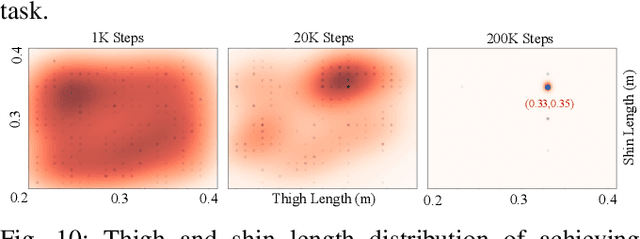
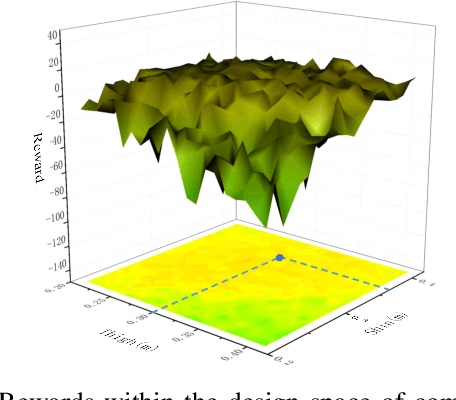

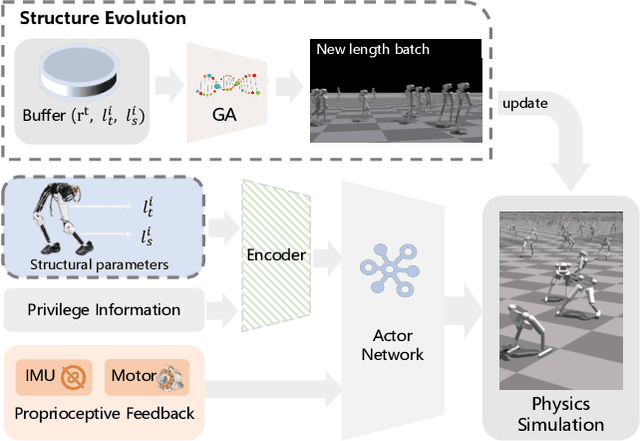
Designing a bipedal robot is a complex and challenging task, especially when dealing with a multitude of structural parameters. Traditional design methods often rely on human intuition and experience. However, such approaches are time-consuming, labor-intensive, lack theoretical guidance and hard to obtain optimal design results within vast design spaces, thus failing to full exploit the inherent performance potential of robots. In this context, this paper introduces the SERL (Structure Evolution Reinforcement Learning) algorithm, which combines reinforcement learning for locomotion tasks with evolution algorithms. The aim is to identify the optimal parameter combinations within a given multidimensional design space. Through the SERL algorithm, we successfully designed a bipedal robot named Wow Orin, where the optimal leg length are obtained through optimization based on body structure and motor torque. We have experimentally validated the effectiveness of the SERL algorithm, which is capable of optimizing the best structure within specified design space and task conditions. Additionally, to assess the performance gap between our designed robot and the current state-of-the-art robots, we compared Wow Orin with mainstream bipedal robots Cassie and Unitree H1. A series of experimental results demonstrate the Outstanding energy efficiency and performance of Wow Orin, further validating the feasibility of applying the SERL algorithm to practical design.