 Add to Chrome
 Add to Firefox
 Add to Edge
Stream4D: 4D-Consistency for Streaming Autoregressive Diffusion Video Models
Aug 20, 2026
Streaming autoregressive diffusion models enable real-time, long-horizon video generation, but their training objectives optimize local frame prediction rather than the geometry and dynamics of a coherent world: long rollouts accumulate geometric drift and degrade into static or unnatural motion. Recent bidirectional approaches address this problem using rewards signals built upon 3D Gaussian-Splatting reconstruction. However, a single rigid 3d reconstruction cannot model a dynamic scene, so this critic penalizes genuine object motion as reconstruction error and is maximized by freezing the video. This shortcut is especially detrimental in the AR setting, where each chunk can propagate an already-static configuration. In this work, we propose Stream4D, which replaces the static critic with a feed-forward 4D reconstruction reward that explicitly models scene dynamics, allowing coherent motion to receive high consistency rewards. To further guide motion magnitude and quality, we add a motion prior that rewards natural scene-flow magnitude while penalizing jitter and non-rigid artifacts. Our final recipe combines these two terms with a lightweight perceptual anchor. Across various autoregressive video backbones and various generation horizons, Stream4D improves 4D reconstruction quality, preserves motion more effectively, and achieves higher human-aligned preference. Project page: https://banyuanhao.github.io/Stream4D/

Arena-T2I Hard: Benchmarking and Improving Faithfulness with Dependency-Aware Checklist
Jun 30, 2026Faithfulness -- how precisely a generated image aligns with its prompt -- is increasingly central to the real-world utility of text-to-image (T2I) models. Existing faithfulness benchmarks, however, rely on simple atomic instructions, on which top-tier systems already achieve near-perfect scores. As T2I models enter creative workflows, users issue multi-faceted requests combining intricate spatial relationships, stylistic constraints, and complex text rendering. In this setting, a single binary VLM-judge score no longer captures which specific constraints the model fails to satisfy. We introduce Arena-T2I Hard, a 310-prompt stress benchmark drawn from real arena T2I logs, with approximately 30 decomposed yes/no constraints per prompt spanning six categories, including text rendering. The strongest closed-source system we evaluate reaches 0.855 with a 33~pp performance gap across 11 systems, demonstrating substantial discriminative power. Moreover, high public-arena rankings fail to predict faithfulness, confirming that holistic Bradley-Terry (BT) preference scores prioritize aesthetics over fine-grained prompt adherence. We propose a dependency-aware checklist reward that decomposes each prompt into a DAG of yes/no questions and zeroes descendants of failed parents, turning faithfulness into a per-constraint training signal. Combined with a BT aesthetic reward via group-decoupled normalization (GDPO), which standardizes each reward within its rollout group so neither collapses, the recipe attains a strictly better faithfulness-aesthetics trade-off on SD3.5-Medium and FLUX.1-dev under MMRB2 pairwise comparisons than every single-reward, naive weighted-sum, or 4-reward BT-ensemble baseline.
A Unifying Lens on Supervised Fine-Tuning Through Target Distribution Design
Jun 09, 2026Supervised fine-tuning (SFT) typically maximizes the likelihood of every token in a demonstrated trajectory. However, an observed token can be non-unique, noisy, or misaligned with the model prior. Strictly fitting toward this one-hot target may be suboptimal, especially when the pretrained model encodes a rich knowledge prior. In this work, we reinterpret SFT as target distribution design: instead of studying only the loss objective, we analyze the token-level target that the loss drives the model to match. We introduce the Q-target framework, which decomposes SFT supervision into two explicit choices: (1) how strongly to rely on the observed token, and (2) how to allocate the remaining probability mass over alternatives. This perspective unifies many existing SFT variants as implicit choices of the target distribution Q. Building on this view, we propose Target-SFT which constructs the training objective directly from the desired target distribution. This method consistently outperforms across the ten reasoning dataset-model settings evaluated, showing the effectiveness of this target-based approach. Overall, our formulation reveals a more fundamental design principle for SFT training and opens a broader search space for SFT objectives.
One-Forcing: Towards Stable One-Step Autoregressive Video Generation
May 22, 2026Recent advances have substantially improved real-time interactive video generation in the autoregressive regime. However, most existing few-step autoregressive video generation methods, often distilled from a corresponding many-step teacher, default to a 4-step sampling configuration, which still incurs considerable latency during deployment and suffers from severe quality degradation when the number of sampling steps is further reduced, particularly in the one-step setting. Trajectory-style consistency distillation methods often produce videos with weak dynamics, while DMD-based approaches, such as Self-Forcing, tend to yield blurry frames. To address this challenge, we propose One-Forcing, a simple yet effective approach which augments the DMD objective with an auxiliary GAN loss for high-quality and efficient one-step video generation. Experiments on VBench show that One-Forcing achieves a total score of 83.76, establishing state-of-the-art performance among one-step causal video generation methods and remaining competitive with strong many-step approaches. We further demonstrate that one-step framewise autoregressive generation can be achieved stably with merely one-third of the training cost of the chunkwise model, a setting that prior methods have failed to achieve successfully.
LoL: Longer than Longer, Scaling Video Generation to Hour
Jan 23, 2026Recent research in long-form video generation has shifted from bidirectional to autoregressive models, yet these methods commonly suffer from error accumulation and a loss of long-term coherence. While attention sink frames have been introduced to mitigate this performance decay, they often induce a critical failure mode we term sink-collapse: the generated content repeatedly reverts to the sink frame, resulting in abrupt scene resets and cyclic motion patterns. Our analysis reveals that sink-collapse originates from an inherent conflict between the periodic structure of Rotary Position Embedding (RoPE) and the multi-head attention mechanisms prevalent in current generative models. To address it, we propose a lightweight, training-free approach that effectively suppresses this behavior by introducing multi-head RoPE jitter that breaks inter-head attention homogenization and mitigates long-horizon collapse. Extensive experiments show that our method successfully alleviates sink-collapse while preserving generation quality. To the best of our knowledge, this work achieves the first demonstration of real-time, streaming, and infinite-length video generation with little quality decay. As an illustration of this robustness, we generate continuous videos up to 12 hours in length, which, to our knowledge, is among the longest publicly demonstrated results in streaming video generation.
Reward-Forcing: Autoregressive Video Generation with Reward Feedback
Jan 23, 2026While most prior work in video generation relies on bidirectional architectures, recent efforts have sought to adapt these models into autoregressive variants to support near real-time generation. However, such adaptations often depend heavily on teacher models, which can limit performance, particularly in the absence of a strong autoregressive teacher, resulting in output quality that typically lags behind their bidirectional counterparts. In this paper, we explore an alternative approach that uses reward signals to guide the generation process, enabling more efficient and scalable autoregressive generation. By using reward signals to guide the model, our method simplifies training while preserving high visual fidelity and temporal consistency. Through extensive experiments on standard benchmarks, we find that our approach performs comparably to existing autoregressive models and, in some cases, surpasses similarly sized bidirectional models by avoiding constraints imposed by teacher architectures. For example, on VBench, our method achieves a total score of 84.92, closely matching state-of-the-art autoregressive methods that score 84.31 but require significant heterogeneous distillation.
Self-Forcing++: Towards Minute-Scale High-Quality Video Generation
Oct 02, 2025Diffusion models have revolutionized image and video generation, achieving unprecedented visual quality. However, their reliance on transformer architectures incurs prohibitively high computational costs, particularly when extending generation to long videos. Recent work has explored autoregressive formulations for long video generation, typically by distilling from short-horizon bidirectional teachers. Nevertheless, given that teacher models cannot synthesize long videos, the extrapolation of student models beyond their training horizon often leads to pronounced quality degradation, arising from the compounding of errors within the continuous latent space. In this paper, we propose a simple yet effective approach to mitigate quality degradation in long-horizon video generation without requiring supervision from long-video teachers or retraining on long video datasets. Our approach centers on exploiting the rich knowledge of teacher models to provide guidance for the student model through sampled segments drawn from self-generated long videos. Our method maintains temporal consistency while scaling video length by up to 20x beyond teacher's capability, avoiding common issues such as over-exposure and error-accumulation without recomputing overlapping frames like previous methods. When scaling up the computation, our method shows the capability of generating videos up to 4 minutes and 15 seconds, equivalent to 99.9% of the maximum span supported by our base model's position embedding and more than 50x longer than that of our baseline model. Experiments on standard benchmarks and our proposed improved benchmark demonstrate that our approach substantially outperforms baseline methods in both fidelity and consistency. Our long-horizon videos demo can be found at https://self-forcing-plus-plus.github.io/
Understanding the Impact of Negative Prompts: When and How Do They Take Effect?
Jun 05, 2024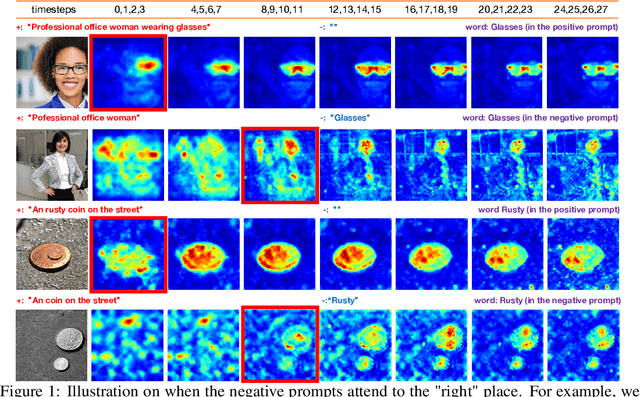
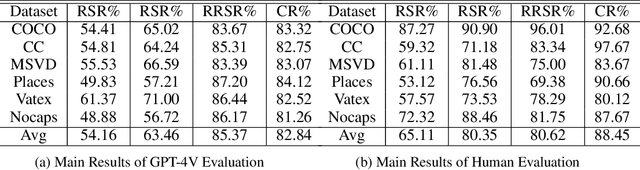
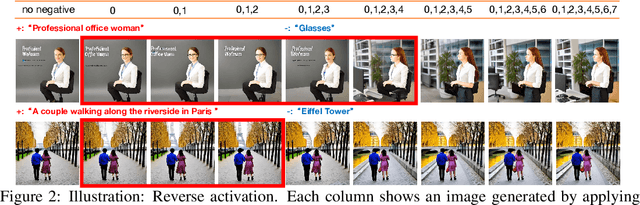
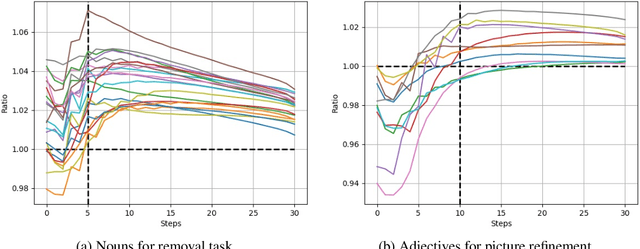
The concept of negative prompts, emerging from conditional generation models like Stable Diffusion, allows users to specify what to exclude from the generated images.%, demonstrating significant practical efficacy. Despite the widespread use of negative prompts, their intrinsic mechanisms remain largely unexplored. This paper presents the first comprehensive study to uncover how and when negative prompts take effect. Our extensive empirical analysis identifies two primary behaviors of negative prompts. Delayed Effect: The impact of negative prompts is observed after positive prompts render corresponding content. Deletion Through Neutralization: Negative prompts delete concepts from the generated image through a mutual cancellation effect in latent space with positive prompts. These insights reveal significant potential real-world applications; for example, we demonstrate that negative prompts can facilitate object inpainting with minimal alterations to the background via a simple adaptive algorithm. We believe our findings will offer valuable insights for the community in capitalizing on the potential of negative prompts.
The Crystal Ball Hypothesis in diffusion models: Anticipating object positions from initial noise
Jun 04, 2024



Diffusion models have achieved remarkable success in text-to-image generation tasks; however, the role of initial noise has been rarely explored. In this study, we identify specific regions within the initial noise image, termed trigger patches, that play a key role for object generation in the resulting images. Notably, these patches are ``universal'' and can be generalized across various positions, seeds, and prompts. To be specific, extracting these patches from one noise and injecting them into another noise leads to object generation in targeted areas. We identify these patches by analyzing the dispersion of object bounding boxes across generated images, leading to the development of a posterior analysis technique. Furthermore, we create a dataset consisting of Gaussian noises labeled with bounding boxes corresponding to the objects appearing in the generated images and train a detector that identifies these patches from the initial noise. To explain the formation of these patches, we reveal that they are outliers in Gaussian noise, and follow distinct distributions through two-sample tests. Finally, we find the misalignment between prompts and the trigger patch patterns can result in unsuccessful image generations. The study proposes a reject-sampling strategy to obtain optimal noise, aiming to improve prompt adherence and positional diversity in image generation.
Pre-trained Adversarial Perturbations
Oct 07, 2022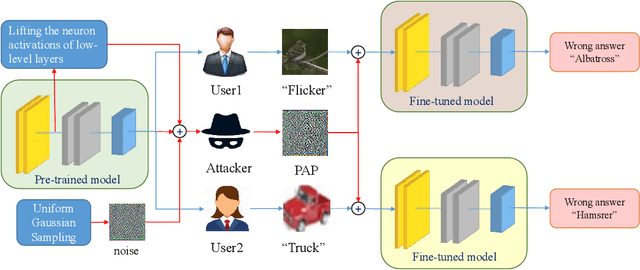
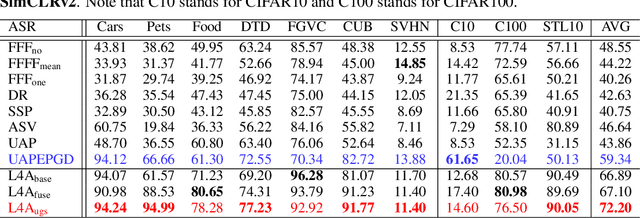
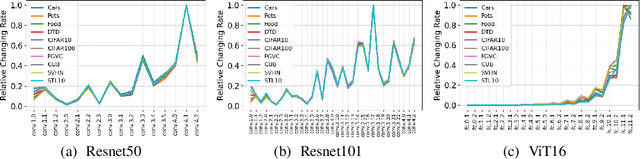
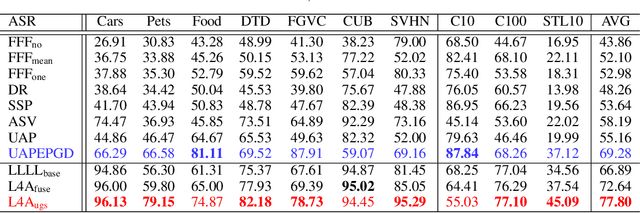
Self-supervised pre-training has drawn increasing attention in recent years due to its superior performance on numerous downstream tasks after fine-tuning. However, it is well-known that deep learning models lack the robustness to adversarial examples, which can also invoke security issues to pre-trained models, despite being less explored. In this paper, we delve into the robustness of pre-trained models by introducing Pre-trained Adversarial Perturbations (PAPs), which are universal perturbations crafted for the pre-trained models to maintain the effectiveness when attacking fine-tuned ones without any knowledge of the downstream tasks. To this end, we propose a Low-Level Layer Lifting Attack (L4A) method to generate effective PAPs by lifting the neuron activations of low-level layers of the pre-trained models. Equipped with an enhanced noise augmentation strategy, L4A is effective at generating more transferable PAPs against fine-tuned models. Extensive experiments on typical pre-trained vision models and ten downstream tasks demonstrate that our method improves the attack success rate by a large margin compared with state-of-the-art methods.