 Add to Chrome
 Add to Firefox
 Add to Edge
HierDoc: Hierarchical Page-to-Region Evidence Routing for Long-Document Visual Question Answering
Jul 31, 2026
Multi-page document visual question answering requires locating sparse evidence at both the page and region levels. Existing approaches typically emphasize one level over the other: page-centric methods focus on page acquisition, with region operations serving mainly as navigation aids, whereas region-centric methods assume that the relevant pages have already been supplied. Consequently, page and region selection remain disconnected rather than forming successive evidence decisions. We propose HierDoc, a hierarchical evidence-routing framework that formulates long-document evidence acquisition as two-stage set prediction from pages to regions. A page policy selects evidence pages from the full document; these pages are then parsed for semantic elements, after which a region policy selects the elements passed to a downstream answer model. Both answer-agnostic policies are optimized with stage-wise GRPO using granularity-specific structured-set rewards. The answer model receives selected full pages together with selected region crops and OCR or table text, preserving global context while emphasizing fine-grained evidence. Across the evaluated benchmarks, HierDoc achieves state-of-the-art or competitive performance among open-weight systems, improving LongDocURL by 16.87% relative to the strongest reported open-weight baseline. Controlled ablations further show that selected regional evidence improves the page-only system in accuracy and F1 by 5.51% and 4.82%, respectively. These results demonstrate the benefit of organizing coarse page routing and fine-grained region routing as successive, separately optimized stages of a unified evidence-acquisition process.

Hierarchical Evidence-Driven Reasoning for Long Document Understanding
Jul 06, 2026Retrieval-Augmented Generation (RAG) streamlines long-document understanding by leveraging retrieval mechanisms to restrict input images to a highly curated subset. However, existing multimodal RAG pipelines primarily face two critical challenges: first, standard semantic similarity retrievers frequently fetch topically overlapping yet answer-void distractor pages that mislead downstream generation; second, rigid single-pass pipelines heavily depend on initial retrieval success, where any omission of core evidence inevitably causes cascading errors. To address these challenges, we introduce HIEVI-RAG, a hierarchical, evidence-driven multimodal RAG framework for closed-domain document understanding. HIEVI-RAG systematically factorizes complex queries into a cooperative four-stage pipeline: (1) hierarchical question decomposition to break multi-hop root queries into atomic child questions; (2) coarse visual page retrieval leveraging a multimodal retriever to fetch candidate pages based on semantic similarity; (3) fine-grained page verification via EVIAGENT, a specialized multi-page verifier trained with GRPO to execute cross-page reasoning over multi-image blocks; and (4) memory-guided iterative generation that leverages accumulated sub-question context to execute multi-round, dynamic reasoning over the prioritized sequence. Extensive evaluations across four benchmarks demonstrate the robust efficacy and synergy of our framework, which significantly outperforms existing open-source baselines and exceeds the strongest reported baseline by an average of 8.05% in accuracy.
Revisiting Shadow Detection from a Vision-Language Perspective
May 12, 2026Shadow detection is commonly formulated as a vision-driven dense prediction problem, where models rely primarily on pixel-wise visual supervision to distinguish shadows from non-shadow regions. However, this formulation can become unreliable in visually ambiguous cases, where similar dark regions may correspond either to cast shadows or to intrinsically dark surfaces, making visual evidence alone insufficient for establishing a stable decision rule. In this work, we revisit shadow detection from a vision--language perspective and argue that robust prediction benefits from an explicit semantic reference beyond visual cues alone. We propose SVL, a Shadow Vision--Language framework that uses language as an explicit semantic reference to disambiguate shadows from visually similar dark regions. SVL aligns the global image representation with shadow-related text embeddings through a scene-level shadow ratio regression objective, thereby providing image-level guidance on the overall extent of shadows. To transfer this global guidance to dense inference, SVL introduces a global-to-local coupling mechanism that enforces consistency between image-level guidance and patch-level predictions. In parallel, SVL applies local patch-level constraints with text embeddings to improve fine-grained discrimination under challenging appearance conditions. Built on a frozen DINOv3 image encoder, the framework learns only lightweight projection and decoding modules, yielding a parameter-efficient design with less than $1\%$ trainable parameters. Extensive experiments on multiple shadow detection benchmarks, including dedicated hard-case evaluations, suggest strong overall performance and improved robustness under visually ambiguous conditions.
DocR1: Evidence Page-Guided GRPO for Multi-Page Document Understanding
Aug 10, 2025Understanding multi-page documents poses a significant challenge for multimodal large language models (MLLMs), as it requires fine-grained visual comprehension and multi-hop reasoning across pages. While prior work has explored reinforcement learning (RL) for enhancing advanced reasoning in MLLMs, its application to multi-page document understanding remains underexplored. In this paper, we introduce DocR1, an MLLM trained with a novel RL framework, Evidence Page-Guided GRPO (EviGRPO). EviGRPO incorporates an evidence-aware reward mechanism that promotes a coarse-to-fine reasoning strategy, guiding the model to first retrieve relevant pages before generating answers. This training paradigm enables us to build high-quality models with limited supervision. To support this, we design a two-stage annotation pipeline and a curriculum learning strategy, based on which we construct two datasets: EviBench, a high-quality training set with 4.8k examples, and ArxivFullQA, an evaluation benchmark with 8.6k QA pairs based on scientific papers. Extensive experiments across a wide range of benchmarks demonstrate that DocR1 achieves state-of-the-art performance on multi-page tasks, while consistently maintaining strong results on single-page benchmarks.
ROOT: VLM based System for Indoor Scene Understanding and Beyond
Nov 24, 2024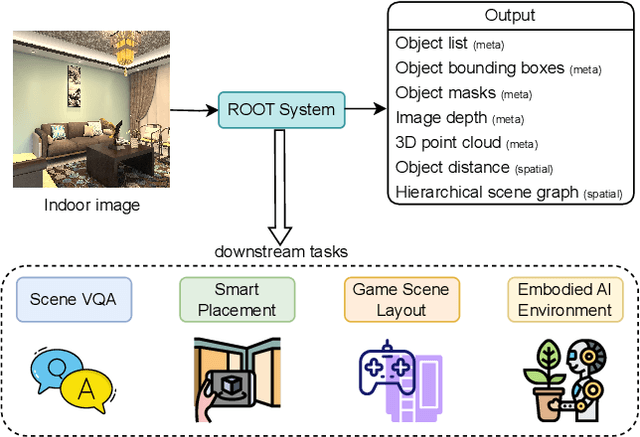
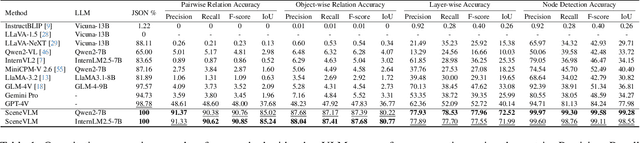
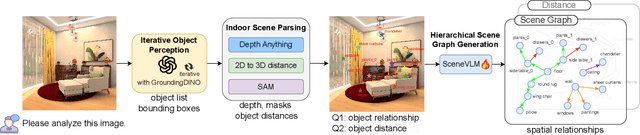
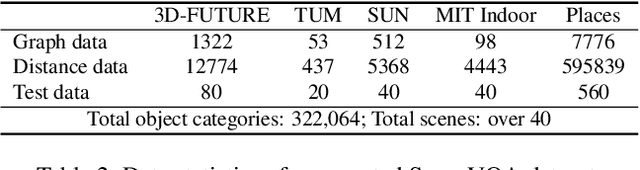
Recently, Vision Language Models (VLMs) have experienced significant advancements, yet these models still face challenges in spatial hierarchical reasoning within indoor scenes. In this study, we introduce ROOT, a VLM-based system designed to enhance the analysis of indoor scenes. Specifically, we first develop an iterative object perception algorithm using GPT-4V to detect object entities within indoor scenes. This is followed by employing vision foundation models to acquire additional meta-information about the scene, such as bounding boxes. Building on this foundational data, we propose a specialized VLM, SceneVLM, which is capable of generating spatial hierarchical scene graphs and providing distance information for objects within indoor environments. This information enhances our understanding of the spatial arrangement of indoor scenes. To train our SceneVLM, we collect over 610,000 images from various public indoor datasets and implement a scene data generation pipeline with a semi-automated technique to establish relationships and estimate distances among indoor objects. By utilizing this enriched data, we conduct various training recipes and finish SceneVLM. Our experiments demonstrate that \rootname facilitates indoor scene understanding and proves effective in diverse downstream applications, such as 3D scene generation and embodied AI. The code will be released at \url{https://github.com/harrytea/ROOT}.
AdaptVision: Dynamic Input Scaling in MLLMs for Versatile Scene Understanding
Aug 30, 2024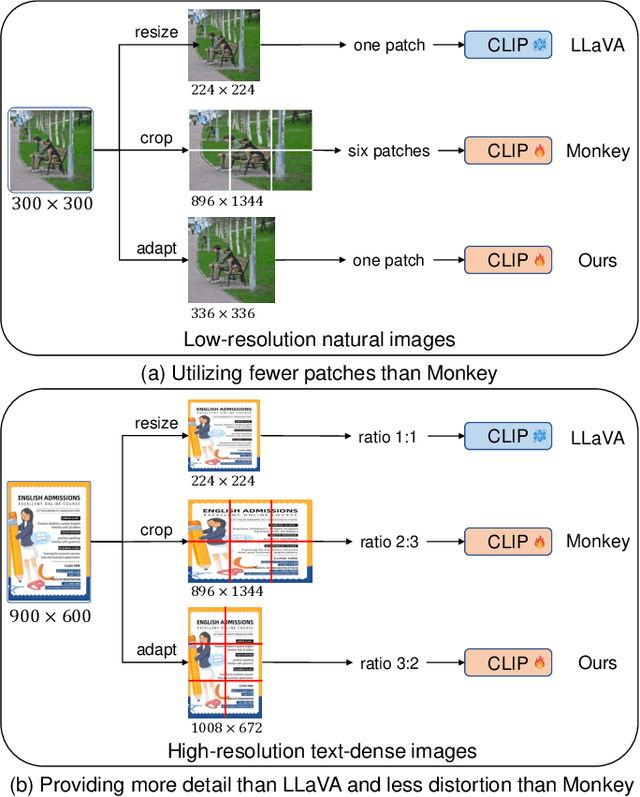
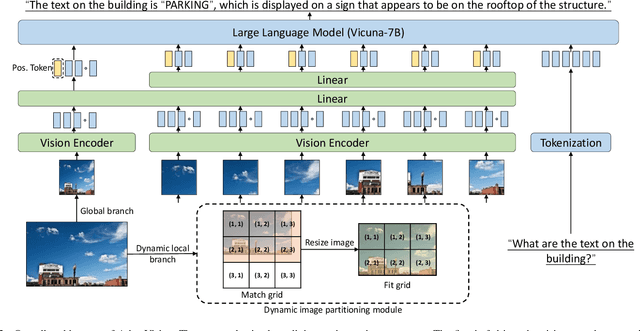
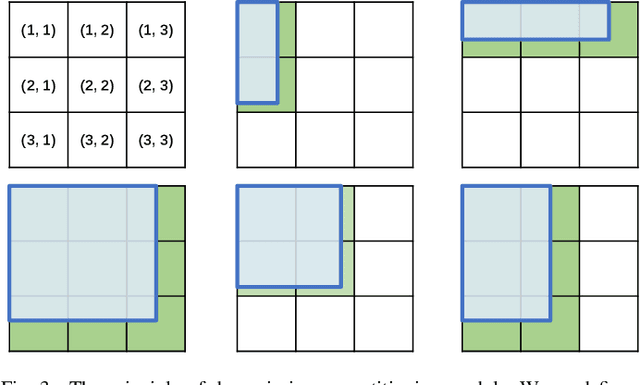
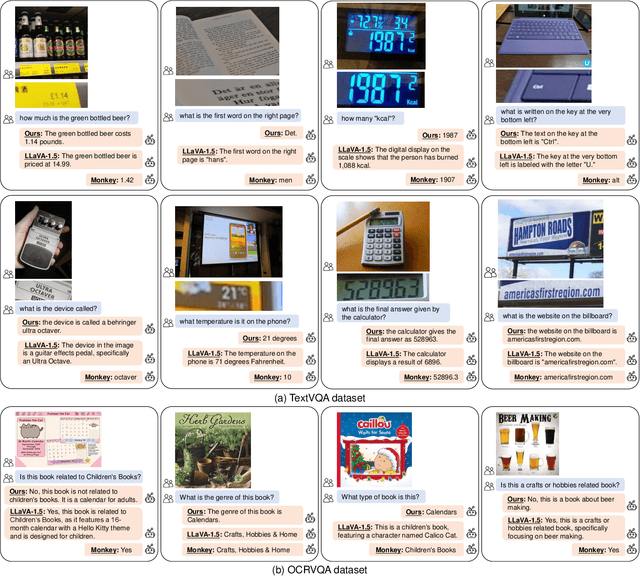
Over the past few years, the advancement of Multimodal Large Language Models (MLLMs) has captured the wide interest of researchers, leading to numerous innovations to enhance MLLMs' comprehension. In this paper, we present AdaptVision, a multimodal large language model specifically designed to dynamically process input images at varying resolutions. We hypothesize that the requisite number of visual tokens for the model is contingent upon both the resolution and content of the input image. Generally, natural images with a lower information density can be effectively interpreted by the model using fewer visual tokens at reduced resolutions. In contrast, images containing textual content, such as documents with rich text, necessitate a higher number of visual tokens for accurate text interpretation due to their higher information density. Building on this insight, we devise a dynamic image partitioning module that adjusts the number of visual tokens according to the size and aspect ratio of images. This method mitigates distortion effects that arise from resizing images to a uniform resolution and dynamically optimizing the visual tokens input to the LLMs. Our model is capable of processing images with resolutions up to $1008\times 1008$. Extensive experiments across various datasets demonstrate that our method achieves impressive performance in handling vision-language tasks in both natural and text-related scenes. The source code and dataset are now publicly available at \url{https://github.com/harrytea/AdaptVision}.
LaneTCA: Enhancing Video Lane Detection with Temporal Context Aggregation
Aug 25, 2024In video lane detection, there are rich temporal contexts among successive frames, which is under-explored in existing lane detectors. In this work, we propose LaneTCA to bridge the individual video frames and explore how to effectively aggregate the temporal context. Technically, we develop an accumulative attention module and an adjacent attention module to abstract the long-term and short-term temporal context, respectively. The accumulative attention module continuously accumulates visual information during the journey of a vehicle, while the adjacent attention module propagates this lane information from the previous frame to the current frame. The two modules are meticulously designed based on the transformer architecture. Finally, these long-short context features are fused with the current frame features to predict the lane lines in the current frame. Extensive quantitative and qualitative experiments are conducted on two prevalent benchmark datasets. The results demonstrate the effectiveness of our method, achieving several new state-of-the-art records. The codes and models are available at https://github.com/Alex-1337/LaneTCA
SwinShadow: Shifted Window for Ambiguous Adjacent Shadow Detection
Aug 07, 2024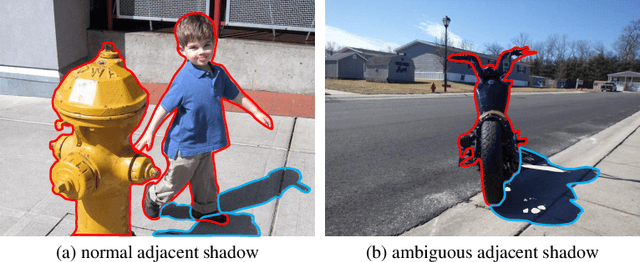
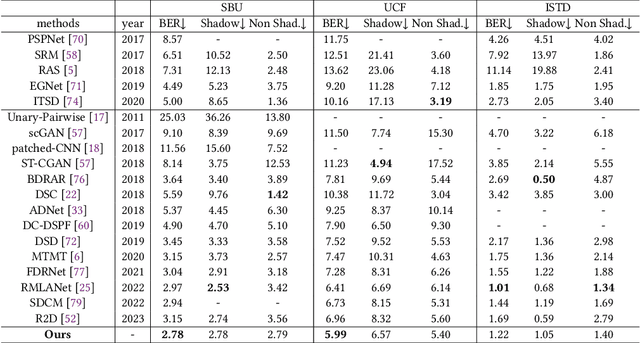
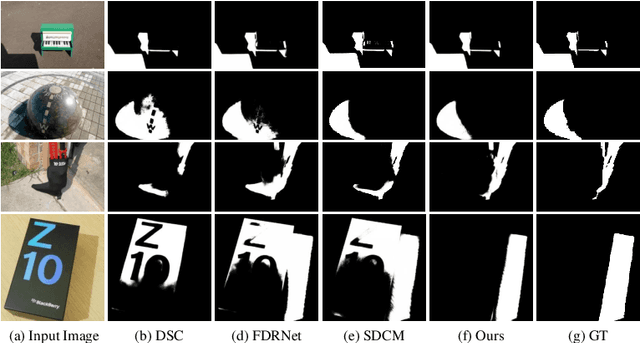
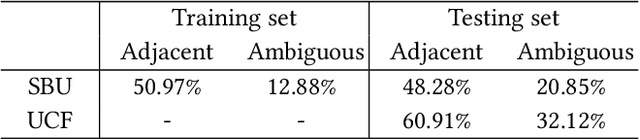
Shadow detection is a fundamental and challenging task in many computer vision applications. Intuitively, most shadows come from the occlusion of light by the object itself, resulting in the object and its shadow being contiguous (referred to as the adjacent shadow in this paper). In this case, when the color of the object is similar to that of the shadow, existing methods struggle to achieve accurate detection. To address this problem, we present SwinShadow, a transformer-based architecture that fully utilizes the powerful shifted window mechanism for detecting adjacent shadows. The mechanism operates in two steps. Initially, it applies local self-attention within a single window, enabling the network to focus on local details. Subsequently, it shifts the attention windows to facilitate inter-window attention, enabling the capture of a broader range of adjacent information. These combined steps significantly improve the network's capacity to distinguish shadows from nearby objects. And the whole process can be divided into three parts: encoder, decoder, and feature integration. During encoding, we adopt Swin Transformer to acquire hierarchical features. Then during decoding, for shallow layers, we propose a deep supervision (DS) module to suppress the false positives and boost the representation capability of shadow features for subsequent processing, while for deep layers, we leverage a double attention (DA) module to integrate local and shifted window in one stage to achieve a larger receptive field and enhance the continuity of information. Ultimately, a new multi-level aggregation (MLA) mechanism is applied to fuse the decoded features for mask prediction. Extensive experiments on three shadow detection benchmark datasets, SBU, UCF, and ISTD, demonstrate that our network achieves good performance in terms of balance error rate (BER).
TextCoT: Zoom In for Enhanced Multimodal Text-Rich Image Understanding
Apr 15, 2024The advent of Large Multimodal Models (LMMs) has sparked a surge in research aimed at harnessing their remarkable reasoning abilities. However, for understanding text-rich images, challenges persist in fully leveraging the potential of LMMs, and existing methods struggle with effectively processing high-resolution images. In this work, we propose TextCoT, a novel Chain-of-Thought framework for text-rich image understanding. TextCoT utilizes the captioning ability of LMMs to grasp the global context of the image and the grounding capability to examine local textual regions. This allows for the extraction of both global and local visual information, facilitating more accurate question-answering. Technically, TextCoT consists of three stages, including image overview, coarse localization, and fine-grained observation. The image overview stage provides a comprehensive understanding of the global scene information, and the coarse localization stage approximates the image area containing the answer based on the question asked. Then, integrating the obtained global image descriptions, the final stage further examines specific regions to provide accurate answers. Our method is free of extra training, offering immediate plug-and-play functionality. Extensive experiments are conducted on a series of text-rich image question-answering benchmark datasets based on several advanced LMMs, and the results demonstrate the effectiveness and strong generalization ability of our method. Code is available at https://github.com/bzluan/TextCoT.
Towards Improving Document Understanding: An Exploration on Text-Grounding via MLLMs
Nov 22, 2023In the field of document understanding, significant advances have been made in the fine-tuning of Multimodal Large Language Models (MLLMs) with instruction-following data. Nevertheless, the potential of text-grounding capability within text-rich scenarios remains underexplored. In this paper, we present a text-grounding document understanding model, termed TGDoc, which addresses this deficiency by enhancing MLLMs with the ability to discern the spatial positioning of text within images. Empirical evidence suggests that text-grounding improves the model's interpretation of textual content, thereby elevating its proficiency in comprehending text-rich images. Specifically, we compile a dataset containing 99K PowerPoint presentations sourced from the internet. We formulate instruction tuning tasks including text detection, recognition, and spotting to facilitate the cohesive alignment between the visual encoder and large language model. Moreover, we curate a collection of text-rich images and prompt the text-only GPT-4 to generate 12K high-quality conversations, featuring textual locations within text-rich scenarios. By integrating text location data into the instructions, TGDoc is adept at discerning text locations during the visual question process. Extensive experiments demonstrate that our method achieves state-of-the-art performance across multiple text-rich benchmarks, validating the effectiveness of our method.