 Add to Chrome
 Add to Firefox
 Add to Edge
A Survey of Physical-layer Authentication Enhanced by Emerging Spatial Domain Technologies
Jun 27, 2026
This article surveys spatial-domain-enhanced Physical-layer Authentication (PLA), with Dual-polarized Antennas (DPA), Massive Multiple-Input Multiple-Output (MIMO), and Reconfigurable Intelligent Surfaces (RIS) as the primary focus. With the rapid growth of wireless deployments, authentication mechanisms face stringent requirements for high security, low overhead, and low latency. PLA offers lightweight identity verification by exploiting physical-layer characteristics. However, the effectiveness of PLA critically depends on how physical observations are constructed and validated under wireless channels. Unlike existing surveys that mainly organize PLA by authentication modality, feature source, and evaluation metrics, this work emphasizes the connection between spatial-domain enhancement mechanisms, the resulting feature representation, and the authentication procedure. We review how DPA, Massive MIMO, and RIS reshape PLA feature representation, and we summarize newly introduced security threats along with representative defense strategies. Case studies further illustrate the practical impact, such as representative detection-probability trends across Signal-to-Noise Ratio regimes and quantitative comparisons among representative schemes. Finally, we outline promising future opportunities enabled by Dynamic Metasurface Antennas, Extra-large MIMO, and spatial configuration with artificial intelligence.

Channel Spreading Function-Inspired Channel Transfer Function Estimation for OFDM Systems with High-Mobility
Dec 10, 2024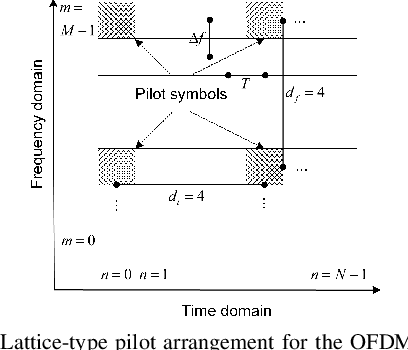
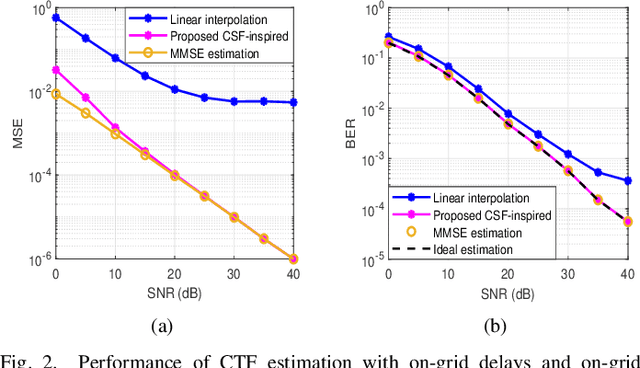
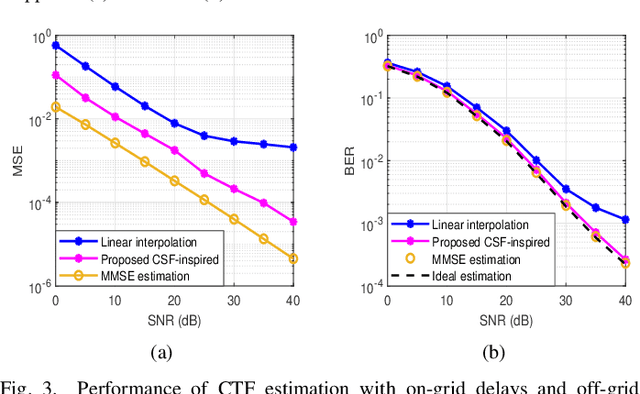
In this letter, we propose a novel channel transfer function (CTF) estimation approach for orthogonal frequency division multiplexing (OFDM) systems in high-mobility scenarios, that leverages the stationary properties of the delay-Doppler domain channel spreading function (CSF). First, we develop a CSF estimation model for OFDM systems that relies solely on discrete pilot symbols in the time-frequency (TF) domain, positioned at predefined resource elements. We then present theorems to elucidate the relationship between CSF compactness and pilot spacing in the TF domain for accurate CSF acquisition. Based on the estimated CSF, we finally estimate the CTF for data symbols. Numerical results show that, in high-mobility scenarios, the proposed approach outperforms traditional interpolation-based methods and closely matches the optimal estimator in terms of estimation accuracy. This work may pave the way for CSF estimation in commercial OFDM systems, benefiting high-mobility communications, integrated sensing and communications, and related applications.