 Add to Chrome
 Add to Firefox
 Add to Edge
LaPro-DTA: Latent Dual-View Drug Representations and Salient Protein Feature Extraction for Generalizable Drug--Target Affinity Prediction
Mar 16, 2026
Drug--target affinity prediction is pivotal for accelerating drug discovery, yet existing methods suffer from significant performance degradation in realistic cold-start scenarios (unseen drugs/targets/pairs), primarily driven by overfitting to training instances and information loss from irrelevant target sequences. In this paper, we propose LaPro-DTA, a framework designed to achieve robust and generalizable DTA prediction. To tackle overfitting, we devise a latent dual-view drug representation mechanism. It synergizes an instance-level view to capture fine-grained substructures with stochastic perturbation and a distribution-level view to distill generalized chemical scaffolds via semantic remapping, thereby enforcing the model to learn transferable structural rules rather than memorizing specific samples. To mitigate information loss, we introduce a salient protein feature extraction strategy using pattern-aware top-$k$ pooling, which effectively filters background noise and isolates high-response bioactive regions. Furthermore, a cross-view multi-head attention mechanism fuses these purified features to model comprehensive interactions. Extensive experiments on benchmark datasets demonstrate that LaPro-DTA significantly outperforms state-of-the-art methods, achieving an 8\% MSE reduction on the Davis dataset in the challenging unseen-drug setting, while offering interpretable insights into binding mechanisms.

Multi-Task Genetic Algorithm with Multi-Granularity Encoding for Protein-Nucleotide Binding Site Prediction
Mar 16, 2026Accurate identification of protein-nucleotide binding sites is fundamental to deciphering molecular mechanisms and accelerating drug discovery. However, current computational methods often struggle with suboptimal performance due to inadequate feature representation and rigid fusion mechanisms, which hinder the effective exploitation of cross-task information synergy. To bridge this gap, we propose MTGA-MGE, a framework that integrates a Multi-Task Genetic Algorithm with Multi-Granularity Encoding to enhance binding site prediction. Specifically, we develop a Multi-Granularity Encoding (MGE) network that synergizes multi-scale convolutions and self-attention mechanisms to distill discriminative signals from high-dimensional, redundant biological data. To overcome the constraints of static fusion, a genetic algorithm is employed to adaptively evolve task-specific fusion strategies, thereby effectively improving model generalization. Furthermore, to catalyze collaborative learning, we introduce an External-Neighborhood Mechanism (ENM) that leverages biological similarities to facilitate targeted information exchange across tasks. Extensive evaluations on fifteen nucleotide datasets demonstrate that MTGA-MGE not only establishes a new state-of-the-art in data-abundant, high-resource scenarios but also maintains a robust competitive edge in rare, low-resource regimes, presenting a highly adaptive scheme for decoding complex protein-ligand interactions in the post-genomic era.
Co-Diffusion: An Affinity-Aware Two-Stage Latent Diffusion Framework for Generalizable Drug-Target Affinity Prediction
Mar 11, 2026Predicting drug-target affinity is fundamental to virtual screening and lead optimization. However, existing deep models often suffer from representation collapse in stringent cold-start regimes, where the scarcity of labels and domain shifts prevent the learning of transferable pharmacophores and binding motifs. In this paper, we propose Co-Diffusion, a novel affinity-aware framework that redefines DTA prediction as a constrained latent denoising process to enhance generalization. Co-Diffusion employs a two-stage paradigm: Stage I establishes an affinity-steered latent manifold by aligning drug and target embeddings under an explicit supervised objective, ensuring that the latent space reflects the intrinsic binding landscape. Stage II introduces modality-specific latent diffusion as a stochastic perturb-and-denoise regularizer, forcing the model to recover consistent affinity semantics from noisy structural representations. This approach effectively mitigates the reconstruction-regression conflict common in generative DTA models. Theoretically, we show that Co-Diffusion maximizes a variational lower bound on the joint likelihood of drug structures, protein sequences, and binding strength. Extensive experiments across multiple benchmarks demonstrate that Co-Diffusion significantly outperforms state-of-the-art baselines, particularly yielding superior zero-shot generalization on unseen molecular scaffolds and novel protein families-paving a robust path for in silico drug prioritization in unexplored chemical spaces.
Multi-objective Genetic Programming with Multi-view Multi-level Feature for Enhanced Protein Secondary Structure Prediction
Mar 11, 2026Predicting protein secondary structure is essential for understanding protein function and advancing drug discovery. However, the intricate sequence-structure relationship poses significant challenges for accurate modeling. To address these, we propose MOGP-MMF, a multi-objective genetic programming framework that reformulates PSSP as an automated optimization task focused on feature selection and fusion. Specifically, MOGP-MMF introduces a multi-view multi-level representation strategy that integrates evolutionary, semantic, and newly introduced structural views to capture the comprehensive protein folding logic. Leveraging an enriched operator set, the framework evolves both linear and nonlinear fusion functions, effectively capturing high-order feature interactions while reducing fusion complexity. To resolve the accuracy-complexity trade-off, an improved multi-objective GP algorithm is developed, incorporating a knowledge transfer mechanism that utilizes prior evolutionary experience to guide the population toward global optima. Extensive experiments across seven benchmark datasets demonstrate that MOGP-MMF surpasses state-of-the-art methods, particularly in Q8 accuracy and structural integrity. Furthermore, MOGP-MMF generates a diverse set of non-dominated solutions, offering flexible model selection schemes for various practical application scenarios. The source code is available on GitHub: https://github.com/qian-ann/MOGP-MMF/tree/main.
CORE-Acu: Structured Reasoning Traces and Knowledge Graph Safety Verification for Acupuncture Clinical Decision Support
Mar 09, 2026Large language models (LLMs) show significant potential for clinical decision support (CDS), yet their black-box nature -- characterized by untraceable reasoning and probabilistic hallucinations -- poses severe challenges in acupuncture, a field demanding rigorous interpretability and safety. To address this, we propose CORE-Acu, a neuro-symbolic framework for acupuncture clinical decision support that integrates Structured Chain-of-Thought (S-CoT) with knowledge graph (KG) safety verification. First, we construct the first acupuncture Structured Reasoning Trace dataset and a schema-constrained fine-tuning framework. By enforcing an explicit causal chain from pattern identification to treatment principles, treatment plans, and acupoint selection, we transform implicit Traditional Chinese Medicine (TCM) reasoning into interpretable generation constraints, mitigating the opacity of LLM-based CDS. Furthermore, we construct a TCM safety knowledge graph and establish a ``Generate--Verify--Revise'' closed-loop inference system based on a Symbolic Veto Mechanism, employing deterministic rules to intercept hallucinations and enforce hard safety boundaries. Finally, we introduce the Lexicon-Matched Entity-Reweighted Loss (LMERL), which corrects terminology drift caused by the frequency--importance mismatch in general optimization by adaptively amplifying gradient contributions of high-risk entities during fine-tuning. Experiments on 1,000 held-out cases demonstrate CORE-Acu's superior entity fidelity and reasoning quality. Crucially, CORE-Acu achieved 0/1,000 observed safety violations (95\% CI: 0--0.37\%), whereas GPT-4o exhibited an 8.5\% violation rate under identical rules. These results establish CORE-Acu as a robust neuro-symbolic framework for acupuncture clinical decision support, guaranteeing both reasoning auditability and strict safety compliance.
PEAR: Position-Embedding-Agnostic Attention Re-weighting Enhances Retrieval-Augmented Generation with Zero Inference Overhead
Sep 29, 2024
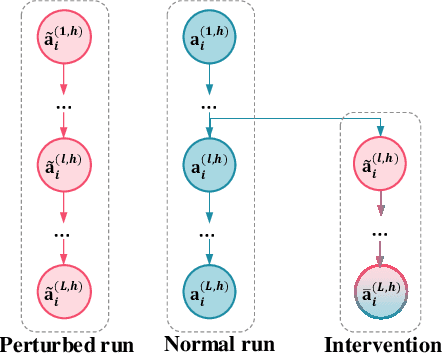

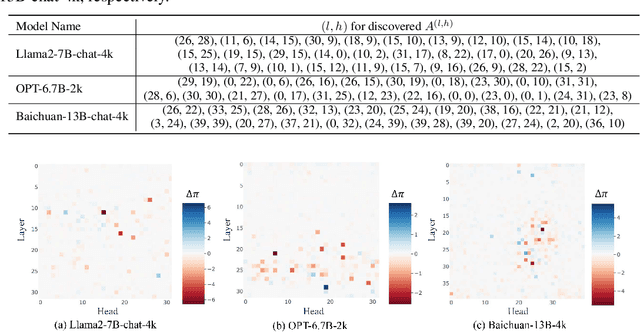
Large language models (LLMs) enhanced with retrieval-augmented generation (RAG) have introduced a new paradigm for web search. However, the limited context awareness of LLMs degrades their performance on RAG tasks. Existing methods to enhance context awareness are often inefficient, incurring time or memory overhead during inference, and many are tailored to specific position embeddings. In this paper, we propose Position-Embedding-Agnostic attention Re-weighting (PEAR), which enhances the context awareness of LLMs with zero inference overhead. Specifically, on a proxy task focused on context copying, we first detect heads which suppress the models' context awareness thereby diminishing RAG performance. To weaken the impact of these heads, we re-weight their outputs with learnable coefficients. The LLM (with frozen parameters) is optimized by adjusting these coefficients to minimize loss on the proxy task. As a result, the coefficients are optimized to values less than one, thereby reducing their tendency to suppress RAG performance. During inference, the optimized coefficients are fixed to re-weight these heads, regardless of the specific task at hand. Our proposed PEAR offers two major advantages over previous approaches: (1) It introduces zero additional inference overhead in terms of memory usage or inference time, while outperforming competitive baselines in accuracy and efficiency across various RAG tasks. (2) It is independent of position embedding algorithms, ensuring broader applicability.
Factor Representation and Decision Making in Stock Markets Using Deep Reinforcement Learning
Aug 03, 2021


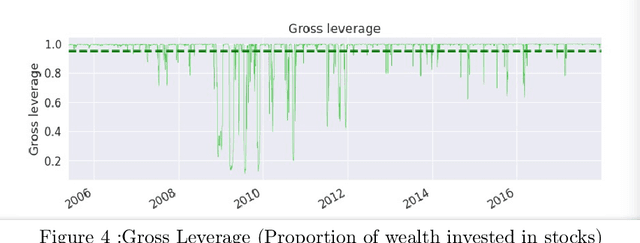
Deep Reinforcement learning is a branch of unsupervised learning in which an agent learns to act based on environment state in order to maximize its total reward. Deep reinforcement learning provides good opportunity to model the complexity of portfolio choice in high-dimensional and data-driven environment by leveraging the powerful representation of deep neural networks. In this paper, we build a portfolio management system using direct deep reinforcement learning to make optimal portfolio choice periodically among S\&P500 underlying stocks by learning a good factor representation (as input). The result shows that an effective learning of market conditions and optimal portfolio allocations can significantly outperform the average market.