 Add to Chrome
 Add to Firefox
 Add to Edge
Allocation Before Ranking: Decoupled Token Compression for OmniLLMs
Aug 03, 2026
Token compression in OmniLLMs is typically posed as a single saliency-ranking problem: score each multimodal token, keep the top-K. We argue this abstraction is mis-specified. The same attention score simultaneously decides two things: how much retained capacity each modality receives, and which tokens within a modality are kept. A shared top-K rule therefore inherits this audio-favoring allocation prior, spending retained capacity on audio before video tokens have a chance to compete. We propose Macer, a training-free compressor that first assigns explicit audio and video budgets, then performs allocation-normalized ranking within each modality at modality-specific shallow layers. Macer significantly reduces token cost while preserving accuracy across audio-grounded, audio--video joint, visual-dominant, and video-centric benchmarks. At 25 % retention, Macer preserves 98.7 % of full-token performance on Qwen2.5-Omni-7B and 97.3 % on Qwen2.5-Omni-3B. On Qwen2.5-Omni-7B, this 25 % setting reaches OmniZip-level performance at 45 % retention while using lower FLOPs. On OmniVinci-9B, the same allocation-before-ranking principle improves over shared top-K ranking by up to 12.9 points.

Holographic MIMO-assisted Multiuser Transmission with Electromagnetic Exposure Constraints
Jul 13, 2026Holographic multiple-input multiple-output (HMIMO) has emerged as a promising technology for future wireless systems by enabling continuous electromagnetic (EM) field control over large apertures. However, user-side EM exposure has become an increasingly important concern in large-scale array systems. This paper addresses this issue by developing a multiuser uplink HMIMO model, where a physically consistent specific absorption rate (SAR) model is established to quantify the EM exposure. On this basis, a spectral efficiency (SE) maximization problem is addressed by developing a modified iterative water-filling algorithm. Simulation results demonstrate that the proposed algorithm effectively improves the system SE while satisfying the SAR constraints.
From Empathy to Personalized Empathy: Adapting Empathetic Strategies to Individual Users
May 30, 2026As Large Language Models (LLMs) are increasingly deployed in long-term interactions with users, empathy has become an increasingly important capability. However, existing research overlooks the influence of users' personality traits on empathetic strategies during long-term interactions. To address this gap, we introduce the task of personalized empathy, which focuses on adapting empathetic strategies according to users' personalized characteristics derived from history. To study and enhance this capability, we construct PersonaEmp, a personalized empathy dataset built from long-term user-AI interactions, featuring rich user histories, persona information, and empathy-seeking queries. We further propose PereGRM, a reward modeling framework that combines the empathy evaluation structure with dynamic evaluation criteria generation for fine-grained reward modeling. Experimental results across different settings and multiple judge models show that PereGRM consistently achieves the strongest performance improvements, indicating its effectiveness for enhancing personalized empathetic capabilities.
HII-DPO: Eliminate Hallucination via Accurate Hallucination-Inducing Counterfactual Images
Feb 11, 2026Large Vision-Language Models (VLMs) have achieved remarkable success across diverse multimodal tasks but remain vulnerable to hallucinations rooted in inherent language bias. Despite recent progress, existing hallucination mitigation methods often overlook the underlying hallucination patterns driven by language bias. In this work, we design a novel pipeline to accurately synthesize Hallucination-Inducing Images (HIIs). Using synthesized HIIs, we reveal a consistent scene-conditioned hallucination pattern: models tend to mention objects that are highly typical of the scene even when visual evidence is removed. To quantify the susceptibility of VLMs to this hallucination pattern, we establish the Masked-Object-Hallucination (MOH) benchmark to rigorously evaluate existing state-of-the-art alignment frameworks. Finally, we leverage HIIs to construct high-quality preference datasets for fine-grained alignment. Experimental results demonstrate that our approach effectively mitigates hallucinations while preserving general model capabilities. Specifically, our method achieves up to a 38% improvement over the current state-of-the-art on standard hallucination benchmarks.
The Llama 4 Herd: Architecture, Training, Evaluation, and Deployment Notes
Jan 15, 2026This document consolidates publicly reported technical details about Metas Llama 4 model family. It summarizes (i) released variants (Scout and Maverick) and the broader herd context including the previewed Behemoth teacher model, (ii) architectural characteristics beyond a high-level MoE description covering routed/shared-expert structure, early-fusion multimodality, and long-context design elements reported for Scout (iRoPE and length generalization strategies), (iii) training disclosures spanning pre-training, mid-training for long-context extension, and post-training methodology (lightweight SFT, online RL, and lightweight DPO) as described in release materials, (iv) developer-reported benchmark results for both base and instruction-tuned checkpoints, and (v) practical deployment constraints observed across major serving environments, including provider-specific context limits and quantization packaging. The manuscript also summarizes licensing obligations relevant to redistribution and derivative naming, and reviews publicly described safeguards and evaluation practices. The goal is to provide a compact technical reference for researchers and practitioners who need precise, source-backed facts about Llama 4.
Prototype-Driven Multi-Feature Generation for Visible-Infrared Person Re-identification
Sep 09, 2024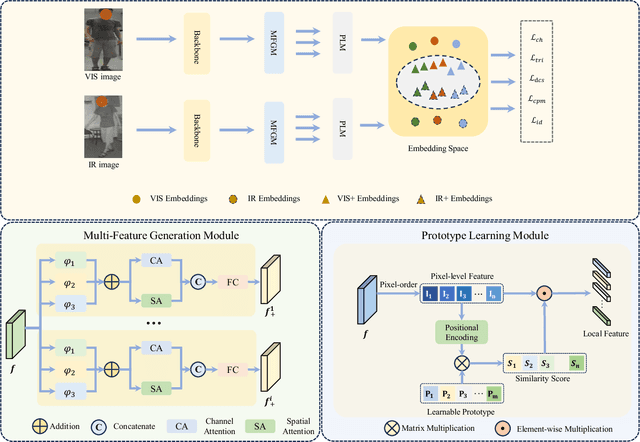
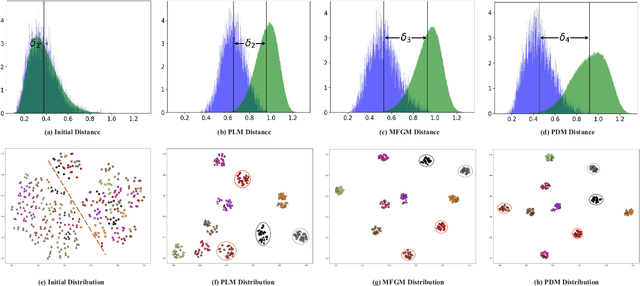
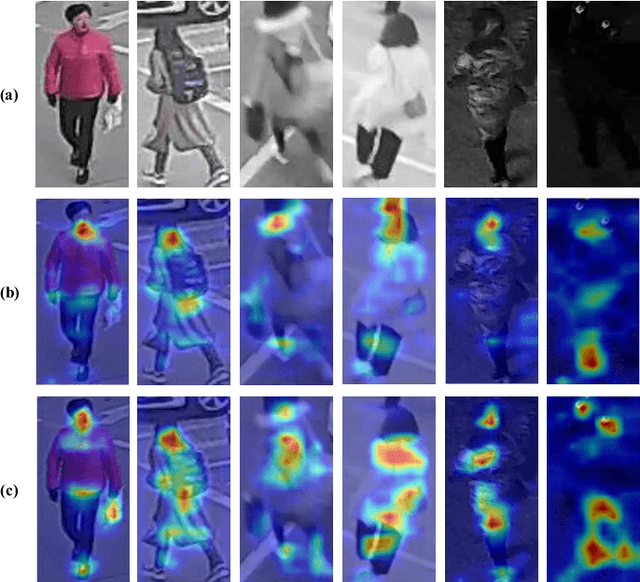
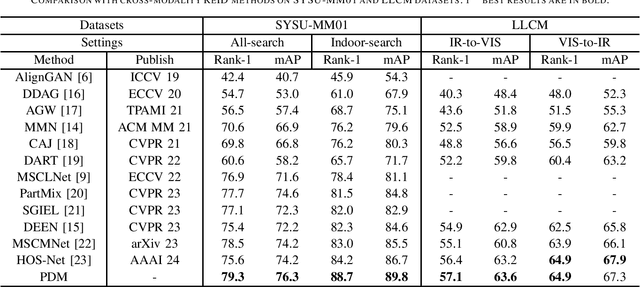
The primary challenges in visible-infrared person re-identification arise from the differences between visible (vis) and infrared (ir) images, including inter-modal and intra-modal variations. These challenges are further complicated by varying viewpoints and irregular movements. Existing methods often rely on horizontal partitioning to align part-level features, which can introduce inaccuracies and have limited effectiveness in reducing modality discrepancies. In this paper, we propose a novel Prototype-Driven Multi-feature generation framework (PDM) aimed at mitigating cross-modal discrepancies by constructing diversified features and mining latent semantically similar features for modal alignment. PDM comprises two key components: Multi-Feature Generation Module (MFGM) and Prototype Learning Module (PLM). The MFGM generates diversity features closely distributed from modality-shared features to represent pedestrians. Additionally, the PLM utilizes learnable prototypes to excavate latent semantic similarities among local features between visible and infrared modalities, thereby facilitating cross-modal instance-level alignment. We introduce the cosine heterogeneity loss to enhance prototype diversity for extracting rich local features. Extensive experiments conducted on the SYSU-MM01 and LLCM datasets demonstrate that our approach achieves state-of-the-art performance. Our codes are available at https://github.com/mmunhappy/ICASSP2025-PDM.
Language-Informed Beam Search Decoding for Multilingual Machine Translation
Aug 11, 2024Beam search decoding is the de-facto method for decoding auto-regressive Neural Machine Translation (NMT) models, including multilingual NMT where the target language is specified as an input. However, decoding multilingual NMT models commonly produces ``off-target'' translations -- yielding translation outputs not in the intended language. In this paper, we first conduct an error analysis of off-target translations for a strong multilingual NMT model and identify how these decodings are produced during beam search. We then propose Language-informed Beam Search (LiBS), a general decoding algorithm incorporating an off-the-shelf Language Identification (LiD) model into beam search decoding to reduce off-target translations. LiBS is an inference-time procedure that is NMT-model agnostic and does not require any additional parallel data. Results show that our proposed LiBS algorithm on average improves +1.1 BLEU and +0.9 BLEU on WMT and OPUS datasets, and reduces off-target rates from 22.9\% to 7.7\% and 65.8\% to 25.3\% respectively.
MSLM-S2ST: A Multitask Speech Language Model for Textless Speech-to-Speech Translation with Speaker Style Preservation
Mar 19, 2024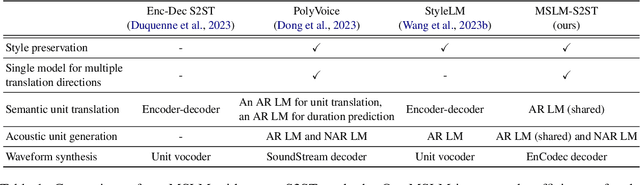
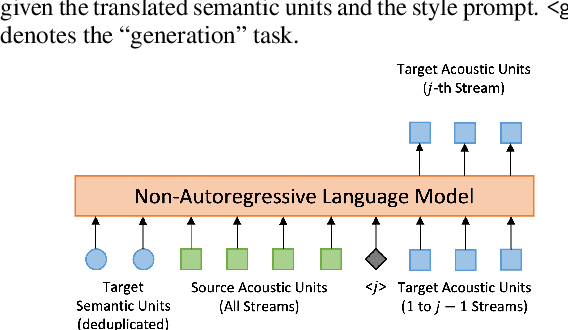
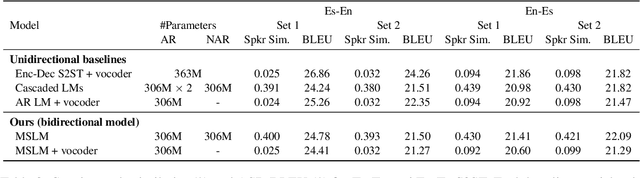
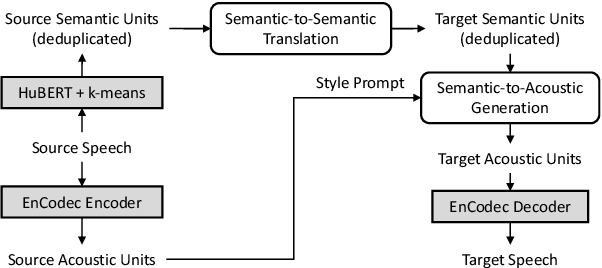
There have been emerging research interest and advances in speech-to-speech translation (S2ST), translating utterances from one language to another. This work proposes Multitask Speech Language Model (MSLM), which is a decoder-only speech language model trained in a multitask setting. Without reliance on text training data, our model is able to support multilingual S2ST with speaker style preserved.
An Empirical Study of Speech Language Models for Prompt-Conditioned Speech Synthesis
Mar 19, 2024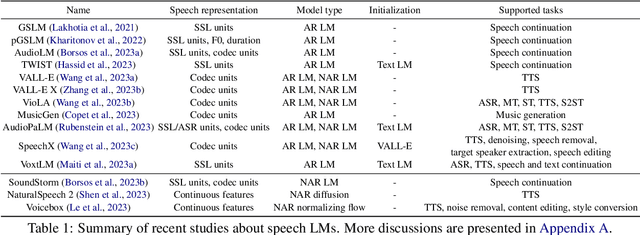
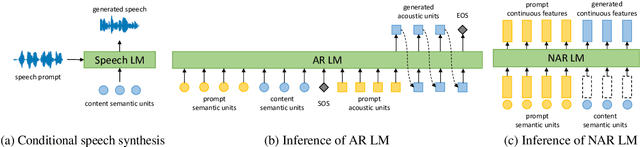
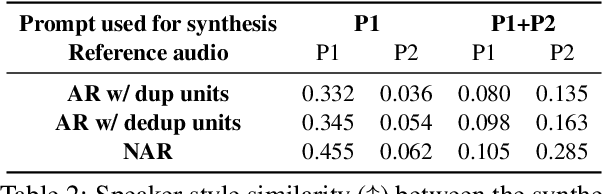
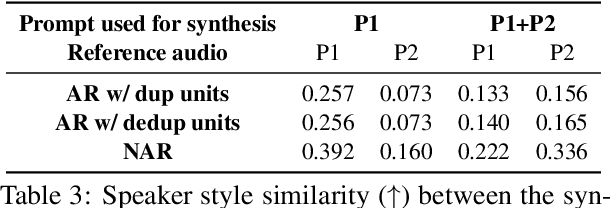
Speech language models (LMs) are promising for high-quality speech synthesis through in-context learning. A typical speech LM takes discrete semantic units as content and a short utterance as prompt, and synthesizes speech which preserves the content's semantics but mimics the prompt's style. However, there is no systematic understanding on how the synthesized audio is controlled by the prompt and content. In this work, we conduct an empirical study of the widely used autoregressive (AR) and non-autoregressive (NAR) speech LMs and provide insights into the prompt design and content semantic units. Our analysis reveals that heterogeneous and nonstationary prompts hurt the audio quality in contrast to the previous finding that longer prompts always lead to better synthesis. Moreover, we find that the speaker style of the synthesized audio is also affected by the content in addition to the prompt. We further show that semantic units carry rich acoustic information such as pitch, tempo, volume and speech emphasis, which might be leaked from the content to the synthesized audio.
Seamless: Multilingual Expressive and Streaming Speech Translation
Dec 08, 2023

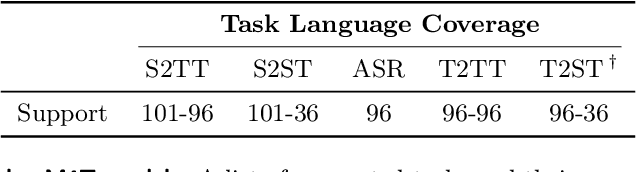

Large-scale automatic speech translation systems today lack key features that help machine-mediated communication feel seamless when compared to human-to-human dialogue. In this work, we introduce a family of models that enable end-to-end expressive and multilingual translations in a streaming fashion. First, we contribute an improved version of the massively multilingual and multimodal SeamlessM4T model-SeamlessM4T v2. This newer model, incorporating an updated UnitY2 framework, was trained on more low-resource language data. SeamlessM4T v2 provides the foundation on which our next two models are initiated. SeamlessExpressive enables translation that preserves vocal styles and prosody. Compared to previous efforts in expressive speech research, our work addresses certain underexplored aspects of prosody, such as speech rate and pauses, while also preserving the style of one's voice. As for SeamlessStreaming, our model leverages the Efficient Monotonic Multihead Attention mechanism to generate low-latency target translations without waiting for complete source utterances. As the first of its kind, SeamlessStreaming enables simultaneous speech-to-speech/text translation for multiple source and target languages. To ensure that our models can be used safely and responsibly, we implemented the first known red-teaming effort for multimodal machine translation, a system for the detection and mitigation of added toxicity, a systematic evaluation of gender bias, and an inaudible localized watermarking mechanism designed to dampen the impact of deepfakes. Consequently, we bring major components from SeamlessExpressive and SeamlessStreaming together to form Seamless, the first publicly available system that unlocks expressive cross-lingual communication in real-time. The contributions to this work are publicly released and accessible at https://github.com/facebookresearch/seamless_communication