 Add to Chrome
 Add to Firefox
 Add to Edge
Omnilingual SONAR: Cross-Lingual and Cross-Modal Sentence Embeddings Bridging Massively Multilingual Text and Speech
Mar 17, 2026
Cross-lingual sentence encoders typically cover only a few hundred languages and often trade downstream quality for stronger alignment, limiting their adoption. We introduce OmniSONAR, a new family of omnilingual, cross-lingual and cross-modal sentence embedding models that natively embed text, speech, code, and mathematical expressions in a single semantic space, while delivering state-of-the-art downstream performance at the scale of thousands of languages, from high-resource to extremely low-resource varieties. To reach this scale without representation collapse, we use progressive training. We first learn a strong foundational space for 200 languages with an LLM-initialized encoder-decoder, combining token-level decoding with a novel split-softmax contrastive loss and synthetic hard negatives. Building on this foundation, we expand to several thousands language varieties via a two-stage teacher-student encoder distillation framework. Finally, we demonstrate the cross-modal extensibility of this space by seamlessly mapping 177 spoken languages into it. OmniSONAR halves cross-lingual similarity search error on the 200-language FLORES dataset and reduces error by a factor of 15 on the 1,560-language BIBLE benchmark. It also enables strong translation, outperforming NLLB-3B on multilingual benchmarks and exceeding prior models (including much larger LLMs) by 15 chrF++ points on 1,560 languages into English BIBLE translation. OmniSONAR also performs strongly on MTEB and XLCoST. For speech, OmniSONAR achieves a 43% lower similarity-search error and reaches 97% of SeamlessM4T speech-to-text quality, despite being zero-shot for translation (trained only on ASR data). Finally, by training an encoder-decoder LM, Spectrum, exclusively on English text processing OmniSONAR embedding sequences, we unlock high-performance transfer to thousands of languages and speech for complex downstream tasks.

Omnilingual MT: Machine Translation for 1,600 Languages
Mar 17, 2026High-quality machine translation (MT) can scale to hundreds of languages, setting a high bar for multilingual systems. However, compared to the world's 7,000 languages, current systems still offer only limited coverage: about 200 languages on the target side, and maybe a few hundreds more on the source side, supported due to cross-lingual transfer. And even these numbers have been hard to evaluate due to the lack of reliable benchmarks and metrics. We present Omnilingual Machine Translation (OMT), the first MT system supporting more than 1,600 languages. This scale is enabled by a comprehensive data strategy that integrates large public multilingual corpora with newly created datasets, including manually curated MeDLEY bitext. We explore two ways of specializing a Large Language model (LLM) for machine translation: as a decoder-only model (OMT-LLaMA) or as a module in an encoder-decoder architecture (OMT-NLLB). Notably, all our 1B to 8B parameter models match or exceed the MT performance of a 70B LLM baseline, revealing a clear specialization advantage and enabling strong translation quality in low-compute settings. Moreover, our evaluation of English-to-1,600 translations further shows that while baseline models can interpret undersupported languages, they frequently fail to generate them with meaningful fidelity; OMT-LLaMA models substantially expand the set of languages for which coherent generation is feasible. Additionally, OMT models improve in cross-lingual transfer, being close to solving the "understanding" part of the puzzle in MT for the 1,600 evaluated. Our leaderboard and main human-created evaluation datasets (BOUQuET and Met-BOUQuET) are dynamically evolving towards Omnilinguality and freely available.
Unified Vision-Language Modeling via Concept Space Alignment
Mar 01, 2026We introduce V-SONAR, a vision-language embedding space extended from the text-only embedding space SONAR (Omnilingual Embeddings Team et al., 2026), which supports 1500 text languages and 177 speech languages. To construct V-SONAR, we propose a post-hoc alignment pipeline that maps the representations of an existing vision encoder into the SONAR space. We thoroughly evaluate V-SONAR and show that its embeddings achieve competitive performance on text-to-video retrieval. Equipped with the OMNISONAR text decoder, V-SONAR further surpasses state-of-the-art vision-language models on video captioning tasks, including DREAM-1K (BLEU 23.9 vs. 19.6) and PE-VIDEO (BLEU 39.0 vs. 30.0). Leveraging V-SONAR, we first demonstrate that the Large Concept Model (LCM; LCM team et al. 2024) operating in SONAR and trained with English text only, can perform both single- and multi-visual concept understanding in a zero-shot manner. Finally, we introduce V-LCM, which extends the LCM with vision-language instruction tuning. V-LCM encodes vision and language inputs into an unified sequence of latent embeddings via V-SONAR and SONAR, and it is trained with the same latent diffusion objective for next-embedding prediction as in LCM's text-only pre-training. Experiments on a large-scale multilingual and -modal instruction-tuning data mixture highlight the potential of V-LCM: V-LCM matches state-of-the-art vision-language models on tasks covering image/video captioning and question answering, while significantly outperforming them across 61 rich- to low-resource languages out of all 62 tested languages.
Omnilingual ASR: Open-Source Multilingual Speech Recognition for 1600+ Languages
Nov 12, 2025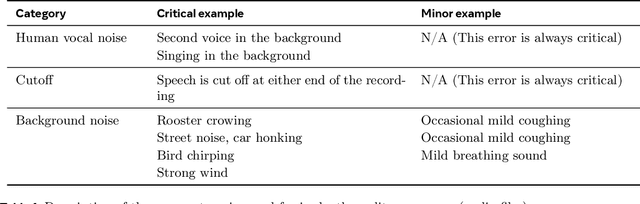
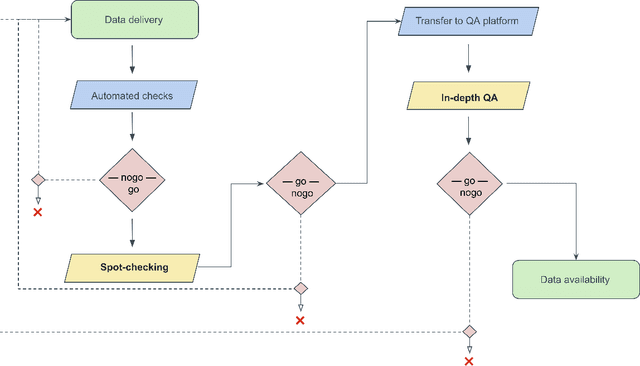
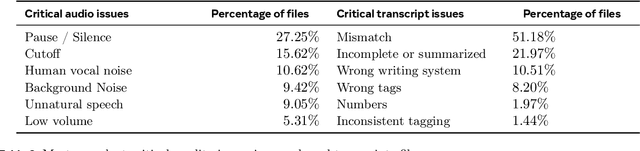
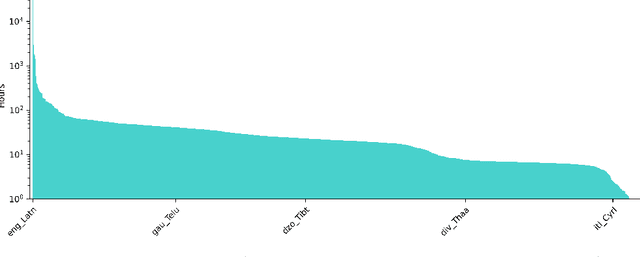
Automatic speech recognition (ASR) has advanced in high-resource languages, but most of the world's 7,000+ languages remain unsupported, leaving thousands of long-tail languages behind. Expanding ASR coverage has been costly and limited by architectures that restrict language support, making extension inaccessible to most--all while entangled with ethical concerns when pursued without community collaboration. To transcend these limitations, we introduce Omnilingual ASR, the first large-scale ASR system designed for extensibility. Omnilingual ASR enables communities to introduce unserved languages with only a handful of data samples. It scales self-supervised pre-training to 7B parameters to learn robust speech representations and introduces an encoder-decoder architecture designed for zero-shot generalization, leveraging a LLM-inspired decoder. This capability is grounded in a massive and diverse training corpus; by combining breadth of coverage with linguistic variety, the model learns representations robust enough to adapt to unseen languages. Incorporating public resources with community-sourced recordings gathered through compensated local partnerships, Omnilingual ASR expands coverage to over 1,600 languages, the largest such effort to date--including over 500 never before served by ASR. Automatic evaluations show substantial gains over prior systems, especially in low-resource conditions, and strong generalization. We release Omnilingual ASR as a family of models, from 300M variants for low-power devices to 7B for maximum accuracy. We reflect on the ethical considerations shaping this design and conclude by discussing its societal impact. In particular, we highlight how open-sourcing models and tools can lower barriers for researchers and communities, inviting new forms of participation. Open-source artifacts are available at https://github.com/facebookresearch/omnilingual-asr.
Large Concept Models: Language Modeling in a Sentence Representation Space
Dec 11, 2024
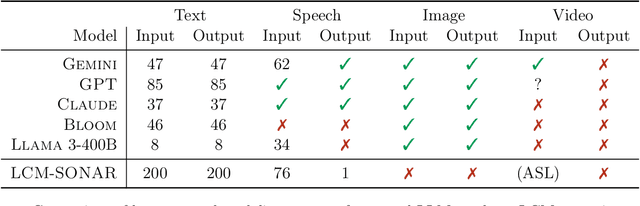
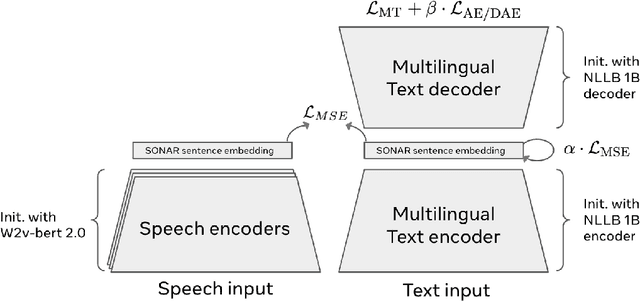
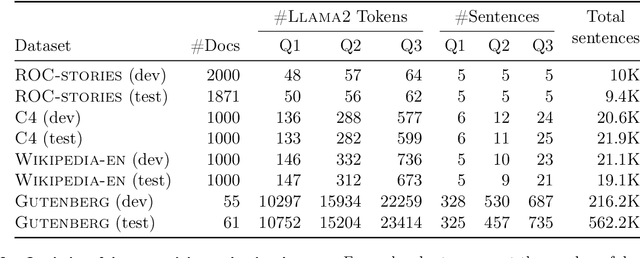
LLMs have revolutionized the field of artificial intelligence and have emerged as the de-facto tool for many tasks. The current established technology of LLMs is to process input and generate output at the token level. This is in sharp contrast to humans who operate at multiple levels of abstraction, well beyond single words, to analyze information and to generate creative content. In this paper, we present an attempt at an architecture which operates on an explicit higher-level semantic representation, which we name a concept. Concepts are language- and modality-agnostic and represent a higher level idea or action in a flow. Hence, we build a "Large Concept Model". In this study, as proof of feasibility, we assume that a concept corresponds to a sentence, and use an existing sentence embedding space, SONAR, which supports up to 200 languages in both text and speech modalities. The Large Concept Model is trained to perform autoregressive sentence prediction in an embedding space. We explore multiple approaches, namely MSE regression, variants of diffusion-based generation, and models operating in a quantized SONAR space. These explorations are performed using 1.6B parameter models and training data in the order of 1.3T tokens. We then scale one architecture to a model size of 7B parameters and training data of about 2.7T tokens. We perform an experimental evaluation on several generative tasks, namely summarization and a new task of summary expansion. Finally, we show that our model exhibits impressive zero-shot generalization performance to many languages, outperforming existing LLMs of the same size. The training code of our models is freely available.
SpiRit-LM: Interleaved Spoken and Written Language Model
Feb 08, 2024We introduce SPIRIT-LM, a foundation multimodal language model that freely mixes text and speech. Our model is based on a pretrained text language model that we extend to the speech modality by continuously training it on text and speech units. Speech and text sequences are concatenated as a single set of tokens, and trained with a word-level interleaving method using a small automatically-curated speech-text parallel corpus. SPIRIT-LM comes in two versions: a BASE version that uses speech semantic units and an EXPRESSIVE version that models expressivity using pitch and style units in addition to the semantic units. For both versions, the text is encoded with subword BPE tokens. The resulting model displays both the semantic abilities of text models and the expressive abilities of speech models. Additionally, we demonstrate that SPIRIT-LM is able to learn new tasks in a few-shot fashion across modalities (i.e. ASR, TTS, Speech Classification).
Seamless: Multilingual Expressive and Streaming Speech Translation
Dec 08, 2023

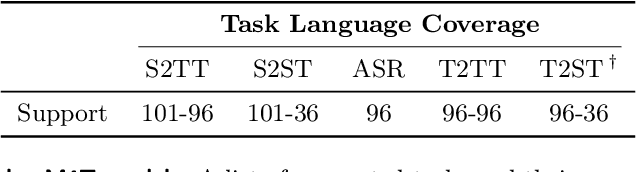

Large-scale automatic speech translation systems today lack key features that help machine-mediated communication feel seamless when compared to human-to-human dialogue. In this work, we introduce a family of models that enable end-to-end expressive and multilingual translations in a streaming fashion. First, we contribute an improved version of the massively multilingual and multimodal SeamlessM4T model-SeamlessM4T v2. This newer model, incorporating an updated UnitY2 framework, was trained on more low-resource language data. SeamlessM4T v2 provides the foundation on which our next two models are initiated. SeamlessExpressive enables translation that preserves vocal styles and prosody. Compared to previous efforts in expressive speech research, our work addresses certain underexplored aspects of prosody, such as speech rate and pauses, while also preserving the style of one's voice. As for SeamlessStreaming, our model leverages the Efficient Monotonic Multihead Attention mechanism to generate low-latency target translations without waiting for complete source utterances. As the first of its kind, SeamlessStreaming enables simultaneous speech-to-speech/text translation for multiple source and target languages. To ensure that our models can be used safely and responsibly, we implemented the first known red-teaming effort for multimodal machine translation, a system for the detection and mitigation of added toxicity, a systematic evaluation of gender bias, and an inaudible localized watermarking mechanism designed to dampen the impact of deepfakes. Consequently, we bring major components from SeamlessExpressive and SeamlessStreaming together to form Seamless, the first publicly available system that unlocks expressive cross-lingual communication in real-time. The contributions to this work are publicly released and accessible at https://github.com/facebookresearch/seamless_communication
Modular Speech-to-Text Translation for Zero-Shot Cross-Modal Transfer
Oct 05, 2023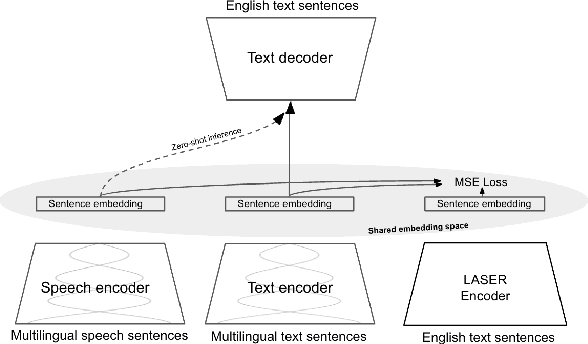


Recent research has shown that independently trained encoders and decoders, combined through a shared fixed-size representation, can achieve competitive performance in speech-to-text translation. In this work, we show that this type of approach can be further improved with multilingual training. We observe significant improvements in zero-shot cross-modal speech translation, even outperforming a supervised approach based on XLSR for several languages.
Language Modeling Is Compression
Sep 19, 2023It has long been established that predictive models can be transformed into lossless compressors and vice versa. Incidentally, in recent years, the machine learning community has focused on training increasingly large and powerful self-supervised (language) models. Since these large language models exhibit impressive predictive capabilities, they are well-positioned to be strong compressors. In this work, we advocate for viewing the prediction problem through the lens of compression and evaluate the compression capabilities of large (foundation) models. We show that large language models are powerful general-purpose predictors and that the compression viewpoint provides novel insights into scaling laws, tokenization, and in-context learning. For example, Chinchilla 70B, while trained primarily on text, compresses ImageNet patches to 43.4% and LibriSpeech samples to 16.4% of their raw size, beating domain-specific compressors like PNG (58.5%) or FLAC (30.3%), respectively. Finally, we show that the prediction-compression equivalence allows us to use any compressor (like gzip) to build a conditional generative model.
SONAR: Sentence-Level Multimodal and Language-Agnostic Representations
Aug 23, 2023We introduce SONAR, a new multilingual and multimodal fixed-size sentence embedding space. Our single text encoder, covering 200 languages, substantially outperforms existing sentence embeddings such as LASER3 and LabSE on the xsim and xsim++ multilingual similarity search tasks. Speech segments can be embedded in the same SONAR embedding space using language-specific speech encoders trained in a teacher-student setting on speech transcription data. Our encoders outperform existing speech encoders on similarity search tasks. We also provide a text decoder for 200 languages, which allows us to perform text-to-text and speech-to-text machine translation, including for zero-shot language and modality combinations. Our text-to-text results are competitive compared to the state-of-the-art NLLB~1B model, despite the fixed-size bottleneck representation. Our zero-shot speech-to-text translation results compare favorably with strong supervised baselines such as Whisper.