 Add to Chrome
 Add to Firefox
 Add to Edge
SE(3)-MeanFlow: Few-Step Protein Backbone Generation on Lie Groups
Jul 29, 2026
Generative modeling of protein backbones promises the de novo design of proteins with prescribed structural and functional properties. Existing diffusion and flow-matching models produce high-quality backbones on SE(3)^N, but inference requires numerically integrating an ODE over hundreds of network evaluations, each involving a Lie group exponential map - a bottleneck for high-throughput design campaigns. We introduce SE(3)-MeanFlow, a few-step generative framework that extends MeanFlow from Euclidean space to the Lie group geometry of protein frames. Working natively in the Lie algebra so(3) and in R^3, we derive closed-form average-velocity identities for rotations and translations, giving simulation-free training targets. We further introduce an SE(3) alpha-Flow objective that removes the Jacobian-vector product from the rotation branch and serves as a warm-up stage, after which training switches to a small-t stabilized MeanFlow loss that is used for the remainder of pretraining and for rectification-based post-training. In protein backbone generation, SE(3)-MeanFlow matches or exceeds flow-matching baselines that use several times more sampling steps, and its advantage widens in the few-step regime, where rectification lets it lead at every matched budget - at a modest cost in diversity.

TOP-Nav: Legged Navigation Integrating Terrain, Obstacle and Proprioception Estimation
Apr 24, 2024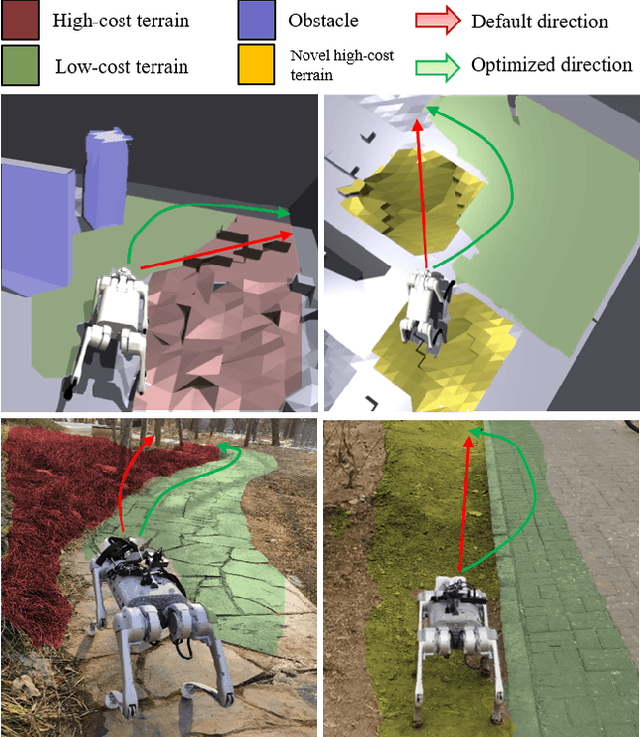
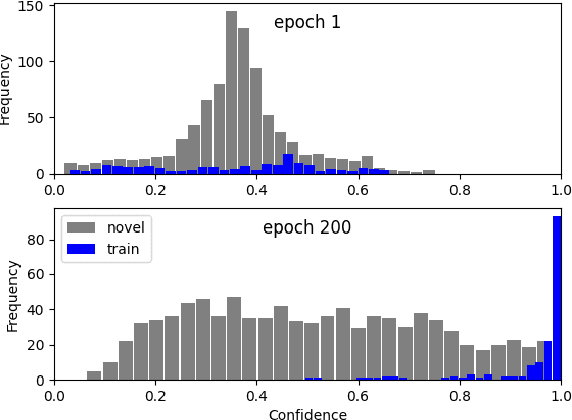
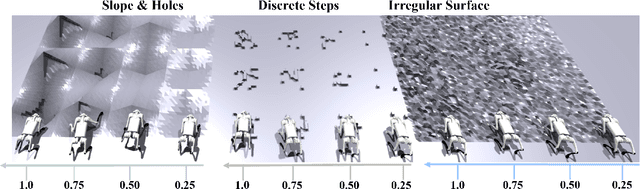
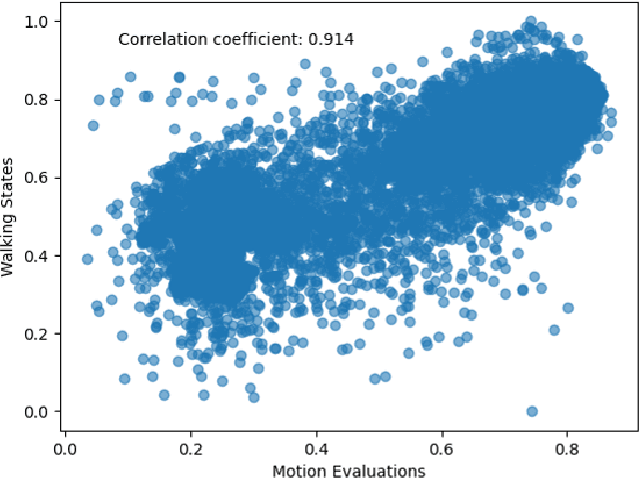
Legged navigation is typically examined within open-world, off-road, and challenging environments. In these scenarios, estimating external disturbances requires a complex synthesis of multi-modal information. This underlines a major limitation in existing works that primarily focus on avoiding obstacles. In this work, we propose TOP-Nav, a novel legged navigation framework that integrates a comprehensive path planner with Terrain awareness, Obstacle avoidance and close-loop Proprioception. TOP-Nav underscores the synergies between vision and proprioception in both path and motion planning. Within the path planner, we present and integrate a terrain estimator that enables the robot to select waypoints on terrains with higher traversability while effectively avoiding obstacles. In the motion planning level, we not only implement a locomotion controller to track the navigation commands, but also construct a proprioception advisor to provide motion evaluations for the path planner. Based on the close-loop motion feedback, we make online corrections for the vision-based terrain and obstacle estimations. Consequently, TOP-Nav achieves open-world navigation that the robot can handle terrains or disturbances beyond the distribution of prior knowledge and overcomes constraints imposed by visual conditions. Building upon extensive experiments conducted in both simulation and real-world environments, TOP-Nav demonstrates superior performance in open-world navigation compared to existing methods.
Unbiasing Enhanced Sampling on a High-dimensional Free Energy Surface with Deep Generative Model
Dec 18, 2023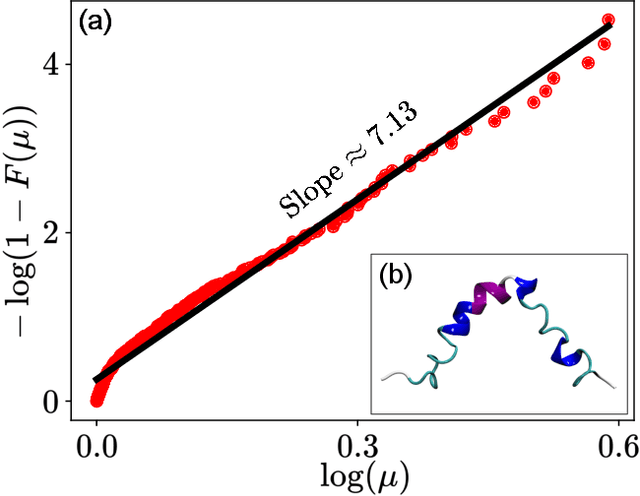
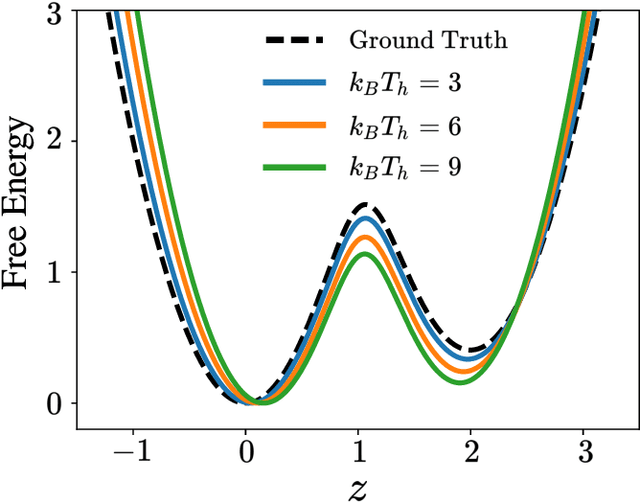


Biased enhanced sampling methods utilizing collective variables (CVs) are powerful tools for sampling conformational ensembles. Due to high intrinsic dimensions, efficiently generating conformational ensembles for complex systems requires enhanced sampling on high-dimensional free energy surfaces. While methods like temperature-accelerated molecular dynamics (TAMD) can adopt many CVs in a simulation, unbiasing the simulation requires accurate modeling of a high-dimensional CV probability distribution, which is challenging for traditional density estimation techniques. Here we propose an unbiasing method based on the score-based diffusion model, a deep generative learning method that excels in density estimation across complex data landscapes. We test the score-based diffusion unbiasing method on TAMD simulations. The results demonstrate that this unbiasing approach significantly outperforms traditional unbiasing methods, and can generate accurate unbiased conformational ensembles for simulations with a number of CVs higher than usual ranges.
Backdiff: a diffusion model for generalized transferable protein backmapping
Oct 03, 2023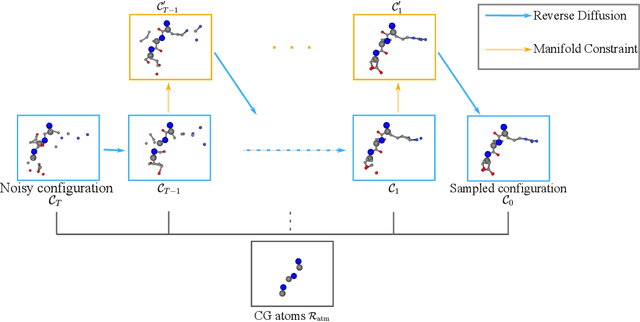
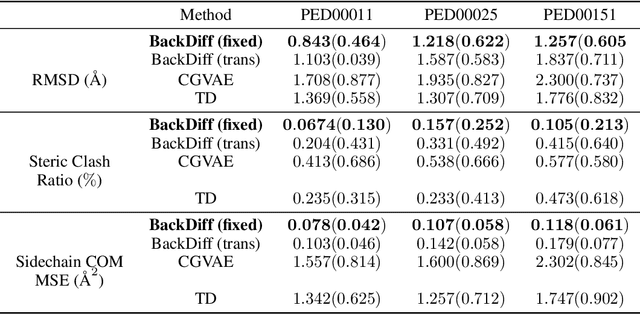
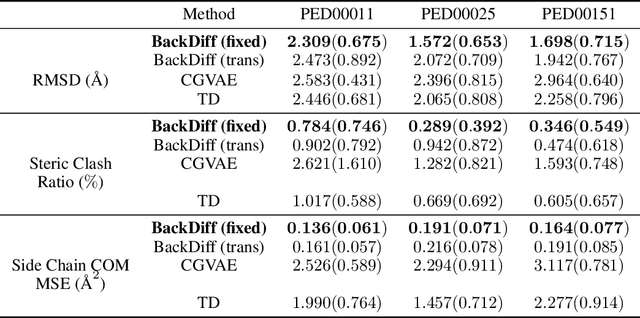
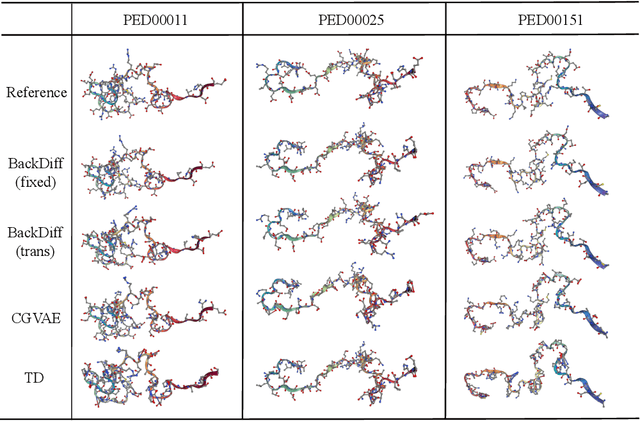
Coarse-grained (CG) models play a crucial role in the study of protein structures, protein thermodynamic properties, and protein conformation dynamics. Due to the information loss in the coarse-graining process, backmapping from CG to all-atom configurations is essential in many protein design and drug discovery applications when detailed atomic representations are needed for in-depth studies. Despite recent progress in data-driven backmapping approaches, devising a backmapping method that can be universally applied across various CG models and proteins remains unresolved. In this work, we propose BackDiff, a new generative model designed to achieve generalization and reliability in the protein backmapping problem. BackDiff leverages the conditional score-based diffusion model with geometric representations. Since different CG models can contain different coarse-grained sites which include selected atoms (CG atoms) and simple CG auxiliary functions of atomistic coordinates (CG auxiliary variables), we design a self-supervised training framework to adapt to different CG atoms, and constrain the diffusion sampling paths with arbitrary CG auxiliary variables as conditions. Our method facilitates end-to-end training and allows efficient sampling across different proteins and diverse CG models without the need for retraining. Comprehensive experiments over multiple popular CG models demonstrate BackDiff's superior performance to existing state-of-the-art approaches, and generalization and flexibility that these approaches cannot achieve. A pretrained BackDiff model can offer a convenient yet reliable plug-and-play solution for protein researchers, enabling them to investigate further from their own CG models.
EASE: An Easily-Customized Annotation System Powered by Efficiency Enhancement Mechanisms
May 23, 2023The performance of current supervised AI systems is tightly connected to the availability of annotated datasets. Annotations are usually collected through annotation tools, which are often designed for specific tasks and are difficult to customize. Moreover, existing annotation tools with an active learning mechanism often only support limited use cases. To address these limitations, we present EASE, an Easily-Customized Annotation System Powered by Efficiency Enhancement Mechanisms. \sysname provides modular annotation units for building customized annotation interfaces and also provides multiple back-end options that suggest annotations using (1) multi-task active learning; (2) demographic feature based active learning; (3) a prompt system that can query the API of large language models. We conduct multiple experiments and user studies to evaluate our system's flexibility and effectiveness. Our results show that our system can meet the diverse needs of NLP researchers and significantly accelerate the annotation process.