 Add to Chrome
 Add to Firefox
 Add to Edge
OneVL: One-Step Latent Reasoning and Planning with Vision-Language Explanation
Apr 20, 2026
Chain-of-Thought (CoT) reasoning has become a powerful driver of trajectory prediction in VLA-based autonomous driving, yet its autoregressive nature imposes a latency cost that is prohibitive for real-time deployment. Latent CoT methods attempt to close this gap by compressing reasoning into continuous hidden states, but consistently fall short of their explicit counterparts. We suggest that this is due to purely linguistic latent representations compressing a symbolic abstraction of the world, rather than the causal dynamics that actually govern driving. Thus, we present OneVL (One-step latent reasoning and planning with Vision-Language explanations), a unified VLA and World Model framework that routes reasoning through compact latent tokens supervised by dual auxiliary decoders. Alongside a language decoder that reconstructs text CoT, we introduce a visual world model decoder that predicts future-frame tokens, forcing the latent space to internalize the causal dynamics of road geometry, agent motion, and environmental change. A three-stage training pipeline progressively aligns these latents with trajectory, language, and visual objectives, ensuring stable joint optimization. At inference, the auxiliary decoders are discarded and all latent tokens are prefilled in a single parallel pass, matching the speed of answer-only prediction. Across four benchmarks, OneVL becomes the first latent CoT method to surpass explicit CoT, delivering state-of-the-art accuracy at answer-only latency, and providing direct evidence that tighter compression, when guided in both language and world-model supervision, produces more generalizable representations than verbose token-by-token reasoning. Project Page: https://xiaomi-embodied-intelligence.github.io/OneVL

EAROL: Environmental Augmented Perception-Aware Planning and Robust Odometry via Downward-Mounted Tilted LiDAR
Aug 20, 2025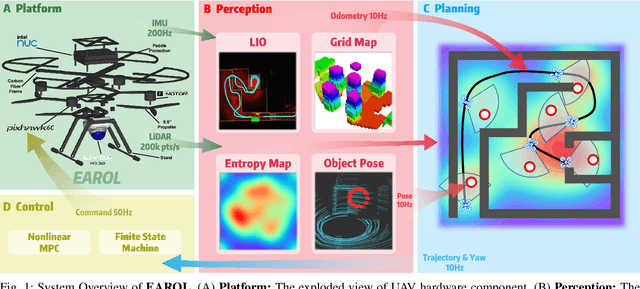
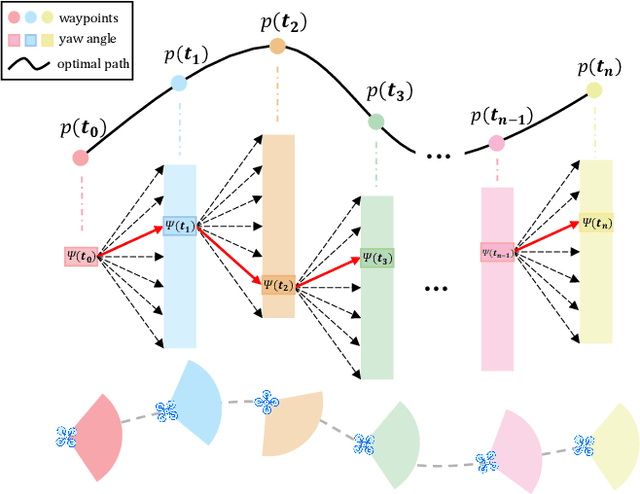
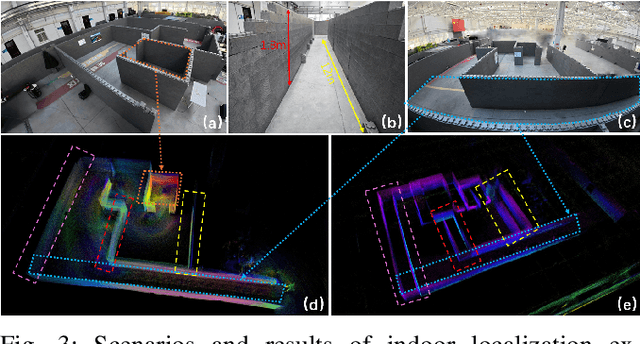
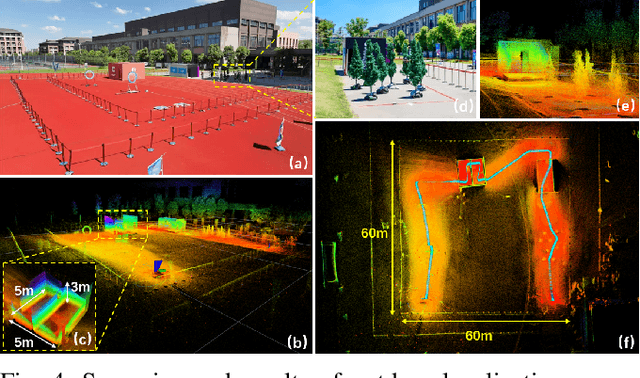
To address the challenges of localization drift and perception-planning coupling in unmanned aerial vehicles (UAVs) operating in open-top scenarios (e.g., collapsed buildings, roofless mazes), this paper proposes EAROL, a novel framework with a downward-mounted tilted LiDAR configuration (20{\deg} inclination), integrating a LiDAR-Inertial Odometry (LIO) system and a hierarchical trajectory-yaw optimization algorithm. The hardware innovation enables constraint enhancement via dense ground point cloud acquisition and forward environmental awareness for dynamic obstacle detection. A tightly-coupled LIO system, empowered by an Iterative Error-State Kalman Filter (IESKF) with dynamic motion compensation, achieves high level 6-DoF localization accuracy in feature-sparse environments. The planner, augmented by environment, balancing environmental exploration, target tracking precision, and energy efficiency. Physical experiments demonstrate 81% tracking error reduction, 22% improvement in perceptual coverage, and near-zero vertical drift across indoor maze and 60-meter-scale outdoor scenarios. This work proposes a hardware-algorithm co-design paradigm, offering a robust solution for UAV autonomy in post-disaster search and rescue missions. We will release our software and hardware as an open-source package for the community. Video: https://youtu.be/7av2ueLSiYw.